1st Generation
(1994 - 2000)
Technical specifications, versions, and history for the Fiat Coupe.
Select a generation to see available versions
(1994 - 2000)
The Fiat Coupé, known internally by the development codename Project 175, represents one of the most audacious and technically fascinating chapters of the Italian automotive industry at the end of the 20th century. Produced between 1993 and 2000, the model was not just a niche vehicle, but a statement of Fiat's competence during a period of global transition, seeking to recover the prestige of its sports car lineage that included icons like the Fiat 124 Coupé and the X1/9. This report details the complete trajectory of the model, from its aesthetic conception to the minutiae of its engineering and its reception in international markets, with a special focus on Brazil.
In the early 1990s, Fiat faced an image challenge. Although it was a leader in compact car segments with the Uno and the recently launched Tipo, the brand lacked a "halo car" that evoked passion and technical sophistication. Under the direction of Paolo Cantarella, the company decided to break with the conservative design of the time. The development of the Coupé was the result of an unusual internal competition between the Centro Stile Fiat and the renowned Pininfarina studio.
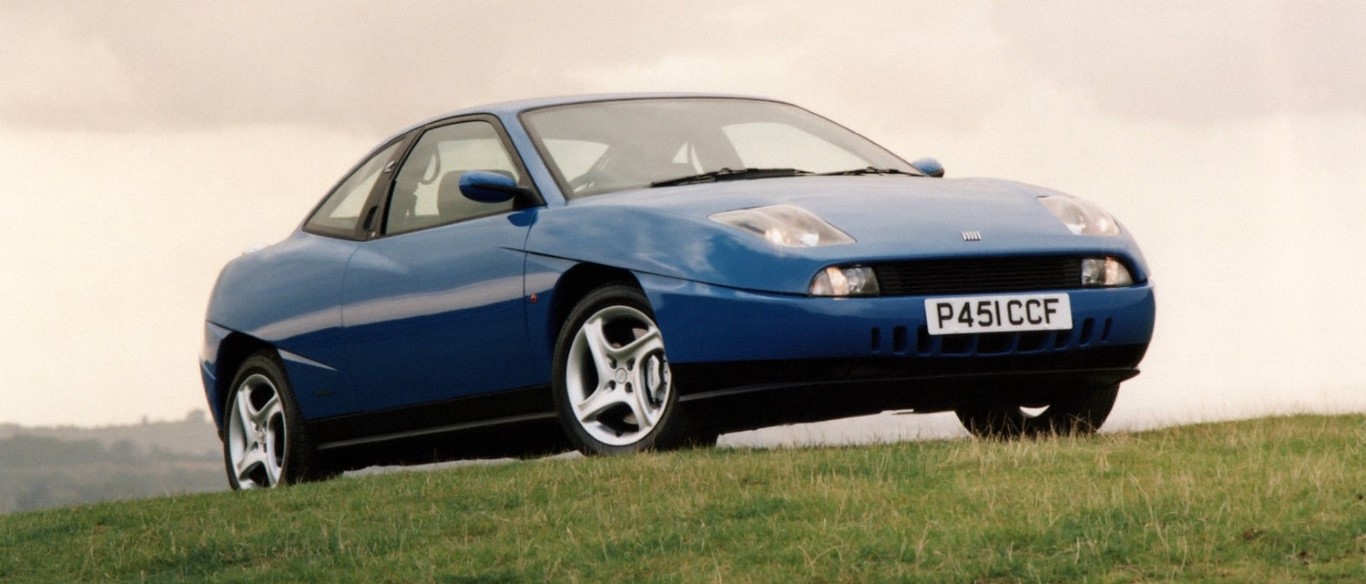
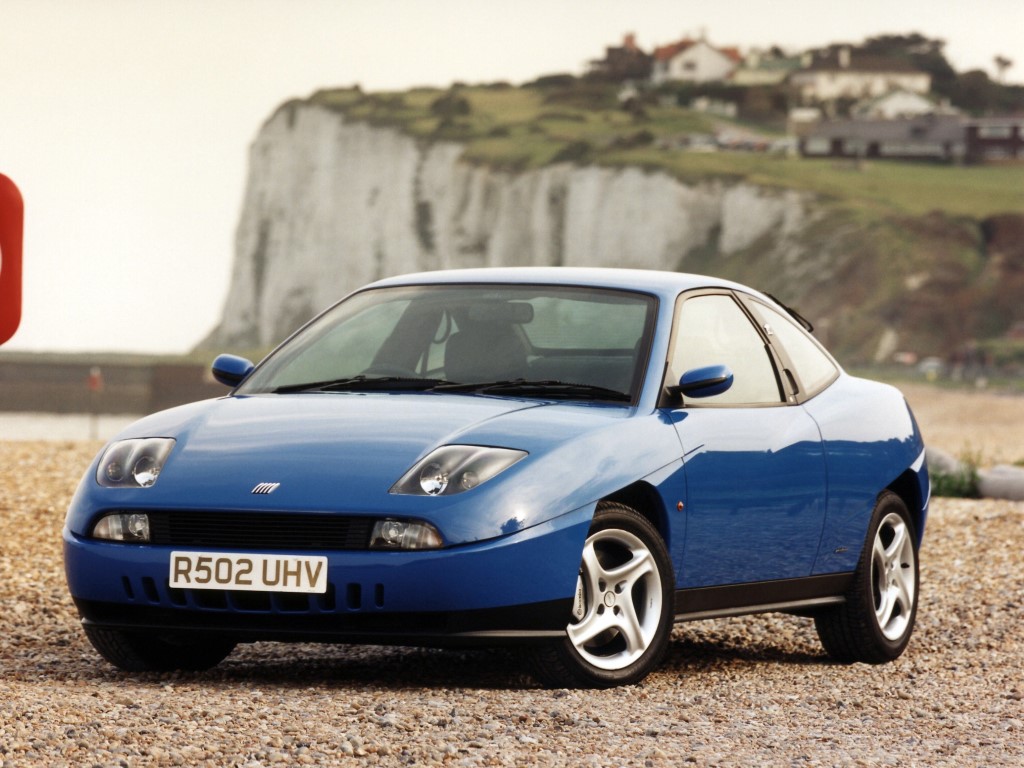
While Pininfarina presented a proposal with more fluid and traditional lines — which would later be reused by Peugeot to create the 406 Coupé —, Fiat opted for the radical vision of Chris Bangle, then head of design for the brand before his move to BMW. Bangle sought a design that he described as "anti-computer," full of historical references and disruptive elements. The final exterior featured unique visual solutions, such as the characteristic cuts or "scars" over the wheel arches, inspired by the plastic artist Lucio Fontana, which gave the vehicle a sense of constant movement.
Another fundamental technical and aesthetic element was the concept of the "cofango" (a fusion of the Italian words for hood and fender), a complex stamped piece that encompassed the hood and part of the front structure, allowing the headlights to remain exposed under dual polycarbonate lenses, a stylistic alternative to the pop-up headlights that dominated the category at the time. The interior, although the exterior design was by Fiat, was entrusted to Pininfarina, resulting in a cabin that combined modern ergonomics with retro touches, such as the iconic body-colored metal strip that wrapped around the entire dashboard.
The mechanical basis of the Fiat Coupé was the "Tipo Due" (Type 2) platform, the same one used in the Fiat Tipo and Tempra, as well as models from Lancia and Alfa Romeo. This choice allowed Fiat to achieve significant economies of scale but required profound modifications for the Coupé to deliver the performance expected of an elite sports car.
The suspension was configured independently on both axles. At the front, it used a MacPherson strut system with lower arms anchored to an auxiliary subframe, offset coil springs, and a stabilizer bar. At the rear, trailing arms mounted on an auxiliary subframe ensured the necessary stability to handle the high speeds the model would reach. This configuration provided a balance between the comfort of a Grand Tourer and the precision required for aggressive sporty driving.
The official launch took place at the end of 1993, with sales beginning in January 1994. Initially, the Coupé was equipped with 2.0-liter, 16-valve four-cylinder engines, derived from the legendary Lampredi Twin-Cam engine that powered the Lancia Delta Integrale in its world rally conquests.
The initial range was divided between a naturally aspirated and a turbocharged version. The Turbo version was particularly notable for its use of the "Viscodrive" system, a viscous limited-slip differential designed to combat understeer and ensure that power was delivered efficiently to the front wheels, something critical in a front-wheel-drive car with 190 hp.
| Technical Specification | 2.0 16V Naturally Aspirated | 2.0 16V Turbo |
|---|---|---|
| Configuration | Inline 4-cylinder, 16V | Inline 4-cylinder, 16V Turbo |
| Displacement | 1995 cm³ | 1995 cm³ |
| Maximum Power | 139 PS (137 bhp) @ 6000 rpm | 190 PS (188 bhp) @ 5500 rpm |
| Maximum Torque | 180 Nm @ 4500 rpm | 290 Nm @ 3400 rpm |
| 0–100 km/h Acceleration | 9.2 seconds | 7.5 seconds |
| Top Speed | 208 km/h | 225 km/h |
| Braking System (Front) | 284 mm Ventilated Discs | 284 mm Ventilated Discs |
| Curb Weight | 1250 kg | 1320 kg |
Sources:
The 16V Turbo Plus version, an improved variant launched at the end of this period, already anticipated some luxury treats, such as 16-inch wheels and a black leather interior finish, maintaining the robust mechanical base.
In 1996, Fiat promoted a profound technical update, introducing the "Pratola Serra" engine family (also known as Fiat's modular engines). This change was fundamental to elevating the car's refinement, exchanging the vibrant nature of the four cylinders for the linear power delivery and the characteristic sound of the five cylinders.
To expand the consumer base, the 1.8 16V (Family B) engine was introduced, the same one used in the Fiat Barchetta. This engine, although less powerful, made the Coupé the best vehicle in the lineup in terms of steering agility, due to the lower weight on the front axle. In the UK, this version was not officially made available.
The introduction of the 2.0 20V five-cylinder engine placed the Fiat Coupé on a new performance level. The Turbo variant, with 220 hp, became the fastest front-wheel-drive car of its time, capable of accelerating from 0 to 100 km/h in just 6.3 seconds and reaching a top speed of 250 km/h in the versions equipped with the six-speed transmission launched later.
| Technical Specification | 1.8 16V | 2.0 20V (Pre-VIS) | 2.0 20V Turbo |
|---|---|---|---|
| Configuration | Inline 4-cylinder | Inline 5-cylinder | Inline 5-cylinder Turbo |
| Displacement | 1747 cm³ | 1998 cm³ | 1998 cm³ |
| Maximum Power | 131 PS @ 6300 rpm | 147 PS @ 6100 rpm | 220 PS @ 5750 rpm |
| Maximum Torque | 164 Nm @ 4300 rpm | 186 Nm @ 4500 rpm | 310 Nm @ 2500 rpm |
| 0–100 km/h Acceleration | 9.2 seconds | 8.9 seconds | 6.3 - 6.5 seconds |
| Top Speed | 205 km/h | 212 km/h | 240 - 250 km/h |
| Transmission | 5-speed manual | 5-speed manual | 5 or 6-speed manual |
Sources:
The mid-1996 facelift brought subtle but effective changes to modernize the model's look and interior:
The year 1998 brought new mechanical evolutions and the launch of the versions that today are the most desired by collectors worldwide. The naturally aspirated 2.0 20V engine received the VIS (Variable Inlet System), which optimized the airflow to the cylinders, raising the power from 147 hp to 154 hp and improving throttle response at low revs.
Launched in July 1998, the "Limited Edition" (LE) was conceived to offer an "exclusive supercar" feel. This version introduced the six-speed transmission to the Coupé line, which would later become standard on Turbo models.
Externally, the LE could be identified by a full body kit (side skirts and front spoiler extensions) and details finished in titanium gray on the alloy wheels, mirror caps, fuel cap, and headlight bezels. The braking system was upgraded with red-painted Brembo calipers and cross-drilled front discs. Inside, the Recaro seats were in red and black leather, and the car featured a push-button start, a rare characteristic in production cars of that time. Each LE was individually numbered with a plaque on the headliner.
Following the success of the LE, Fiat launched the "Turbo Plus" version, which served as a spiritual successor, retaining almost all the mechanical and styling characteristics of the LE (body kit, 6-speed gearbox, Brembo brakes), but with a black leather interior with red stitching, being less extravagant than the LE.
Simultaneously, for some markets, the 1.8 16V SE (Special Edition) version emerged, which offered superior comfort and styling items, such as 15-inch BBS wheels, a silver honeycomb-style grille, and a titanium gray center console, in addition to equipment like air conditioning and a leather interior.
Brazil had an intense and short relationship with the Fiat Coupé. The model arrived on the national market in 1995, shortly after the resounding success of the Fiat Tipo. It was imported in a single powertrain configuration: the naturally aspirated 2.0 16V four-cylinder.
| Import Details for Brazil | Statistical Data |
|---|---|
| Import Period | 1995 to 1997 |
| Single Powertrain | 2.0 16V DOHC (Naturally Aspirated) |
| Power (Brazil) | 137 hp (recalibrated for local fuel) |
| Imported Quantity (Total) | ~1,191 units |
| Registered Units | ~1,124 units |
| Power Difference vs Europe | Europe: 141 PS (139 hp) / Brazil: 137 hp |
Sources:
In Brazil, the Coupé quickly became an object of desire, but its high price and the specific nature of its maintenance (many components were shared with the Tempra and Tipo, but trim pieces were exclusive and expensive) restricted its popularity to a niche market. Today, it is considered one of the most collectible cars of the 90s in the country, with well-preserved units reaching high values in the classic car market.
Like any high-performance Italian sports car of that era, the Fiat Coupé requires a rigorous maintenance routine to ensure its longevity. One of the most discussed points among enthusiasts is the timing belt change.
Other known issues include corrosion of the oil cooler pipes located below the main radiator and thermostat failures on the 20-valve models, which can lead to overheating if unmonitored. The hand-built construction at Pininfarina's facilities guaranteed a good level of finish, but the electrical and sensor complexity requires constant attention.
Total production of the Fiat Coupé was 72,762 units, a respectable number for a vehicle in its segment. Assembly was carried out entirely by Pininfarina in Turin, allowing Fiat to maintain focus on its volume models while a specialist handled the Coupé's artisanal rigor.
| Production Year | Units Manufactured |
|---|---|
| 1993 | 119 |
| 1994 | 17,619 |
| 1995 | 13,732 |
| 1996 | 11,273 |
| 1997 | 12,288 |
| 1998 | 9,042 |
| 1999 | 6,332 |
| 2000 | 2,357 |
| Global Total | 72,762 |
Approximately half of the total production was destined for the Italian domestic market, reflecting strong automotive patriotism and acceptance of the bold design in its home country.
At the time of its launch, the Fiat Coupé faced fierce competition from traditional rear-wheel-drive coupes and other compact sports cars. Its main rivals included:
The Coupé's main theoretical disadvantage was its front-wheel-drive layout. However, Fiat's engineering proved that, with the use of limited-slip differentials and a well-tuned suspension geometry, the Coupé could outperform many rear-wheel-drive rivals in real-world road speed and high-speed cornering stability.
Production of the Fiat Coupé ended in December 2000. Several factors contributed to Fiat's decision not to launch an immediate direct successor. The company began facing financial difficulties in the late 90s and chose to focus on its volume compact cars, such as the new Panda and the Fiat 500 launched years later. Furthermore, the group's strategy was to consolidate Alfa Romeo as the sole sports brand of the conglomerate at the time.
The legacy of the Fiat Coupé is immeasurable. It demonstrated that Fiat was capable of producing a timeless design — Chris Bangle's lines still look contemporary decades later. More than that, the 20V Turbo engine remains one of the milestones of Italian engineering, offering performance that still challenges many modern cars today. The Fiat Coupé was not just a car; it was a statement of stylistic bravery and technical competence, securing its permanent place in the annals of world automotive history.