1st Generation
(2011 - 2015)
Technical specifications, versions, and history for the Fiat Freemont.
Select a generation to see available versions
(2011 - 2015)
Select a powertrain to view full technical specifications
The Fiat Freemont represents one of the most significant chapters in the history of the 21st-century global automotive industry, functioning as the first tangible and large-scale product resulting from the union between Italy's Fiat and the American Chrysler Group. This vehicle was not merely an addition to the Turin brand's catalog, but rather a complex strategic maneuver aimed at filling gaps in multiple global markets, utilizing an already established platform, the Dodge Journey, but refined by European engineering criteria. A detailed analysis of this model requires a deep understanding of its origins, the technical modifications implemented to adapt it to Fiat's DNA, and its commercial performance in different regions, especially in Brazil and Europe.
The genesis of the Freemont is situated in the context of the 2008 financial crisis, which forced a drastic restructuring of American manufacturers. With the formation of Fiat Chrysler Automobiles (FCA), Fiat saw the opportunity to replace aging minivans, such as the Fiat Ulysse, with a hybrid concept between SUV and crossover that was already successful in North America. The model was manufactured at the Toluca plant in Mexico, a location that allowed for efficient logistics for both the Americas and transatlantic export, taking advantage of trade agreements that made the vehicle financially viable in emerging markets like Brazil.
The development of the Fiat Freemont was not limited to a simple logo swap, a practice known in the industry as rebadging. Although the basic structure and silhouette were inherited from the Dodge Journey, Fiat invested significantly in recalibrating the driving dynamics. Italian engineering focused primarily on the suspension and steering system to align the vehicle's behavior with the demands of European roads and the taste of consumers who prioritize greater precision and less body roll.
Modifications included stiffening the suspension bushings, springs with new compression rates, and shock absorbers with firmer calibration to prevent the feeling of excessive "floating," common in American vehicles of that category. The steering system was also revised to be more direct and communicative, allowing the driver to have more refined control in corners and urban maneuvers. These changes were crucial so that the Freemont was not seen merely as a rebadged American car, but as a product that incorporated the dynamic refinement expected of a Fiat.
The structural basis of the Freemont is the Chrysler JC platform, which also served models such as the Chrysler 200 and the Dodge Avenger. This architecture allowed the vehicle to offer a generous wheelbase of 2,891 mm, which translated into one of the most versatile interior spaces in its category. The design prioritized functionality, maintaining a high roofline and a verticalized rear end to maximize cargo volume and passenger accommodation in the third row.
| Dimensional Specification | Measurement (mm) | Reference |
|---|---|---|
| Overall Length | 4,887 | |
| Wheelbase | 2,891 | |
| Overall Width | 1,834 | |
| Height | 1,692 | |
| Front Track | 1,571 | |
| Rear Track | 1,582 |
The vehicle's construction utilized materials such as aluminum in the hood, aiming not only for weight reduction but also for improving passive safety in the event of pedestrian impacts, a growing requirement in European safety standards. The curb weight varied between 1,755 kg and 1,809 kg, depending on the seating configuration and the powertrain, which placed the model in a considerable weight range, requiring engines with good torque to ensure acceptable drivability.
One of the most complex aspects of the Fiat Freemont's history lies in the diversity of its powertrains, which were adapted according to the destination market and mid-life cycle updates. In Brazil, the mechanical trajectory was marked by a significant evolution in the transmission, while in Europe the focus was on the efficiency of the MultiJet II diesel engines.
Upon arriving in Brazil in 2011, the Freemont was equipped exclusively with the 2.4-liter four-cylinder engine from the Chrysler family. This engine featured an aluminum block and cylinder head and a dual variable valve timing (VVT) system, delivering 172 horsepower. However, the first phase of the model in the country was criticized for using an automatic transmission with only four speeds, which resulted in long gearing and limited the vehicle's agility in overtaking situations and highway consumption.
In 2014, Fiat implemented a vital change: the introduction of the six-speed automatic transmission with Autostick system. This update allowed the 2.4 engine to work more efficiently, maintaining lower revs at cruising speeds and offering smoother and quieter gear changes. The evolution in the transmission resolved one of the biggest complaints from owners and noticeably improved the SUV's perceived performance.
In other markets, such as Europe and Australia, the Freemont had access to a broader range of engines. The 2.0-liter MultiJet II diesel powertrains were the favorites in Europe, offered in 140 hp and 170 hp versions. These engines were known for their robust torque of 350 Nm, available right at low revs, which gave the vehicle a towing capacity and urban agility superior to those of the four-cylinder gasoline version.
For consumers seeking the ultimate in performance, Fiat made available Chrysler's 3.6 V6 Pentastar engine. With 280 horsepower, this engine transformed the Freemont's behavior, allowing acceleration from 0 to 100 km/h in about 8.4 seconds. Almost always associated with an all-wheel-drive (AWD) system and a six-speed gearbox, the Pentastar V6 represented the top of the pyramid in terms of the model's mechanical sophistication.
| Engine | Power (hp) | Torque (kgfm/Nm) | Fuel | Markets |
|---|---|---|---|---|
| 2.4 16V VVT | 172 | 22.4 kgfm | Gasoline | Brazil, Global |
| 2.0 MultiJet II | 140 | 350 Nm | Diesel | Europe |
| 2.0 MultiJet II | 170 | 350 Nm | Diesel | Europe, Mercosur |
| 3.6 V6 Pentastar | 280 | 342 Nm | Gasoline | Europe, Global |
Fiat's strategy for the Freemont was based on offering a high level of standard equipment, positioning the model as an excellent cost-benefit option compared to German or Japanese SUVs of a similar size. In Brazil, the version structure was kept consistent, focusing on the Emotion and Precision variants.
The Emotion version was designed to serve the public that needed space, but not necessarily the third row of seats. With a five-seater configuration, this version offered a larger trunk under normal usage conditions and came equipped with items that already surpassed many competitors of the time. Among the standard items, the dual-zone digital air conditioning (which later evolved to three zones), Keyless Entry & Go system for keyless start, electronic stability control (ESP) and traction control (ASR), and the UConnect multimedia system with a 4.3-inch screen stood out.
Over the years, the Emotion version received updates, such as the inclusion of rear parking sensors and 17-inch alloy wheels in the 2014 lineup, seeking to maintain attractiveness in the face of competition that was becoming fiercer with the arrival of models such as the renewed Honda CR-V and the Toyota RAV4.
The Precision variant was the flagship in terms of sales volume and technological prestige. Its main differential was the seven-seater configuration, which used a smart folding system where the third-row seats could be hidden in the floor, creating a flat cargo surface. In addition to all the items of the Emotion, the Precision added larger-inch wheels, longitudinal roof bars and, in the 2014 update, the 8.4-inch UConnect center with integrated Garmin GPS navigation.
Life on board in the Precision version was marked by treats such as the electrochromic internal rearview mirror, seats with electric adjustments for the driver, and the tri-zone climate control system, which allowed the occupants of the rear rows to control their own temperature independently. These details were fundamental so that the Freemont was perceived as a higher category vehicle, almost reaching the luxury segment in terms of internal convenience.
The Fiat Freemont's cabin was one of its biggest selling points, frequently being described as an "amphitheater on wheels". The seating arrangement was tiered, with each successive row being positioned slightly higher than the previous one, ensuring that even the passengers in the back had a clear view of the road ahead, reducing the feeling of confinement and motion sickness on long trips.
Versatility was amplified by the ability to perform more than 30 different seating configurations. An innovative highlight were the integrated "child boosters": seats in the second row that could have their base raised to safely accommodate children, eliminating the need for bulky external car seats for children who had already passed the baby stage.
In addition to the trunk, which could drastically vary in capacity according to occupancy, the Freemont had more than 20 storage compartments scattered throughout the cabin. Among them, two compartments under the floor of the second row of seats stood out, ideal for storing useful objects or cooling drinks, and a compartment under the front passenger seat, demonstrating a smart use of every cubic centimeter of the Chrysler platform.
| Seating Configuration | Trunk Capacity (Liters) | Reference |
|---|---|---|
| With 7 Active Seats | 145 | |
| With 5 Seats (3rd row folded) | 540 | |
| With All Seats Folded | 1,461 |
Safety was a central pillar in the Freemont's development, reflecting both regulatory requirements and Fiat's desire to project a reliable brand image for families. The vehicle obtained solid ratings in the crash tests of the time, such as Euro NCAP, where it achieved high scores for adult and child occupant protection.
The model came equipped as standard with a robust safety package that included six or seven airbags (front, side, and curtain), as well as active head restraints that protected against whiplash in rear-end collisions. In the field of active safety, the Freemont incorporated technologies aimed at mitigating the risks inherent to a vehicle with a high center of gravity:
These technologies were essential to manage the vehicle's nearly two-ton mass, ensuring that the driver had constant technological assistance to maintain the safety of all occupants in various weather and road conditions.
The interface between man and machine in the Fiat Freemont underwent a radical transformation during its life cycle. At launch, the UConnect system with a 4.3-inch screen was the norm, offering basic audio functions and vehicle settings. Although functional, the small screen was seen as a point for improvement, especially on such a vast dashboard.
With the 2014 lineup, Fiat introduced the UConnect 8.4 NAV multimedia center as standard equipment on the Precision version. This change was not just visual; the new 8.4-inch screen allowed for much more intuitive interaction, with large icons and superior touch response. The integration of the Garmin navigator was an important differential, offering updated maps and 3D junction views, something that at the time was still a luxury reserved for higher segments.
The system also allowed centralized control of the radio, DVD player, Bluetooth phone, and climate control system. The inclusion of a high-resolution rearview camera facilitated maneuvers with the large SUV, while the SD card slot and USB ports ensured that passengers could play a wide range of digital media, keeping the family entertained on long journeys.
Throughout its production, the Freemont sought to remain relevant through editions that explored different facets of design, from urban luxury to adventurous ruggedness. Although not all were formally marketed in all markets, they exemplify the model's flexibility.
The Black Code was presented as the definitive styling variant for the Freemont. With a purely aesthetic approach, this version eliminated chrome in favor of a gloss black finish on the front grille, headlight bezels, mirror caps, and exclusive 19-inch wheels. Inside, luxury was the focus, with premium heated leather seats and a 368-watt amplified sound system, including a subwoofer. This version targeted the young and urban audience seeking an SUV with a striking visual presence, distancing itself from the purely family image.
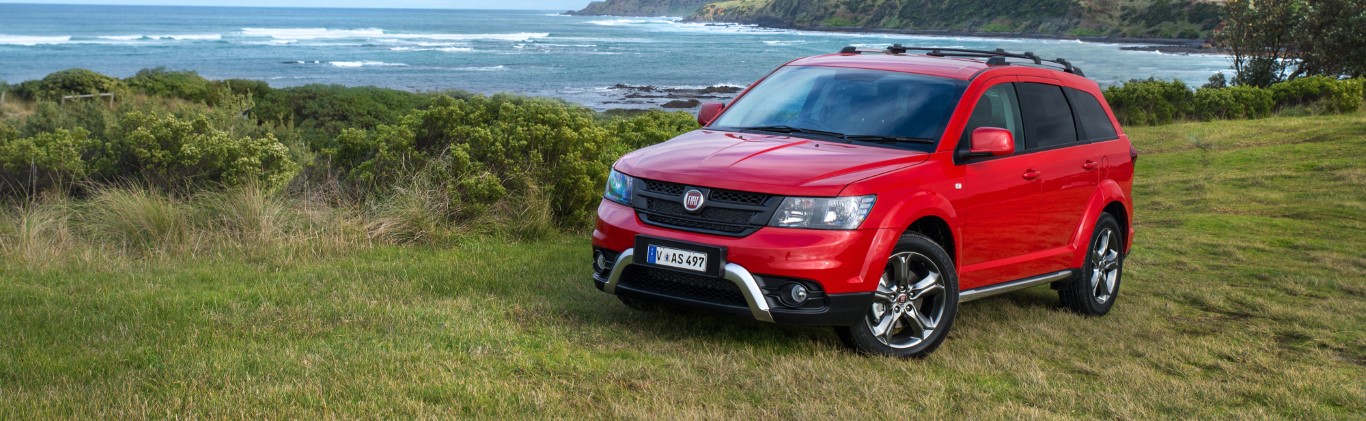
To meet the growing demand for vehicles with a "tougher" look, Fiat launched the Cross version. Distinguishing itself by bumpers with platinum-tone inserts, protective side skirts, and roof bars with an exclusive finish, the Cross suggested greater off-road capability. Frequently equipped with the on-demand AWD system, this version was capable of transferring torque to the rear axle only when sensors detected a loss of traction in the front wheels, optimizing fuel consumption on dry asphalt while ensuring extra safety in mud or snow.
The success of the Fiat Freemont was variable, reaching sales peaks in specific markets and facing logistical and economic challenges in others. The analysis of the numbers reveals the importance of the model for the consolidation of the Fiat brand as a manufacturer capable of operating in higher added value segments.
In Europe, the Freemont was an immediate success, especially in Italy, where traditional families quickly adopted the model as a replacement for classic minivans. In 2011, its first year on the market, the Freemont was already registering significant registration numbers, becoming the best-selling SUV in its category on Italian soil for two consecutive years.
| Year | Sales in Europe (Units) | Source |
|---|---|---|
| 2011 | 13,651 | |
| 2012 | 25,830 | |
| 2013 | 18,826 | |
| 2014 | 17,417 | |
| 2015 | 13,790 |
In Brazil, the Freemont had a "shooting star" trajectory. Its launch in 2011 generated great expectations, and the year 2012 was its peak, with 11,330 units sold. This volume was impressive for a vehicle of its size and price, even threatening established leaders like the Honda CR-V. However, starting in 2013, a combination of external factors began to harm the model: the Brazilian government imposed import quotas for vehicles from Mexico, limiting the quantity Fiat could bring in without paying prohibitive taxes.
With the economic crisis that took hold from 2014 onwards and the appreciation of the dollar, the price of the Freemont rose rapidly, losing its main competitive advantage. Furthermore, FCA's strategy of focusing on the Jeep brand with the launch of the Renegade and, later, the nationalized Compass, sealed the fate of the Freemont, which ceased to be officially imported at the end of 2016.
| Year | Sales in Brazil (Units) | Context |
|---|---|---|
| 2011 | 2,237 | Launch in August |
| 2012 | 11,330 | Sales peak and record |
| 2013 | 3,855 | Start of quota restrictions |
| 2014 | 3,707 | Update to 6 speeds |
| 2015 | 1,435 | Economic crisis and high dollar |
| 2016 | 665 | Stock depletion |
In total, Brazil absorbed approximately 22,500 units of the model during its life cycle, a number that still keeps it as a constant and relevant presence in the used market for large families.
For repair professionals and enthusiasts, the Fiat Freemont is a vehicle that requires attention to specific details of its mixed architecture. Although the basic mechanics are robust, the high weight and electronic sophistication impose a careful maintenance routine.
The MacPherson suspension system at the front and MultiLink at the rear is praised for its comfort, but suffers from the imperfections of Brazilian roads. The weight of almost two tons exerts severe pressure on the control arm bushings, sway bar links, and shock absorber bump stops. It is common for dry knocking noises to appear prematurely, often requiring the replacement of components with reinforced parts or parts of better quality than the factory originals.
The brake calipers are also the subject of frequent observations. Many owners report a characteristic metallic noise that disappears when the brake pedal is lightly pressed, usually caused by play in the guide pins that does not compromise safety but generates acoustic discomfort. Preventive maintenance of the cooling system is vital, given that the 2.4 engine works at high temperatures and any failure in the fan or obstruction in the radiator can lead to rapid overheating of the aluminum block.
The Freemont's CAN-bus network integrates a vast array of comfort and safety modules. Although reliable, dead battery problems can occur if the vehicle is parked for long periods, due to the stand-by consumption of the UConnect systems. Updating GPS maps and center firmware is a recurring task that many owners seek out on forums and specialized workshops to keep navigation functions operational in the face of changes to urban roads.
The Fiat Freemont ended its trajectory as a symbol of transition. It proved that collaboration between brands from cultures as different as the Italian and American could produce a balanced vehicle, capable of offering the versatility of a minivan with the visual appeal of an SUV. In Brazil, it filled a space that today is occupied by much more expensive seven-seater SUVs, remaining one of the most rational options in the secondary market for those who need real space for seven passengers without giving up modern safety and comfort items.
The legacy of the Freemont lives on in the structure of Stellantis, where the practice of sharing platforms and technologies has become the industry standard. The model demonstrated that Fiat could compete in higher segments and that European dynamic refinement could transform a vehicle of American origin into something truly global. For owners, the Freemont remains a "safe haven" of comfort and space, representing an era where family functionality did not have to be sacrificed in the name of ephemeral style.
Images of the Fiat Freemont