
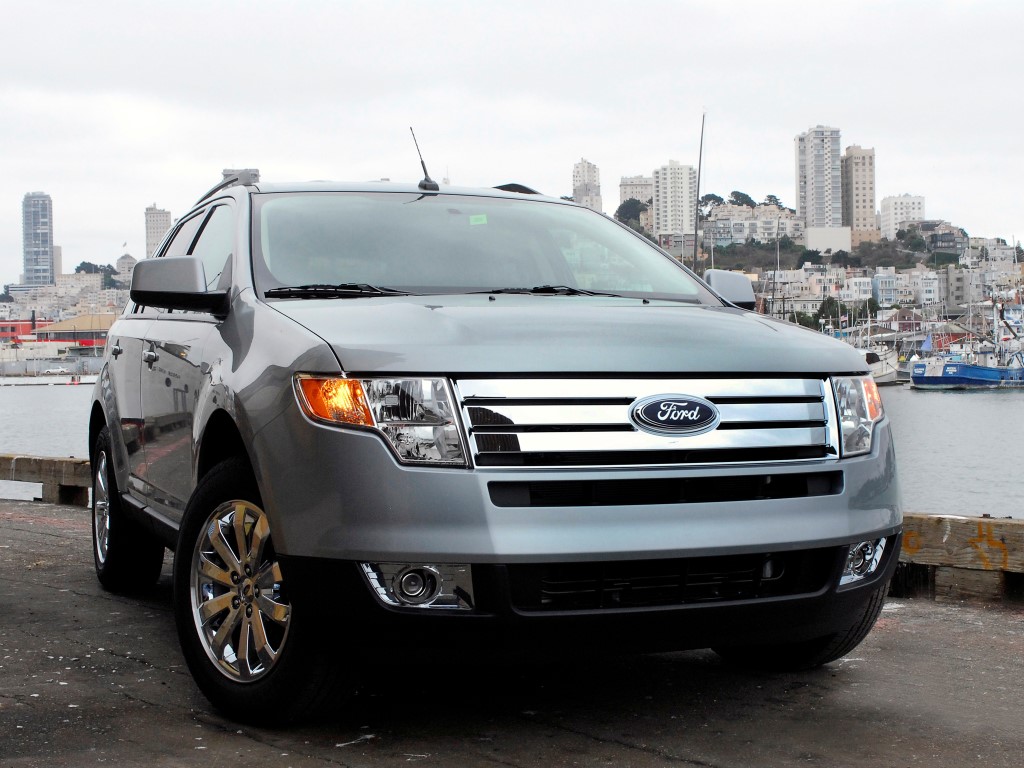
1st Generation
(2007 - 2010)
3.5 V6 24V
269 cv
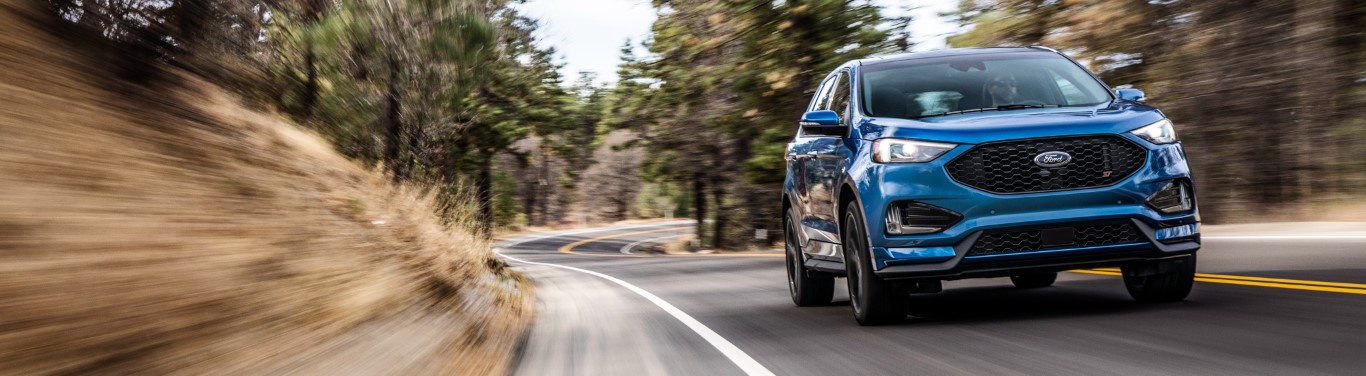
Technical specifications, versions, and history for the Ford Edge.
Select a generation to see available versions
(2007 - 2010)
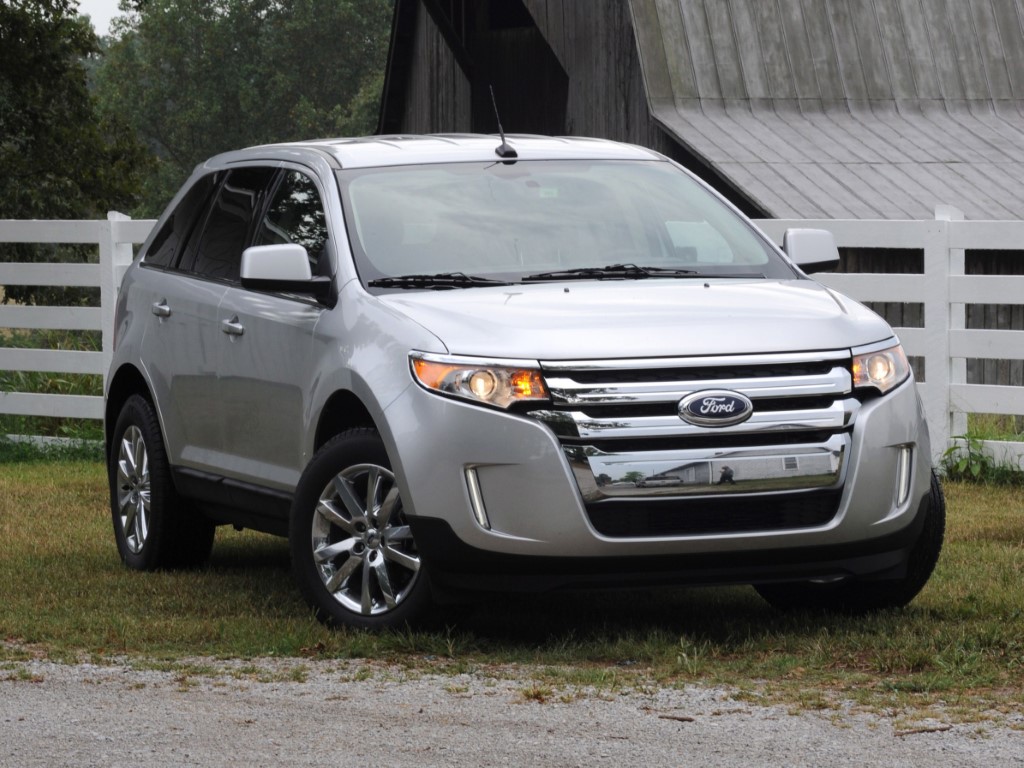
(2011 - 2014)
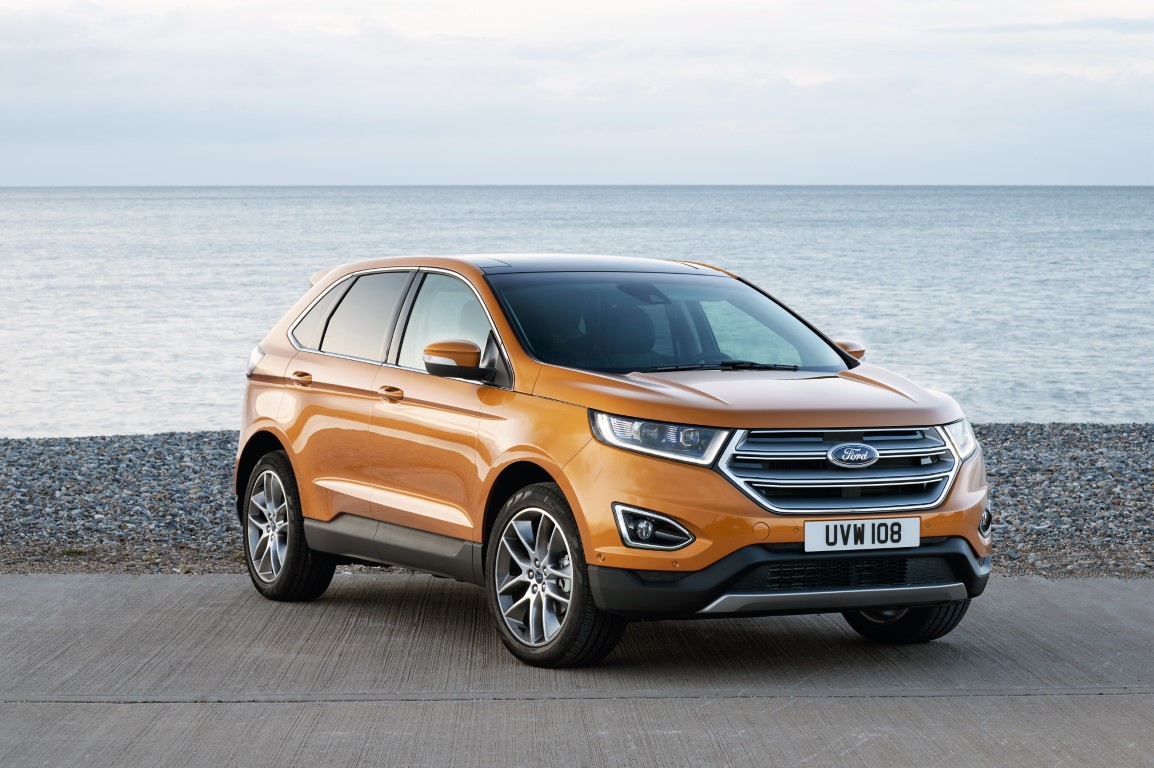
(2015 - 2018)
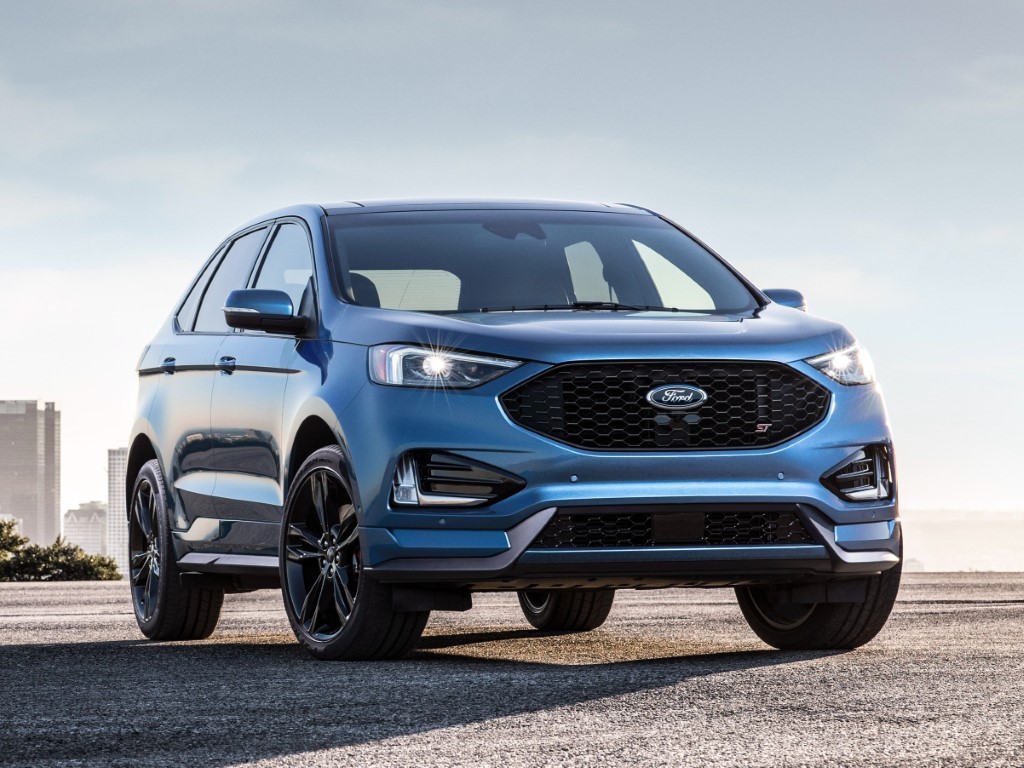
(2019 - 2024)
The history of the Ford Edge is a testament to the transformation of the automotive industry in the early 21st century, marking the moment when the Ford Motor Company identified the need for a vehicle that bridged the gap between traditional, truck-chassis-based SUVs and passenger sedans. Officially launched at the Detroit Auto Show in 2006 and hitting the market as a 2007 model, the Edge was conceived as a mid-size crossover (D-segment) with a unibody structure, prioritizing dynamic comfort and urban sophistication over extreme off-road capabilities. Over nearly two decades, the model evolved through two distinct global generations and a third iteration exclusive to the Chinese market, becoming a technological pillar for the brand in terms of connectivity and active safety.
The development of the first-generation Ford Edge, under project code U387, occurred during a period of intense collaboration between Ford and Mazda. The vehicle utilized the Ford CD3 platform, which also served as the basis for the Mazda 6, the Ford Fusion, and the luxurious Lincoln MKX. This architecture allowed for the implementation of an independent rear suspension and driving dynamics much more refined than those of the Ford Explorer of the time, attracting consumers seeking the elevated driving position of an SUV, but without the mechanical harshness of commercial vehicles.
In its debut, the Edge featured an aesthetic marked by the three-bar chrome front grille, a design element that became Ford's visual signature in North America. The interior was designed to accommodate five occupants with a generous level of space, standing out for the modularity of the rear seats and the optional panoramic sunroof, marketed as the "Vista Roof".
On the mechanical side, Ford opted for a single, robust engine for the launch: the 3.5 L Duratec V6. This powertrain was an entirely new unit at the time, built in aluminum and equipped with technologies aimed at balancing low-end torque and energy efficiency. It was mated to a six-speed automatic transmission (6F50), developed jointly with General Motors.
| Technical Specification (2007-2010) | Detail |
|---|---|
| Platform | Ford CD3 |
| Engine | 3.5L Duratec V6 |
| Power | 265 hp (269 PS) @ 6,250 rpm |
| Torque | 339 Nm (250 lb-ft) @ 4,500 rpm |
| Transmission | 6-speed Automatic (6F50) |
| Layout | Transverse engine; FWD or AWD |
In 2009, Ford perceived a demand for a more aggressive variant, launching the Edge Sport. Initially, the Sport package focused on aesthetic and dynamic enhancements, including side skirts, 20-inch aluminum wheels (with a 22-inch option for the first time in the segment), and a stiffer suspension tuning. In the same year, safety technologies such as blind-spot monitoring and Ford's post-crash alert system became standard equipment, reinforcing the Edge's image as a safe family vehicle.
The year 2011 marked the first major renewal of the Edge, revealed at the 2010 Chicago Auto Show. The external changes were profound, with an imposing new front grille and redesigned headlights with vertical LED daytime running lights on higher trims. However, the most radical evolution occurred inside and under the hood. The dashboard was completely redone to integrate the MyFord Touch system, which used 4.2-inch LCD screens in the instrument cluster and an 8-inch touchscreen on the center console, eliminating many physical buttons in favor of capacitive controls.
The engine range was significantly expanded to meet different consumption and performance needs:
| Engine (2011 Facelift) | Power | Torque | Primary Application |
|---|---|---|---|
| 2.0L EcoBoost Turbo I4 | 240 hp | 366 Nm (270 lb-ft) | SE, SEL, Limited |
| 3.5L Duratec Ti-VCT V6 | 285 hp | 343 Nm (253 lb-ft) | Standard on all trims |
| 3.7L Duratec Ti-VCT V6 | 305 hp | 380 Nm (280 lb-ft) | Exclusive to Sport version |
During this period, the Edge consolidated itself as a global commercial success, surpassing the milestone of 1 million units produced in 2013, which motivated Ford to plan a truly global second generation.
Launched in 2015, the second generation of the Ford Edge was built on the global CD4 platform, the same one used by the Ford Fusion sedan and the Lincoln Nautilus. This platform change was crucial, as it allowed the vehicle to be marketed for the first time in the European market and the Asia-Pacific region with greater competitiveness, offering a more rigid structure and greater acoustic insulation.
The design of the second generation adopted more sculpted and athletic lines. The front now featured an integrated hexagonal grille, and the rear received a horizontal LED light bar that connected the taillights, conferring a technological and modern look. The wheelbase was expanded to 112.2 inches (2,850 mm), resulting in a direct gain in knee room for rear passengers and greater cargo capacity.
Ford introduced unprecedented technologies in the 2015 model, such as adaptive steering, which changes the steering ratio depending on speed to facilitate parking maneuvers and increase stability on highways. Furthermore, passive safety was reinforced with the introduction of inflatable rear seat belts, an innovation aimed at protecting children and the elderly in frontal collisions.
At the launch of the second generation, the Edge offered three gasoline engine options in North America, all initially mated to a six-speed automatic transmission:
In Europe, the model was launched with 2.0L TDCi diesel options of 180 hp (single turbo) and 210 hp (biturbo), frequently combined with standard intelligent AWD to compete in the premium segment against rivals like the Audi Q5 and BMW X3.
The mid-cycle renewal of the second generation, presented in 2018 for the 2019 model year, brought the most radical change in the vehicle's identity. Ford discontinued the Sport version and replaced it with the Edge ST, the first SUV developed by the Ford Performance division. The 2.7L V6 Biturbo engine was recalibrated to produce 335 hp and 515 Nm (380 lb-ft) of torque, accompanied by a track-tuned suspension and high-performance brakes.
Technically, the entire 2019 lineup received a new eight-speed automatic transmission (8F35), operated by a rotary selector (E-Shifter) on the center console, replacing the traditional lever. The naturally aspirated 3.5L V6 engine was removed from the catalog in most markets, consolidating the total transition to EcoBoost technology.
| Attribute | Pre-facelift (2015-2018) | Post-facelift (2019-2024) |
|---|---|---|
| Gearbox | 6-speed Automatic | 8-speed Automatic |
| Gear Selector | Physical lever | Electronic rotary selector |
| Top Trim | Sport (315 hp) | ST (335 hp) |
| Standard Safety | Airbags and ABS | Co-Pilot360 Package |
In the final years of the second generation's life in North America, Ford focused on keeping the model technologically relevant. In 2021, the Edge received a massive update to the infotainment system, adopting a 12-inch vertical screen with the SYNC 4A system on all versions. This system brought wireless connectivity for Apple CarPlay and Android Auto, as well as remote over-the-air updates via the cloud.
In 2022, as part of a production rationalization strategy, Ford made all-wheel drive (AWD) standard on all Edge models sold in the US and Canada, eliminating the front-wheel-drive variants. Production officially ended at the Oakville plant in Canada on April 26, 2024, so that the factory could be converted for the production of next-generation electric vehicles.
Brazil had a long-standing relationship with the Ford Edge, where it was positioned as a niche product, serving as a showcase for the best of Ford's North American engineering. Imported from Canada, the model faced currency fluctuations and changes in import tax policy, but maintained a loyal customer base due to its superior comfort and performance.
The Edge debuted in Brazil in 2008 in the SEL version, equipped with the 269 hp 3.5L V6 engine. Its reception was excellent, as it filled a gap left by the Ford Explorer and offered a design that still looked futuristic to the national market. In 2011, with the facelift, Ford introduced the Limited version, which featured the panoramic sunroof and the MyFord Touch system, items that became objects of desire.
The year 2012 represented the Edge's commercial peak in Brazil, with a record 3,828 registrations. This volume was driven by the stability of the exchange rate at the time and the perception of the vehicle as a viable and more equipped alternative to traditional luxury brand SUVs.
The second generation arrived in Brazil in 2016, but with a higher price positioning strategy. Unlike the US, where the EcoBoost engine was the protagonist, the Brazilian Edge initially maintained the naturally aspirated 3.5L V6 engine (284 hp), focusing on smoothness and reliability perceived by the local consumer.
However, sales began to decline due to the significant rise in the dollar and the arrival of competitors like the Volvo XC60 and the new Jeep Grand Cherokee. To try to revitalize the model's image, in 2019, Ford Brazil began importing exclusively the Edge ST version. With 335 hp and a complete technological package (including Co-Pilot360), the Edge ST became a halo car, but with sales restricted to a few units per month.
The trajectory of the Ford Edge in Brazil officially ended in 2021. The announcement of the closure of Ford's factories in Brazil and the brand's new global directive to focus on models like the Bronco Sport, Territory, and Ranger culminated in the removal of the Edge from the official website. Over 12 years, approximately 15,698 units of the Edge were sold in Brazil, with the vast majority (14,639 units) belonging to the first generation.
| Period | Available Versions in Brazil | Predominant Engine |
|---|---|---|
| 2008-2010 | SEL | 3.5L V6 (269 hp) |
| 2011-2015 | SEL, Limited | 3.5L V6 (289 hp) |
| 2016-2018 | Titanium | 3.5L V6 (284 hp) |
| 2019-2021 | ST | 2.7L V6 Biturbo (335 hp) |
The technical analysis of the Ford Edge reveals a constant commitment to Ford's technological vanguard, often debuting components that would only reach other models years later.
The transmission was one of the points of greatest evolution. While the initial six-speed units were focused on durability and smooth shifts, the eight-speed gearbox (8F35) introduced in 2019 brought a much more sophisticated control logic. With closer gear ratios, it allowed the EcoBoost engine to operate in its maximum torque range for longer, resulting in an acceleration from 0 to 100 km/h in about 6.6 seconds in the ST version, an impressive figure for a vehicle weighing over two tons.
The Edge closely followed the four generations of Ford's connectivity system, each representing a leap in the human-machine interface:
The Edge was one of the first Ford vehicles to popularize the Co-Pilot360 package, a suite of driver assistance technologies that raised the segment's safety standard. Features include:
Although the Ford Edge has been discontinued in North America and Brazil, the name continues to expand in the Chinese market through the Changan Ford joint venture. The new Ford Edge L, launched in 2023, represents the third generation of the model, but with a concept adapted to the demands of that market for large vehicles and electrified propulsion.
The Edge L is significantly larger than its global predecessor. At 5 meters long and with a wheelbase of 2.95 meters, it offers three rows of seats in a 2+2+3 configuration. This shift in positioning puts it almost on par in size with the Ford Explorer, but with a unibody platform (Ford C2) that prioritizes comfort and interior space over heavy towing capabilities.
The big mechanical news for the Edge L is its E-Hybrid system. Combining a 2.0L EcoBoost engine with a non-plug-in full hybrid (HEV) system, the vehicle delivers a combined power of 271 hp. The highlight is the range: Ford claims the model can travel up to 1,188 km (738 miles) on a single tank of gas, outperforming many traditional hybrid competitors.
Internally, the Edge L breaks with traditional design. The dashboard features a 27-inch panoramic screen that extends from the center console to the passenger's front, with 4K resolution. This interface is complemented by a high-fidelity Bang & Olufsen audio system and top-level autonomous driving features specific to Chinese highways.
| Characteristic | Ford Edge (US/Brazil - Old) | Ford Edge L (China - New) |
|---|---|---|
| Length | 4.79 m | 5.00 m |
| Wheelbase | 2.85 m | 2.95 m |
| Seats | 5 passengers | 7 passengers |
| Main Engine | 2.0 Turbo or 2.7 V6 | 2.0 Turbo Hybrid |
| Dashboard Screen | 12-inch vertical | 27-inch panoramic |
The industrial trajectory of the Ford Edge is marked by the concentration of production in Canada and its later expansion in China. The Oakville Assembly plant in Ontario was the productive heart of the model for the West, operating in constant shifts to supply North American demand and global exports.
Since its launch, the Edge maintained a robust sales performance, especially in the United States, where it consistently surpassed the 100,000 annual units mark between 2010 and 2020. Globally, total Edge production exceeded 2 million units, consolidating it as one of the most successful crossovers in Ford's history.
In the US market, detailed sales statistics reflect the model's acceptance across generations:
| Calendar Year | US Sales (Units) | Relevant Event |
|---|---|---|
| 2007 | 130,125 | First full year on the market |
| 2009 | 88,548 | Impact of the global financial crisis |
| 2012 | 127,969 | Introduction of the EcoBoost engine |
| 2017 | 142,603 | 2nd generation sales record |
| 2021 | 85,225 | Global semiconductor shortage |
| 2023 | 106,098 | Recovery in the last full year of sales |
In China, production by Changan Ford in Hangzhou also recorded significant numbers, especially after 2015, when the second generation was introduced to the local market with a long-wheelbase variant exclusive to the region. The sales peak in China occurred in 2016, with 123,690 units delivered to consumers.
The end of Edge production in North America in April 2024 was not caused by a lack of demand, but by a structural change in Ford's strategy. The Oakville plant is undergoing a $1.8 billion restructuring to become a battery electric vehicle (BEV) production hub. This move indicates that, while the Edge as we know it has come to an end in the West, its legacy of comfort and versatility will serve as the foundation for the brand's next generation of electric SUVs.
Like any model with a long time on the market, the Ford Edge went through engineering challenges that were solved through updates. Experts point out that the second generation (2015-2024) is considerably more reliable than the first, especially after the adoption of the CD4 platform.
A historically documented point of attention involves certain early variants of the 2.0-liter and 2.7-liter EcoBoost engines, which presented coolant intrusion problems into the cylinders due to flaws in the cylinder head gasket design in some production batches. However, models produced after 2019, equipped with the new versions of these engines and the eight-speed transmission, are considered exemplary in high durability and low preventive maintenance cost for the category. The average annual repair cost for a Ford Edge in the United States is approximately $492, which is below the average for the mid-size SUV category.
The Ford Edge ends its historical cycle in the West as a pioneer that helped define what the modern consumer expects from a luxury crossover: a balanced mix of power, on-board silence, and intuitive technology. It was the vehicle that massively introduced EcoBoost turbocharged engines and Co-Pilot360 driving assistances into Ford's SUV lineup, technologies that are standard across the industry today.
Although its production in North America has ceased to make way for electric vehicles, and its presence in Brazil ended at a time of brand transition, the Edge remains a milestone of technical excellence. In China, its evolution into the Edge L demonstrates that the original concept of a "smart and creative" vehicle still holds enormous appeal in markets that value generous space and technological sophistication. The Edge was not just a replacement for old sedans or SUVs; it was the architect of a new segment that now dominates the streets all over the world.