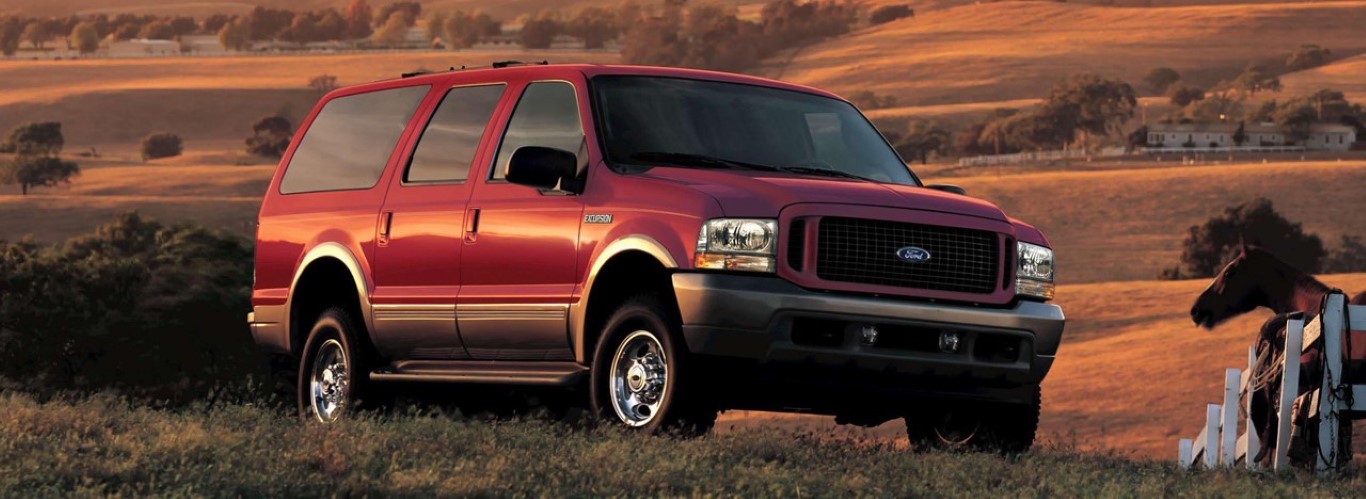
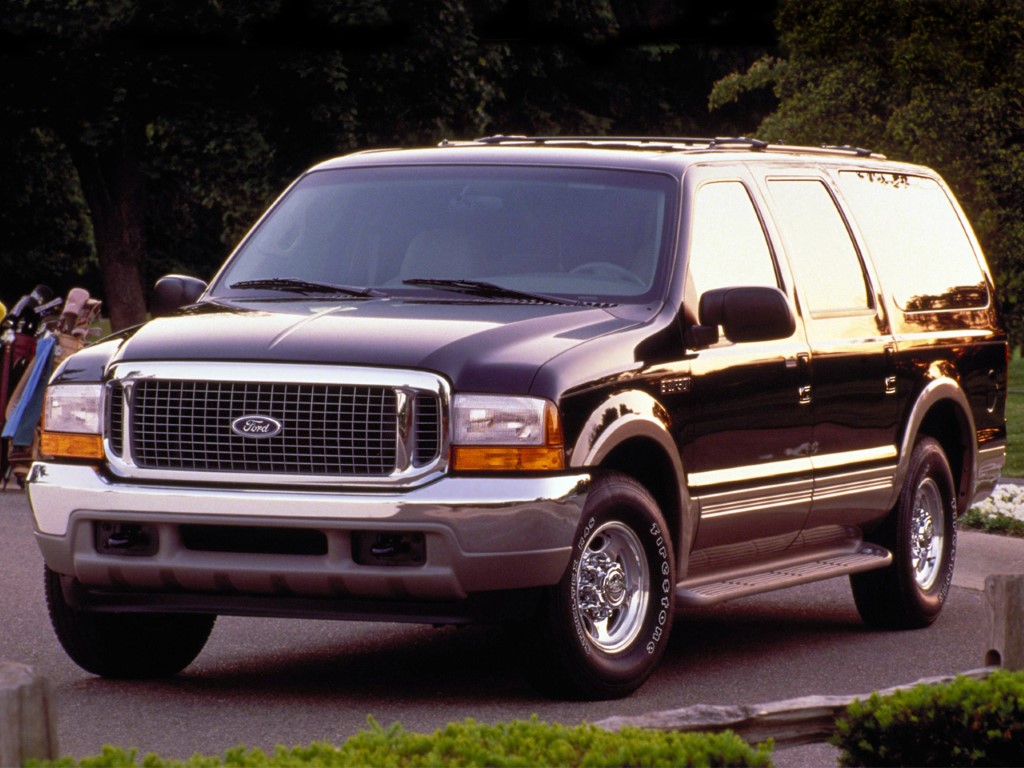
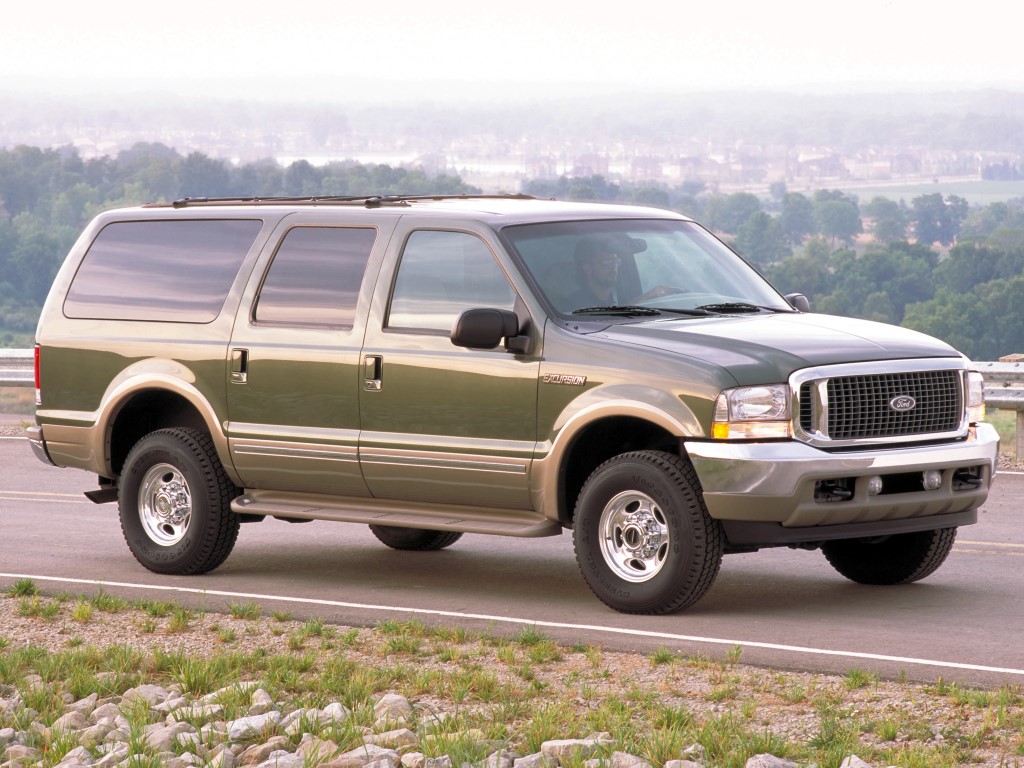
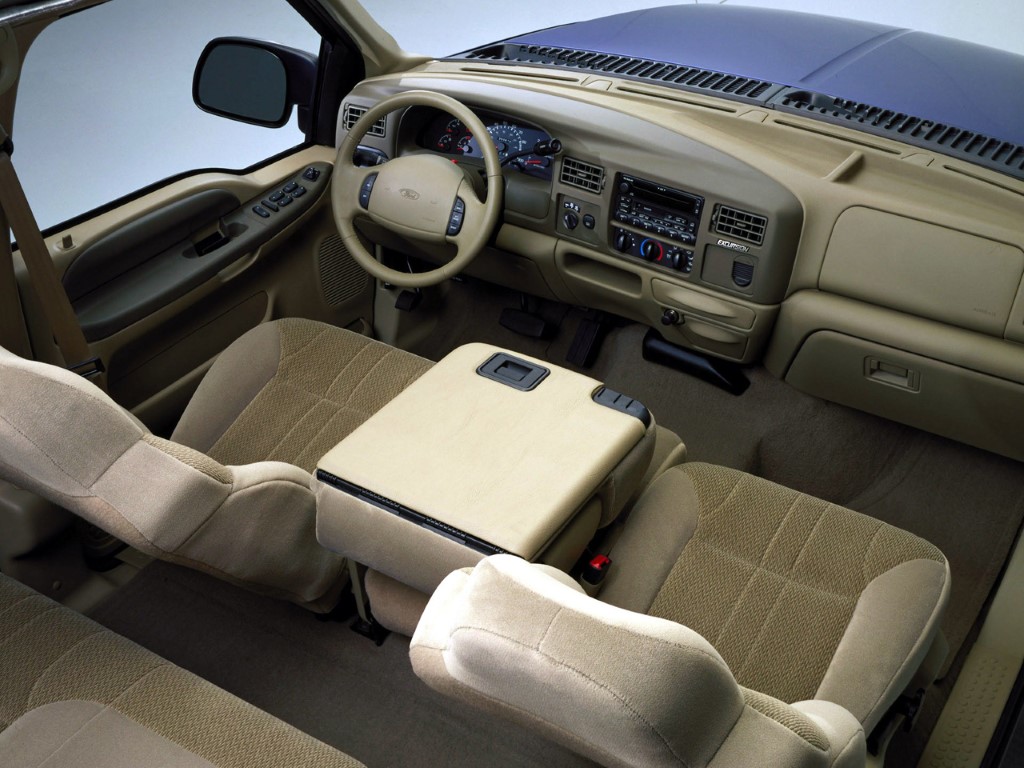
Unlike other models that go through multiple generations, the Ford Excursion had a single technical
generation but received significant incremental updates each model year (MY).
The Launch: 2000 Model
The Excursion debuted in XLT and Limited trims. The XLT model was the standard of comfort, while the
Limited brought leather seats, faux wood trim, and polished aluminum wheels. The vehicle was immediately
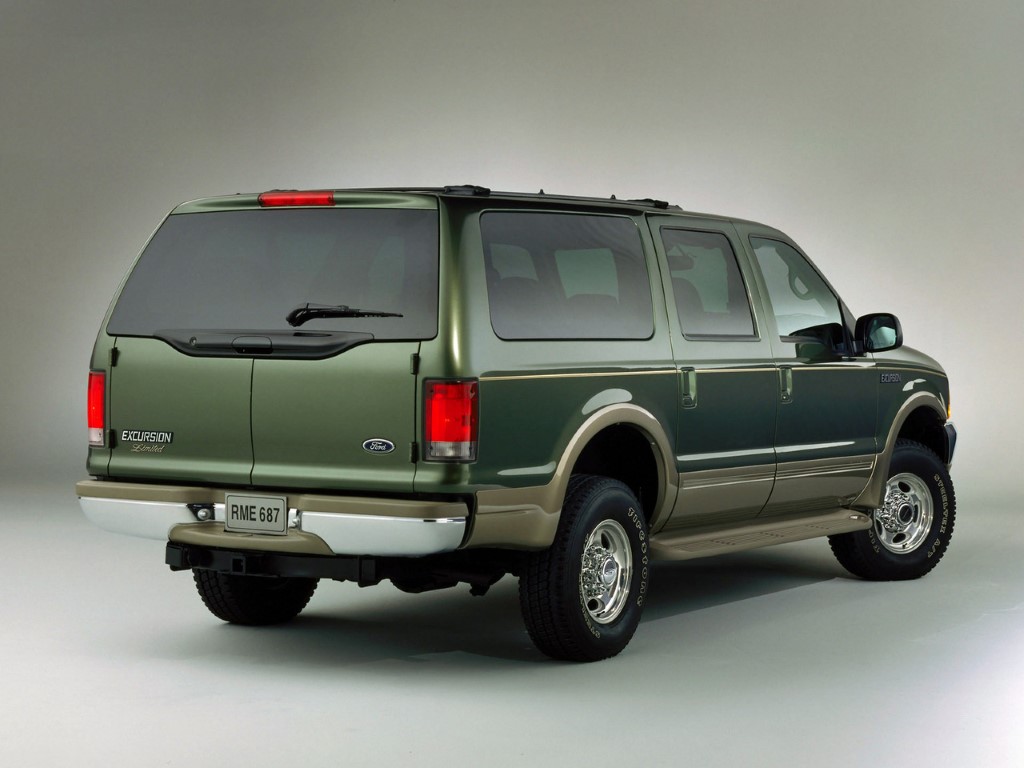
noted for its "Tri-Panel" rear door system, consisting of a full-width upper window that opened upwards and
two lower "Dutch" style doors that opened outward.
Initial Refinements: 2001 and 2002 Models
In 2001, Ford focused on entertainment, introducing an optional rear video system based on VHS tapes,
which would later be updated to DVD. In 2002, the instrument panel received improvements, including a
digital odometer and the addition of a transmission temperature gauge on all models, reflecting the frequent
use of the vehicle for towing. The Limited Ultimate version was introduced as the new top-of-the-line,
offering power-adjustable pedals with memory and heated seats.
The Great Transition: 2003 Model
This was the most important year for the Excursion's mechanical evolution. Ford launched the "Eddie
Bauer" edition, characterized by two-tone exterior paint (usually with the lower portion in Arizona Beige)
and exclusive beige leather interior. Mid-production year, the 7.3L diesel engine was discontinued in favor
of the new 6.0L Power Stroke, accompanied by the five-speed TorqShift transmission.
Consolidation: 2004 Model
For 2004, the lineup was expanded with the XLS trim level, which became the new entry base, while the
XLT moved up to the mid-level. New wheel and color options were added, and the 6.0L diesel engine received
software updates to try to mitigate the reliability issues reported in the 2003 models.
The Final Facelift: 2005 Model
In its final year of production in the United States, the Excursion received its most drastic visual
change. The front was completely revamped to align the SUV with the Super Duty pickups of that year. The old
"eggcrate" grille was replaced by a more imposing and modern horizontal bar grille. The front bumper was
also redesigned, and the headlights gained a new internal arrangement, although they kept their basic shape.
Mechanically, the gasoline engines remained with the two-valve-per-cylinder architecture, unlike the F-250
pickup which was already receiving the three-valve engines.