
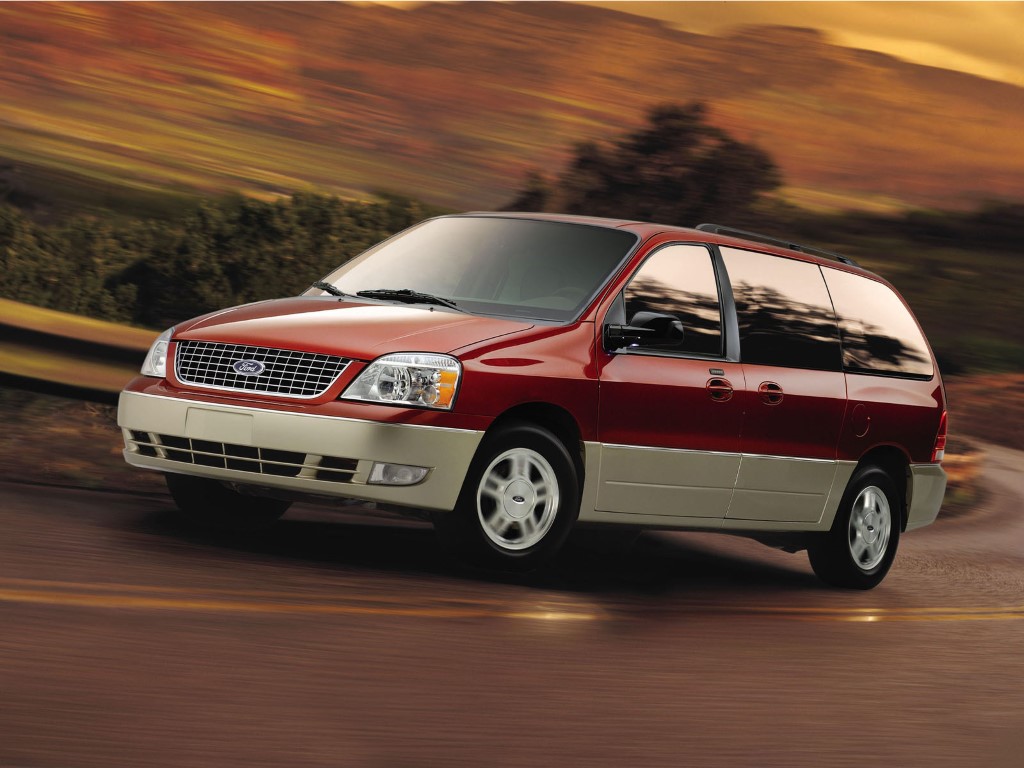
1st Generation
(2004 - 2006)
4.2 V6 12V
204 cv
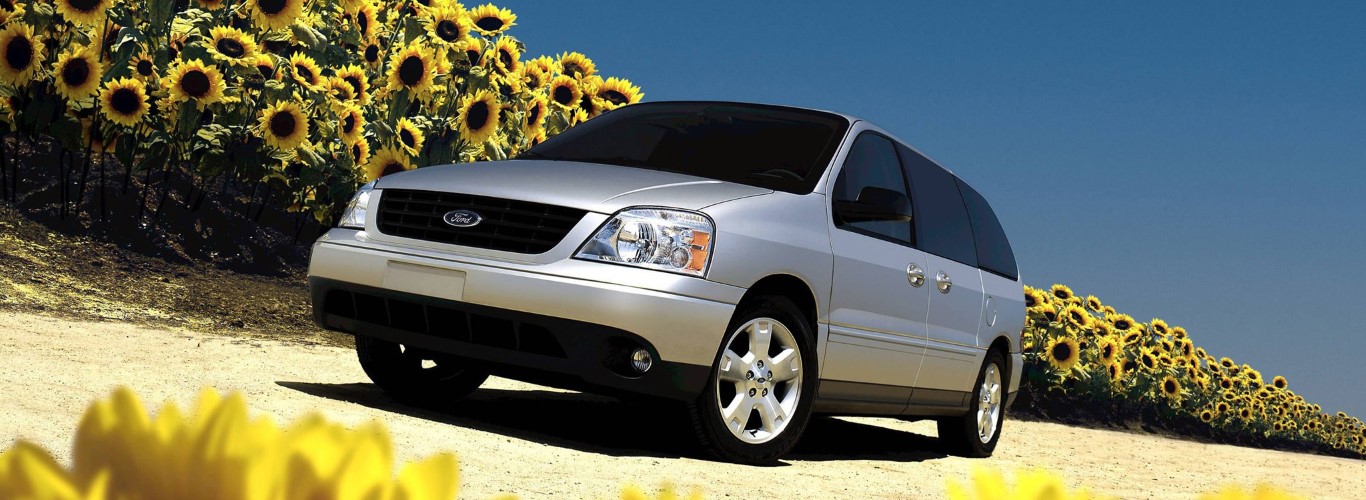
Technical specifications, versions, and history for the Ford Freestar.
Select a generation to see available versions
(2004 - 2006)
Select a powertrain to view full technical specifications
The trajectory of the Ford Freestar in the North American automotive market represents a critical transition moment for the Ford Motor Company. Originally launched as the direct successor to the Ford Windstar, the Freestar was not just a name change, but an ambitious attempt to regain relevance in the minivan segment, which was being rapidly dominated by foreign rivals and the growing popularity of sport utility vehicles (SUVs). This report details the technical evolution, production milestones, and strategic nuances that defined this model between 2004 and 2007.
The Ford Freestar emerged at a time when Ford was seeking to revitalize its brand image through a new naming strategy. The decision to rename the Windstar to Freestar in 2004 was part of a global initiative by the company to have all its passenger models start with the letter "F", resulting in contemporaries like the Ford Five Hundred, the Ford Fusion, and the Ford Freestyle. However, behind the name change, there was a substantial engineering effort.
Ford invested approximately 600 million dollars in the Oakville Assembly plant in Ontario, Canada, to prepare the assembly lines for the Freestar. Although it shared the V (MV1) platform with the previous Windstar, the Freestar was promoted as a deeply redesigned vehicle. The main focus of this redesign was the durability of the transmission and powertrain, areas that had presented critical failures in past generations.
Historically, the Freestar is considered the third generation of Ford's minivan lineage, succeeding the Aerostar (rear-wheel drive) and the Windstar (front-wheel drive). It was designed to be the pinnacle of family comfort, focusing on safety and internal versatility to compete directly with models like the Honda Odyssey, Toyota Sienna, and Chrysler's minivans.
The Ford Freestar utilized a unibody body construction, designed to offer a smooth, sedan-like ride, despite its cargo and passenger capacity. Structural rigidity was one of the pillars of development, aiming to reduce noise, vibration, and harshness (NVH) that were common in large-volume vehicles.
The front suspension consisted of independent MacPherson struts, which were updated with new hydraulic isolators on the lower control arms, recalibrated springs, and a new stabilizer bar to improve cornering stability. At the rear, Ford opted for a torsion beam axle with a Panhard rod, a configuration that allowed for a low floor to accommodate the third-row seat that folded completely flat into the floor.
The steering system was tuned to offer more on-center feel, making it easier to maintain trajectory on highways, a feature valued by families on long trips. The turning radius was kept at 39.5 feet, allowing acceptable maneuverability for a vehicle over five meters long.
One of the most significant improvements over the Windstar was the standardization of four-wheel ventilated disc brakes for all Freestar models. This system was complemented by:
| Physical Specification | Measurement (Inches/Pounds) |
|---|---|
| Wheelbase | 120.8 in |
| Overall Length | 201.0 in |
| Width (without mirrors) | 76.4 in (2004-2006) / 76.6 in (2006-2007) |
| Height (with roof rack) | 70.6 in to 70.8 in |
| Curb Weight | 4,275 lbs to 4,406 lbs |
| Fuel Tank Capacity | 26 gallons |
Sources:
The Ford Freestar was equipped with two V6 engine options from the Essex family, both designed to offer substantial torque at low revs, which is crucial for a vehicle that can carry up to seven passengers and luggage.
This engine was the entry-level powertrain for the United States market. Derived from the engine used in the Ford Mustang of the time, it focused on cost efficiency and durability.
The 4.2-liter engine was optional in the US and standard in the Canadian market and on exports. It was one of the largest engines ever offered in a minivan, securing the title of "best-in-class torque" at the time of launch.
Both engines were mated to an electronically controlled 4-speed automatic transmission. For the Freestar, Ford made deep updates to this gearbox, including beefed-up drive axles and larger wheel bearings to solve the reliability issues that plagued earlier Windstar models. The transmission hydraulics were redesigned to allow for faster and smoother gear changes, improving the driving experience.
Although the large displacement engines offered good torque, fuel economy was a challenge for the Freestar due to its high weight and minivan aerodynamics.
| Engine / Configuration | City (MPG) | Highway (MPG) | Combined (MPG) |
|---|---|---|---|
| 3.9L V6 (Passenger) | 17 | 23 | 19 |
| 3.9L V6 (Cargo) | 18 | 24 | 20 |
| 4.2L V6 (Passenger) | 16 | 23 | 18 |
Sources:
Ford structured the Freestar lineup to cater to everyone from commercial fleets to families seeking luxury. Over the years, equipment packages were adjusted to offer greater value to consumers.
Designed for delivery companies and service providers, this version had only the two front seats. The rear compartment was empty, allowing for the installation of shelves or the transport of large cargo volumes.
The passenger range was diversified to cover different price points:
The Ford Freestar did not undergo a generational change, operating in a single life cycle with gradual annual updates.
Debuted with the five versions mentioned above. The main innovation was the third-row seat that could be folded with just one hand and flipped backwards (tailgate mode), allowing passengers to sit facing out the back of the vehicle when parked.
This year, Ford focused on refining the package offerings. A rear spoiler was added as an option for the SES version to reinforce its sporty image. Safety items like side curtain airbags became more widely promoted as options on lower trims.
To reduce manufacturing complexity and improve customer value, Ford reduced the trim levels from five to three: SE, SEL, and Limited.
The final year of production saw the end of the 3.9L engine, with the 4.2L V6 engine becoming standard for all units sold. Six new exterior colors were introduced to try and maintain interest in the model before its definitive discontinuation.
Ford used the Freestar as a showcase for its safety technologies, seeking to surpass the already solid reputation of the Windstar.
This system was standard and used an intelligent network of sensors to protect the driver and front passenger. It monitored seatbelt usage, seat position, and crash severity to deploy the dual-stage front airbags, minimizing the risk of injuries caused by the airbag itself in minor collisions.
A crucial innovation for the time, this optional side curtain airbag system covered all three rows of seats. Unlike competitors that only protected the first two rows, Ford's Safety Canopy included a rollover sensor that kept the airbags inflated for up to six seconds to protect occupants during multiple impacts or vehicle rotations.
The AdvanceTrac system monitored the vehicle's trajectory and compared it to the driver's intent via steering angle and yaw sensors. If the vehicle began to skid, the system applied the brakes to individual wheels to correct the course. In 2007 models, Panic Brake Assist was added to reduce stopping distances in emergencies.
| Safety Rating (NHTSA/IIHS) | Result |
|---|---|
| Frontal Crash (Passenger) | 5 Stars |
| Frontal Crash (Driver) | 5 Stars |
| Side Impact (Rear with Airbags) | 5 Stars |
| Frontal Offset Impact (IIHS) | "Best Pick" |
Sources:
The interior of the Ford Freestar was designed based on extensive research with families. The instrument panel was completely revamped from the Windstar, adopting a more horizontal and elegant design, with materials that mimicked the finish of luxury sedans in the Limited version.
The vehicle was "full of niches", including a covered compartment on top of the dashboard, cupholders that could accommodate up to 20-ounce bottles in the front doors, and up to nine cupholders scattered throughout the cabin. The rear DVD entertainment system included a retractable LCD screen and allowed rear passengers to listen to different audio from front occupants via headphones.
Production of the Ford Freestar took place entirely at the Oakville plant in Ontario, Canada. Despite Ford's efforts, the Freestar faced a rapidly changing market and aggressive competition.
Although Ford hoped to maintain Windstar volumes, the Freestar saw a steady annual decline in sales as SUVs began to dominate the North American market.
| Calendar Year | Ford Freestar Sales (US) | Mercury Monterey Sales |
|---|---|---|
| 2003 (Launch) | 15,771 | 2,213 |
| 2004 | 100,622 | 17,407 |
| 2005 | 77,585 | 8,166 |
| 2006 | 50,125 | 4,467 |
| 2007 (Inventory Clearance) | 2,390 | 700 |
| Cumulative Total | 246,493 | 32,953 |
Sources:
The total production of approximately 246 thousand units of the Freestar is modest when compared to its predecessor, the Windstar, which sold over 1.7 million units during its life cycle.
Several factors contributed to the discontinuation of the Freestar:
Ford ended Freestar production on December 29, 2006. The decision marked Ford's temporary exit from the traditional minivan market with sliding doors in the United States.
To fill the gap left by the Freestar and the Mercury Monterey, Ford launched the Ford Flex in 2008. The Flex abandoned the classic minivan format in favor of a more modern and square "boxer" design, focused on being a luxury family crossover with three rows of seats, but without the sliding side doors that characterized the Freestar.
Interestingly, the Freestar proved to be a much more reliable vehicle than the Windstar in the long run. In 2009, the 2005 model-year Ford Freestar took second place in J.D. Power's Vehicle Dependability Study, beating the Toyota Sienna and Honda Odyssey in durability after three years of use. This demonstrated that the 600 million dollar investment in improving the powertrain and manufacturing quality was technically successful, even if the market had moved in another commercial direction.
The Ford Freestar represents the final stage of evolution of a concept that Ford helped popularize in the 1990s. It was the result of exhaustive technical refinement, focusing on safety and interior comfort above all. Although its commercial life was short and overshadowed by the rise of SUVs, it left a significant mark as one of the safest family vehicles of its time and as an example of how engineering can reverse historical reliability problems through focused investments in critical components.
Today, the Freestar is seen as a low-cost family transport option in the used market, valued for its ease of maintenance compared to more complex minivans of the same era, and for its extremely versatile interior that allowed transforming the vehicle from a passenger carrier to a cargo van in a matter of minutes. The Freestar was not the technical failure that some suggest, but rather the "swan song" of an architecture that gave way to a new era of crossovers and lifestyle vehicles that now dominate garages around the world.
Images of the Ford Freestar