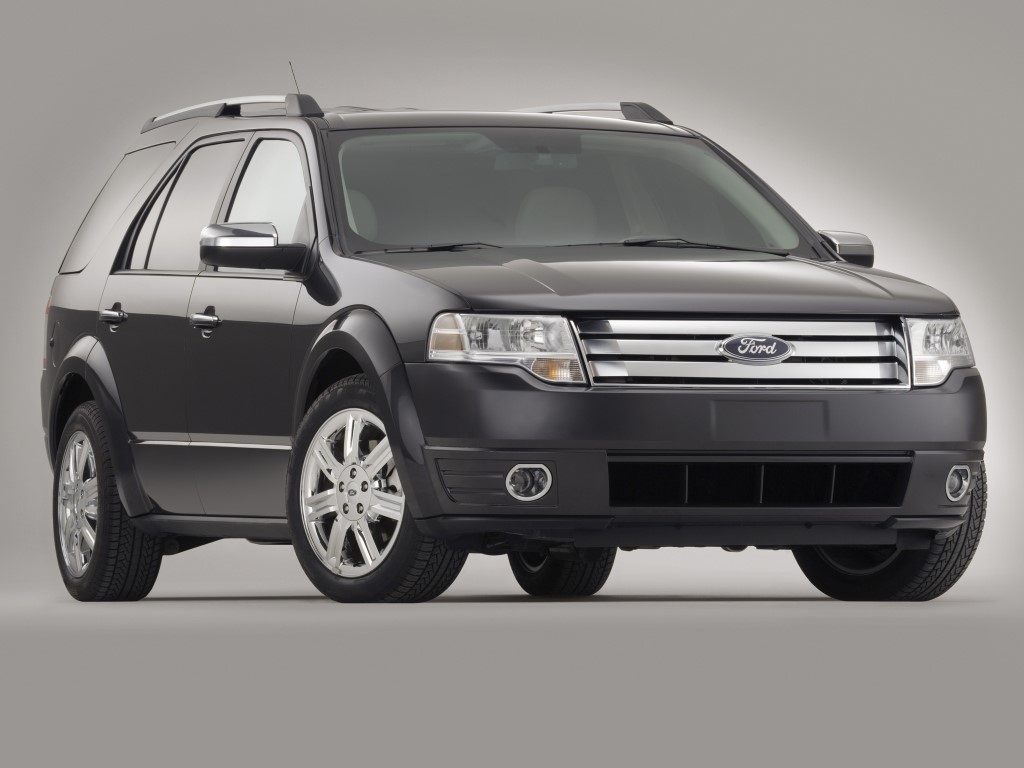
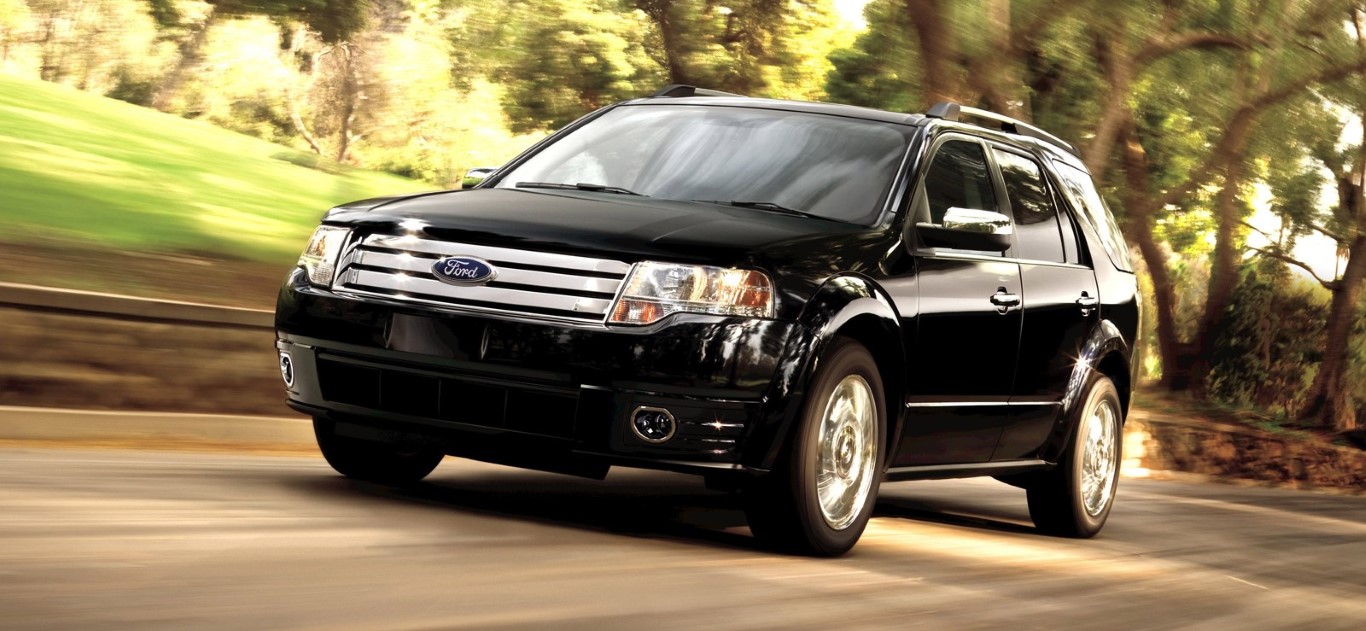
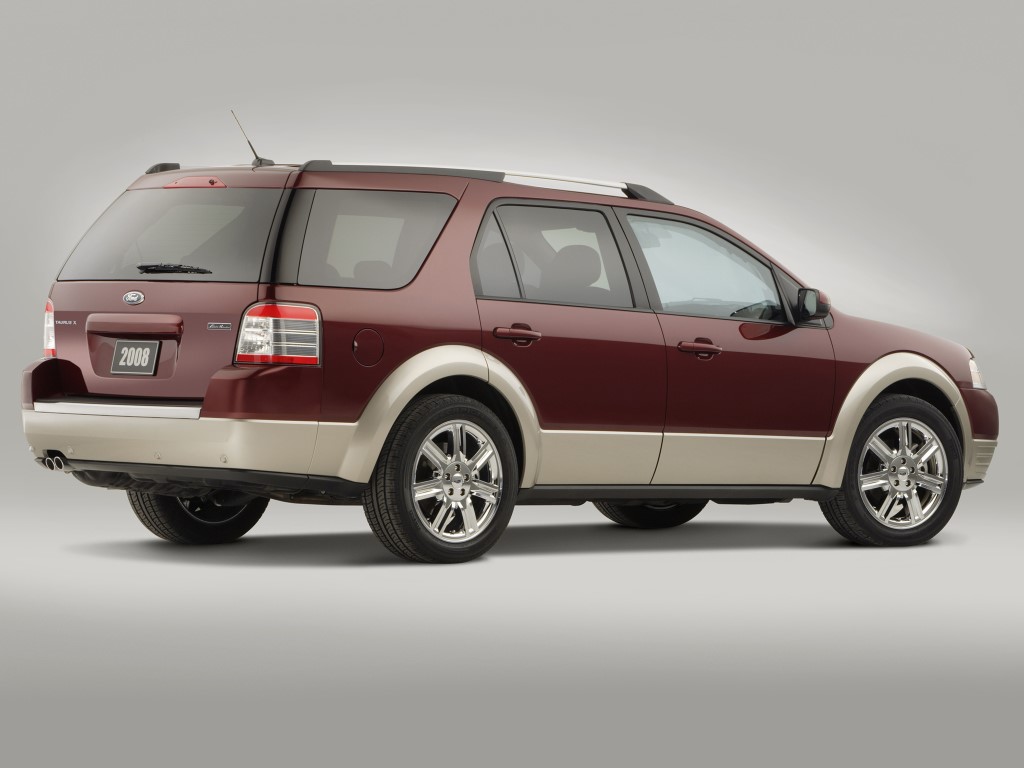
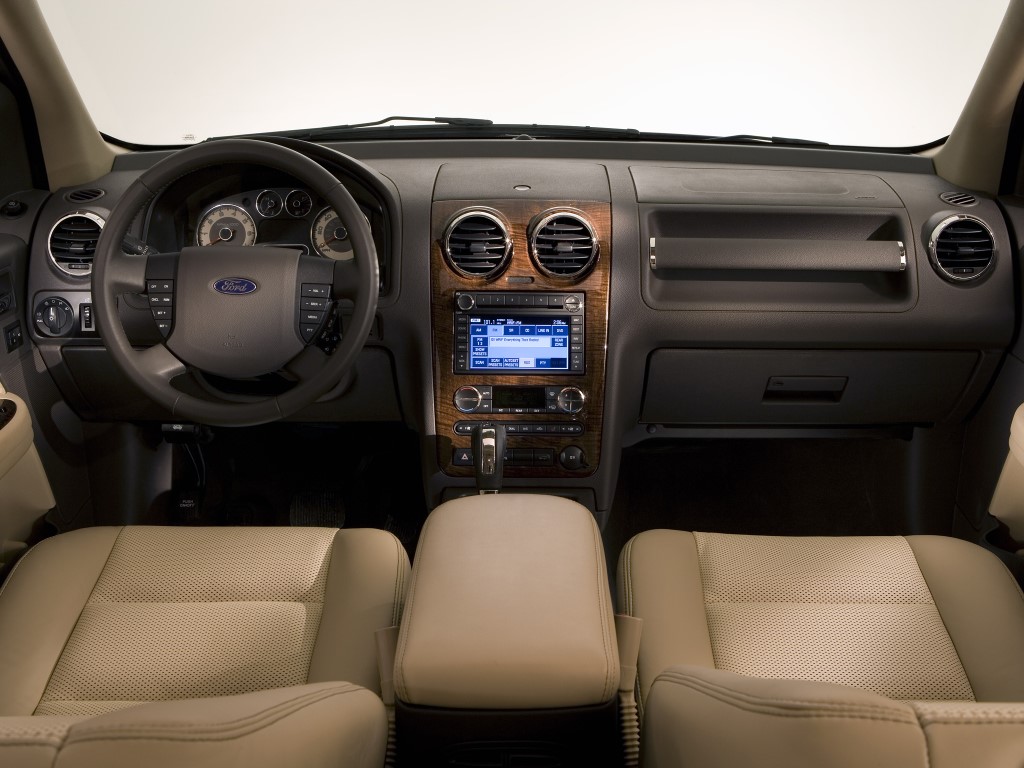
The Ford Taurus X officially debuted as a 2008 model, representing a substantial evolution from the
original Freestyle. Although it maintained the same basic structure and the D3 platform, the facelift was so
comprehensive that Ford promoted it as a new offering in its crossover lineup. The exterior design was
updated to align the vehicle with Ford's new visual identity, characterized by the three-bar chrome front
grille, inspired by the brand's pickup trucks and the Fusion sedan of the time.
Aesthetic Evolution and Exterior Design
The front of the Taurus X was completely redesigned. The thick, chrome three-bar grille gave the
vehicle a more robust and modern appearance, distancing it from the more conservative silhouette of the
Freestyle. The headlights gained a more sculpted design that integrated into the front bumper, while the
rear received revised taillights with more sophisticated finishes.
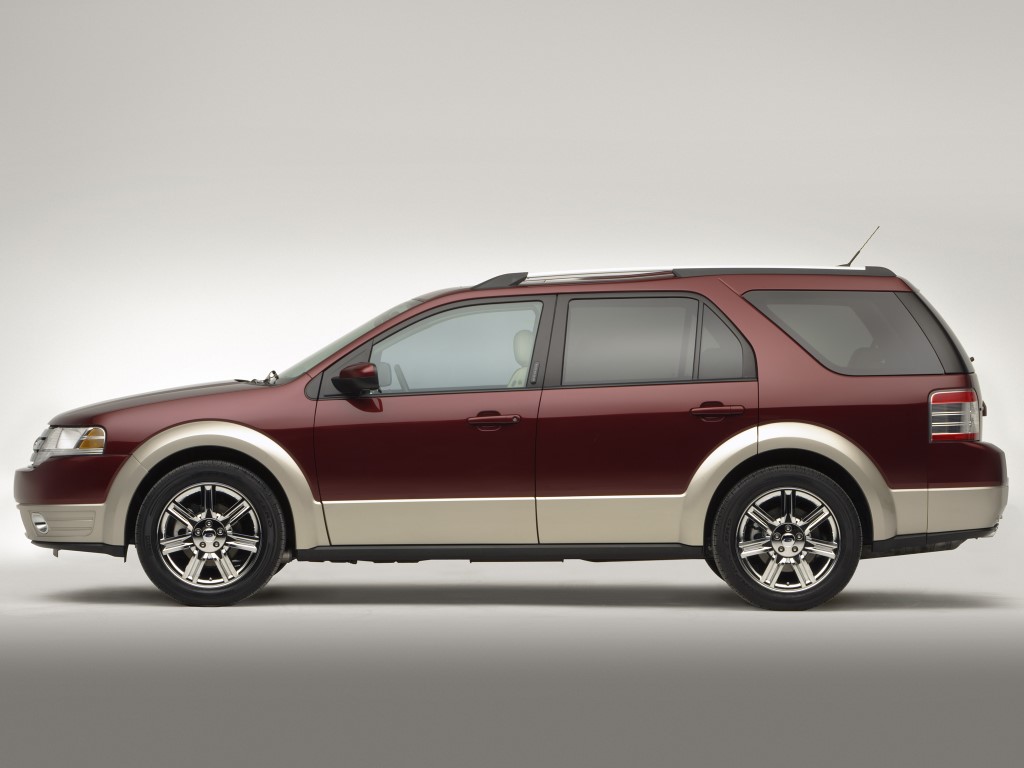
On the sides, the model preserved its "wagon on heels" characteristic, with a ride height higher than
that of a regular sedan but lower than a traditional SUV like the Ford Explorer. This height was
strategically chosen to facilitate access for children and the elderly, a crucial selling point for the
family market the car was aimed at. The use of privacy glass and a roof rack became standard on several
trims, reinforcing the model's practical utility.
| Design Characteristic |
Ford Taurus X Details (2008-2009) |
| Front Grille |
Three-bar horizontal chrome style. |
| Headlights |
Design with bumper cutout and improved lighting. |
| Taillights |
Style inspired by the Ford Fusion and Mercury Sable. |
| Wheels |
17 or 18-inch alloy, depending on the trim. |
| Exhaust Tips |
Chrome tips standard on higher models. |
The Mechanical Leap: Duratec 35 Engine and the New Transmission
The most celebrated change in the Taurus X was the introduction of the 3.5L Duratec 35 V6 engine.
This engine, part of Ford's Cyclone family, replaced the old 3.0L and raised power from 203 to 263
horsepower. More than just the raw increase in power, the new engine offered a much broader and friendlier
torque curve, facilitating passing and highway merging.
Simultaneously, Ford abandoned the Freestyle's CVT transmission in favor of a new six-speed automatic
transmission. This gearbox, developed in partnership with General Motors and known as the 6F, provided more
linear gear changes and eliminated the "rubber band" feel of the previous CVT. The combination of the 3.5L
engine with the six-speed transmission resulted in a drastic performance improvement: 0 to 60 mph
acceleration became significantly faster, and towing capacity was stabilized at approximately 2,000 lbs (907
kg).
| Technical Specification |
Duratec 35 Engine (3.5L V6) |
| Maximum Power |
263 hp @ 6,250 rpm |
| Maximum Torque |
249 lb-ft @ 4,500 rpm |
| Configuration |
60-degree V6, DOHC, 24 valves |
| Fuel System |
Sequential Multiport Electronic Injection |
| Transmission |
6-speed Automatic (6F) |
| Drivetrain Type |
Front-Wheel Drive (FWD) or All-Wheel Drive (AWD) |