
1st Generation
(2008 - 2009)
3.5 V6 24V
267 cv
Technical specifications, versions, and history for the Ford Taurus X.
Select a generation to see available versions
(2008 - 2009)
Select a powertrain to view full technical specifications
The trajectory of the Ford Taurus X represents one of the most dynamic and challenging moments in the recent history of the Ford Motor Company in North America. This vehicle, which occupied a strategic position in the large crossover segment, was not just an isolated model but the result of a profound brand and engineering restructuring that occurred between 2005 and 2009. Understanding the history of the Taurus X requires a detailed analysis that traces back to its direct predecessor, the Ford Freestyle, and extends to the consolidation of Ford's D3 platform, inspired by Volvo's safety engineering. This report details each phase of this evolution, the technical specifications that defined the model, and the market circumstances that led to its emergence and eventual replacement.
To understand the emergence of the Taurus X in 2008, it is imperative to analyze the automotive landscape of the early 2000s. During this period, the American market was witnessing the systematic decline of traditional station wagons and minivans in favor of a new category of vehicles: crossovers. Ford, which had dominated the station wagon market with the original Ford Taurus since the 1980s, realized the need to offer a vehicle that combined the cargo capacity of a wagon, the space of a minivan, and the elevated driving position of an SUV, but without the excessive fuel consumption and heavy handling of truck-based utility vehicles.
In 2005, Ford launched the Ford Freestyle, built on the D3 platform, developed from Volvo's P2 architecture. The Freestyle was an attempt to replace the Taurus wagon with a "high-roof" design and three rows of seats. However, the Freestyle suffered from a perceived lack of power, utilizing a 3.0-liter Duratec V6 engine with 203 horsepower, mated to a continuously variable transmission (CVT). Although innovative for its time, the mechanical setup was considered apathetic by many consumers, especially when the vehicle was fully loaded with seven passengers.
In 2007, under the new leadership of CEO Alan Mulally, Ford decided to make a drastic change. Mulally identified that abandoning iconic names like "Taurus" in favor of new names like "Five Hundred" and "Freestyle" was hurting consumer brand recognition. Thus, during the 2007 Chicago Auto Show, Ford announced that the Five Hundred would be renamed the Taurus, and the Freestyle would be heavily updated and renamed the Ford Taurus X for the 2008 model year. This change was not just a marketing exercise; it brought with it a complete powertrain overhaul and significant improvements in comfort and safety.
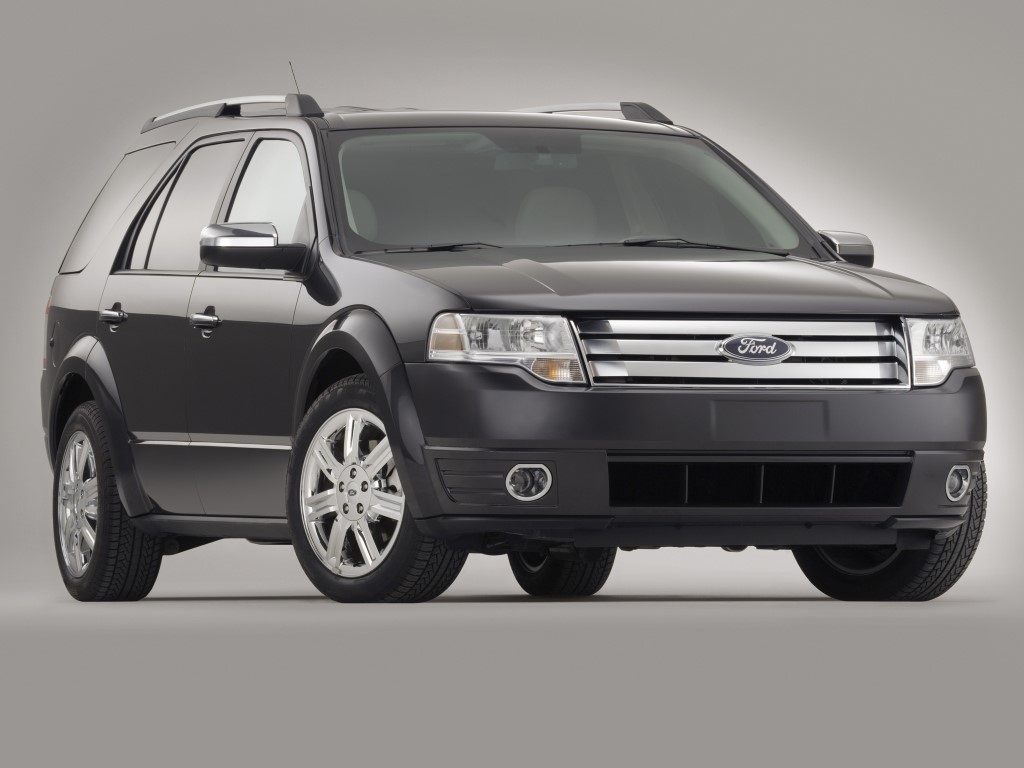
The Ford Taurus X officially debuted as a 2008 model, representing a substantial evolution from the original Freestyle. Although it maintained the same basic structure and the D3 platform, the facelift was so comprehensive that Ford promoted it as a new offering in its crossover lineup. The exterior design was updated to align the vehicle with Ford's new visual identity, characterized by the three-bar chrome front grille, inspired by the brand's pickup trucks and the Fusion sedan of the time.
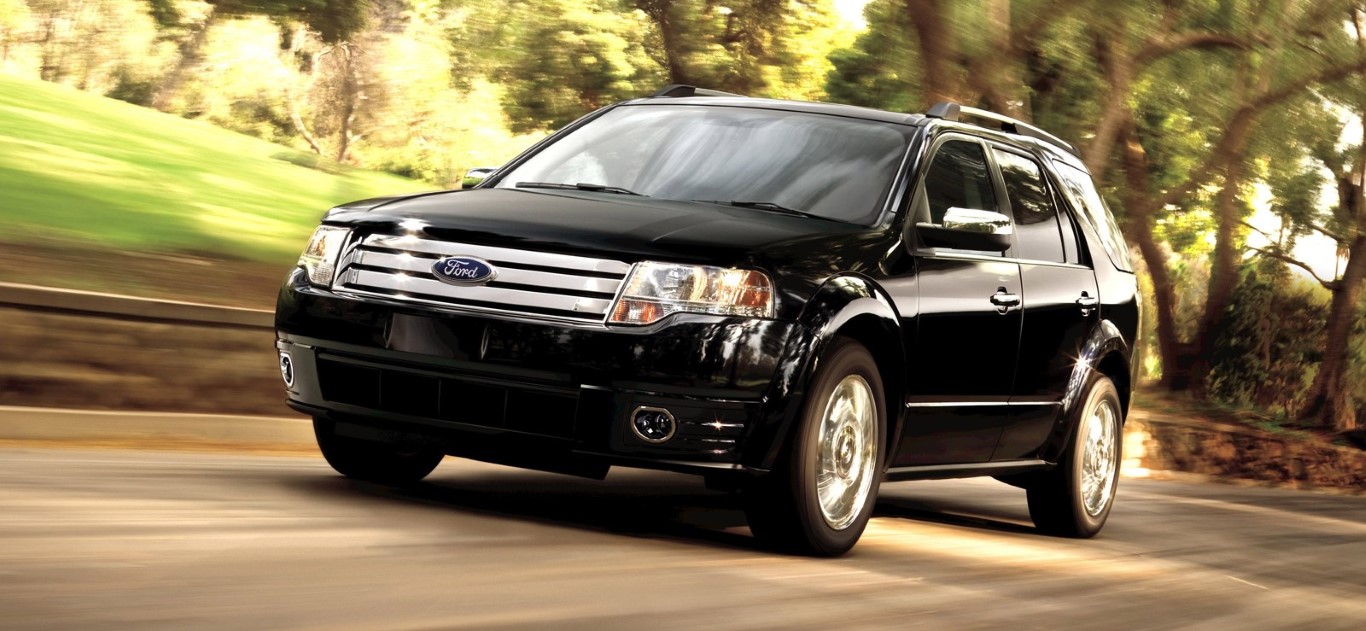
The front of the Taurus X was completely redesigned. The thick, chrome three-bar grille gave the vehicle a more robust and modern appearance, distancing it from the more conservative silhouette of the Freestyle. The headlights gained a more sculpted design that integrated into the front bumper, while the rear received revised taillights with more sophisticated finishes.
On the sides, the model preserved its "wagon on heels" characteristic, with a ride height higher than that of a regular sedan but lower than a traditional SUV like the Ford Explorer. This height was strategically chosen to facilitate access for children and the elderly, a crucial selling point for the family market the car was aimed at. The use of privacy glass and a roof rack became standard on several trims, reinforcing the model's practical utility.
| Design Characteristic | Ford Taurus X Details (2008-2009) |
|---|---|
| Front Grille | Three-bar horizontal chrome style. |
| Headlights | Design with bumper cutout and improved lighting. |
| Taillights | Style inspired by the Ford Fusion and Mercury Sable. |
| Wheels | 17 or 18-inch alloy, depending on the trim. |
| Exhaust Tips | Chrome tips standard on higher models. |
The most celebrated change in the Taurus X was the introduction of the 3.5L Duratec 35 V6 engine. This engine, part of Ford's Cyclone family, replaced the old 3.0L and raised power from 203 to 263 horsepower. More than just the raw increase in power, the new engine offered a much broader and friendlier torque curve, facilitating passing and highway merging.
Simultaneously, Ford abandoned the Freestyle's CVT transmission in favor of a new six-speed automatic transmission. This gearbox, developed in partnership with General Motors and known as the 6F, provided more linear gear changes and eliminated the "rubber band" feel of the previous CVT. The combination of the 3.5L engine with the six-speed transmission resulted in a drastic performance improvement: 0 to 60 mph acceleration became significantly faster, and towing capacity was stabilized at approximately 2,000 lbs (907 kg).
| Technical Specification | Duratec 35 Engine (3.5L V6) |
|---|---|
| Maximum Power | 263 hp @ 6,250 rpm |
| Maximum Torque | 249 lb-ft @ 4,500 rpm |
| Configuration | 60-degree V6, DOHC, 24 valves |
| Fuel System | Sequential Multiport Electronic Injection |
| Transmission | 6-speed Automatic (6F) |
| Drivetrain Type | Front-Wheel Drive (FWD) or All-Wheel Drive (AWD) |
The Taurus X's life cycle under this name was short, lasting only the 2008 and 2009 model years. However, there were gradual refinements that demonstrate Ford's effort to keep the vehicle competitive in a market that was becoming increasingly saturated with SUV options.
The year 2008 marked the introduction of technologies that were previously rare in the affordable crossover segment. The Ford SYNC system, developed in collaboration with Microsoft, was one of the biggest novelties. This system allowed drivers to operate mobile phones and music players through voice commands, in addition to offering full Bluetooth integration.
Another innovation was the second-row seating system with automatic power folding. By pressing a button in the cargo area, the second-row seats folded and tumbled forward, making it easier for passengers to access the third row, a common problem in seven-seater vehicles. The Taurus X also introduced the option of a power liftgate, increasing convenience for families with groceries or sports equipment.
For the 2009 model year, the Taurus X received few visual changes, focusing primarily on safety and equipment standardization. The main addition was the "SOS Post-Crash Alert" system as standard equipment on all versions. This system activated automatically in the event of airbag deployment or seatbelt pretensioner activation, unlocking the doors, turning on the hazard lights, and sounding the horn to attract help.
In addition, Ford improved interior acoustic insulation, using materials like Sonosorb in more areas of the cabin to reduce wind and road noise, making the Taurus X one of the quietest crossovers in its class at the time. Despite these advancements, the shadow of the Ford Flex, which went into production in June 2008, began to limit the Taurus X's market space.
The Ford Taurus X was structured into three main trim levels, each designed to meet different budget and luxury needs. Ford's strategy was to offer superior value compared to competitors like the Toyota Highlander and Honda Pilot, delivering more standard equipment for a competitive price.
The SEL model was the entry point to the lineup, but far from a basic vehicle. It came equipped with 17-inch wheels, single-zone air conditioning with auxiliary controls for the rear rows, a six-way power driver's seat, and an audio system with a 6-disc in-dash CD changer compatible with MP3s. The exterior was generally characterized by a two-tone finish, with the lower body cladding in a contrasting color.
A significant addition for the 2008 lineup was the Eddie Bauer version, a classic Ford brand associated with the outdoor and adventure lifestyle. This version offered a middle ground between the SEL and Limited, including 18-inch wheels, exclusive lower body cladding in a gold tone ("Arizona Beige"), and a two-tone leather interior with distinct stitching. The SYNC system and dual-zone automatic climate control were standard on this version.
The top-of-the-line version was the Limited, which focused on urban sophistication. Unlike the Eddie Bauer, the Limited featured a monochromatic paint job (the entire body in the same color) and a more luxurious interior with dark simulated wood appliques. The front seats were heated, and the driver's seat had memory for two users. The sound system was a premium Audiophile with seven speakers and a subwoofer, providing a superior audio experience.
| Feature | SEL | Eddie Bauer | Limited |
|---|---|---|---|
| Wheels | 17" Aluminum | 18" Aluminum | 18" Bright Aluminum |
| Paint | Two-Tone | Two-Tone (Gold) | Monochromatic |
| Interior | Cloth or Leather | Two-Tone Leather | Premium Leather |
| Climate Control | Manual | Dual Zone Automatic | Dual Zone Automatic |
| Ford SYNC | Optional | Standard | Standard |
| Reverse Sensor | Optional | Standard | Standard |
One of the Taurus X's biggest assets was its cabin, designed specifically for the needs of large families. Ford used what it called "Command Seating," an engineering technique that raised the passengers' H-point (hip). This allowed occupants to have a clear view of the road, similar to an SUV, but with the ease of entry and exit of a passenger car.
The Taurus X could be configured to accommodate six or seven people. In the six-seater configuration, the second row consisted of two individual chairs ("Captain's Chairs"), which offered executive-level comfort and a center aisle for access to the third row. In the seven-seater configuration, the second row was a 60/40 split-bench seat.
Cargo capacity was impressive for its class. With all rows of seats folded, the Taurus X offered a flat load surface. A unique feature was the front passenger seat, which could also be folded completely flat, allowing the transport of objects up to 10 feet (about 3 meters) long, such as ladders or surfboards, with the tailgate closed.
| Cargo Capacity | Volume (Cubic Feet) |
|---|---|
| Behind 3rd row | 20.8 cu. ft. |
| Behind 2nd row | 47.0 cu. ft. (estimated) |
| Maximum Volume (Seats folded) | 85.5 cu. ft. |
Based on the architecture developed by Volvo, the Taurus X was widely marketed as America's safest crossover at its launch. The vehicle's structure was designed to disperse impact energy in multiple directions, protecting the occupants' survival cell.
All Taurus X models came standard with the Safety Canopy security system, which included side curtain airbags for all three rows of seats and rollover sensors. In addition, the AdvanceTrac system with Electronic Stability Control (ESC) worked in conjunction with the ABS braking system to prevent skidding and loss of control in adverse conditions.
In 2008 and 2009, the Taurus X achieved the maximum five-star rating in all frontal and side crash tests conducted by the National Highway Traffic Safety Administration (NHTSA). The Insurance Institute for Highway Safety (IIHS) also awarded the model the "Top Safety Pick" award, the institution's highest honor, after the vehicle received a "Good" rating in frontal, side, and whiplash protection impacts.
| Crash Test (IIHS) | Taurus X Rating |
|---|---|
| Frontal Impact (Moderate Overlap) | Good |
| Side Impact | Good |
| Roof Strength | N/A (Not tested at the time) |
| Head and Seat Protection | Good |
The Ford Taurus X was produced exclusively at the Chicago Assembly plant, located in southern Chicago, Illinois. This plant was modernized specifically to handle the D3 platform, producing the Taurus X simultaneously with the Ford Taurus sedan, the Mercury Sable, and the Lincoln MKS.
Although Ford hoped the renaming to "Taurus X" would revitalize the crossover's sales, the numbers tell a story of sharp decline, influenced by the 2008 economic crisis and changing consumer preferences. While Freestyle sales in 2005 reached nearly 77,000 units, the Taurus X never reached those heights.
| Calendar Year | Model | US Sales (Units) |
|---|---|---|
| 2004 | Freestyle | 8,509 |
| 2005 | Freestyle | 76,739 |
| 2006 | Freestyle | 58,602 |
| 2007 | Freestyle / Taurus X | 42,110 (Total) |
| 2008 | Taurus X | 23,112 |
| 2009 | Taurus X | 6,106 |
| 2010 | Taurus X (Leftovers) | 12 |
| Cumulative Total | Freestyle + Taurus X | 215,190 |
(Note: In 2007, sales were split into 23,765 units of the Freestyle and 18,345 of the Taurus X as inventory was renewed.)
Production of the Taurus X officially ended on February 27, 2009. The low sales volume in the final months of production was a direct reflection of market saturation and consumer anticipation of the Ford Flex, which offered a bolder design and greater technical sophistication.
The discontinuation of the Taurus X in 2009 marked the end of a short but technically important chapter for Ford. The vehicle was not directly replaced by a model with the same name, but rather by two distinct paths in the brand's portfolio.
The Ford Flex took on the role of luxury, high-capacity crossover within the Ford lineup. Using the D4 platform (a reinforced version of the Taurus X's D3), the Flex offered a "retro" design that appealed to a younger, more urban audience, and featured EcoBoost turbo engine options that the Taurus X never had. The Flex also surpassed the Taurus X in towing capacity and interior finish, becoming its most successful spiritual successor.
Subsequently, Ford made the strategic decision to transform the Ford Explorer from a body-on-frame SUV to a unibody crossover based on the same D3/D4 platform that the Taurus X helped consolidate. In many ways, the fifth-generation Explorer (launched in 2011) was the direct heir to the Taurus X philosophy: a three-row family vehicle focused on safety, with all-wheel drive and driving dynamics superior to those of older SUVs.
To place the Taurus X in its historical context, it is useful to look at how it compared to its main rivals in 2008, a year when competition for space-seeking families was fierce.
| Vehicle | Power (hp) | Transmission | Passenger Capacity | Differentiating Factor |
|---|---|---|---|---|
| Ford Taurus X | 263 | 6-speed Auto | 6 or 7 | IIHS Safety and SYNC |
| Toyota Highlander | 270 | 5-speed Auto | 7 | Resale reputation |
| Honda Pilot | 244 | 5-speed Auto | 8 | 3rd row space |
| Subaru Tribeca | 256 | 5-speed Auto | 7 | Standard all-wheel drive |
The Taurus X stood out with its six-speed transmission (when most rivals used five) and its SYNC infotainment system, which was superior to any offering from the Japanese competition at the time. However, its aesthetics, closer to a tall station wagon, hindered its acceptance by consumers who wanted the more "adventurous" and robust look of a traditional SUV.
The Ford Taurus X was a transitional vehicle, a "bridge" between the era of traditional station wagons and the absolute domination of modern SUVs and crossovers. Its history is a testament to Ford's adaptability under Alan Mulally's leadership, correcting the Freestyle's mechanical flaws and raising industry safety standards.
Although its production lasted only two years, the Taurus X left an engineering legacy that survived much longer in the D3 platform, serving as the basis for the Ford Explorer, the Ford Flex, and even the Lincoln MKS. It proved that it was possible to build a seven-seater vehicle that handled like a sedan on the road while offering elite protection for American families. Today, the Taurus X is remembered by enthusiasts and owners as an example of practical functionality and mechanical robustness, a vehicle that fulfilled its mission of being the ultimate tool for family transport in an era of great uncertainty in the global automotive industry.
Images of the Ford Taurus X