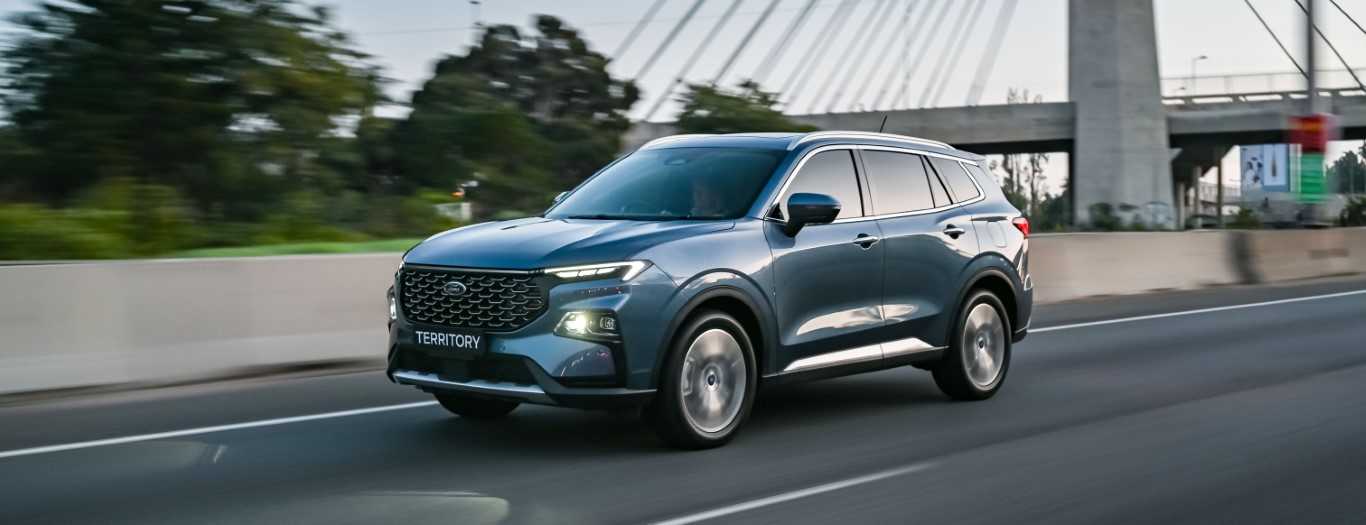
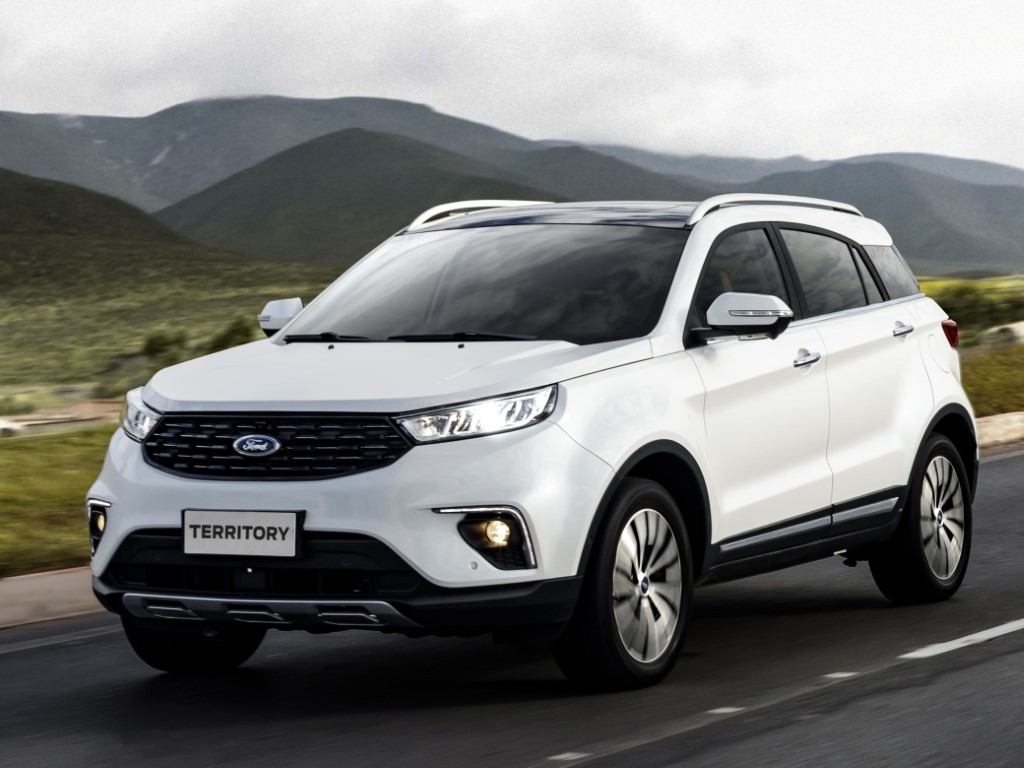
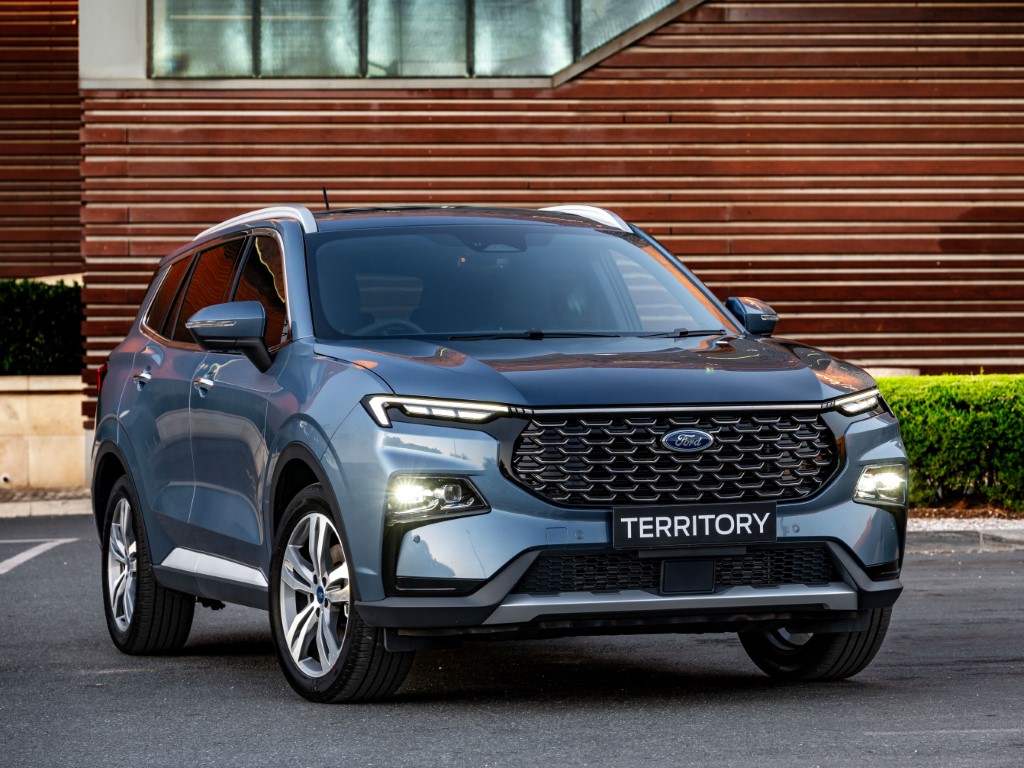
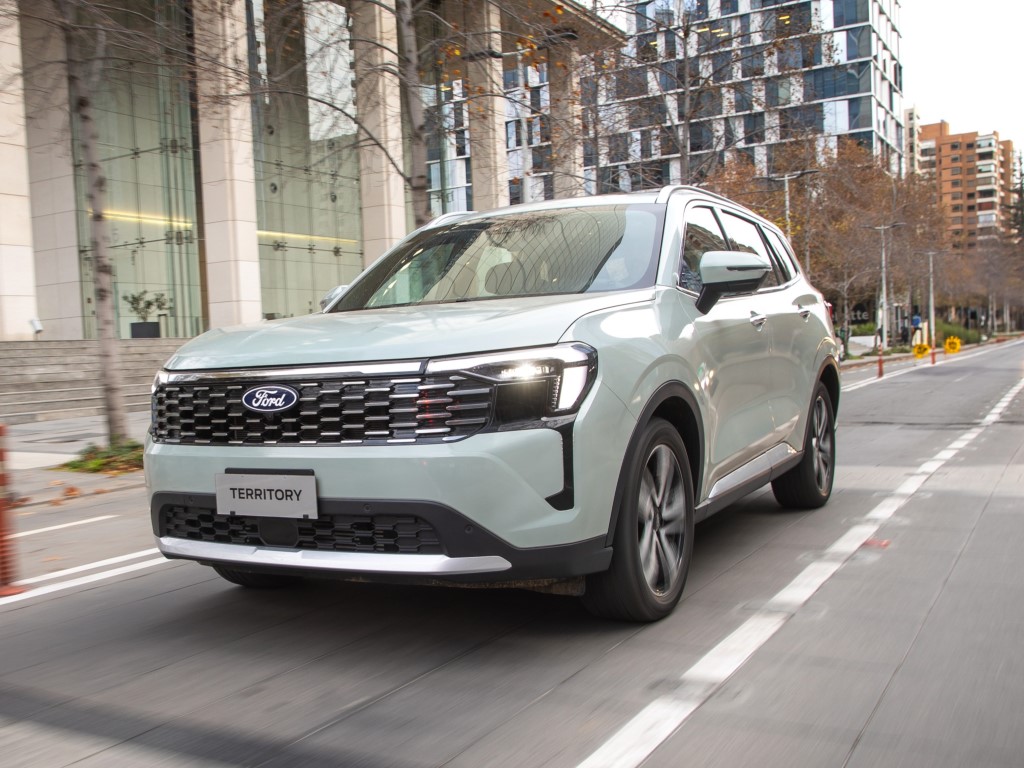
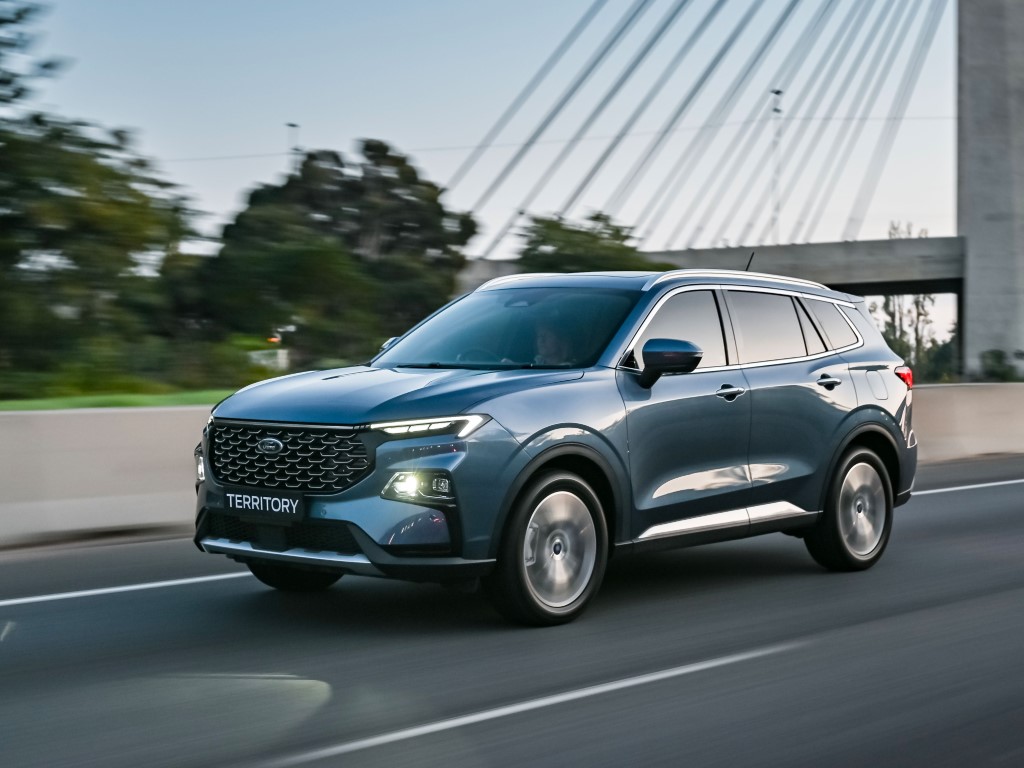
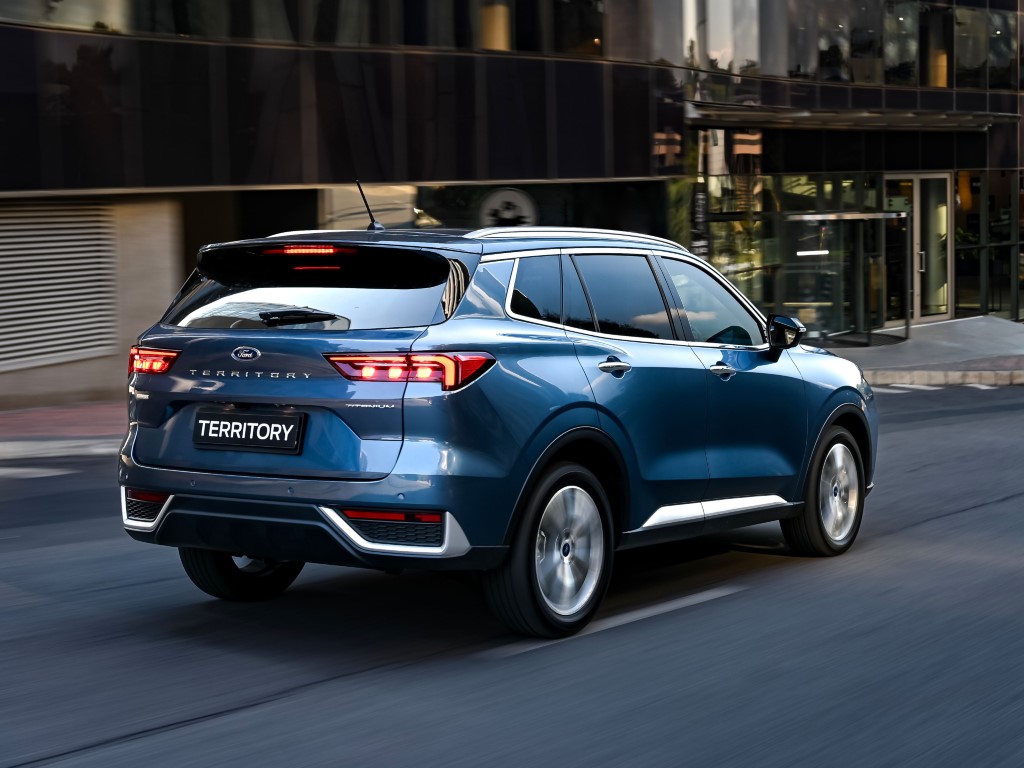
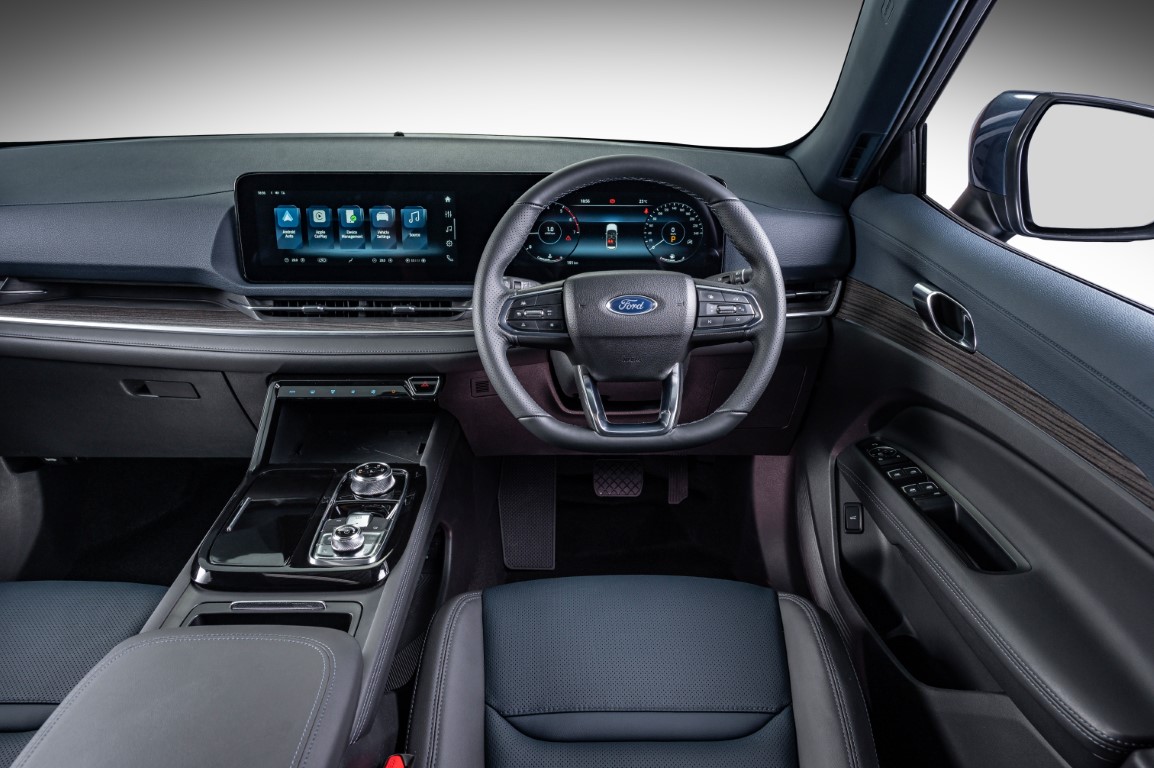
The second generation of the Ford Territory marked a fundamental shift in product philosophy. While
the first model was a quick adaptation of a JMC design, the second generation was conceived from the
beginning as a global Ford product, although still manufactured by the JMC-Ford joint venture in Nanchang.
In China, this vehicle is sold under the name Ford Equator Sport (or Lǐngruì), being a two-row
seating version based on the larger Ford Equator platform. Development was led by Ford Australia's design
and engineering teams, ensuring the vehicle aligned with the brand's new global visual language, seen in
models like the Ford Explorer and the Mustang Mach-E.
Dimensions and Capacity of the New Generation
The new model grew in almost all dimensions, offering one of the largest rear-seat legroom spaces in
its category, which became its main selling point in Brazil and the Middle East.
| Dimension |
Ford Territory / Equator Sport |
Comparison with 1st Generation |
| Length |
4,630 mm |
+50 mm |
| Width |
1,935 mm |
Similar |
| Height |
1,706 mm |
+32 mm |
| Wheelbase |
2,726 mm |
+10 mm |
| Trunk |
448 to 1,422 liters |
Significant increase |
Mechanical Evolution and EcoBoost Powertrain
One of the most celebrated changes in the second generation was the replacement of the CVT
transmission with a 7-speed dual-clutch automatic gearbox (DCT) with wet clutches. This transmission,
produced by Magna, provided a much more dynamic and efficient drive, eliminating the rubber-band effect of
the previous model.
The engine was also updated to a new family of JMC-Ford turbocharged units:
- 1.5 EcoBoost (4G15F6C): Used in China and the Philippines, it delivers 170
hp and 26.5 kgfm of torque.
- 1.8 EcoBoost (4G18F6E): This larger displacement variant was aimed at
markets like Brazil, Mexico, and the Middle East. It produces between 187 hp and 190 hp and a robust
torque of 32.6 kgfm (320 Nm).
This 1.8T engine, although sharing the EcoBoost name, has no direct relationship with the American
engines of the Focus or Fusion line, being a JX4 family unit developed specifically for the Chinese
operation, but validated under Ford's global rigors.