
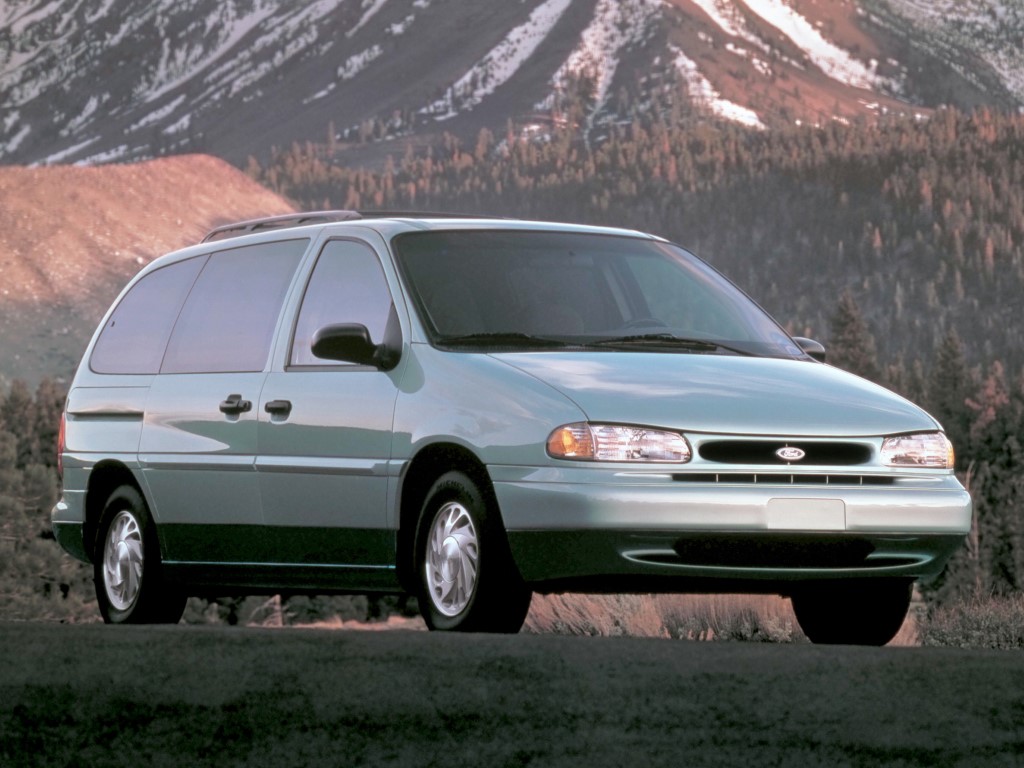
1st Generation
(1995 - 1996)
3.8 V6 12V
203 cv
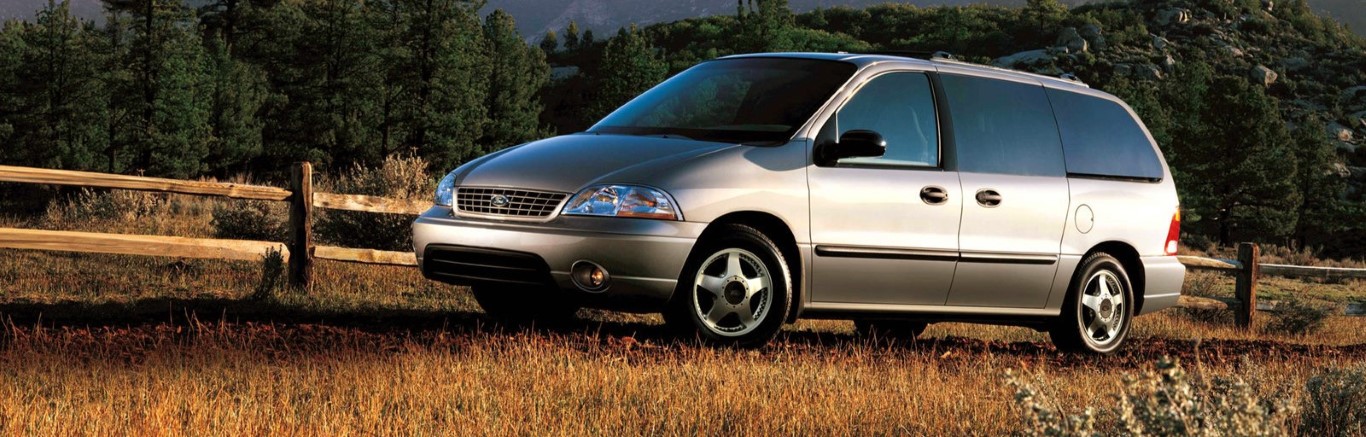
Technical specifications, versions, and history for the Ford Windstar.
Select a generation to see available versions
(1995 - 1996)
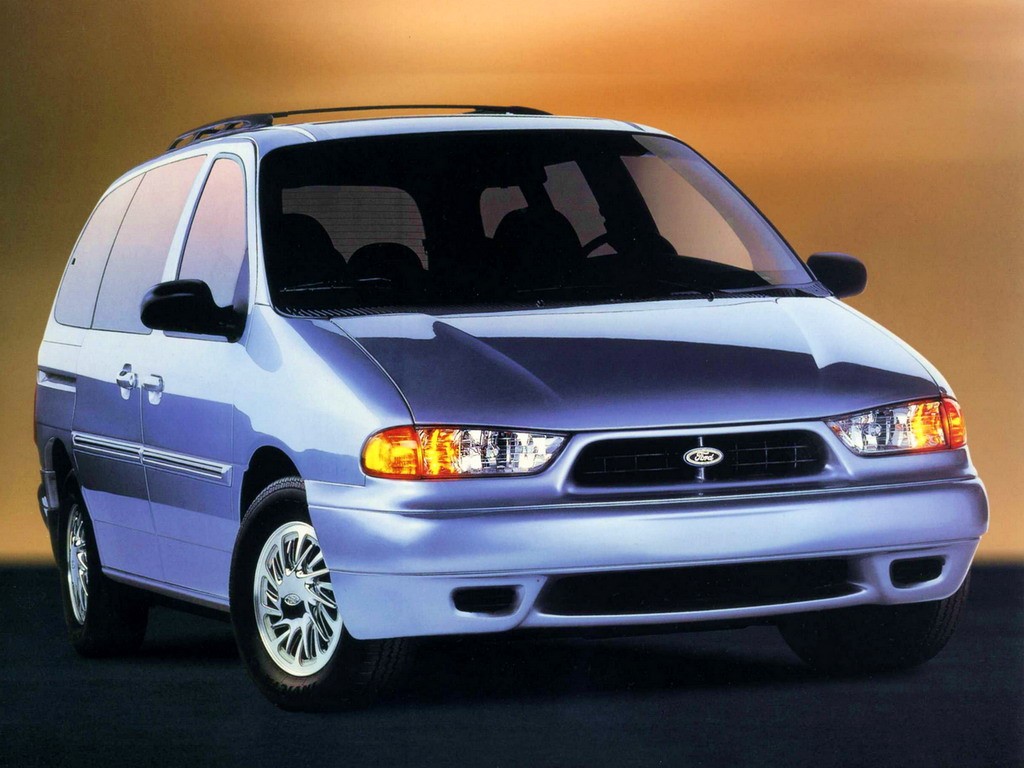
(1997 - 1998)
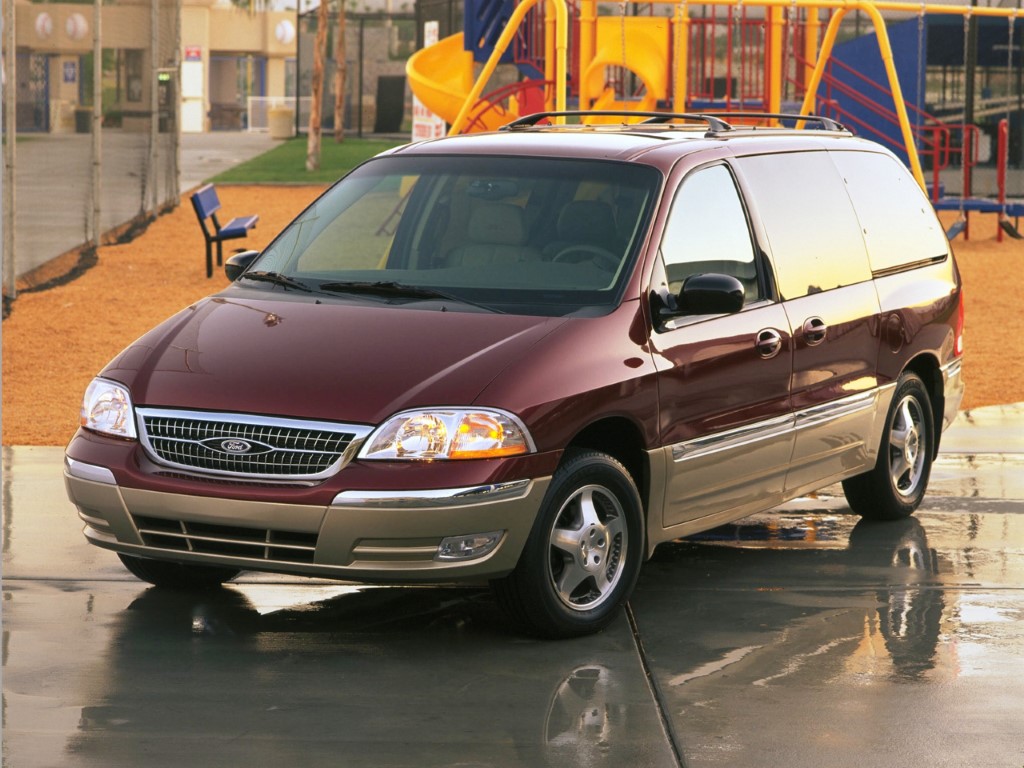
(1999 - 2000)
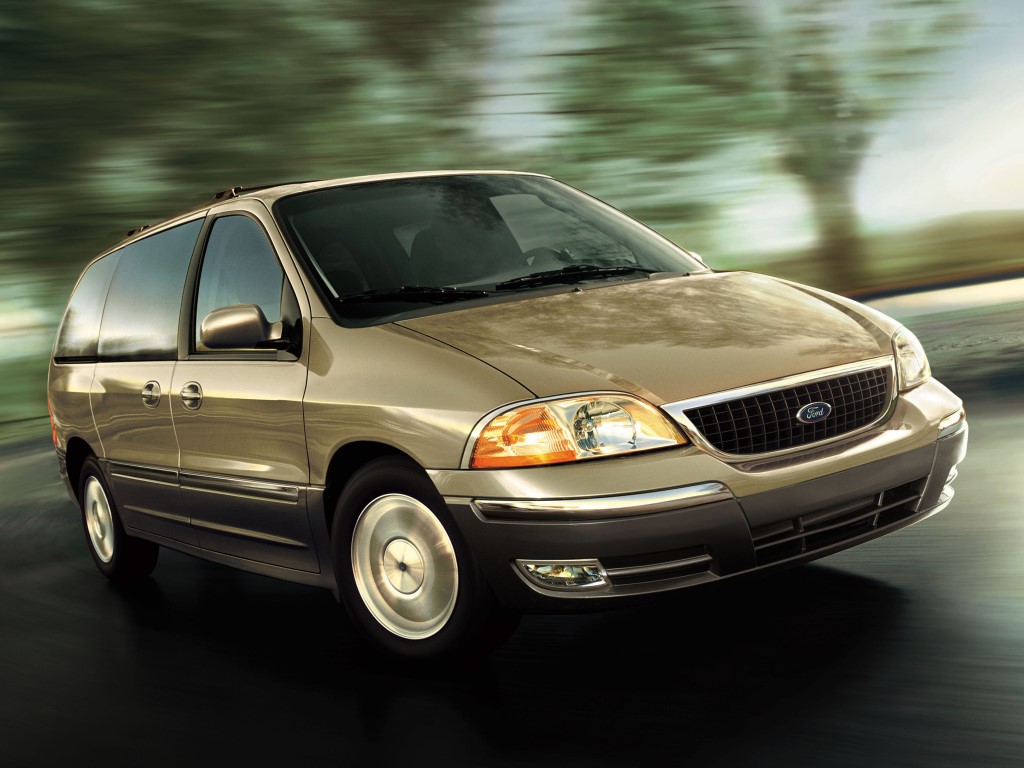
(2001 - 2003)
The trajectory of the Ford Windstar in the North American and global automotive market represents one of the most significant chapters in the evolution of family transport vehicles. This report details the genesis, development, life cycles, and technical legacy of a model that, although having faced substantial mechanical challenges, established new safety and comfort parameters for the minivan segment during nearly a decade of active production.
To understand the importance of the Ford Windstar, it is necessary to analyze the scenario of the Ford Motor Company in the late 1980s. At that time, Chrysler dominated the market with its K-platform-based front-wheel-drive minivans, while Ford competed with the Aerostar, a rear-wheel-drive vehicle with roots in truck components. Although the Aerostar was aerodynamic and capable, it did not offer the ease of entry, low floor, and passenger car drivability that minivan consumers were beginning to demand.
Ford's response was project codename WIN88, which stood for "Wagon, Intermediate, North America". The goal was to create an entirely new vehicle, built on a dedicated front-wheel-drive platform, that could compete directly with the Dodge Caravan and Plymouth Voyager. The design team, under the leadership of Camilo Pardo and Jack Telnack, was tasked with creating a modern, friendly aesthetic, intensely focused on ergonomics and family use.
Unlike the Aerostar, which used an integrated ladder-frame chassis, the Windstar adopted a unibody construction derived from the DN5 platform, the same used by the successful Ford Taurus and Mercury Sable. This technical choice was fundamental to ensure that the Windstar had a dynamic behavior much closer to that of a sedan than a commercial van, facilitating its acceptance by drivers transitioning from smaller cars to higher-capacity family vehicles.
The Ford Windstar was officially introduced to the public in January 1994 at the North American International Auto Show, and sales began in March of that year as a 1995 model year. From the beginning, the Windstar was positioned as a more refined and modern alternative to the Aerostar, which continued in simultaneous production for a few years to serve customers needing higher towing capacity.
The initial design of the Windstar was marked by rounded, flowing lines, a characteristic of Ford's visual language in the 1990s. The model featured a low front end, a steeply raked windshield, and a large glass area that provided excellent visibility for all seven or eight passengers. At launch, Ford offered the Windstar primarily in the GL version, with the more luxurious LX version being introduced shortly after to attract upper-middle-class families.
| Technical Specification | 1995 Ford Windstar (GL/LX) |
|---|---|
| Engine | 3.8L Essex V6 |
| Maximum Power | 155 hp @ 4,000 rpm |
| Maximum Torque | 220 lb-ft @ 3,000 rpm |
| Transmission | 4-speed automatic (AX4S) |
| Drivetrain | Front-Wheel Drive (FWD) |
| Wheelbase | 120.7 inches (3,066 mm) |
| Overall Length | 201.2 inches (5,110 mm) |
| Fuel Tank Capacity | 25.0 gallons |
A notable aspect of the original design was Ford's decision not to include a fourth door (driver's side sliding door). At the time, the focus was on child safety, and Ford believed that preventing exit on the street side was a safety feature appreciated by parents. However, this perception would quickly change with the launch of the new Chrysler minivans in 1996, which popularized access from both sides.
Ford did not take long to refine the Windstar lineup. In October 1994, what the company internally called the "1995.5" model year was launched. The main change was the introduction of the 3.0L Vulcan V6 engine as the standard option for the entry-level GL version. This engine, although less powerful than the 3.8L, was widely respected for its reliability and durability in other Ford models, such as the Ranger and Taurus.
| Engine | Power (1995.5) | Torque (1995.5) | Application |
|---|---|---|---|
| 3.0L Vulcan V6 | 147 hp @ 5,000 rpm | 170 lb-ft @ 3,250 rpm | Base / GL |
| 3.8L Essex V6 | 155 hp @ 4,000 rpm | 220 lb-ft @ 3,000 rpm | Optional GL / Standard LX |
During this period, Ford also adjusted the pricing structure to make the Windstar more competitive, with the Cargo Van version starting at approximately $17,510 and the top-tier LX version reaching $23,760.
The 1996 model year brought one of the most important mechanical updates in the Windstar's history. The 3.8L Essex V6 engine was heavily revised with Split Port Induction (SPI) technology. This innovation allowed the engine to produce a much more efficient power curve, raising the output to an impressive 200 hp.
This update transformed the Windstar into the most powerful minivan in its class in the North American market at the time. In addition to the engine, Ford introduced four-wheel disc brakes as an option and made the four-channel anti-lock braking system (ABS) a standard item on all models. Other convenience additions included the high-fidelity JBL audio system and the introduction of integrated child seats in the second row.
In 1997, updates were more focused on restructuring the trim lineup. A simplified base version, sometimes referred to as the "G" trim, was introduced for fleet operators and budget-conscious buyers. A new high-capacity rear air conditioning and heating system was added to the options list, resolving common complaints about thermal comfort in the third row of seats.
For the last year of the first generation, in 1998, the Windstar underwent a significant aesthetic facelift to maintain its relevance against renewed competition. The front grille was redesigned, adopting a cleaner style, and the headlights gained a new internal arrangement. The Ford logo on the rear was moved to a central position above the license plate, and new colors, such as Deep Forest Green and Vibrant White, became popular.
This year saw the emergence of the Limited version, which represented the pinnacle of luxury in Ford minivans up to that point. It featured monochromatic paint, 16-inch chrome alloy wheels, wood-tone interior trim, and premium leather seats. Ford also launched the "Northwoods" edition, focused on a more adventurous lifestyle, with exclusive two-tone exterior paint.
| Version (1998) | Standard Engine | Main Features |
|---|---|---|
| Cargo | 3.0L V6 | Cargo van, simplified interior |
| GL | 3.0L V6 | Basic family version, 7 seats |
| LX | 3.8L V6 | Power windows and locks, cruise control |
| Limited | 3.8L V6 | Leather, 16" wheels, digital AC, overhead console |
Launched in the summer of 1998 as an early 1999 model year, the second-generation Ford Windstar was a direct response to market evolution and the need to correct the flaws of the previous generation. Although it maintained some visual similarities, the vehicle was substantially new, built on Ford's V platform, a dedicated architecture that allowed the inclusion of the driver's side sliding door.
The styling of the 1999 Windstar followed Ford's "New Edge" philosophy, seen in models like the Focus and Mustang of the time, with more defined creases crossing curved surfaces. The front grille now featured a matrix pattern and the B-pillars were hidden behind the glass, creating a more continuous and modern appearance.
Internally, the dashboard was completely redesigned to be more driver-friendly, with intuitively positioned controls. An important innovation was the emergence of the second-row seat that could be moved laterally, allowing easier access to the third row, even with a child seat installed. Safety was again a pillar, with the introduction of side airbags for the front occupants, a rare feature in minivans at the time.
| Technical Attribute | Second Generation Details (1999) |
|---|---|
| Platform | Ford V Platform |
| Sliding Doors | Availability of dual doors (standard on high trims) |
| Front Suspension | MacPherson strut with coil springs |
| Rear Suspension | Solid torsion beam axle with coil springs |
| Brakes | Front disc / Rear drum (ABS standard) |
| Cargo Capacity | Up to 159.0 cubic feet (without seats) |
Ford maintained a steady pace of updates during the second generation's life cycle:
The simplification of the mechanics in 2001 was a strategic decision to reduce complexity on the production line and ensure that all buyers had the necessary performance to move the vehicle's nearly two tons.
| Model Year | Engine | Power | Torque | Transmission |
|---|---|---|---|---|
| 1999-2000 | 3.0L Vulcan V6 | 150 hp | 172 lb-ft | 4-speed AX4S |
| 1999-2000 | 3.8L Essex V6 | 200 hp | 240 lb-ft | 4-speed AX4S |
| 2001-2003 | 3.8L Essex V6 | 200 hp | 240 lb-ft | 4F50N (AX4N) |
The introduction of the 4F50N transmission (an evolution of the AX4N) in 2001 was an attempt to resolve the durability complaints that haunted earlier models. This new unit featured non-synchronous shifting logic, which allowed for more direct downshifts and more robust overall operation under heavy load.
The Ford Windstar was designed to be a comfortable highway cruiser, prioritizing ride smoothness over sporty agility. Its suspension was tuned to absorb ground imperfections, making it a favorite for family road trips.
The 3.8-liter Essex V6 engine was a unit with a cast iron block and aluminum cylinder heads. The implementation of IMRC (Intake Manifold Runner Control) technology in 1996 was the secret behind the jump to 200 hp. This system used secondary intake butterflies that remained closed at low revs to increase air velocity (improving torque) and opened at high revs to allow maximum flow (increasing power).
However, this engine became infamous for head gasket failure problems. The cause was multifactorial: the difference in thermal expansion rates between the iron block and the aluminum head, combined with gaskets that were not robust enough for the heat generated in the cramped minivan engine bay, led to oil contamination by coolant. Ford conducted several recalls and revisions to the gasket design, but the damage to the model's reputation had already been done in the used car market.
The AX4 series transmissions (AX4S and AX4N) were the Windstar's recurring weak point. Because the vehicle was heavy and frequently used to tow or carry full families, the transmissions suffered from overheating and failures in the internal clutch pistons.
To mitigate these problems, remanufactured units and later models (2001-2003) received critical updates, such as:
In terms of driving, the Windstar was often described as having a "truckier" feel than the Honda Odyssey or Chrysler Town & Country, due to its slightly heavier steering and firmer suspension, which, on the other hand, conferred excellent stability in crosswinds and when carrying maximum payload.
Safety was undoubtedly the attribute that sold the most Windstar units. Ford invested heavily in computer simulations and real-world crash testing, resulting in a vehicle that was the first in its class to receive a five-star rating from the US government for several consecutive years.
Despite the mechanical problems that arose over time, the Ford Windstar was a sales giant. It consistently maintained the number two position in the US minivan market for almost its entire lifespan, losing only to the Dodge/Chrysler lineup.
| Calendar Year | US Sales | Model Context |
|---|---|---|
| 1995 | 222,147 | Impactful 1st Generation launch |
| 1996 | 209,033 | Introduction of 200 hp engine |
| 1997 | 205,356 | End of original body style |
| 1998 | 190,173 | Facelift and Limited version |
| 1999 | 213,844 | Start of 2nd Generation (New Edge) |
| 2000 | 222,298 | Peak popularity of 2nd Generation |
| 2001 | 179,595 | Transition to single 3.8L engine |
| 2002 | 148,875 | Consolidation of dual doors |
| 2003 | 113,465 | End of the Windstar line |
By the end of its production on July 3, 2003, Ford had manufactured a total of 1,704,786 Windstar units at the Oakville, Ontario plant. This colossal volume demonstrates how the model integrated into the North American suburb and became part of the visual culture of that era.
In 2004, as part of a new Ford marketing strategy to name all its passenger models with the letter "F", the Windstar was replaced by the Ford Freestar. Although Ford invested around US$ 600 million in the development of the Freestar, the vehicle still shared the basic structure of the Windstar's V platform.
The transition focused almost entirely on solving the Windstar's "sins":
Unfortunately for Ford, the minivan market began to shrink dramatically in the early 2000s with the meteoric rise of SUVs and Crossovers. The Freestar failed to repeat the Windstar's commercial success and was discontinued in 2007, succeeded by the Ford Flex, a vehicle that abandoned the traditional minivan format with sliding doors once and for all.
The Ford Windstar remains a fascinating case study on how an automaker can balance safety and design innovation with the challenges of high-demand mass production. It was not just a means of transportation; it was the birthplace of technologies we now take for granted, such as parking sensors and smart airbags.
Despite the transmission failures and head gaskets that frustrated many owners, the Windstar fulfilled its mission of providing a safe and spacious alternative for millions of families. Its evolution, from the rounded 1995 model year to the sophisticated 2003 Limited, traces the history of an industry that was learning to prioritize the human occupant above all else. Today, surviving Windstar units are remembered as icons of the great family road trip era of the 90s, a testament to a time when comfort and protection were the kings of the road.