Maserati 3200GT

Maserati 3200GT

The rebirth of the Trident: Italian elegance immortalized by boomerang taillights and twin-turbo V8 fury.

Maserati 3200GT Generations

Select a generation to see available versions

Technical Data and History: Maserati 3200GT

Introduction: The Significance of the Tipo 338 in Automotive History

In the vast and tumultuous pantheon of the Italian automotive industry, few vehicles occupy a position as polarizing and historically crucial as the Maserati 3200 GT. Designated internally as the Tipo 338, this four-seater Grand Tourer, launched at the dawn of the new millennium, does not represent just another model in the lineage of the House of the Trident; it is the final period of one sentence and the opening paragraph of another. It is the swan song of Maserati's independent engineering and, simultaneously, the herald of its modern reinvention under the corporate tutelage of Fiat and, later, Ferrari.

This report aims to conduct a forensic and exhaustive analysis of the 3200 GT. Unlike superficial summaries that limit themselves to listing catalog specifications, this document will investigate the complex corporate machinations that dictated its development, the design philosophy that generated its controversial aesthetics, the thermodynamic engineering of its twin-turbo V8 powerplant, and the detailed demographics of its production. By synthesizing technical data, Maserati Classiche production records, and contemporary market analyses, we will dissect why this vehicle, produced in only 4,795 units, has become one of the most intriguing investments in the modern classic market.

The relevance of the 3200 GT transcends its mechanics. It is a case study on brand identity. At a time when globalization and platform sharing threatened to dilute the character of luxury brands, the 3200 GT maintained a fierce idiosyncrasy — for better or worse. Its visceral engine, its temperamental electronics, and its iconic boomerang-shaped taillights tell the story of a company fighting for its soul before surrendering to Ferrari's clinical competence.

The Historical Crucible: From De Tomaso's Chaos to Fiat's Stability

To understand the genesis of the 3200 GT, it is imperative to contextualize the state of Maserati in the 1990s. The brand emerged from the Alejandro de Tomaso era (1975-1993) with its reputation severely compromised. De Tomaso's strategy, centered on the Biturbo line, aimed to democratize the brand and increase production volumes. Although it had initial success in sales numbers, the execution was flawed. The Biturbos became synonymous with unreliability, premature corrosion, and fragile interiors, leading to a humiliating exit from the North American market in 1991.

Fiat's Intervention and the Rebirth Project

In 1993, Fiat Auto S.p.A. acquired all of Maserati's shares, injecting vital capital and engineering resources that De Tomaso no longer possessed. However, automotive development is a long-term process. The project that would culminate in the 3200 GT began to gestate during this transitional period. Fiat knew it could not simply launch another evolution of the boxy Biturbo; it needed a "halo car," a vehicle that would recover the prestige of the great GTs of the 60s, such as the 3500 GT and the Sebring.

The strategic goal was clear, but the execution was fraught with political obstacles. In July 1997, Fiat made a decision that would alter the project's fate: it transferred the operational and commercial control of Maserati to its former arch-rival, Ferrari. This maneuver, orchestrated by Luca di Montezemolo, aimed to create an integrated luxury group, where Ferrari would occupy the supercar segment and Maserati the luxury Grand Tourer segment.

The Ferrari-Maserati Tension

The 3200 GT was launched in 1998, placing it in a peculiar chronological position. Its engineering "hard points" (chassis and engine) were developed under Fiat's aegis, but its final refinement, launch, and marketing were managed by Ferrari. This generated a fascinating internal tension. Ferrari had just launched the 456M and was preparing the 360 Modena. There was a palpable fear in Maranello that an overly competent and powerful Maserati could cannibalize Ferrari's sales or, worse, embarrass the "mother brand's" products in terms of pure performance at a lower price point.

Reports suggest that Ferrari deliberately limited certain aspects of the 3200 GT's development or influenced the marketing narrative to position it strictly below their models. For example, although the twin-turbo Maserati engine was easily capable of outputs exceeding 400 hp, its official output was fixed at 370 hp, maintaining a "respectful" distance from the 442 hp of the Ferrari 456 and the 400 hp of the future 360 Modena. This "little brother" dynamic would shape the public perception of the car, even though the mechanical reality was much more rebellious.

Aesthetics and Design: Giugiaro's Vision and the Boomerang Controversy

The break from the boxy past of the Biturbo era demanded a completely new visual language. The task was entrusted to Italdesign, led by the legendary Giorgetto Giugiaro, the man responsible for previous brand masterpieces like the Ghibli (1967), the Bora, and the Merak.

The Exterior Sculpture

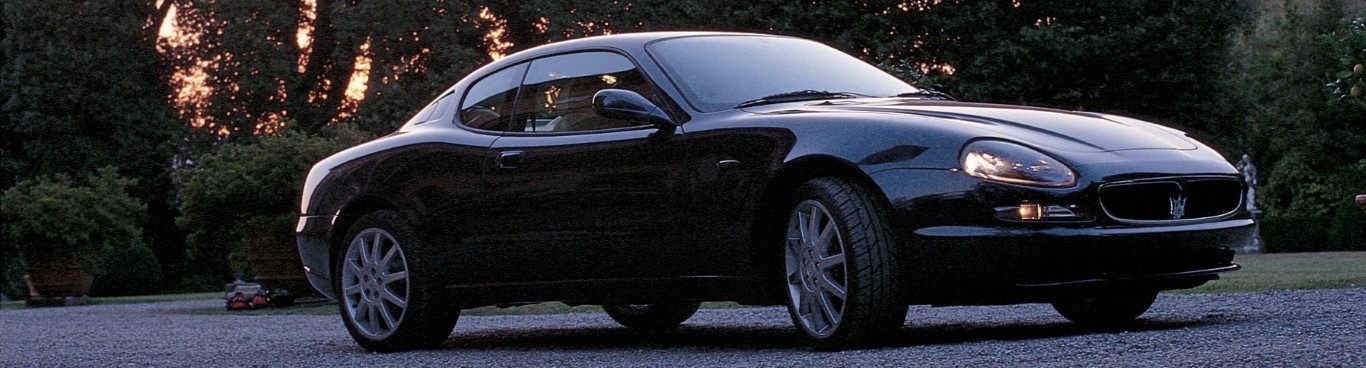
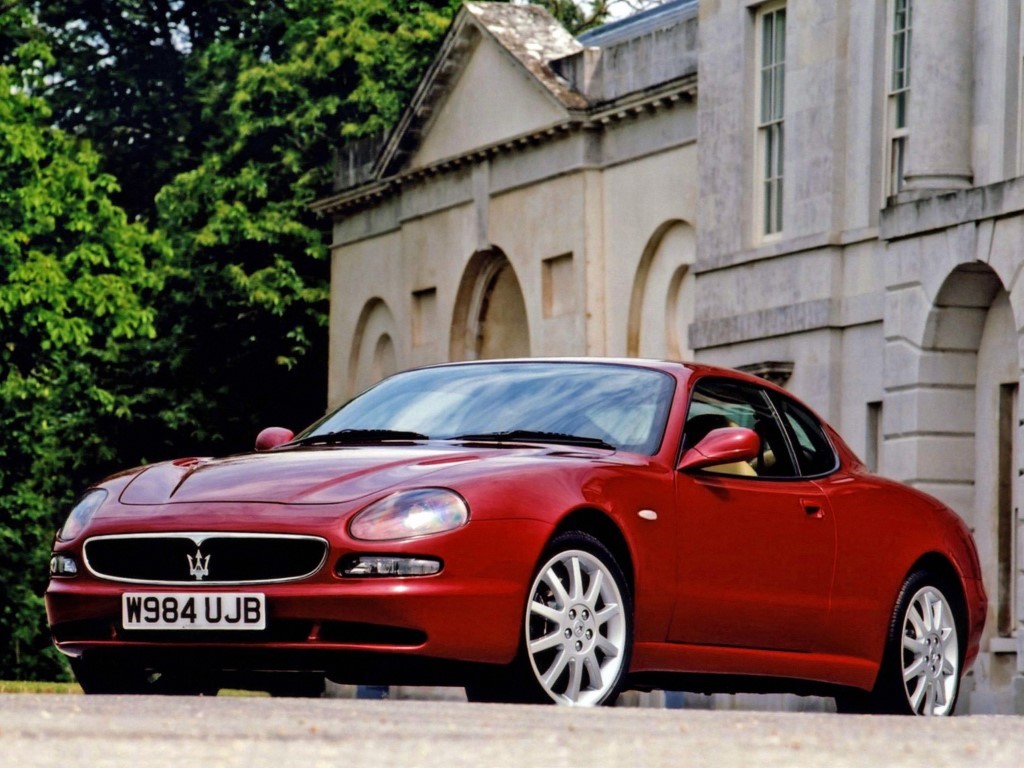
Giugiaro conceived the 3200 GT as a return to muscular elegance. The design is characterized by voluptuous and organic curves, radically departing from the wedge lines and sharp edges that dominated the 70s and 80s. The side profile features a classic coupé silhouette, with a long, plunging hood, a set-back cabin, and prominent rear haunches that emphasize the rear-wheel drive.

At 4,510 mm in length and 1,822 mm in width, the 3200 GT was significantly larger than the contemporary Porsche 911 (996), offering a more substantial road presence. The oval front grille, with the floating trident, directly evoked the Maserati racing cars of the 50s, establishing an immediate visual connection with the brand's heritage.

The "Boomerang" Taillights: Innovation and Politics

The most iconic, and subsequently most debated, design element of the 3200 GT are its taillights. Giugiaro and Italdesign innovated by using, for the first time in a mass-produced car, LED (Light Emitting Diode) technology for the tail and brake lights. This technology allowed the creation of a thin, curved, and continuous shape — the "boomerang" — that followed the contour of the rear bodywork, something impossible with the bulky incandescent bulbs of the time.

These lights were not merely functional; they were an artistic signature. However, their existence was short-lived. When the 3200 GT evolved into the 4200 GT (Maserati Coupé) in 2002, the boomerang lights were replaced by bulky and generic triangular units, frequently criticized for resembling those of ordinary sedans.

The Conspiracy Theory and the Reality of Homologation

The official reason for the elimination of the boomerang lights frequently centered on the regulations of the US Department of Transportation (DOT). It was argued that the illuminated surface area or angular visibility did not meet federal requirements for Maserati's return to North America.

However, deeper investigations and testimonies from designers involved, such as Frank Stephenson (who oversaw Ferrari/Maserati design at the time), suggest a different motivation. Stephenson reported that the decision was directly driven by Luca di Montezemolo. In a meeting, Montezemolo allegedly expressed displeasure with the lights, or perhaps, in a more cynical reading of corporate politics, saw in them too strong an element of distinction that overshadowed Ferrari's visual identity. The replacement of the lights was, therefore, both an aesthetic homogenization maneuver for the global market and an act of affirming hierarchy within the group. The result is that the 3200 GT remains the only model to sport this feature, making it instantly recognizable and more highly valued by purist collectors.

Interior Architecture

The interior of the 3200 GT, designed by Enrico Fumia (then at Lancia's Centro Stile, collaborating with Maserati), was designed to offer an opulent luxury that contrasted with the Germanic austerity of its rivals. The cabin was almost entirely clad in high-quality Connolly leather, including the dashboard, door panels, and headliner.

The layout featured a "dual cockpit" design, subtly separating the driver from the passenger. The oval analog clock in the center of the dashboard became a trademark of the "new" Maserati, symbolizing the fusion of tradition and luxury. In terms of habitability, the 3200 GT vastly outperformed the Jaguar XKR and the Porsche 911, offering two genuinely usable rear seats for adults on short or medium trips, thanks to a generous wheelbase of 2,660 mm.

Mechanical Engineering: The Heart of the Trident

What gives the 3200 GT the status of the "last true Maserati" is its powertrain. Unlike its successor, which would use a Ferrari-derived engine, the 3200 GT was powered by a final evolution of the twin-turbo V8 that Maserati had been perfecting for decades.

The Type AM 585 V8 Engine

The heart of the 3200 GT is the Type AM 585 engine. It is a 3.2-liter (3,217 cc) V8, with a 90-degree angle between the banks, built entirely of aluminum alloy.

Detailed Technical Specifications:

Parameter Specification Technical Context
Architecture 90° V8 Classic configuration for primary balance.
Displacement 3,217 cc Relatively small for a V8, dependent on forced induction.
Bore x Stroke 80 mm x 80 mm "Square" engine. Allows a good compromise between torque and revving ability.
Valvetrain DOHC, 4 valves/cylinder 32 valves in total, driven by a timing belt (critical maintenance point).
Induction Twin-Turbo (IHI RHF5B) Two water-cooled IHI turbos, one per bank.
Intercooling Dual Air-to-Air Front-mounted heat exchangers to densify the intake charge.
Maximum Power 370 hp (272 kW) @ 6,250 rpm Specific output of 115 hp/liter, very high for the era.
Maximum Torque 491 Nm (362 lb-ft) @ 4,500 rpm High torque peak, characteristic of turbocharged engines.
Engine Management Magneti Marelli 4CM Integrated injection and ignition system.

This engine was not an entirely new design, but rather a profound evolution of the unit used in the Maserati Quattroporte IV Evoluzione and, spiritually, in the brutal Maserati Shamal. The engineering focused on improving throttle response and reliability, while maintaining the explosive nature of twin-turbo power delivery. Unlike modern engines with variable geometry or twin-scroll turbos that seek to imitate the linearity of naturally aspirated engines, the AM 585 exhibited a noticeable "turbo lag" followed by a torrential wave of torque, giving the car an exciting and sometimes intimidating personality.

The Drive-by-Wire Technology

The 3200 GT pioneered the adoption of a full drive-by-wire electronic throttle system. There was no mechanical link between the pedal and the engine. Instead, a potentiometer on the pedal sent signals to the ECU, which in turn commanded an actuator on the throttle body.

Although theoretically superior — allowing integration with the ASR traction control and different driving maps — the initial implementation by Magneti Marelli proved problematic. The system utilized carbon contact tracks that wore out over time, causing erratic readings. The initial software calibration also resulted in an overly sensitive throttle ("hair trigger"), making smooth driving in urban traffic difficult.

Transmission Systems

The vehicle was offered with two distinct transmissions, which fundamentally altered the driving experience:

  • 6-Speed Manual (Getrag 226): This gearbox, coupled to a single-plate Sachs clutch, was the purists' choice. Robust and precise, it allowed the driver to manually manage the narrow but explosive power band of the turbo engine. It is the rarest and most valued configuration today.
  • 4-Speed Automatic (BTR M72LE): Interestingly, Maserati opted for an automatic gearbox from the Australian company BTR, a robust but technologically conservative unit, used in vehicles like the SsangYong Musso and Ford Falcon. While it lacked the sophistication of the 5-speed ZF or Mercedes gearboxes of the time, the BTR's torque converter handled the turbo V8's torque well, providing a relaxed GT experience. However, the lack of gear ratios slightly hindered acceleration (0-100 km/h in 5.7s versus 5.1s for the manual) and fuel consumption.
Chassis Dynamics: Suspension and Structure

Unlike the Quattroporte IV platform, which utilized a semi-trailing arm rear suspension (a dated technology), the 3200 GT benefited from a complete redesign of the suspension geometry, bringing it closer to Ferrari standards.

Suspension Architecture

The 3200 GT adopted a double wishbone layout on all four wheels.

  • Front and Rear: Forged aluminum control arms to reduce unsprung mass.
  • Geometry: The double wishbone configuration allows superior control of camber and toe during suspension compression and high-load cornering, ensuring the tire maintains maximum contact area with the ground.
  • Anti-dive and Anti-squat: The geometry was designed to minimize front-end dive during braking and rear-end squat during heavy acceleration, which is critical in a car with so much torque.

The "Skyhook" System (Precursor) and the Assetto Corsa

While the base models used high-quality passive shock absorbers, the Assetto Corsa version (and as an option on some late models) introduced an electronic adaptive damping system. This system monitored body movements and adjusted the stiffness of the shock absorbers in milliseconds, offering 14 different automatic settings. This was the direct precursor to the famous Skyhook system that would become standard on the 4200 GT and subsequent models.

Braking and Traction Control

With a top speed of 280 km/h, braking was critical. Brembo provided a system with oversized ventilated and cross-drilled discs (330 mm front, 310 mm rear) and four-piston calipers.

The Bosch 5.3 ASR (Anti-Slip Regulation) traction control system was an essential safety feature. Given the engine's "turbo kick," the rear of the 3200 GT had a propensity to lose traction abruptly on wet surfaces or during aggressive corner exits. The ASR intervened by cutting ignition and selectively applying the rear brakes. The system could be turned off, allowing controlled drifts for experienced drivers, but its presence made the car usable on a daily basis.

Range Evolution and Production Analysis

The life cycle of the 3200 GT was short (1998-2002) but intense, with variants that sought to refine the initial formula.

Chronology of Versions

  • Maserati 3200 GT (1998-2001): The original model, launched exclusively with a manual gearbox. Focused on sporty driving.
  • Maserati 3200 GT Automatica / GTA (1999-2002): Presented in Geneva in 1999, it aimed to broaden the car's appeal to a more executive and urban audience. The weight increased by about 30 kg.
  • Maserati 3200 GT Assetto Corsa (2001): The final and definitive version. Created to respond to criticisms that the standard GT was too soft for track use. Limited and numbered, it is today the most sought-after version.

Detailed Production Statistics

The rarity of the 3200 GT is one of its main investment attractions. Based on Maserati Classiche data and enthusiast records, we can establish the following definitive numbers:

  • Total Global Production: 4,795 units.
  • Breakdown by Transmission:
    • Manual (GT): 2,689 units (56% of the total).
    • Automatic (GTA): 2,106 units (44% of the total).
  • Relevant Markets: The UK was a key market, absorbing 870 units, indicating a strong British preference for Italian GTs. RHD (Right Hand Drive) markets included the UK, Australia, Hong Kong, Malaysia, Thailand, and Indonesia. The car was never officially homologated for the US, which adds to its mystique in that territory today as a potential "25-year import."

The Exclusivity of the Assetto Corsa

The production of the special edition Assetto Corsa deserves a separate analysis, as it represents the pinnacle of collectability for this model. Unlike frequently cited rounded numbers (250), precise records indicate:

  • Total Assetto Corsa: 259 units.
  • Manual: 163 units.
  • Automatic: 96 units.

Assetto Corsa Color Analysis:

The color distribution reveals extreme rarities that drastically influence market value. While standard colors dominate, special orders ("Fuoriserie") are unicorns.

Color Units Produced Market Notes
Grigio Touring (Silver) 73 The most common, standard value.
Nero Carbonio (Metallic Black) 63 Highly sought after, aggressive look.
Rosso Mondiale (Red) 60 The launch color, classic Italian.
Grigio Alfieri (Dark Grey) 15 Rare and elegant.
Blue Nettuno 13 Deep blue, highly appreciated.
Nero (Solid) 11 Less common than metallic.
Bianco Birdcage 6 Extremely rare, high premium value.
Verde Mexico 1 Unique. The Holy Grail for collectors.
The Ownership Experience: Reliability and Maintenance

Owning a 3200 GT is a commitment that requires technical knowledge and a budget for preventative maintenance. Its reputation for fragility is partially deserved, but often exacerbated by negligent maintenance.

The "Achilles Heel": Throttle Body

The 3200 GT's most notorious issue is the electronic Throttle Body. The original Magneti Marelli design relied on contact potentiometers that physically wear out.

  • Symptoms: "Check Engine" light, limp mode (rev limit at 2,000 rpm), erratic throttle response.
  • Solution: Replacing it with an original unit is temporary (as it will fail again) and expensive. The modern solution involves rebuilding the unit using Hall effect sensors (contactless), which eliminates physical wear and solves the problem permanently.

Crankshaft End Float

A potential catastrophic mechanical defect, especially in manual models. The design of the crankshaft thrust washers can suffer premature wear, especially if the engine is started with the clutch pedal depressed (which places axial load on the crankshaft without established oil pressure).

  • Consequence: The crankshaft begins to "walk" longitudinally, machining the engine block.
  • Prevention: Checking the end float prior to purchase is mandatory. Modifications to the starting procedure and using high-quality oil mitigate the risk.

Suspension and Steering

The front lower suspension arms have a weak point: the ball joints. These are integral to the aluminum arm and cannot be replaced individually. When they develop play, the entire arm must be replaced, an expensive part. At the rear, the geometry adjustment tie rods are also frequent wear items, causing directional instability.

Electronics and Sensors

The 3200 GT is extremely sensitive to battery voltage. A weak battery can trigger a Christmas tree of warning lights on the dashboard. Furthermore, the knock sensors are sensitive and can put the engine into protection mode if they detect low-octane fuel or anomalous vibrations. The red master key is essential for reprogramming the immobilizer system; buying a car without it is a massive financial risk.

Transition and Legacy: The End of an Era

Production of the 3200 GT ceased in 2002 to make way for the Maserati Coupé (4200 GT). This transition marked the complete "Ferrarization" of the brand.

3200 GT vs. 4200 GT: The Definitive Comparison

The shift from the 3200 to the 4200 was not merely aesthetic; it was philosophical.

Feature Maserati 3200 GT Maserati 4200 GT (Coupé)
Engine 3.2L Twin-Turbo V8 (Maserati AM 585) 4.2L Naturally Aspirated V8 (Ferrari/Maserati F136)
Engine Character Explosive, low-end torque, "Turbo Lag". Linear, rev-happy, needs high RPMs.
Transmission Front-mounted (Manual or Auto). Rear transaxle (Manual or Cambiocorsa).
Taillights Boomerang LED (Iconic). Generic Triangular.
Electronics Problematic (Early Magneti Marelli). Improved (Evolved Bosch/Marelli).
Weight Distribution 50/50 or slight front bias. Improved (Transaxle shifts weight rearward).
Collectible Value Rising (Rarer/Purer). Stable (Seen as less special).

The 4200 GT is objectively a better car — more reliable, faster on track, easier to drive fast. However, the 3200 GT wins in subjectivity: it has more character, a purer design, and a stronger historical connection to Maserati's original engineering.

The Market in 2025 and Beyond

Market trend analysis for 2025 indicates that the 3200 GT is solidifying its classic status. Where it was once viewed as a cheap financial "time bomb," it is now appreciated for its rarity and design purity. Manual examples, especially in rare colors or the Assetto Corsa specification, are seeing steady appreciation, surpassing 4200 GT prices. The market has recognized that the boomerang lights and the twin-turbo engine are unrepeatable in the modern era.

Conclusion

The Maserati 3200 GT is a paradox on wheels. It is simultaneously a symbol of the brand's rebirth and a vestige of its turbulent past. It was financed by Fiat, refined by Ferrari, but its heart remained defiantly Maserati.

Its flaws — the temperamental throttle body, the demanding maintenance — are the price to pay for a driving experience that is visceral and unfiltered, something that was lost in subsequent, more polished generations. For the automotive historian, the 3200 GT is the missing link between the artisanal era and the corporate era. For the driver, it is a machine of strong emotions, where the whistle of the IHI turbos and the glow of the boomerang lights serve as reminders of a time when a car's personality was more important than its clinical perfection.

With only 4,795 units in existence, and far fewer still in concours condition, the 3200 GT has secured its place in history not as the "poor man's Ferrari," but as the last untamed Maserati.

Technical data based on: • Official manufacturer catalogs • EPA / WLTP documentation when available • Official press releases

Editorial content produced by Gabriel Carvalho. | Última revisão: Dezembro/2025.