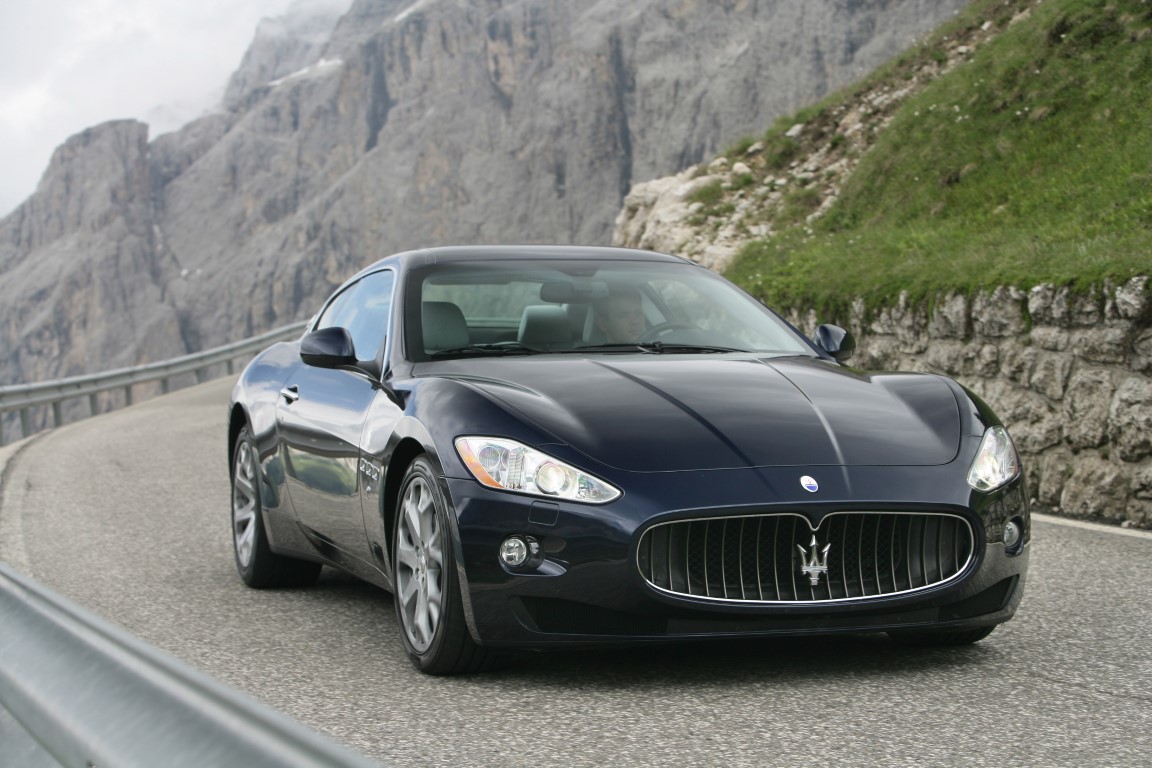
M145
(2007 - 2017)
4.7 V8
460 cv
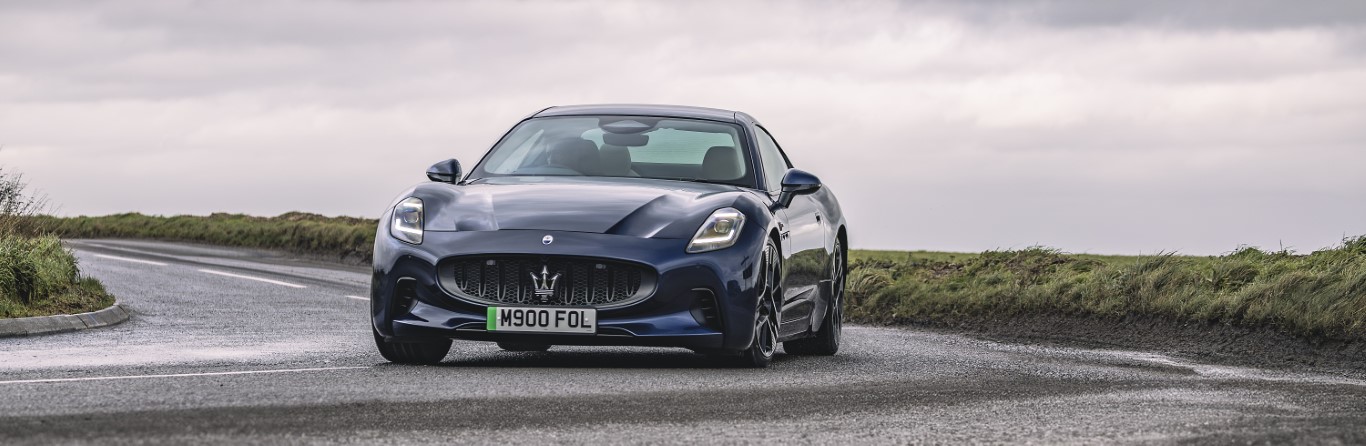
Technical specifications, versions, and history for the Maserati GranTurismo.
Select a generation to see available versions
(2007 - 2017)
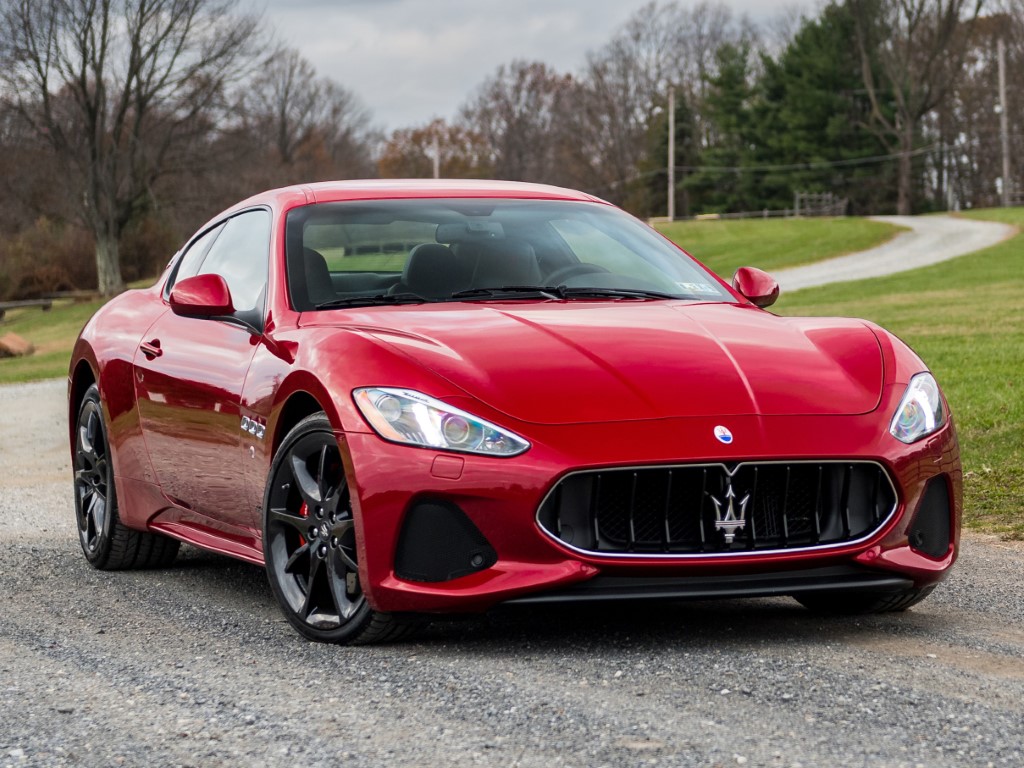
(2018 - 2020)
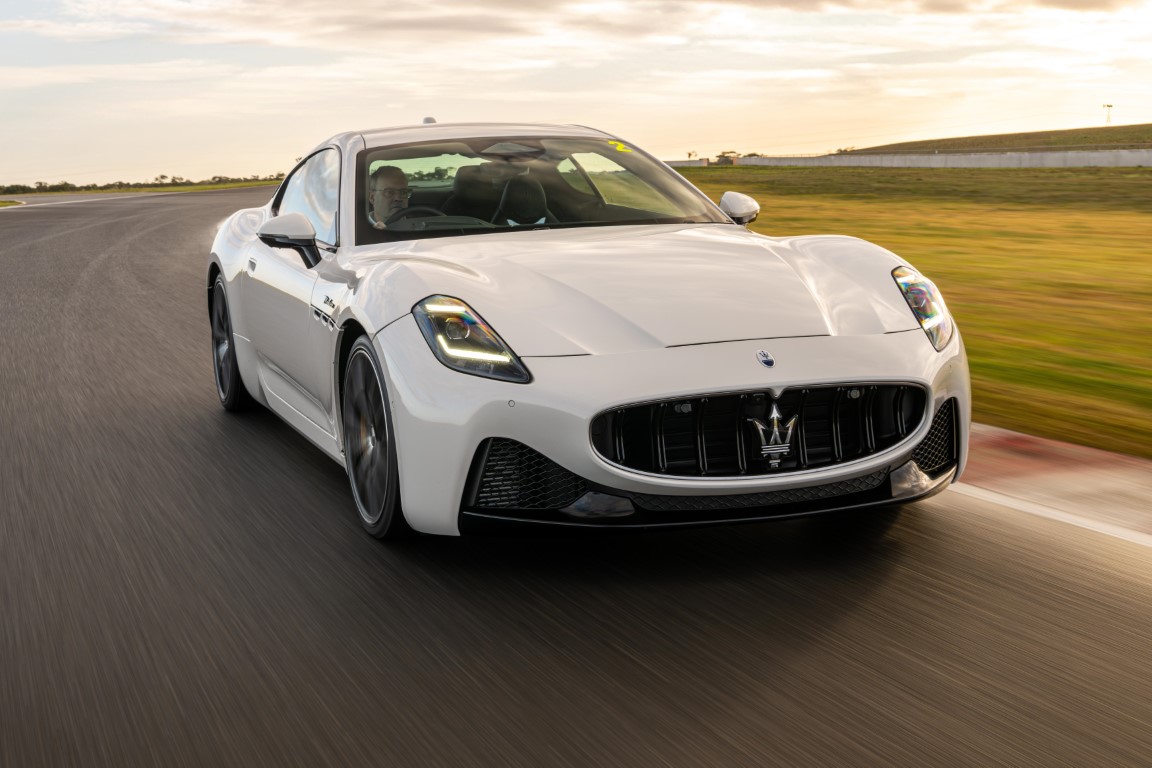
(2023-)
The history of the automobile is punctuated by models that transcend their transport function to become cultural icons and pillars of a brand's identity. The Maserati GranTurismo is, undeniably, one of these milestones. This report is dedicated to dissecting the trajectory of this coupe which, over two distinct generations, not only saved Maserati from an identity crisis but redefined the luxury Grand Tourer (GT) segment. The analysis presented here is not limited to a chronology of launches; it investigates the engineering decisions, design nuances, and market strategies that shaped the model, with a particular focus on its reception and commercialization in the Brazilian market.
The "Gran Turismo" concept is foundational to the House of the Trident. Maserati claims the invention of this category with the launch of the A6 1500 GT Pininfarina in 1947. The philosophy was revolutionary for the time, but deceptively simple: take a sophisticated racing engine and install it in a seductive, luxurious body comfortable enough for continental travel. Seventy years later, the launch of the modern GranTurismo in 2007 (code M145) and its reinvention in 2023 (code M189) continue to strictly follow this dogma, balancing the dichotomy between track performance and cruising comfort.
To understand the importance of the GranTurismo, it is necessary to situate it in the corporate context of the mid-2000s. Maserati, then under the operational control of Ferrari (within the Fiat Group), desperately needed a successor for the Maserati Coupé (known as the 4200 GT) and the Spyder. The original replacement project became complex and expensive, eventually being transferred to its sister brand and launched as the Ferrari California. This left Maserati in a dangerous vacuum, without a flagship coupe. The response was the lightning-fast development of the GranTurismo M145, which went from design to production in just nine months — an industry record that reflects the urgency and competence of Italian engineering.
The first generation of the GranTurismo is one of the longest-lived in the history of modern sports cars, remaining in production for 12 years. Its persistence in the market was not just a sign of budget constraints from FCA (Fiat Chrysler Automobiles), but a testament to the timelessness of its design and the charisma of its mechanical assembly.
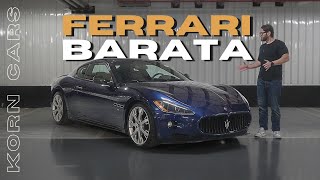
The design of the GranTurismo M145 was entrusted to the Pininfarina studio, under the creative direction of American designer Jason Castriota. The instruction was clear: create a true four-seater (a real 2+2, capable of accommodating four adults comfortably), distinguishing itself from rivals like the Porsche 911 or the Jaguar XK, which offered merely symbolic rear seats.
The visual result was a masterclass in proportion. The car was large — 4,881 mm in length and a 2,942 mm wheelbase — but the lines camouflaged its mass. The front was dominated by an aggressive oval grille with the concave trident, a direct reference to the racing cars of the 1950s. The side silhouette flowed organically, with a beltline that rose over the rear wheels to create muscular "shoulders," evoking power and stability.
A crucial design detail was the influence of the "Birdcage 75th" concept car. The fluidity of the front fender lines and the way the hood dove toward the grille were elements inherited directly from this concept, giving the GranTurismo an elegance that has aged gracefully, resisting ephemeral automotive design trends.
Built on the M139 platform (a shortened evolution of the Quattroporte V sedan's platform), the GranTurismo utilized a steel unibody structure. Although heavier than the aluminum structures used by Ferrari or Audi, the steel offered the necessary torsional rigidity for the comfort of a GT and passive safety.
Weight distribution was a point of obsession for the engineers. To combat the understeer tendency typical of front-engine cars, Maserati pushed the V8 engine behind the front axle, configuring a "front-mid engine" layout.
The suspension utilized double wishbones on all four wheels, with an "anti-dive" system in the front and an "anti-squat" system in the rear, ensuring the body remained level under heavy acceleration and braking. The Skyhook adaptive damping system, standard on many versions and optional on others, used sensors to continuously adjust the stiffness of the shock absorbers, prioritizing comfort in normal mode and stiffness in Sport mode.
The defining element of the GranTurismo M145 experience was the naturally aspirated V8 engine of the F136 family, jointly developed by Ferrari and Maserati and produced at the Ferrari factory in Maranello.
Unlike the F136 engines used by Ferrari (such as in the F430 and 458), which utilized a flat-plane crank to reach stratospheric RPMs and maximum power at the expense of low-end torque, Maserati opted for a cross-plane crank.
Why a Cross-Plane Crank?
This engineering choice was fundamental to the car's character. The cross-plane crank generates an uneven firing interval between the cylinder banks, resulting in two main characteristics:
There were two main variants of this engine over the model's life:
The "simplicity" of the GranTurismo lineup is deceptive. Over 12 years, Maserati launched multiple variants, each with distinct technical specifications that significantly altered the car's behavior. Below, we detail each iteration.
Launched at the 2007 Geneva Motor Show, the inaugural model focused on comfort.
The response to critics who asked for more sportiness arrived just a year later.
Maserati noticed a gap: customers who wanted the power of the 4.7 engine but rejected the harshness of the MC-Shift robotized gearbox.
Before the Stradale, Maserati launched limited versions and trim packages focused on the track. The initial "MC" (Maserati Corse) was a limited series based on the GT4 race car. The "MC Sport Line" package became available in 2009, allowing GranTurismo S owners to add carbon fiber parts, stiffer suspension, and racing aesthetic details to their road cars.
The pinnacle of the M145 platform. The MC Stradale was not just an aesthetic package; it was a performance-focused re-engineering, inspired directly by the Trofeo Maserati cars.
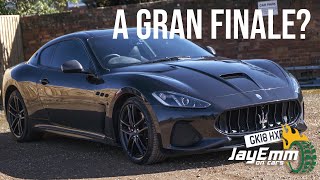
Direct replacement for the GranTurismo S in the mid-life facelift.
To mark the end of production in December 2019, Maserati presented the final chassis as a unique piece of art: the GranTurismo Zéda. The tri-color paint (Blue, Black, and White) symbolized the transition: blue represented the electric future, black modern technology, and white the "raw" state of the bodywork before painting, honoring the manual industrial process of Modena.
An analysis of the production numbers reveals the model's commercial success, especially considering its price and niche. All models were manufactured at the historic Viale Ciro Menotti factory in Modena.
The consolidated data indicate that the first generation was the most produced Maserati in history up to that point.
| Model | Units Produced | Manufacturing Period |
|---|---|---|
| GranTurismo (Coupe - All) | 28,805 | 2007 – Dec 2019 |
| GranCabrio (Convertible - All) | 11,715 | 2010 – Dec 2019 |
| Overall Total for M145 Platform | 40,520 |
Source: Consolidated data from.
Thanks to internal Maserati data leaks, we have a rare breakdown of the most collectible version, the MC Stradale.
| MC Stradale Configuration | LHD (Left-Hand Drive) | RHD (Right-Hand Drive) | Global Total |
|---|---|---|---|
| 2 Seater (2011-2013) | 334 | 168 | 502 |
| 4 Seater (2013-2017) | 271 | 198 | 469 |
| Total MC Stradale | 605 | 366 | 971 |
Source:. Insight: With fewer than 1,000 units produced globally, the MC Stradale is significantly rarer than "Special" Ferrari models like the 458 Speciale, suggesting high potential for future appreciation.
After a three-year hiatus (2020–2022) — a period during which the Modena factory was renovated for the new era — the GranTurismo returned. The challenge of the second generation (M189) was monumental: replace the charismatic V8 without losing the soul of the brand, and integrate total electrification without compromising driving dynamics.
The new GranTurismo uses a radical evolution of the Giorgio platform (famous for the Alfa Romeo Giulia). Maserati calls it a "multi-energy" architecture. The great innovation here is modularity: the chassis was designed from the ground up to accommodate both the V6 combustion engine and the electric powertrain and batteries, without altering the external dimensions or the body sheet metal. The extensive use of aluminum and magnesium kept the weight under control, despite the increase in onboard technology (~1,795 kg for the combustion versions).
The centerpiece of the combustion version is the Nettuno engine, a 90-degree 3.0L twin-turbo V6. This engine represents Maserati's independence from Ferrari, being designed and built in-house in Modena.
Pre-Chamber Technology (Maserati Twin Combustion - MTC):
The Nettuno incorporates a technology derived directly from Formula 1, unprecedented in mass-production cars at this level:
The result is an engine with very high specific output (>200 hp/liter) and superior thermal efficiency, allowing 550 hp from just 3 liters of displacement, surpassing the power of the old naturally aspirated 4.7L V8 with much more torque available at low revs.
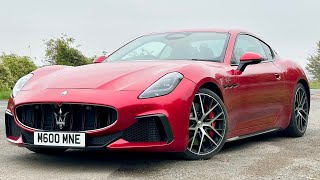
Under the leadership of Klaus Busse, Maserati opted for evolution, not revolution. The classic proportions were maintained, but "cleaned up".
The M189 lineup is divided into three distinct personalities: Modena, Trofeo, and Folgore.
The entry-level version, focused on classic "Grand Touring".
The high-performance combustion version.
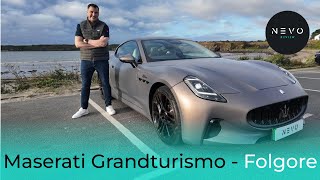
The Folgore is the most powerful and revolutionary version. Maserati made the bold decision not to make a "skateboard" chassis (batteries on the floor) like Tesla or Porsche Taycan, as this would raise the driver's position.
Exclusive Folgore Engineering:
Brazil has always been a key market for Maserati in Latin America, managed by the official importer Via Italia. The GranTurismo played a fundamental role in building the brand's image in the country.
In Brazil, the GranTurismo has always attracted a distinct customer profile from the Ferrari buyer. While the Ferrari is often a weekend or collection car, the GranTurismo is used by many Brazilian owners as a more frequent car, due to its ability to handle uneven asphalt (especially with the Skyhook suspension in normal mode) and the real space to take children to school or couples of friends to dinner, something impossible in a mid-engine supercar.
The first-generation GranTurismo (M145) suffered the typical depreciation of Italian luxury cars in Brazil, but it stabilized. Today, it is seen as an "accessible" gateway into the exotic world. 2008-2010 models orbit the range of R$ 380,000 to R$ 500,000, while the MC Stradale models and newer Sport models (2015+) maintain significantly higher values, frequently above R$ 700,000 to R$ 900,000, depending on provenance and maintenance history. The maintenance of the phase variator and the clutch (on automated models) are the critical points observed by national buyers.
The table below summarizes the radical evolution between the generations, comparing the top versions of each era.
| Technical Specification | GranTurismo MC Stradale (Gen 1) | GranTurismo Trofeo (Gen 2) | GranTurismo Folgore (EV) |
|---|---|---|---|
| Production | 2011 – 2017 | 2023 – Present | 2023 – Present |
| Motorization | 4.7L V8 Naturally Aspirated (F136 Y) | 3.0L V6 Twin-Turbo (Nettuno) | 3 Electric Motors (Perm. Magnet) |
| Maximum Power | 460 hp @ 7,000 rpm | 550 hp @ 6,500 rpm | 761 hp (MaxBoost Mode) |
| Maximum Torque | 520 Nm @ 4,750 rpm | 650 Nm @ 3,000 rpm | 1,350 Nm (Instantaneous) |
| Transmission | 6-Speed Automated Manual (MC Race) | 8-Speed Automatic (ZF Gen2) | 1-Speed (Fixed Reduction) |
| Drive | Rear-Wheel Drive (RWD) | All-Wheel Drive (AWD) | All-Wheel Drive (Vectored AWD) |
| 0-100 km/h | 4.5 seconds | 3.5 seconds | 2.7 seconds |
| Top Speed | 303 km/h | 320 km/h | 325 km/h |
| Weight (Kerb Weight) | ~1,770 kg | ~1,795 kg | ~2,260 kg |
| Dimensions (L x W x H) | 4,933 x 1,915 x 1,343 mm | 4,966 x 1,957 x 1,353 mm | 4,966 x 1,957 x 1,353 mm |
| Battery Capacity | N/A | N/A | 92.5 kWh (83 kWh Usable) |
| Consumption / Range | ~6 km/l (Urban) | ~8 km/l (Urban) | ~450 km (WLTP) |
Cross-referenced technical data sources:.
The Maserati GranTurismo is a case study on how a brand can maintain its soul while navigating corporate storms and technological shifts.
The First Generation (M145) will forever be remembered as the last bastion of the "old guard": analog design, a large-displacement naturally aspirated engine, and a soundtrack that defined an era. For collectors, the MC Stradale represents the purest point of this lineage.
The Second Generation (M189) proves that Maserati is not stuck in the past. The adoption of the Nettuno engine demonstrates technical competence independent of Ferrari, while the Folgore places the brand at the technological forefront of electric GTs, offering an engineering solution (T-battery and 800V) that preserves sporty driving dynamics where others have failed.
For the Brazilian and global market, the GranTurismo remains unique. It occupies a solitary space between the excessive comfort of a Bentley Continental GT and the rigid aggressiveness of a Porsche 911 Turbo. It is a car for those who understand that the journey matters as much as the destination. With production now consolidated in Modena and the platform ready for the electric future, the GranTurismo name seems guaranteed for more decades as the supreme ambassador of Italian style and performance.