Exterior Philosophy
The Grecale's design represents a break from the angular aggressiveness that characterized the
previous era of Maserati (Ghibli and Levante), adopting a more organic, fluid, and sculptural approach,
described by the brand as "Visual Longevity". The aesthetic is heavily influenced by the MC20 supercar,
establishing a new corporate face for the brand.
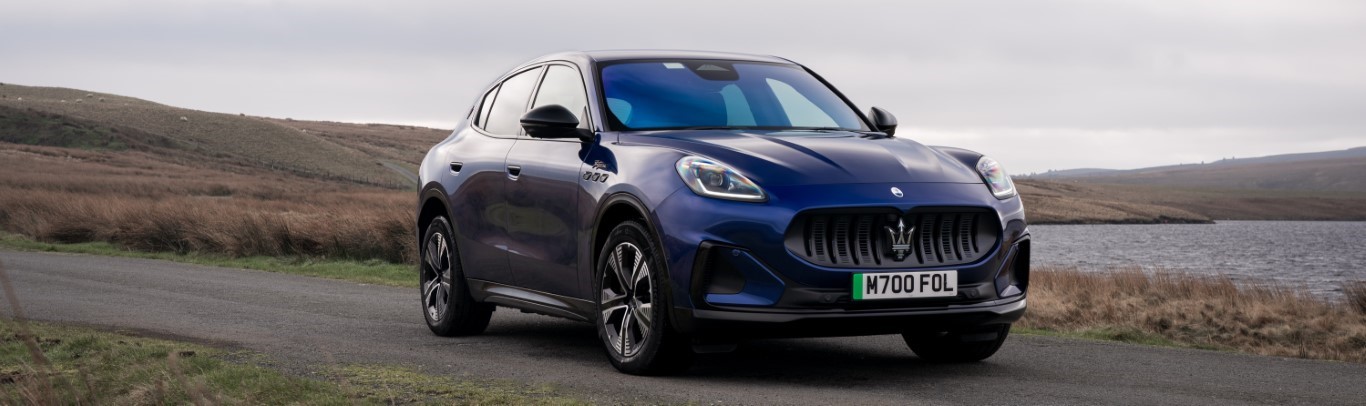
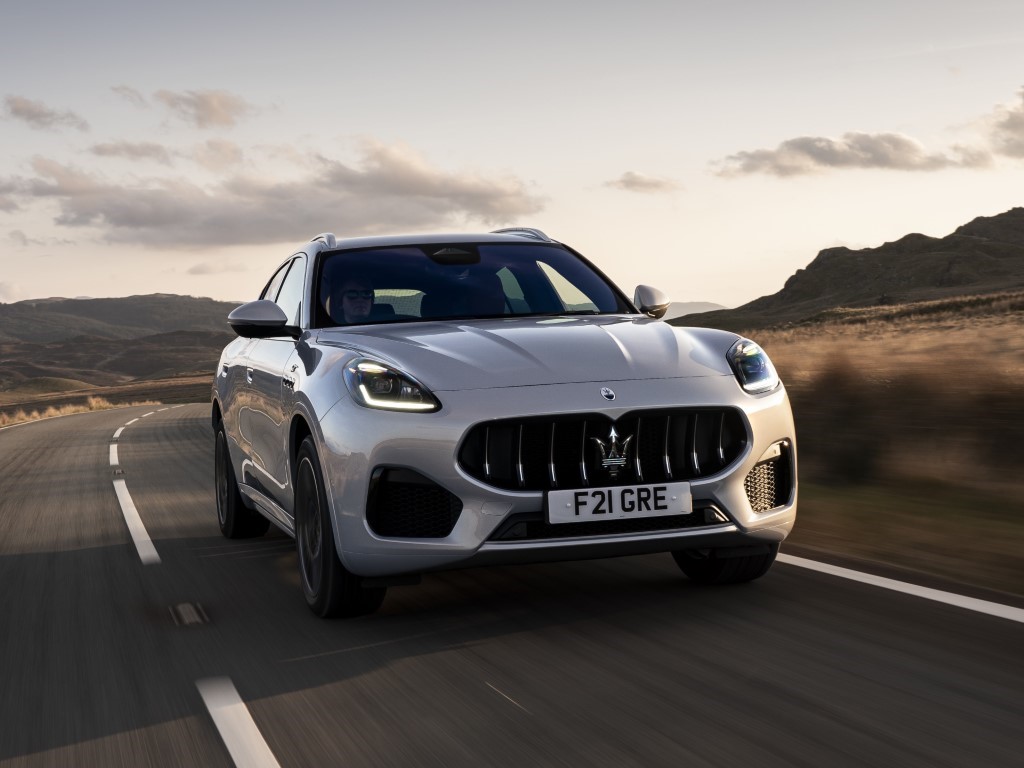
The front end is dominated by a low and imposing grille, featuring the traditional concave vertical
slats that harken back to the brand's historic racing cars. A crucial point of differentiation from the
Levante is the headlight design. While the Levante uses horizontal light clusters, the Grecale adopts
vertically arranged headlights. This choice is no accident; it seeks a direct visual connection with the
MC20 and classic models from the 2000s, giving the SUV a sportier and less utilitarian appearance. The
sculpted hood and prominent "nose" reinforce the sense of movement even when the vehicle is stationary.
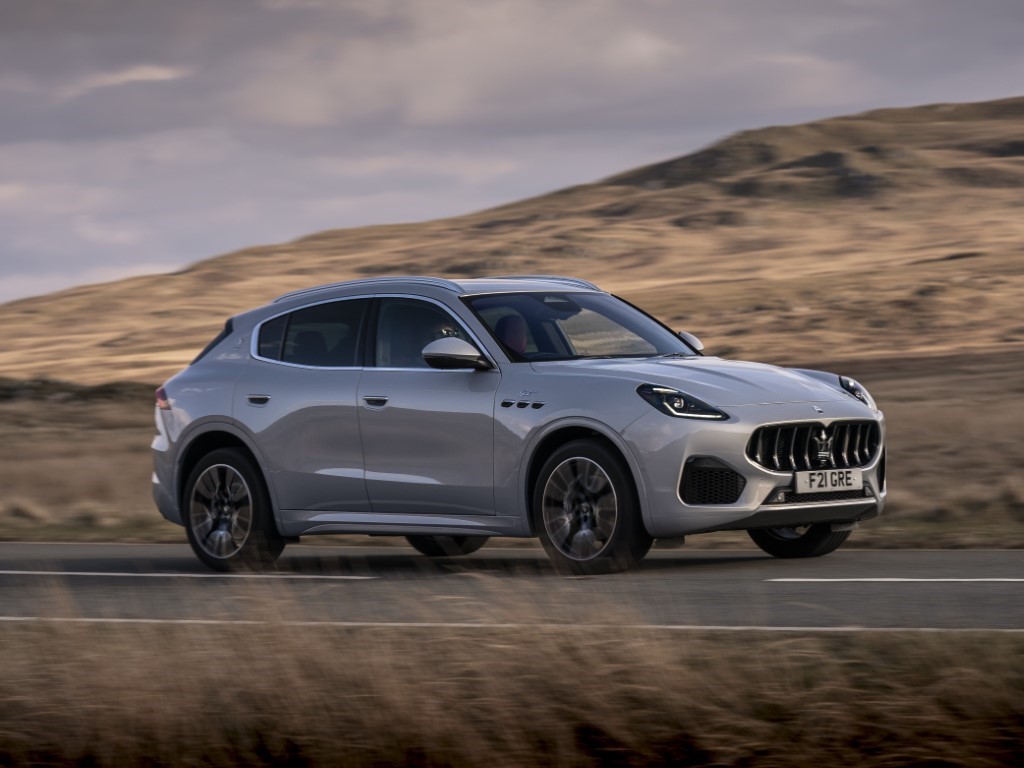
On the side, the silhouette seeks a balance between the functionality of an SUV and the elegance of a
coupe. The roofline slopes gently toward the rear, but without the abrupt cut that would compromise headroom
for rear passengers, a common flaw in competing "Coupe SUVs". The door handles are flush with the bodywork,
emerging only when needed, a solution that improves aerodynamics and cleans up the vehicle's lateral lines.
The iconic Trident logo is positioned on the C-pillar, a classic design detail that reaffirms the model's
nobility.
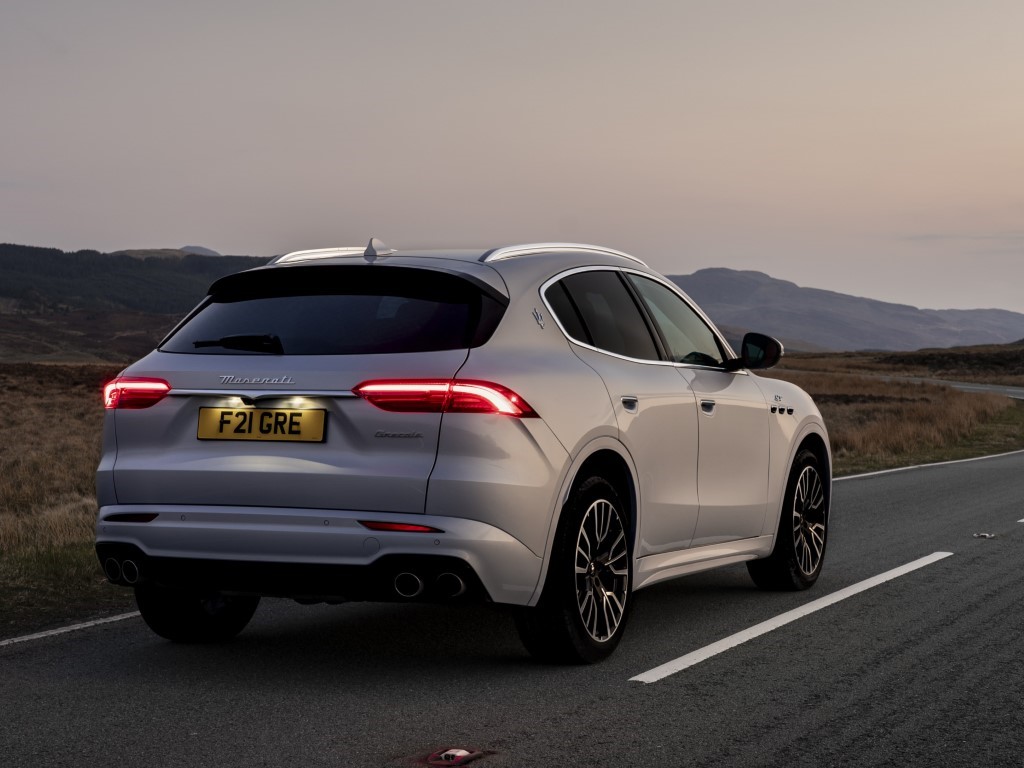
The rear features "boomerang" shaped taillights, a direct and nostalgic homage to the Maserati 3200
GT designed by Giorgetto Giugiaro in the late 90s. This design element connects the Grecale to the brand's
rich heritage of Gran Turismos. The lower part of the rear bumper varies according to the version: the
combustion variants (GT, Modena, Trofeo) display real and prominent exhaust tips, emphasizing acoustic
performance, while the electric Folgore adopts a specific aerodynamic diffuser without exhaust outlets.
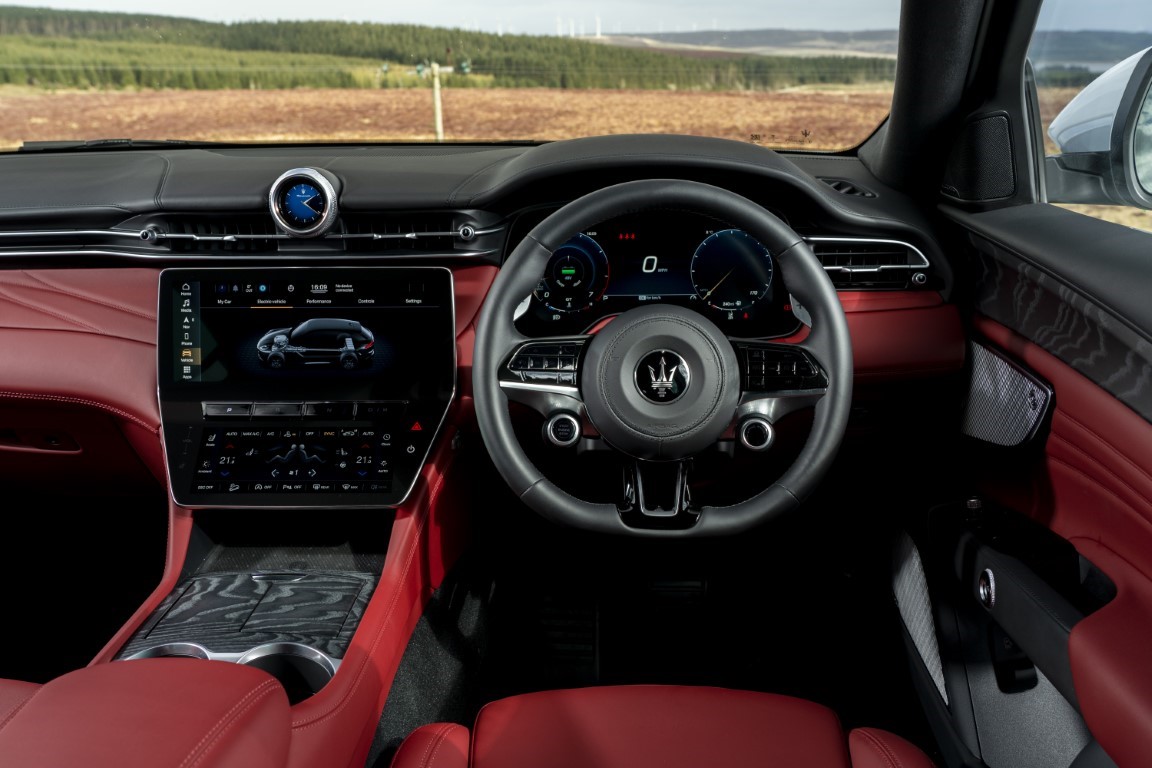
Interior Architecture and Digital Revolution
The Grecale's interior was the stage for Maserati's greatest technological revolution in decades.
Abandoning the traditional architecture full of physical buttons, the dashboard adopts a philosophy of
visual "digital detox," where surfaces are clean and functions are controlled by high-resolution screens.
The human-machine interface system is composed of four main screens:
- Digital Instrument Cluster: A 12.3-inch TFT screen located in front of the
driver, with configurable layouts ranging from classic dials to full-screen navigation maps.
- Central Infotainment Screen: Also measuring 12.3 inches, this screen
operates the MIA (Maserati Intelligent Assistant) system, based on the Android Automotive operating
system. This ensures a fast, intuitive interface with native integration of Google services, overcoming
the sluggishness criticisms of previous systems.
- Comfort Display: Just below the main screen, an 8.8-inch screen is
dedicated to controlling climate, seats, lights, and other vehicle settings. The physical separation of
these functions on a dedicated screen allows the driver to adjust the environment without interrupting
navigation or media on the main screen.
- Smart Clock: At the top of the dashboard, Maserati's traditional analog
clock has been replaced by a digital face. This is not just a clock; it is an interactive interface that
can function as a compass, G-force meter, stopwatch, and even visualize interaction with the voice
assistant, modernizing a classic icon without discarding it.
Material quality was elevated to compete with Germanic standards. Extensive use of natural leather,
open-pore wood, and real carbon fiber (especially on the Trofeo version) creates a tactile luxury
environment. The audio system is supplied by the renowned Italian brand Sonus faber. In higher trims, this
system features 21 speakers and immersive 3D sound, using natural materials in the speakers to ensure
organic sound fidelity, aligned with the "Italian craftsmanship" philosophy.