
1st Generation
(2022-)
3.0 V6 Twin-turbo (Nettuno)
530 cv
Technical specifications, versions, and history for the Maserati Grecale.
Select a generation to see available versions
(2022-)
The introduction of the Maserati Grecale into the historic Trident brand's portfolio does not merely represent the launch of another model, but rather a calculated move for survival and expansion in a global automotive market increasingly dominated by the SUV (Sport Utility Vehicle) segment. Historically associated with grand tourers and luxury sedans, Maserati identified, at the end of the 2010s, the imperative need to offer an entry-level product that was more accessible and practical than its older brother, the Levante, launched in 2016. The Grecale, positioned in the luxury D-SUV segment, was conceived to be the brand's highest volume vehicle, with the critical mission of attracting a younger audience, increasing female participation in the customer base, and serving as the spearhead for the automaker's electrification strategy under Stellantis management.
The name "Grecale" follows Maserati's century-old tradition of naming its vehicles after famous winds, a practice that began in 1963 with the Mistral and continued with icons like the Ghibli, Bora, Khamsin, and Levante. The Grecale is a strong, cool wind that blows from the northeast over the Mediterranean Sea, suggesting a transformative and dynamic force. This onomastic choice is not merely poetic; it signals the vehicle's intention to bring a fresh and vigorous "air" to the range, combining Italian passion with the versatility needed for everyday use, encapsulated in the marketing slogan "The Everyday Exceptional".
The strategic relevance of the model is underlined by its fiscal responsibility within the company. In a scenario where traditional sedans (Ghibli and Quattroporte) face a decline in demand, the Grecale was designed to compete directly with established and highly engineered leaders, notably the Porsche Macan, the BMW X3, and the Mercedes-Benz GLC. Maserati's ambition was not just to participate in this segment, but to redefine the standards of luxury, interior space, and performance, using a proven but deeply modified platform to preserve the brand's DNA.
The development of the Grecale occurred during a period of significant corporate transition, beginning under the aegis of Fiat Chrysler Automobiles (FCA) and concluding under the management of Stellantis. The fundamental technical decision was the use of the Giorgio platform, a highly acclaimed rear/all-wheel-drive architecture originally developed by Alfa Romeo for the Giulia and Stelvio models. This choice was pragmatic and technical: the Giorgio platform is recognized worldwide for its exceptional torsional rigidity and superior driving dynamics, indispensable characteristics for a vehicle bearing the Trident emblem.
However, Maserati's engineering in Modena was not limited to a simple "rebadge" (emblem swap). The technical team made extensive modifications to the basic architecture to give the Grecale a distinct identity and resolve common criticisms of the Alfa Romeo Stelvio, particularly regarding rear space. The wheelbase was lengthened to 2,901 mm, a significant increase that allowed the Grecale to offer class-leading rear-seat legroom, surpassing direct competitors and correcting one of the main dynamic limitations of vehicles focused purely on performance.
The Grecale's journey to dealerships was marked by significant external obstacles. Officially announced in 2020, the vehicle was scheduled for a global launch in November 2021. However, the global semiconductor (chip) shortage crisis, exacerbated by the COVID-19 pandemic, forced Maserati to make a difficult decision: postpone the launch. The official and strategic justification was that the Grecale, being the most technologically advanced Maserati to date, could not reach the market with compromised features or limited stocks of electronic components vital to the user experience.
The official launch finally took place in March 2022, with European sales beginning in the first half of that year and its arrival in the North American market the following fall. This delay, while frustrating, allowed for further refinement of the software systems and dynamic calibration. The fully electric version, the Grecale Folgore, was announced concurrently, but with a delayed launch schedule for 2023/2024, allowing the brand to first establish the combustion variants in the market.
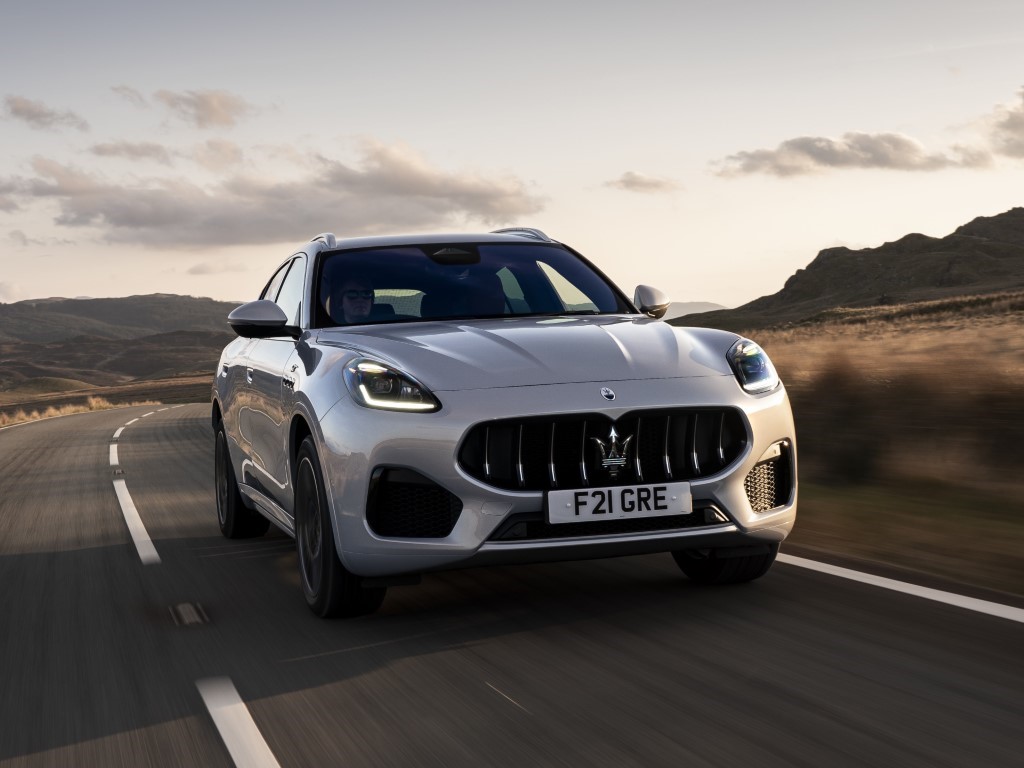
The Grecale's design represents a break from the angular aggressiveness that characterized the previous era of Maserati (Ghibli and Levante), adopting a more organic, fluid, and sculptural approach, described by the brand as "Visual Longevity". The aesthetic is heavily influenced by the MC20 supercar, establishing a new corporate face for the brand.
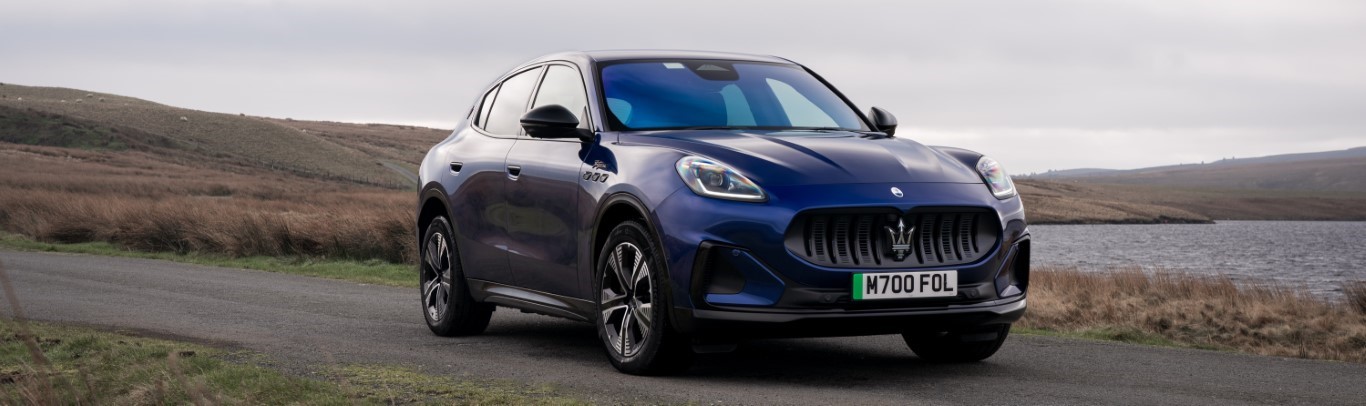
The front end is dominated by a low and imposing grille, featuring the traditional concave vertical slats that harken back to the brand's historic racing cars. A crucial point of differentiation from the Levante is the headlight design. While the Levante uses horizontal light clusters, the Grecale adopts vertically arranged headlights. This choice is no accident; it seeks a direct visual connection with the MC20 and classic models from the 2000s, giving the SUV a sportier and less utilitarian appearance. The sculpted hood and prominent "nose" reinforce the sense of movement even when the vehicle is stationary.
On the side, the silhouette seeks a balance between the functionality of an SUV and the elegance of a coupe. The roofline slopes gently toward the rear, but without the abrupt cut that would compromise headroom for rear passengers, a common flaw in competing "Coupe SUVs". The door handles are flush with the bodywork, emerging only when needed, a solution that improves aerodynamics and cleans up the vehicle's lateral lines. The iconic Trident logo is positioned on the C-pillar, a classic design detail that reaffirms the model's nobility.
The rear features "boomerang" shaped taillights, a direct and nostalgic homage to the Maserati 3200 GT designed by Giorgetto Giugiaro in the late 90s. This design element connects the Grecale to the brand's rich heritage of Gran Turismos. The lower part of the rear bumper varies according to the version: the combustion variants (GT, Modena, Trofeo) display real and prominent exhaust tips, emphasizing acoustic performance, while the electric Folgore adopts a specific aerodynamic diffuser without exhaust outlets.
The Grecale's interior was the stage for Maserati's greatest technological revolution in decades. Abandoning the traditional architecture full of physical buttons, the dashboard adopts a philosophy of visual "digital detox," where surfaces are clean and functions are controlled by high-resolution screens.
The human-machine interface system is composed of four main screens:
Material quality was elevated to compete with Germanic standards. Extensive use of natural leather, open-pore wood, and real carbon fiber (especially on the Trofeo version) creates a tactile luxury environment. The audio system is supplied by the renowned Italian brand Sonus faber. In higher trims, this system features 21 speakers and immersive 3D sound, using natural materials in the speakers to ensure organic sound fidelity, aligned with the "Italian craftsmanship" philosophy.
The Grecale's powertrain strategy is diverse, covering everything from hybrid efficiency to supercar performance and full electrification.
The volume versions, GT and Modena, are powered by a 2.0-liter, inline 4-cylinder turbocharged engine. Unlike a conventional engine, this powerplant integrates a 48-volt Mild Hybrid (MHEV) system designed to eliminate turbo lag and improve efficiency.
The system comprises four main elements:
Although they share the same hardware, the electronic calibration differs. In the Grecale GT, the setup delivers 300 hp (296 bhp), while in the Grecale Modena, power increases to 330 hp (325 bhp), maintaining a robust 450 Nm of torque in both, but with a broader delivery curve in the Modena version.
For the top-of-the-line Trofeo version, Maserati transplanted the heart of the MC20: the 3.0-liter Nettuno V6 biturbo engine. This engine is a milestone in modern automotive engineering, bringing Formula 1 technology to the streets.
The central innovation is the Maserati Twin Combustion (MTC) system. The engine uses a pre-combustion chamber located above the main chamber. At the moment of ignition, the air-fuel mixture is ignited in the pre-chamber, and jets of flame are fired into the main chamber through tiny holes. This causes extremely fast and uniform combustion, allowing for higher compression ratios and greater thermal efficiency. The engine features two spark plugs per cylinder (one in the pre-chamber and one in the main) to ensure smooth operation at low loads, where the pre-chamber is not needed.
For its application in the Grecale SUV, the engine was adapted. Unlike the MC20 which uses a dry sump (ideal for tracks), the Grecale uses a wet sump. Additionally, cylinder deactivation technology was implemented: in cruising situations or low torque demand, the entire right bank of cylinders can be deactivated, temporarily transforming the V6 into a 3-cylinder engine for fuel economy, without the driver noticing the transition.
The Grecale Folgore ("Lightning" in Italian) adapts the Giorgio platform for electric propulsion, demonstrating the versatility of the architecture. It operates on a 400V architecture.
The Grecale's driving is managed by the VDCM (Vehicle Dynamic Control Module) system. This electronic "brain" monitors the vehicle in real-time and controls the car's dynamics vertically, longitudinally, and laterally. It coordinates the suspension, steering, brakes, and engine to ensure the car's behavior matches the selected driving mode.
Suspension: The Grecale uses a double-wishbone layout at the front and a multilink setup at the rear.
The GT and Modena versions come standard with a mechanical suspension (coil springs), with the Skyhook adaptive suspension (variable stiffness dampers) being optional or standard depending on the market.
The Trofeo version and the Folgore come equipped as standard with air suspension, which allows for adjusting not only the stiffness but also the vehicle's ride height. This eases access, improves aerodynamics at high speeds (lowering the car), and allows for light off-road capability (raising the car).
Brakes: Braking is ensured by Brembo systems. On the Trofeo, 6-piston fixed calipers at the front and 4-piston at the rear guarantee stopping power consistent with its 530 hp performance.
The Grecale range is structured to meet distinct customer profiles, from rational luxury to extreme performance.
The entry-level version, but far from basic. The GT is focused on "urban chic" and minimalist design.
The mid-range version, balancing sportiness and elegance. It is frequently considered the "sweet spot" of the range.
The pinnacle of performance.
The vision of the future.
| Characteristic | GT | Modena | Trofeo | Folgore |
|---|---|---|---|---|
| Engine | 2.0 L4 MHEV | 2.0 L4 MHEV | 3.0 V6 Biturbo | Electric (BEV) |
| Power (hp) | 300 | 330 | 530 | 550 |
| Torque (Nm) | 450 | 450 | 620 | 820 |
| 0-100 km/h (s) | 5.6 | 5.3 | 3.8 | 4.1 |
| Top Speed (km/h) | 240 | 240 | 285 | 220 |
| Traction | AWD | AWD + Mech. LSD | AWD + e-LSD | e-AWD |
| Trunk Capacity (L) | 535 | 535 | 570 | 535 |
Maserati used the Grecale to demonstrate the potential of its "Fuoriserie" (custom-made) personalization program, creating editions that reinforce the model's luxury and exclusivity character.
To celebrate the model's launch, Maserati made available the limited edition "PrimaSerie" (First Series) based on the Modena and Trofeo versions. This edition served to reward early buyers with exclusive content.
In a bold collaboration with Mattel, Maserati produced only two ultra-exclusive units of the Grecale Trofeo with a Barbie theme, inspired by the "Barbiecore" phenomenon.
A "one-off" concept vehicle created to push the limits of Fuoriserie customization.
Production of the Grecale is centralized at the Stellantis plant in Cassino, Italy. This plant is a competence center for premium vehicles based on the Giorgio platform, also producing the Alfa Romeo Stelvio and Giulia. The decision to produce the Grecale in Cassino, and not at the historic Mirafiori plant (where the Levante is made), was motivated by the industrial efficiency of sharing the assembly line with Alfa Romeo models that use the same base architecture. Millions of euros were invested in modernizing the line to accommodate advanced electronic systems and battery assembly for the hybrid and electric versions.
The numbers reveal a challenging scenario for the model. Although the Grecale accounted for 53% of Maserati's global sales in 2023 (a year in which the brand sold 26,700 units in total), more recent data indicates a concerning retraction.
Reliability is a critical factor for Maserati's reputation. The Grecale, being a new project, faced initial challenges.
Owner reports and technical forums highlighted a recurring problem with 12V battery drain. The cause was identified in the keyless entry system. If the key is left within a distance of up to 5-6 meters (approx. 15 feet) from the vehicle, the car's communication system remains active, "waiting" for the driver, which drains the battery rapidly if the car sits idle for a few days. Maserati released software updates allowing users to disable "approach unlock" in the settings, mitigating the problem.
The Grecale faces established titans. A comparison reveals its strengths and weaknesses.
The Macan is the dynamic benchmark of the segment.
The Maserati Grecale is the most competent and strategically vital product launched by the brand in recent decades. It successfully fills the gap of a mid-size luxury SUV with true sporting DNA, offering a habitability that makes it usable as an only family car, something not all competitors manage to balance with performance.
The engineering behind the Nettuno engine and the brilliant adaptation of the Giorgio platform show that Maserati has maintained its technical excellence. However, the commercial challenges are immense. The drop in production volumes in 2024 suggests that the high price and fierce competition, coupled with economic uncertainties in key markets like China, are limiting the model's volume potential.
The Grecale's future now rests on the shoulders of the Folgore version. As the brand's first electric SUV, it must lead Maserati's transition to a 100% electric automaker by 2030. If the Folgore manages to convince buyers that an electric car can have a "soul," the Grecale will secure its place in history not just as a wind of change, but as the foundational pillar of the Trident's new era.
For today's consumer, the Grecale presents itself as a passionate choice grounded in technical competence: the GT for daily luxury, the Modena for perfect balance, and the Trofeo for those who want a supercar disguised as an SUV. The 2025 lineup updates, with package simplifications and software fixes, make the model more mature and ready to face its Germanic rivals.