1st Generation
(2016 - 2024)
3.8 V8 Twin-turbo
580 cv
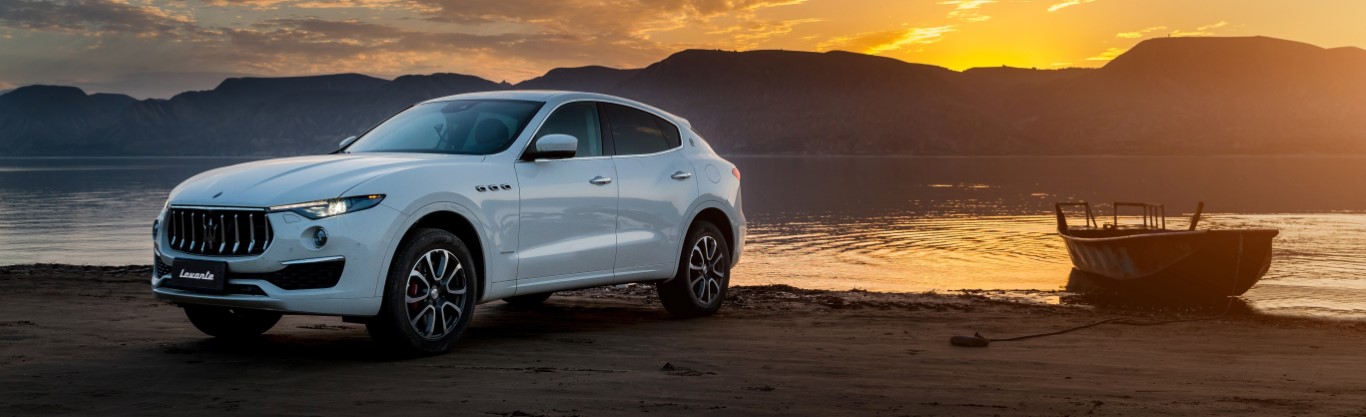
Technical specifications, versions, and history for the Maserati Levante.
Select a generation to see available versions
(2016 - 2024)
Select a powertrain to view full technical specifications
The global automotive industry witnessed, in the second decade of the 21st century, a paradigmatic transformation in the luxury segment. The hegemony of executive sedans and high-performance coupes was challenged by the inexorable rise of Sport Utility Vehicles (SUVs). For manufacturers with a centennial legacy rooted in racetracks, such as Maserati, this shift represented an existential dilemma: how to integrate the robust practicality of an SUV with the elegance and driving dynamics demanded by the Trident emblem? The answer to this strategic question materialized in the Maserati Levante.
This report offers an exhaustive and straightforward analysis of the Levante's trajectory, from its controversial conceptual origins to the end of its production in 2024. We examine the engineering behind the M161 chassis, the evolution of the Ferrari-produced powertrains, the nuances of each model year (MY) update, and the commercial performance that defined the brand's financial health for nearly a decade.
The journey to the launch of Maserati's first SUV was long and marked by significant corporate changes. The idea did not emerge in 2016, but rather thirteen years earlier, manifesting itself in two distinct concepts, both named "Kubang", which reflect different geopolitical moments of the company.
Maserati's first foray into the universe of utility vehicles occurred in 2003, at the Detroit Auto Show. Designed by the legendary Giorgetto Giugiaro, the Kubang GT Wagon concept was an avant-garde vision that attempted to merge the sports wagon with the SUV.
At that time, Maserati operated under a sphere of influence that sought synergies with the Volkswagen/Audi Group. The concept was designed on the technical basis of the Audi A8, with the anticipation of using the Quattro all-wheel-drive system and a 368 hp V8 engine derived from the Maserati 3200 GT. The project, however, fell victim to failed corporate negotiations; the agreement with Audi did not materialize, and the Kubang GT Wagon remained merely a design study, leaving Maserati out of the first wave of luxury SUVs that consecrated the Porsche Cayenne.
The dream was revived in 2011, at the Frankfurt Motor Show, under the new management of the Fiat-Chrysler (FCA) group. This second concept, also called Kubang, had a radically different technical proposal: it used the Jeep Grand Cherokee platform as its foundation. The logic was to leverage the American group's economy of scale to make the Italian product viable. The design already anticipated the lines of the final Levante, with an aggressive front grille and a muscular stance.
Between 2011 and 2015, Maserati's management made a crucial decision that would define the vehicle's character. To ensure that the SUV behaved like a true Maserati and not like a rebadged Jeep, the engineering team discarded the American platform. They opted to develop the Levante on the architecture of the Ghibli and Quattroporte VI sedans. This technical choice allowed them to prioritize rear-wheel drive and sporty dynamic behavior, distancing the Levante from its more utilitarian competitors.
The name "Kubang" was abandoned in favor of Levante, inspired by a warm Mediterranean wind capable of changing from a gentle breeze to a gale in an instant — a direct metaphor for the duality of behavior intended for the car.
The Maserati Levante (internal code M161) was produced exclusively at the Mirafiori plant in Turin, Italy. Its construction reflects a commitment to on-road performance, differentiating itself from most SUVs that prioritize space or extreme off-road capability.
The use of the sedan platform (M156) adapted for the SUV gave the Levante rare characteristics in the segment:
Unlike the Ghibli, which used conventional steel springs, the Levante was equipped as standard in all versions with an air suspension system (pneumatic springs) combined with Skyhook variable electronic dampers.
This system allows the ride height to vary across six different levels, adapting the car for multiple situations:
The front suspension uses a double-wishbone setup, typical of race cars, while the rear employs a five-link Multi-link system, ensuring precise wheel control on uneven surfaces.
Maserati equipped the Levante with the intelligent Q4 all-wheel-drive system, designed to offer the feel of a rear-wheel-drive car but with the safety of all-wheel drive.
| Driving Condition | Torque Distribution (Front/Rear) | Dynamic Behavior |
|---|---|---|
| Cruising / Dry Surface | 0% / 100% | The engine sends all the power to the rear wheels, saving fuel and maintaining the purity of sporty steering. |
| Loss of Grip | Up to 50% / 50% | In just 150 milliseconds, the system detects slip and transfers up to half of the power to the front axle. |
The Q4 system works in conjunction with a mechanical Limited Slip Rear Differential (LSD), which ensures traction even in tight corners under heavy acceleration. This focus on traditional mechanics, rather than relying solely on electronic brakes to simulate a differential, is a trademark of Maserati engineering.
Throughout its eight years of production, the Levante was powered by four distinct engine families. The vast majority of these units were designed in Modena and manufactured by Ferrari in Maranello, a crucial selling point for the model's exclusivity.
The Levante's most popular engine is the 3.0-liter, twin-turbo V6 with gasoline direct injection (GDI). This engine was developed by Maserati Powertrain and produced by Ferrari.
A notable feature of this engine is the active exhaust system. In "Sport" mode, pneumatic valves in the exhaust open up, bypassing the mufflers to produce the sharp, metallic roar characteristic of the brand.
Introduced in 2018 to compete with "super SUVs" like the Lamborghini Urus, this 3.8-liter V8 engine is derived from the unit used in the Ferrari California T and the Maserati Quattroporte GTS.
At launch in 2016, the European market still demanded diesel engines. Maserati utilized a 3.0-liter V6 supplied by VM Motori.
With the decline of diesel and the tightening of emissions standards, Maserati introduced the Levante Hybrid in 2021.
Although it belongs to a single generation, the Levante underwent a process of continuous improvement. Analyzing the year-over-year changes is essential to understanding the product's maturation in the used car market.
The Levante hit the market with the mission of doubling the brand's sales. The first units were criticized by the specialized media for some interior materials that felt shared with generalist brands from the Chrysler group (such as power window switches and the older multimedia screen). However, the driving dynamics were universally praised.
Brazil: The launch took place at the São Paulo Auto Show in 2016, with prices starting at R$ 640,000 for the entry-level version and reaching R$ 740,000 for the S version.
The first major technical update occurred in 2018.
The 2019 model year brought interior refinements to address criticisms about perceived quality.
In 2021, the Levante received its most significant aesthetic update.
To mark the end of production, Maserati simplified the range into two main versions, under the "Ultima" nomenclature, loaded with equipment that was previously optional.
Maserati utilized limited editions to keep the model fresh and attract collectors.
Limited to 100 global units, this edition marked the debut of the V8 engine. It was characterized by the exclusive matte Blu Emozione Matte paint, 22-inch Orione wheels, and an interior with contrast stitching matching the body color. The interior featured a numbered "One of 100" plaque on the center console.
A limited series of 150 units exclusive to Europe and Asia. Available only in the color Grigio Lava (matte gray), with the "Nerissimo" pack that blacked out all chrome elements (grille, exhaust, window trims). The brake calipers were red, and the interior featured high-gloss carbon fiber and red leather seats.
A tribute to the ultra-rare 1986 Quattroporte Royale. Production was restricted to 100 units (divided among Levante, Ghibli, and Quattroporte).
Differentiator: Available in two exclusive colors (Blu Royale and Verde Royale). The interior debuted the Zegna PELLETESSUTA™ material, an innovative fabric made from thin strips of Nappa leather woven like wool yarns, offering a unique and luxurious tactile texture.
A tribute to the brand's racing history and to driver Juan Manuel Fangio (the "F" in the name).
Colors: Rosso Tributo (Red) and Azzurro Tributo (Blue). The red symbolizes the colors of Italian racing, while the blue refers to the flag of the city of Modena.
Details: The wheels and brake calipers received a yellow finish, a reference to the colors of the front of the Maserati 250F that Fangio piloted in Formula 1.
Brazil received the Levante during a time of expansion in the luxury market, although currency volatility affected its pricing.
At its launch in 2016, Maserati (represented by the importer Via Itália) brought two versions of the V6:
These values placed the Levante above the entry-level versions of the Porsche Cayenne, positioning it as a more exclusive niche product.
An analysis of prices over the years shows the appreciation of the more powerful versions and the impact of the exchange rate.
According to market data (Fipe and Webmotors) referenced in the research:
The Levante's production numbers tell the story of a dazzling initial success followed by a gradual decline, typical of models that remain in the market for a long time without a total renewal.
The Levante was Maserati's engine for growth. Prior to it, the brand sold modest volumes.
The end of production was abrupt and marked by a crisis at the Mirafiori plant. In 2024, the factory's total production (including the last Levantes and the new GranTurismos) plummeted to just 2,250 units, a 74% drop compared to 2023. Stellantis, the brand's parent company, halted production of the Levante in the first quarter of 2024, without an immediate direct successor on the assembly line, sparking strikes and labor uncertainties in the Turin region.
The total estimated production of the Levante over its 8-year lifespan hovers around 100,000 to 110,000 units, consolidating it as one of the most produced Maseratis in history, despite the melancholic finale.
The Maserati Levante was much more than just a product; it was a survival tool. It proved that the Trident brand could step out of its sports car niche and compete in a global mass market without losing its Italian soul.
Strengths of the Legacy:
The Future:
With the end of the Levante, Maserati temporarily leaves the large SUV segment (E-UV). The baton has been passed to the Maserati Grecale, a smaller SUV (D-UV) launched in 2022, which now carries the brand's volume responsibility. A direct successor to the Levante, likely fully electric (Folgore), is in the brand's future plans, but the original Levante will remain in history as the last of its kind: a large, gasoline-powered SUV with the heart of a Ferrari and the soul of a GT.
Images of the Maserati Levante