


Introduction: The Rebirth of the Trident and the Strategic Context
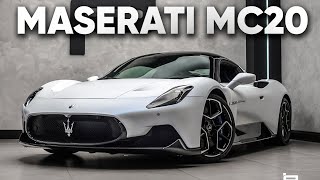
The high-performance automotive industry is marked by cycles of innovation and identity redefinition. In the case of Maserati, one of Italy's most historic and revered brands, the launch of the MC20 (Maserati Corse 2020) did not just represent the introduction of a new product to the portfolio, but rather a tectonic shift in the company's corporate and technological strategy. This report details the complete trajectory of the model, from its conception in the Modena laboratories to its most extreme variants, analyzing the impact of its engineering and its role in restructuring the brand for the new decade.
The MC20 carries heritage and the future in its name: "MC" revives the acronym for Maserati Corse, the racing division that forged the brand's legend, while "20" marks the year 2020, the turning point for a new era. The importance of this vehicle transcends its technical specifications; it symbolizes Maserati's declaration of independence from Ferrari. After decades of using shared or derived engines and platforms from Maranello, the MC20 was the first vehicle in over twenty years to be powered by an engine 100% developed and produced by Maserati itself.
Positioned as the spiritual successor to the legendary MC12 — the supercar that dominated the FIA GT championship between 2004 and 2010 — the MC20 adopts a distinct approach. While the MC12 was a street-homologated race car, extremely limited and physically imposing (based on the Ferrari Enzo chassis), the MC20 was designed from the ground up as a mass-produced supercar, balancing everyday usability with dynamic track capability. This report explores how this duality was achieved through innovations in aerodynamics, materials science, and engine thermodynamics.
The Return to Modena
The production of the MC20 required a complete revitalization of Maserati's historic facilities on Viale Ciro Menotti in Modena. The factory, which has operated at the site for over 80 years, underwent significant modernizations to accommodate the assembly line for the new supercar and the creation of the Maserati Engine Lab, where the Nettuno engine is assembled. This strategic move to centralize development and production in Modena reinforces the narrative of authenticity and quality control, crucial elements for competing in the luxury segment against established rivals such as McLaren, Lamborghini, and Ferrari itself.
Engineering and Development: The Digital and Structural Revolution
The development cycle of the Maserati MC20 stands out in the industry for its speed and efficiency. The model was conceived in approximately 24 months, a record time for a vehicle designed from scratch. This feat was made possible by the adoption of a development methodology heavily based on virtual simulations, led by the Maserati Innovation Lab.
The Virtual Development Methodology
Modern supercar engineering has shifted from physical test tracks to data servers. In the case of the MC20, about 97% of dynamic development was conducted virtually before the construction of the first physical prototype . Using an advanced dynamic simulator, engineers and test drivers were able to model chassis behavior, engine response, and aerodynamic efficiency across thousands of different scenarios.
This approach, called Virtual Vehicle Dynamics Development, allowed the team to refine the car's "soul" — its drivability and tactile feedback — without the costs and delays associated with manufacturing physical test mules in early stages. The result was a vehicle that, upon hitting the asphalt for final validation, already had its suspension and engine parameters extremely mature, requiring only fine calibration adjustments.
The Carbon Fiber Monocoque and the Partnership with Dallara
The backbone of the MC20 is its carbon fiber monocoque chassis . For this critical structure, Maserati established a technical partnership with Dallara, a world leader in motorsport engineering and chassis builder for IndyCar and Formula 2.
The monocoque was designed with a "multi-energy" philosophy. This means that a single basic architecture was developed to accommodate three distinct body and powertrain types, without requiring structural changes that would compromise rigidity or add unnecessary weight. The three configurations envisioned from the start were:
- Coupé: With an internal combustion engine.
- Cabriolet (Spyder): Which would become the Cielo model.
- Electric: The Folgore version (later canceled).
The intensive use of carbon fiber and composites allowed the monocoque's weight to remain around 100 kg. This is fundamental to keeping the total vehicle weight (Kerb Weight) below 1,500 kg in the coupé version, resulting in a weight-to-power ratio of 2.33 kg/hp, one of the best in its class. The torsional rigidity provided by this chassis also eliminated the need for heavy reinforcements in the convertible version, keeping driving dynamics unchanged between variants.
The Heart of the Machine: Deep Analysis of the Nettuno Engine
The centerpiece of the MC20's engineering is the Nettuno engine . This powerplant is not just a means of propulsion, but a technological manifesto. It is a 3.0-liter twin-turbo V6, with cylinder banks at 90 degrees, a dry sump, and a combustion technology unprecedented in road cars.
Pre-Chamber Technology: The Transfer from Formula 1
The great differentiator of the Nettuno engine is its passive pre-chamber combustion system , a technology derived directly from current Formula 1 power units. Maserati patented this system for highway use, bringing significant gains in thermal efficiency and specific power.
The mechanics of this system are complex and operate in precise stages:
- The Pre-Chamber: Unlike a conventional engine, where the spark plug ignites the mixture in the main chamber, the Nettuno has a small combustion chamber (pre-chamber) located above the main cylinder, connected to it by a series of calibrated holes.
- Primary Ignition: During the compression stroke, a portion of the air-fuel mixture is forced into the pre-chamber. The main spark plug, situated inside this pre-chamber, fires and initiates combustion.
- Turbulent Jets: The combustion in the pre-chamber generates immense pressure, forcing flames and hot gases through the connection holes into the main cylinder. These "turbulent jets" penetrate the main chamber's mixture much faster and deeper than a conventional electrical spark would.
- Rapid and Uniform Combustion: The result is an extremely fast and uniform fuel burn throughout the cylinder volume. This drastically reduces the chance of uncontrolled detonation (engine knock), allowing the engine to operate with a high compression ratio of 11:1, even under high pressure from the turbochargers.
To ensure operability in all conditions, the engine uses a Twin Spark system. In addition to the pre-chamber spark plug, there is a traditional lateral spark plug that acts under low loads or at idle, when the pre-chamber is neither necessary nor efficient, guaranteeing smoothness in urban driving.
Technical Specifications and Performance
The Nettuno engine delivers numbers that rival larger displacement V8 engines, demonstrating the effectiveness of downsizing when applied with high technology.
| Parameter | Specification |
|---|---|
| Configuration | 90° V6 Twin-Turbo |
| Displacement | 3,000 cc (3.0 Liters) |
| Maximum Power | 630 hp (463 kW) at 7,500 rpm |
| Maximum Torque | 730 Nm between 3,000 and 5,500 rpm |
| Specific Power | 210 hp/liter |
| Bore x Stroke | 88 mm x 82 mm |
| Compression Ratio | 11:1 |
| Injection System | Dual (Direct at 350 bar + Indirect at 6 bar) |
| Lubrication | Dry Sump with external scavenge pumps |
| Firing Order | 1-6-3-4-2-5 |
| Engine Weight | < 220 kg |
The use of a dual injection system (PDI) allows optimizing the fuel mixture: the high-pressure direct injection (350 bar) improves performance and chamber cooling at high revs, while the indirect injection (Port Injection) helps reduce particulate emissions and ensures smoothness at low revs. The dry sump, a typical race car solution, allows the engine to be mounted lower in the chassis, reducing the vehicle's center of gravity and improving cornering dynamics.
Design, Aerodynamics, and Ergonomics
The MC20's design, penned by Klaus Busse at the Centro Stile Maserati in Turin, follows a philosophy of "subtractive purity." Unlike the contemporary trend of supercars filled with aggressive aerodynamic appendages, winglets, and large fixed spoilers, the MC20 presents a clean and fluid silhouette. The bodywork was visually divided into two parts: the upper, focused on aesthetics and elegance, and the lower, in exposed carbon fiber, strictly technical and functional.
Invisible Aerodynamics
The absence of large movable spoilers on the top (with the exception of a small integrated spoiler) hides sophisticated aerodynamic work carried out on the vehicle's underbody . The car uses ground effect to generate downforce.
- Vortex Generators: Located at the front, they channel air beneath the vehicle.
- Flat Underbody and Diffuser: The air flows accelerated under the car and is expanded in the large rear diffuser. The pressure difference created "sucks" the car against the asphalt, ensuring stability at high speeds (over 325 km/h) without penalizing the drag coefficient.
- Cooling: The side air intakes feed the intercoolers, while vents in the rear engine cover (which form a stylized trident) extract heat from the engine bay.
Butterfly Doors and Ergonomics
Access to the cabin is via "butterfly" doors (Butterfly Doors) . While visually striking, the choice of this mechanism was primarily ergonomic. They project upwards and outwards, completely freeing up legroom and facilitating entry and exit, a common problem in cars with wide carbon monocoques.
The interior follows a minimalist philosophy . The focus is entirely on the driver. The steering wheel, clad in Alcantara and Carbon fiber, groups the essential controls, including the start button and launch control selector. The center console was cleared of unnecessary buttons, housing only the driving mode selector (GT, Sport, Corsa, Wet, ESC Off), the transmission buttons, and window controls. The digital interface consists of two 10-inch screens: one for the configurable instrument cluster and another for the MIA (Maserati Intelligent Assistant) multimedia system, based on the Android Automotive system.
Evolution and Model Versions
Although the MC20 is a recent project, its family has rapidly expanded to include body variants and track-focused versions. It is important to note that, to date, there is only one generation of the MC20, but this generation has unfolded into several iterations.
Maserati MC20 Coupé (2020 – Present)
The inaugural model set the parameters for the line.
- Transmission: Uses an 8-speed dual-clutch gearbox (Tremec TR-9080) bathed in oil. The first six gears are focused on acceleration, while the 7th and 8th are overdrive gears for fuel economy and highway comfort.
- Performance: Acceleration from 0 to 100 km/h in 2.9 seconds and 0 to 200 km/h in less than 8.8 seconds.
- Suspension: Uses a double-wishbone layout with a virtual steering axis, a refined solution that improves steering precision and isolates vibrations.
Maserati MC20 Cielo (2022 – Present)
The convertible variant, named Cielo (sky in Italian) , introduced innovations in the spyder segment.
- Electrochromic Glass Roof: The major technical differentiator is the retractable rigid glass roof. Using PDLC (Polymer Dispersed Liquid Crystal) technology, the glass can instantly switch between transparent and opaque at the touch of a button on the center console. This allows occupants to have a sense of brightness even with the roof closed, or privacy and sun protection when needed.
- Mechanism: The roof opens or closes in just 12 seconds, one of the fastest operations on the market.
- Weight Impact: Due to the inherent rigidity of the carbon monocoque, the structural reinforcement required for the convertible version was minimal. The MC20 Cielo weighs only about 65 kg more than the coupé, keeping dynamic performance practically unchanged (0-100 km/h in approximately 3.0 seconds).
The Cancellation of the MC20 Folgore (Electric)
A crucial part of the MC20 story is the chapter that didn't happen. Since its launch in 2020, Maserati promised a fully electric version, designated Folgore.
- The Promises: This version would use the same carbon chassis and promised over 700 hp, with three electric motors (one front, two rear), torque vectoring, and 0-100 km/h acceleration in the 2-second range.
- The Outcome (2025): In March 2025, Maserati officially confirmed the cancellation of the MC20 Folgore project. The decision was attributed to a combination of "lack of commercial interest" for electric supercars in this price segment and investment cuts by the parent group Stellantis. The cancellation marks a significant shift in the brand's electrification strategy, which will now focus the MC20 platform exclusively on internal combustion.
Rebranding: Maserati MCPura (2025)
From 2025 onwards, reports indicate that the MC20 underwent a rebranding or mid-life update process, being referred to in some markets or versions as Maserati MCPura. This update brought minor aesthetic revisions, new color and customization options, while retaining the Nettuno mechanics as the foundation.
High Performance and Competition Versions
The transition of the MC20 from the streets to the tracks — and back to the streets — generated the most extreme versions of the model.
Maserati GT2 (Competition)
Developed to compete in the Fanatec GT2 European Series, the Maserati GT2 marked the brand's official return to GT racing in 2023.
- Modifications: Based on the street model, the GT2 removes all acoustic insulation and interior luxury, adding an FIA-homologated roll cage, fire extinguisher system, and competition fuel tank.
- Aerodynamics: Features an aggressive aerodynamic package with a large adjustable rear wing, prominent front splitter, and revised side skirts for maximum downforce.
- Immediate Success: The car demonstrated instant competitiveness, securing pole position and a podium finish in its debut at Paul Ricard in late 2023.
Maserati GT2 Stradale (2024/2025)
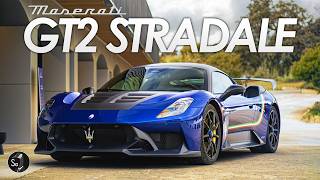
In response to demand for a vehicle with a "racing soul" but road-legal, Maserati launched the GT2 Stradale .
- Concept: It is the union between the standard MC20 chassis and the aerodynamics and mechanics of the GT2 race car.
- Engine Evolution: The Nettuno engine received new calibration and an exhaust system, raising power to 640 hp (10 hp more than standard).
- Weight Reduction: Through the removal of superfluous items, use of Sabelt carbon seats, and forged wheels, total weight was reduced by about 60 kg (to ~1,365 kg dry).
- Aerodynamics: Inherits the ventilated hood and enormous rear wing from the GT2, generating significantly more downforce than the standard model, which improves cornering speed, although it marginally reduces final top speed (324 km/h vs 325 km/h) due to aerodynamic drag.
- Performance: The 0 to 100 km/h drops to 2.8 seconds. The model features a new "Corsa Evo" driving mode, derived from the tracks.
Special Editions, Customization, and Rarity
Maserati used the MC20 as a showcase for its Fuoriserie customization program, creating limited series that increase its collector appeal.
PrimaSerie (Launch Edition)
The first units produced received the PrimaSerie designation.
- Production: Production was strictly limited. For the Cielo version, for example, only about 65 units were produced globally.
- Exclusive Details: These units are characterized by the Acquamarina launch color (in the case of the Cielo), wheels with an exclusive matte white gold finish, specific badges, and interiors with contrasting stitching in colors that reference the sea and the sky.
MC20 Notte (2023)
An edition focused on an aggressive and nocturnal aesthetic.
- Limited: Only 50 units were produced worldwide.
- Aesthetic: The bodywork is painted in matte black (Nero Essenza) with matte gold details (badges, wheels, and brake calipers). The interior follows the dark theme with black Alcantara and yellow stitching, evoking the idea of "racing in the night."
Icona and Leggenda (Tribute to the MC12)
In 2024, to celebrate 20 years since returning to racing with the MC12, Maserati launched two ultra-limited editions.
- MC20 Icona: Pays homage to the MC12 Stradale (street version). Two-tone white (Bianco Audace) and blue (Blu Stradale) paint.
- MC20 Leggenda: Pays homage to the Vitaphone Racing team's MC12 GT1 race car. Black paint (Nero Essenza) with mint green details (Digital Mint).
- Rarity: It is estimated that only about 20 units of each were produced.
One-Offs: Opera d'Arte
The Fuoriserie program also produces unique vehicles (One-offs) commissioned by VIP clients. The most notable example is the MC20 Cielo Opera d'Arte. This car features a multicolored abstract paint job inspired by geometric art and the Bauhaus movement, painted entirely by hand at the Modena factory. It is considered a manifesto of the brand's artistic capability.
Another example is the MC20 Maserati per Maserati, commissioned by the grandsons of founder Ettore Maserati, with specifications that honor the family's history.
Production, Market, and Legacy
Production Volumes
Maserati adopted a controlled exclusivity strategy for the MC20. Production capacity and the sales target were set around 1,400 to 1,500 units per year.
- 2023 Data: Actual production in 2023 reached 1,244 units. The forecast for 2024 was to maintain a similar volume.
- Demand: Reports indicate that allocations for key markets, such as the United States, sold out quickly in the first years of production (2021-2022), validating the brand's strategy.
- Comparison: Although not as rare as the MC12 (which had only 50 street units), the MC20 is significantly more exclusive than direct competitors like the Porsche 911 Turbo, situating itself on a rarity level similar to McLaren models and special variants of the Lamborghini Huracán.
Comparative Table of Versions
Below, we consolidate the technical data of the main street variants for direct comparison.
| Feature | MC20 Coupé | MC20 Cielo | GT2 Stradale |
|---|---|---|---|
| Launch Year | 2020 | 2022 | 2024 |
| Engine | 3.0L V6 Nettuno | 3.0L V6 Nettuno | 3.0L V6 Nettuno Evo |
| Power | 630 hp | 630 hp | 640 hp |
| Torque | 730 Nm | 730 Nm | 720 Nm |
| 0-100 km/h | 2.9 s | ~3.0 s | 2.8 s |
| Top Speed | >325 km/h | >320 km/h | 324 km/h |
| Weight (Kerb) | ~1,475 kg | ~1,540 kg | ~1,415 kg |
| Technical Highlight | Pure Design / Passive Aero | PDLC Glass Roof | Active Aero / Track Focus |
| Status | Series Production | Series Production | Limited Production |
Conclusion
The Maserati MC20 represents a watershed moment in the century-old history of the Trident brand. By breaking technological ties with Ferrari and bringing engine development back in-house, Maserati not only ensured its technical survival but reaffirmed its identity as an elite supercar builder.
The engineering of the Nettuno engine proved that the internal combustion engine still has room for revolutionary innovation through pre-chamber technology. The timeless design, which avoids excessive aggressiveness in favor of aerodynamic elegance, ensures that the model will age with dignity, becoming a future classic.
Despite the strategic setback with the cancellation of the electric Folgore version in 2025, the MC20 consolidated itself as a robust and versatile platform, capable of generating race-winning variants (GT2) and extreme street versions (GT2 Stradale). For Maserati, the MC20 is not just a car; it is living proof that the soul of Modena — the ability to combine artisanal luxury with visceral performance — remains intact and vibrant in the 21st century.