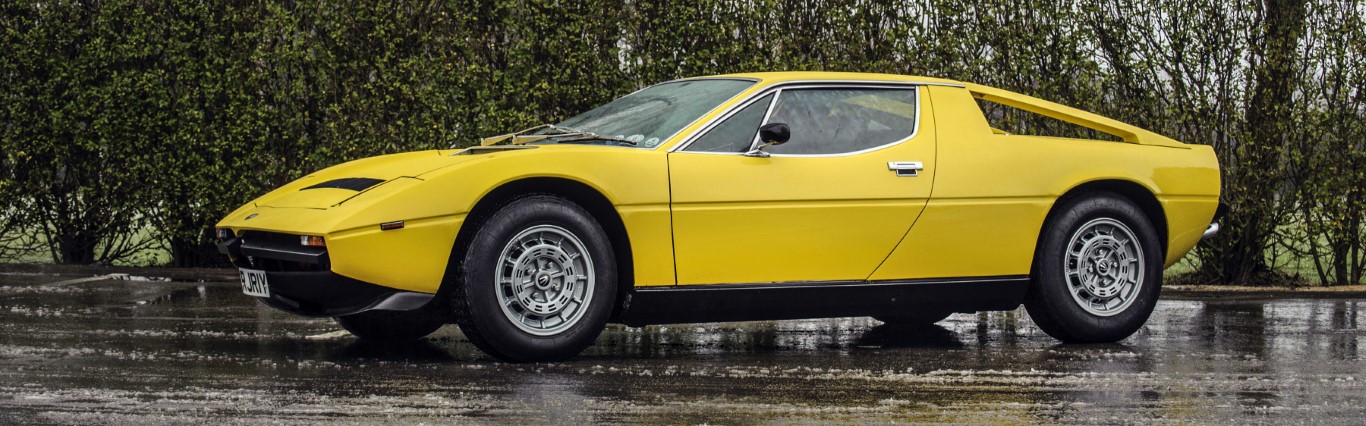
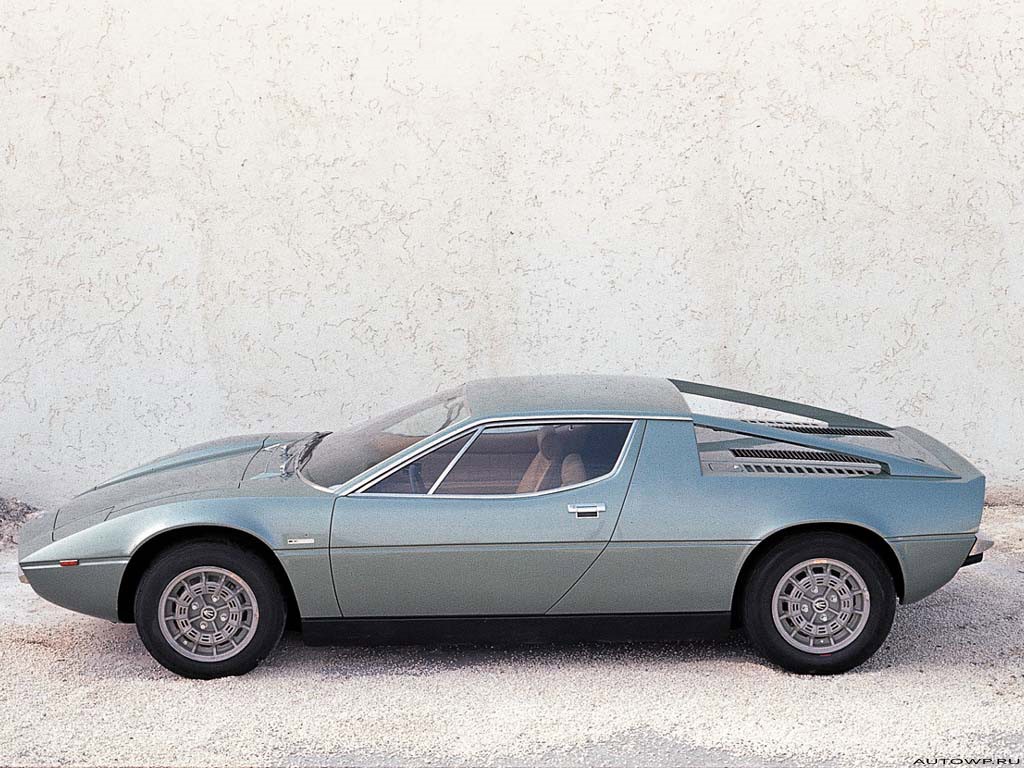
The Merak's engineering is a fascinating case study on how to adapt existing components to create a
new and distinct product. The fusion of Italian and French technologies defines the mechanical identity of
this vehicle.
The Type C.114 V6 Engine
The heart of the Merak is the 90-degree V6 engine, known internally as Type C.114. The history of
this engine is complex: it was designed by Giulio Alfieri, Maserati's chief engineer, commissioned by
Citroën for the SM model.
Unusual Architecture: Most V6 engines use a 60-degree angle between the cylinder
banks to ensure a natural balance of vibrations. The Merak's engine, however, has a 90-degree angle. The
reason for this is pragmatic: this engine was developed by cutting two cylinders from Maserati's existing V8
(used in the Indy and the Bora). This allowed Maserati to use the same machining tooling, drastically
reducing capital costs.
Detailed Specifications:
- Displacement: For use in the Merak, the displacement was increased from 2.7
liters (from the SM) to 3.0 liters (2,965 cc).
- Dimensions: The cylinder bore was enlarged to 91.6 mm, maintaining the 75
mm stroke.
- Valve Train: The engine is entirely made of light alloy, with double
overhead camshafts (quad-cam) driven by chains.
- Fuel Feed: The air-fuel mixture was supplied by three twin-choke Weber
carburetors, specifically the 42 DCNF model.
- Power: In its initial configuration, the engine delivered 190 cv (187 hp)
at 6,000 rpm and 255 Nm of torque at 4,000 rpm.
The choice of this engine wasn't just economical; its longitudinal compactness was the key factor
that allowed Maserati to add two small rear seats, creating the 2+2 configuration that differentiated the
Merak from the Bora.
Citroën's Hydraulic Influence
During the initial production phase (1972-1975), the Merak deeply incorporated the hydropneumatic
technology of its parent company. Unlike conventional systems, the Merak used a centralized high-pressure
system, fed by an engine-driven pump and utilizing the green LHM (Liquide Hydraulique Minéral) fluid.
This system controlled three main functions:
- Braking System: The brakes were hydraulically assisted, providing immense
stopping power with very little effort on the pedal. The system was known for its immediate, almost
binary response, which required the driver to get used to it. The rear brakes were mounted "inboard"
(next to the differential) to reduce unsprung mass.
- Pop-up Headlights: The lifting of the pop-up headlights was operated
hydraulically, unlike the electric motors used by most competitors.
- Clutch: Perhaps the most exotic feature was the hydraulic assistance on the
clutch, which made it extremely light, but complex to maintain.
The reliability of this system became a point of contention. Leaks in the pump or the accumulator
spheres could leave the car without power brakes. The complexity scared off mechanics unfamiliar with French
engineering, creating a reputation for difficult maintenance that endures to this day.
Chassis and Suspension
Structurally, the Merak shared the Bora's steel monocoque up to the B-pillar. From there back,
however, there was a crucial difference. While the Bora used a complex structure to support the heavy V8,
the Merak utilized a simplified tubular subframe to accommodate the V6 engine and transmission.
This solution not only reduced costs, but also made maintenance easier, allowing the powertrain
assembly to be removed more easily. Furthermore, the tubular subframe helped isolate the cabin from engine
vibrations and noise, contributing to the car's "Gran Turismo" character.
The suspension was independent on all four wheels, with double wishbones and coil springs, offering a
praiseworthy balance between ride comfort and body control. The wheels were Campagnolo light alloy,
initially 15 inches.