Introduction: The Renaissance of the Trident under Maranello's Tutelage
The turn of the millennium marked one of the most transformative periods in the long and tumultuous history of Maserati. After decades of financial instability and products that, although charismatic, suffered from quality inconsistencies under the De Tomaso management, the acquisition of the brand by the Fiat Group in 1993 began a slow recovery process. However, the true catalyst for Maserati's modern renaissance occurred in 1997, when Fiat transferred the operational and shareholder control of the brand to its most prestigious subsidiary: Ferrari.
This report deeply analyzes the family of vehicles that emerged from this strategic union: the M138 series, composed of the Maserati Spyder, Maserati Coupe (often called the 4200 GT), and its apex, the Maserati GranSport. These vehicles do not merely represent new models on a production line; they symbolize the synthesis between the traditional elegance of Modena and the engineering excellence of Maranello. The main objective of this project was clear and ambitious: to reintroduce Maserati to the North American market, from which the brand had been absent for over a decade due to compliance and reputation issues, and to establish the Trident as a credible competitor against established giants like Porsche, Jaguar, and Aston Martin.
The transition from the previous model, the 3200 GT, to the new M138 series perfectly illustrates Ferrari's influence. While the 3200 GT was a transitional product, retaining the twin-turbo V8 engine from the previous era and a front-mounted transmission, the new Coupe and Spyder were designed to satisfy a global audience with stricter demands for reliability, comfort, and power linearity. The decision to replace forced induction with a naturally aspirated, high-revving engine developed by Ferrari fundamentally altered the brand's character, moving it from a "brute supercar" identity to that of a "sophisticated Grand Tourer."
The historical importance of these models lies in their ability to combine industrial production volumes with Italian artisanal exclusivity. They served as the spearhead for Maserati's global expansion, utilizing Ferrari's established dealership network in the United States to ensure support and sales, a strategy that proved vital to the company's survival and subsequent growth. Throughout this document, we will explore every facet of this lineage, from the metallurgy of its engine to the nuances of its limited editions.
Design and Aesthetics: The Evolution of Form
The Signature of Giorgetto Giugiaro
The design of the M138 series is credited to Giorgetto Giugiaro of Italdesign, one of the most influential designers of the 20th century. The challenge proposed to Giugiaro was complex: to create a car that was undeniably Italian and stunning, but that also offered the internal space of a true 2+2 (in the case of the Coupe), capable of accommodating four adults with relative comfort, something that direct competitors, such as the Porsche 911, could not offer.
The resulting silhouette is a mixture of muscular curves and discrete elegance. Unlike the aggressive and angular lines of Lamborghinis or the extreme aerodynamic shapes of contemporary Ferraris, the Maserati Coupe adopted a more "gentleman driver" stance. The beltline is fluid, the hood is long, and the cabin is set back, respecting the classic proportions of a front-engine, rear-wheel-drive GT.
The Taillight Controversy
One of the most discussed points in the transition from the 3200 GT to the 4200 GT was the redesign of the rear end. The 3200 GT featured "boomerang" shaped taillights, which used pioneering LED technology to create a unique and futuristic visual signature. However, for the launch in the United States, these taillights faced regulatory hurdles. The US Department of Transportation (DOT) standards required a specific illuminated surface area and visibility at angles that the thin boomerang design could not fully satisfy at the time without costly modifications.
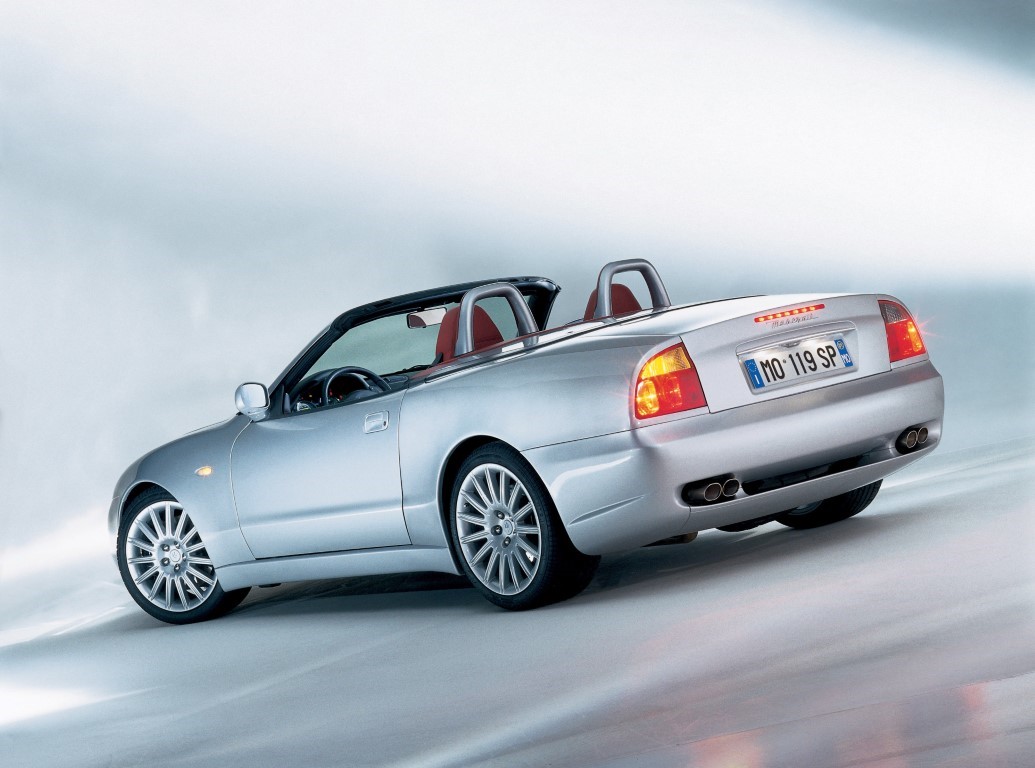
Consequently, for the M138 series Coupe and Spyder, Maserati adopted a more conventional, bulky, triangular-shaped rear optical set. Although this change allowed for global homologation, it was met with mixed feelings by purists, who felt the car lost part of its distinct visual identity. The new design, however, integrated well with the car's sober lines and has aged with dignity, being seen today as a clean and classic design feature.
Aerodynamic Optimization and Packaging
The design was not purely aesthetic; there were deep functional considerations. The engine hood, for example, had to be slightly raised in the center compared to the 3200 GT. This subtle but necessary alteration served to accommodate the new intake manifold of the naturally aspirated V8 engine, which was taller than the system of the previous twin-turbo engine.
Inside, the packaging work was remarkable. The M138 Coupe offers one of the best rear spaces in its class. While many "2+2" cars are euphemistically described as having rear seats, the Maserati Coupe could genuinely transport adult passengers on short to medium journeys, with adequate headroom and legroom, thanks to a roof profile that didn't slope as drastically as in other sports coupes. The trunk was also generous for the category, capable of accommodating two golf bags, an almost mandatory requirement for the target American market.
Powertrain Engineering: The Ferrari-Maserati Heart
The soul of any Italian sports car is its engine, and the M138 series benefited from one of the most charismatic units ever produced.
The F136 R Engine: Genesis and Architecture
The engine that equips the entire Coupe, Spyder, and GranSport line is the F136 R, a naturally aspirated 4.2-liter (4,244 cc) V8. This engine was jointly developed by Ferrari and Maserati and produced at the Ferrari foundry in Maranello. It belongs to the F136 engine family, which would later see variants equipping legends such as the Ferrari F430, the Alfa Romeo 8C Competizione, and the Ferrari 458 Italia.
The engine's architecture is an engineering masterpiece:
- Block and Cylinder Head: Built entirely of an aluminum and silicon alloy for lightness and superior thermal dissipation.
- Valvetrain: Double overhead camshafts (DOHC) driven by chains, with four valves per cylinder.
- Variable Valve Timing: A variable valve timing (VVT) system was applied on the intake side. This allowed the engine to optimize valve opening times depending on the RPM, ensuring a stable idle, abundant torque at low revs, and free breathing at high revs.
The Choice of the Cross-Plane Crankshaft
A crucial technical distinction separates the Maserati version of this engine from the version used by Ferrari (such as in the F430). While Ferrari traditionally uses a flat-plane crankshaft, which favors extreme revs and produces a high-pitched "screaming" sound, Maserati opted for a cross-plane crankshaft.
This technical choice defines the character of the car. The cross-plane crankshaft balances second-order inertial forces more effectively, resulting in much smoother operation with fewer vibrations, ideal for a luxury Grand Tourer. Furthermore, this configuration alters the cylinder firing order, producing the deep, burbling, and low-pitched sound that has become the trademark of modern Maserati. In terms of performance, this setup favors torque delivery in mid-range revs, making the car more agile and responsive in urban traffic and during overtaking without the need to downshift multiple gears.
Dry Sump Lubrication
Another detail derived from racing is the dry sump lubrication system. Shutterstock In conventional cars, the oil is stored in a reservoir (sump) at the base of the engine. In the M138, the oil is pumped to an external reservoir.
The advantages of this system are multiple and significant for a performance car:
- Center of Gravity: Without the need for a deep sump at the bottom, the engine can be mounted in a much lower position in the chassis. This reduces the vehicle's center of gravity, decreasing body roll in corners and improving agility.
- Cornering Reliability: In high-speed corners, centrifugal force can push the oil to the side of the sump in conventional engines, leaving the oil pump to suck in air (cavitation), which can destroy the engine in seconds. The dry sump guarantees constant oil pressure under any lateral g-force.
Consolidated Technical Specifications:
| Parameter | Specification |
|---|---|
| Engine Code | F136 R |
| Configuration | 90° V8 |
| Displacement | 4,244 cc |
| Bore x Stroke | 92 mm x 80 mm |
| Compression Ratio | 11.1:1 |
| Max Power (Coupe/Spyder) | 390 hp (287 kW) at 7,000 rpm |
| Max Power (GranSport) | 400 hp (294 kW) at 7,000 rpm |
| Max Torque | 451 Nm (333 lb-ft) at 4,500 rpm |
| Redline | 7,600 rpm |
Transmission and Chassis Dynamics
The transition from the 3200 GT to the 4200 GT involved a complete reengineering of weight distribution and power transmission.
The Transaxle Layout
The most radical change in the chassis engineering was the adoption of the Transaxle layout. In the previous model (3200 GT), the gearbox was coupled directly behind the engine, at the front of the car. In the M138, the gearbox was moved to the rear axle, forming an integrated unit with the differential.
The engine at the front and the gearbox at the rear are connected by a rigid torque tube, inside of which the driveshaft rotates at engine speed. This arrangement is costly and complex, but it offers unparalleled dynamic benefits. It shifts a significant mass (the transmission) to the rear, counterbalancing the engine's weight. The result is a near-perfect weight distribution:
- Maserati Coupe: 52% Front / 48% Rear.
- Maserati Spyder: 53% Front / 47% Rear.
This distribution reduces the polar moment of inertia, allowing the car to change direction more readily and maintain a neutral attitude at the limit of grip, avoiding the excessive understeer typical of heavy front-engine cars.
Gearbox Options: GT vs. Cambiocorsa
Maserati offered two interfaces for the same 6-speed mechanical transmission manufactured by Graziano:
- GT (Manual): The purist version, equipped with a clutch pedal and a traditional gear lever with a metal gate. Due to the rear location of the gearbox, the lever uses long cables or linkages to engage the gears. Although it offers total involvement, this version represented a minority of sales and is extremely rare today.
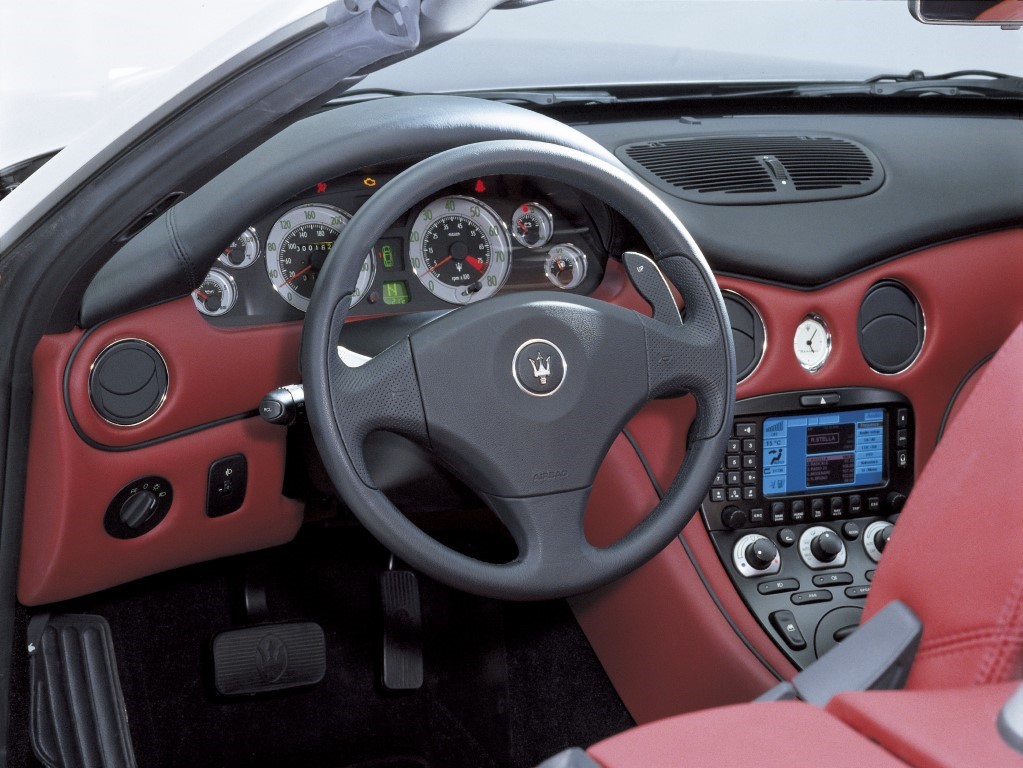
- Cambiocorsa (Sequential Automatic): The standout technology of the time. "Cambiocorsa" means "Racing Gearbox" in Italian. It is not a conventional automatic transmission with a fluid torque converter, which "slips" and smooths out shifts. It is the same mechanical gearbox as the GT version, but robotized. A high-pressure electro-hydraulic system, controlled by a processing unit (TCU), operates the clutch and gear selection.
The driver commands shifts via paddles mounted on the steering column (not on the steering wheel, meaning they remain fixed while the steering wheel turns, a preference derived from F1 so the driver always knows where the upshift and downshift commands are).
Operating Modes: The system offers "Sport" mode (faster and more aggressive shifts), "Auto" (the computer decides, simulating an automatic), and "Low Grip" (for snow/ice).
Software Evolution: Throughout production, the control software (nicknamed "SOFAST") was updated. Early versions (2002-2003) could be somewhat jerky in traffic. From 2004/2005 onwards, and especially in the GranSport, the software became much more refined, smoothing out maneuvers and speeding up shifts under high load.
Skyhook Suspension: Real-Time Adaptation
The aluminum double-wishbone suspension on all four wheels ensured correct geometry. However, the technological innovation lay in the Skyhook adaptive damping system, developed in partnership with Mannesmann-Sachs.
The Skyhook system uses a network of sensors that monitor vertical wheel movements, body acceleration, and driver inputs (steering, braking, throttle). An electronic control unit processes this data thousands of times per second and adjusts the fluid viscosity inside each individual shock absorber via electromagnetic valves.
The theoretical concept is to isolate the body from road imperfections, as if the car were suspended by a "sky-hook," staying level while the wheels work. The driver can select between "Normal" mode (focus on absorption comfort) and "Sport" mode (focus on roll control and precision).
Detailed Analysis of Models and Evolution
The M138 line did not remain static. It evolved through two distinct body styles and several mid-cycle updates that refined the formula.
Maserati Spyder (Type M138AD) - 2001 to 2007
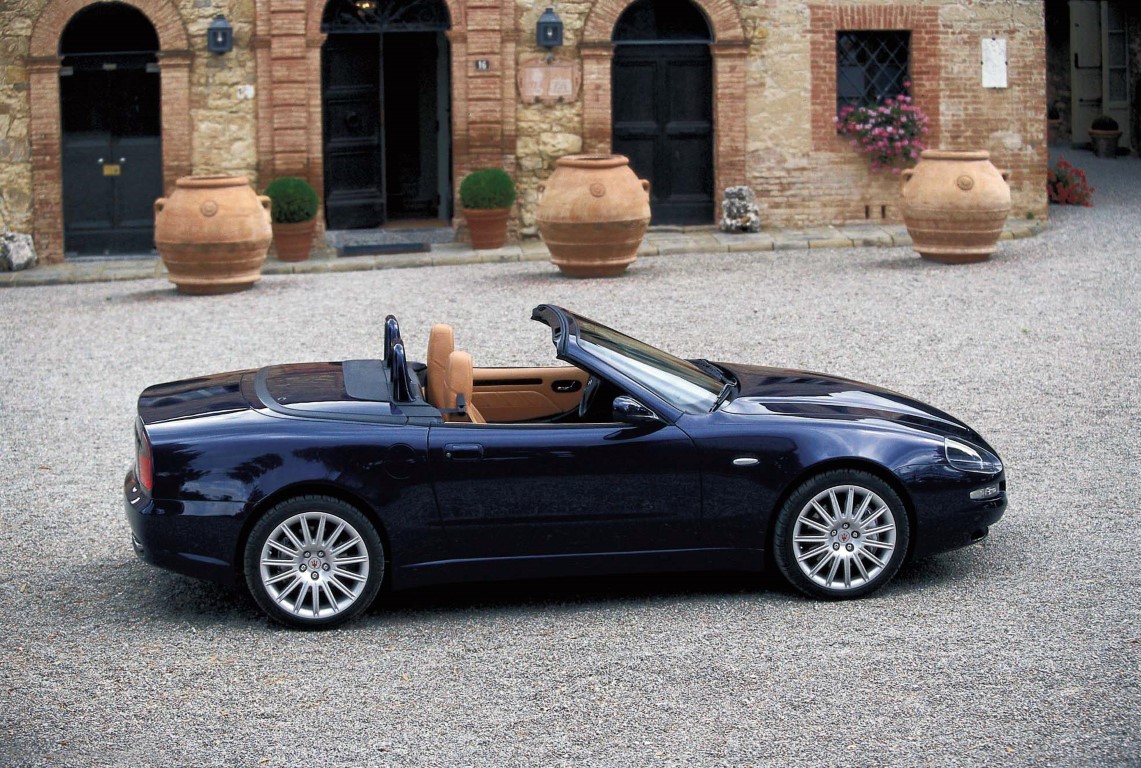
The Spyder was launched before the Coupe, debuting at the Frankfurt Motor Show in 2001. The priority given to the convertible was a tactical maneuver focused on the American market, where luxury convertibles enjoy great prestige.
Unique Features:
- Shortened Wheelbase: The Spyder's chassis is not identical to the Coupe's. Maserati shortened the wheelbase by 220 mm, reducing it to 2,440 mm. This drastic alteration completely changes the physics of the car. The short wheelbase makes the Spyder exceptionally agile ("eager") upon corner entry, but it also makes it more sensitive and potentially nervous at high speeds or on uneven surfaces, demanding more attention from the driver.
- Strict Two-Seater: Unlike the Coupe, the Spyder is a pure two-seater car. The space behind the seats is occupied by the convertible top mechanism and fixed roll-bars.
- Convertible Top: The fabric roof is fully automatic and hides under a rigid cover integrated into the bodywork, maintaining a clean line when open.
Maserati Coupe (Type M138AB) - 2002 to 2007
The Coupe arrived in 2002 as the direct successor to the 3200 GT. With a length of 4,523 mm, it combined continental GT capability with sports car performance.
Differentiators:
- 2+2 Space: The roof design and the long 2,660 mm wheelbase allowed for a genuinely usable rear cabin. While not a limousine, adults of average height can travel in the back with comfort unthinkable in a Porsche 911 or Jaguar XK from the same era.
- Dynamics: The longer chassis gives the Coupe superior directional stability on highways and in high-speed corners, making it a more relaxing long-distance cruiser than the Spyder.
The 2004 Facelift (Model Year 2005)
In 2004, Maserati introduced a significant update to the line. Although visually subtle to laymen, the changes were profound.
- Aesthetics: The front bumper was redesigned with a larger and more prominent grille, inspired by the design of the Quattroporte V, giving a more modern "family face." The rear bumper gained side air vents and a modified diffuser.
- Interior and Technology: The center console was revised to improve ergonomics. Mechanically, the big news was the introduction of reliability improvements in the Cambiocorsa transmission and refinements in the engine mapping to improve drivability at low revs.
- Gearbox: The "T" shaped reverse lever on the center console, used in early Cambiocorsa versions, was replaced by a simpler push-button engagement, aligning with the design of the future GranSport.
The Apex: Maserati GranSport (2004-2007)
If the 4200 GT Coupe was the rebirth, the GranSport was the assertion of competence. Launched at the 2004 Geneva Motor Show, the GranSport was developed to address criticisms that the original Coupe was too soft and comfort-focused. It wasn't just an aesthetic package; it was a sharpened, driver-focused version.
Technical Enhancements
- Power: The V8 engine received fine-tuning on the intake and a reduction in internal friction, raising the power to 400 hp (a symbolic, but important, gain of 10 hp).
- Transmission: Available exclusively with the Cambiocorsa transmission, the GranSport debuted aggressive control software. Gear shifts became 35% faster than in the standard Coupe. Additionally, the 6th gear ratios were lengthened to allow for a higher top speed and quieter cruising.
- Exhaust: A sports exhaust system with pneumatic bypass valves was installed. Below 4,000 rpm (or in Normal mode), the valves remain closed for civility. Above that, or when pressing the "Sport" button, they open up, releasing a direct and visceral roar that has become legendary.
- Suspension and Wheels: The car was lowered by 10 mm. The Skyhook suspension received specific, stiffer calibration. 19-inch wheels with a "Trofeo" design (inspired by the cars from the Maserati one-make championship) were adopted, mounted on lower-profile tires for more direct steering responses.
Aerodynamics and Interior
Externally, the GranSport distinguished itself by an aerodynamic kit developed in a wind tunnel. The front bumper had a pronounced lower splitter, and the side skirts were deeper. At the rear, a lip spoiler on the trunk lid helped reduce lift and drag. The drag coefficient (Cd) was reduced from 0.34 to 0.33.
Inside, luxury gave way to technicality. Traditional leather was combined with a high-grip synthetic technical fabric (often called "BrighTex" or similar), applied to the center of the seats and the dashboard. The steering wheel was redesigned with a thicker rim, flattened at the base, and topped with carbon fiber, a material that also adorned the center console. The goal was to create an environment that held the driver through corners and conveyed a sense of competition.
Performance
The result of these changes was a car that accelerated from 0 to 100 km/h in 4.85 seconds and reached a top speed of 290 km/h. More importantly than the numbers, the GranSport was perceived as a much more cohesive, responsive, and exciting car to drive than the base Coupe.
Special Editions and Collectibles
Maserati produced several limited series that today represent the peak of collection value for this platform.
Maserati Spyder 90th Anniversary (2004)
To commemorate 90 years since the brand's founding, Maserati launched this special edition of the Spyder.
- Production: Strictly limited to 180 units. Interestingly, production was divided exactly in half: 90 cars for North America and 90 for the rest of the world.
- Exclusive Aesthetics: The 90th Anniversary anticipated the look of the GranSport Spyder, using the more aggressive bumpers and side skirts. The most striking feature, however, is the aerodynamic tonneau cover behind the headrests. Made of blue carbon fiber, it features "double bubbles" that flow behind the headrests, providing a racing "barchetta" look.
- Interior: It featured blue carbon fiber finishes, a numbered commemorative plaque on the console, and specific instrument dials.
Maserati GranSport MC Victory (2006)
Considered by many to be the definitive version. It was launched to celebrate Maserati's victory in the 2005 FIA GT championship with the MC12 supercar.
- Production: Limited and numbered to 180 global units.
- Connection to the Track: The MC Victory wasn't just cosmetic. It received a quicker, more direct steering rack to improve cornering response.
- Exotic Materials: The use of colored carbon fiber (Blue Carbon) was extensive, adorning the front and rear spoilers as well as the interior. The seats were fixed carbon fiber bucket seats, identical to those used in the MC12 supercar, upholstered in Alcantara and leather. Enameled Italian flags were embedded into the front fenders.
Maserati GranSport "Cornes Edition" (Japan)
An absolute rarity, created exclusively for the Japanese market to celebrate the 10th anniversary of the partnership between Maserati and importer Cornes & Co.
- Production: Only 35 units.
- Specifications: Available in white (Bianco Fuji) or black, with specific interiors. These cars often share characteristics with the MC Victory (such as carbon details and flags), but with unique color combinations and trim specifications catered to Japanese tastes.
The "Vintage" Package
Although not a separate model, the "Vintage Package" deserves a mention. It was an option package intended to evoke the glory of 1950s Maseratis (such as the 3500 GT).
Details: Included a chrome front grille with metallic mesh and the trident with red details, chrome side air vents, chrome door handles, and "ball-polished" finished wheels. Inside, the instruments had retro graphics and wood trim was favored over carbon fiber.
Production Data and Statistics
Understanding production numbers is essential for assessing the rarity and investment potential of these vehicles. The table below synthesizes the data most accepted by the expert community.
| Model | Version | Transmission | Units Produced | Rarity Notes |
|---|---|---|---|---|
| Coupe (4200 GT) | Base / Facelift | Cambiocorsa | 5,371 | The most common version on the market. |
| GT | Manual | 1,078 | Rare. Highly sought after by purists. | |
| Spyder | Base / Facelift | Cambiocorsa | 3,134 | |
| GT | Manual | 574 | Extremely rare. | |
| 90th Anniversary | Cambiocorsa | 181 | Numbered series (90 USA / 90 ROW). | |
| GranSport Coupe | Base | Cambiocorsa | 2,432 | |
| MC Victory | Cambiocorsa | 181 | The most valuable Coupe version. | |
| GranSport Spyder | Base | Cambiocorsa | 472 | One of the rarest models of the modern era. |
| GRAND TOTAL | ~13,423 | Total for the M138 family (2001-2007). |
Highlight: The GranSport Spyder is a "unicorn." With only 472 units produced worldwide, it is rarer than many special edition Ferraris. Of these, it is estimated that only 46 were produced in right-hand drive (RHD), making them virtually impossible to find in markets like the UK or Japan.
Owner's Guide: Maintenance and Technical Challenges
Owning a Maserati from this era is a rewarding experience, but requires technical knowledge to avoid financial pitfalls. Although the Ferrari engine is robust, the peripherals and trim present specific challenges.
Clutch Life (F1 System)
The Cambiocorsa system is the most critical maintenance point. Unlike a manual car where the driver feels the wear, the robotized system compensates for wear by adjusting the point of contact (PIS - Point of Initial Slip) until the clutch fails completely.
- Accelerated Wear: Driving in "stop-and-go" traffic, uphill starts without using the handbrake, and excessive use of "Auto" mode (which tends to slip the clutch more for smoothness) drastically reduce its lifespan.
- Diagnosis: It is vital to check the clutch wear percentage using an SD2/SD3 diagnostic scanner before purchasing. A reading above 70-80% suggests an imminent replacement, which is a high-cost service.
- F1 Pump: The hydraulic pump that pressurizes the system can fail. Often, the culprit is a simple, cheap relay that "sticks" in the closed position, forcing the pump to run continuously until it burns out. Preemptively replacing this relay is a common practice among experienced owners.
The "Sticky Buttons" Phenomenon
This is an endemic problem in luxury European cars from the early 2000s (Maserati, Ferrari, Porsche).
- The Chemistry: Manufacturers applied a rubberized "soft-touch" coating over interior plastics to provide a premium tactile feel. Over time, heat and humidity cause the chemical plasticizers in this coating to migrate to the surface and break down, turning into a viscous, black, and sticky substance that soils hands and clothing.
- Solution: There is no simple cleaning product that solves the problem while preserving the printed icons. The definitive solution involves disassembling each button and trim piece, chemically removing the coating (using isopropyl alcohol or industrial solvents), and repainting the parts. Specialized companies offer restoration services where the icons are laser-etched again after painting, returning the factory look.
Control Arms and Suspension
- Bushing Failure: The rubber bushings on the suspension control arms (wishbones) deteriorate over time, causing steering play and noises (clunks).
- The Cost: Maserati historically only sold the complete control arm, not the separate bushings, making the repair astronomically expensive. Fortunately, the aftermarket and specialists have developed replacement bushings, allowing original arms to be rebuilt for a fraction of the cost.
Heater Matrix
A less frequent but devastating problem in terms of labor. The heating system radiator can develop coolant leaks inside the cabin. The part itself is not excessively expensive, but replacing it requires the complete removal of the dashboard, a process that can take 10 to 15 hours of skilled labor.
Market Context and Comparison
To understand the value of the Maserati Coupe/GranSport, one must look at its rivals of the era.
- Porsche 911 (Generation 996/997): The eternal rival. The Porsche offered a more solid build and a more clinical, precise drive. However, the 911 was omnipresent, had a less exotic engine sound (Flat-6 vs Ferrari V8), and the rear seats were practically useless for adults, unlike the Maserati.
- Jaguar XKR (X100/X150): The Jaguar focused more on extreme comfort and the torque of the Supercharged V8 engine. It was a softer car, with a conventional automatic transmission (torque converter), offering less sporty involvement than Maserati's transaxle system and high-revving engine.
- Aston Martin V8 Vantage (Launched in 2005): Perhaps the closest rival in spirit and beauty. The Aston Martin was more modern and visually stunning, but the Maserati GranSport managed to surpass it in interior space and the aggressive power delivery of the Italian engine.
Current Value Proposition:
Today, the M138 series occupies a fascinating niche in the used market. It offers the most accessible way to own an engine developed by Ferrari and designed by Giugiaro. While prices for Ferrari F430s have skyrocketed, the Maserati Coupe and GranSport remain relatively affordable, although the manual versions (GT), GranSports, and limited editions (MC Victory) are on a clear upward valuation trajectory.
Conclusion
The Maserati Coupe and GranSport represent the pivotal moment when Maserati ceased to be a troubled "boutique manufacturer" to become a serious global player. They are the children of the unlikely union between two former rivals, Ferrari and Maserati.
The 4200 GT Coupe was the competent pioneer, bringing reliability and daily usability to the brand. The GranSport refined that foundation, injecting the emotion, sound, and precision that enthusiasts desired, creating what many consider to be the best modern Maserati before the GranTurismo era.
For the collector or enthusiast, these cars offer an analog experience that is disappearing: a naturally aspirated, high-revving V8, communicative hydraulic steering, and a design that prioritizes beauty over aggressiveness. With correct maintenance and attention to critical points like the clutch and interior trim, the M138 series is not just a piece of Italian automotive history; it is a machine of genuine pleasure.