1st Generation
(2018-2019)
3.8 V8 Twin-turbo
570 cv
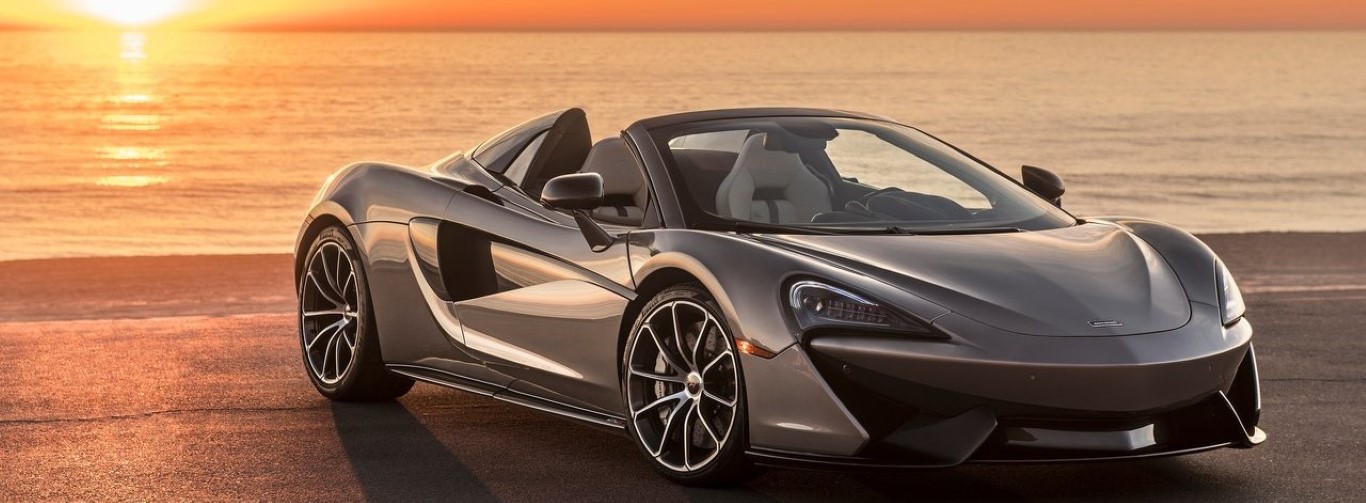
Unfiltered performance: open-air freedom meeting the unshakable rigidity of McLaren's carbon chassis.
Select a generation to see available versions
(2018-2019)
The high-performance automotive industry witnessed, in 2015, a tectonic shift led by McLaren Automotive. Historically known for its presence in Formula 1 and, more recently, for the launch of limited-production hypercars like the P1 and the Super Series line (650S), the Woking, Surrey-based manufacturer decided to expand its operations into a territory previously unexplored by the brand: the everyday sports car segment, but with a supercar pedigree. This strategic move culminated in the creation of the "Sports Series", a family of vehicles designed to compete directly with established giants like the Porsche 911 Turbo S, the Audi R8 V10, and the Lamborghini Huracán, offering a British alternative focused on engineering purity and structural lightness.
The McLaren 570S Coupé, revealed to the world at the 2015 New York International Auto Show, was not just another model in the brand's portfolio; it represented the democratization of carbon fiber technology at a price point where aluminum was still the predominant material. The 570S's mission was clear and ambitious: to deliver a visceral driving experience, worthy of McLaren's racing heritage, but packaged in a vehicle capable of offering day-to-day usability, ride comfort, and modern conveniences that were missing in the company's more extreme models.
Throughout its production cycle, which ran from 2015 to 2021, the 570S established itself as McLaren's commercial core, boosting sales volumes and allowing the company to reach the milestone of 30,000 vehicles produced. The importance of this model transcends its sales numbers; it served as a platform for several variants, including the touring-focused 570GT, the acclaimed 570S Spider, and track-focused versions like the 600LT and the 620R, before finally passing the baton to the hybrid McLaren Artura. This report thoroughly dissects the engineering, historical evolution, market variants, and commercial impact of this modern icon.
McLaren's design philosophy, "form follows function," finds its ultimate expression in the architecture of the 570S. Unlike its competitors, which use aluminum chassis or hybrid structures, the 570S was built around a carbon fiber survival cell, a technology that McLaren pioneered in Formula 1 in 1981 with the MP4/1 and in road cars with the legendary F1 in 1993.
The core component of the 570S is the MonoCell II chassis. This carbon fiber monocoque structure weighs less than 80 kg and offers exceptional torsional rigidity, fundamental to the vehicle's precise driving dynamics. The "II" designation is crucial here, as it denotes a significant evolution from the original MonoCell used in the MP4-12C and the 650S. The main criticism of previous models was the difficulty of accessing the cabin due to the wide and high door sills.
For the 570S, intended for more frequent use and less exclusively track-focused, McLaren engineers redesigned the structure, lowering and narrowing the door sills. This drastically eased ingress and egress, making the car viable for daily use, without compromising the structural integrity that carbon fiber provides. This inherent rigidity eliminated the need for additional heavy structural reinforcements in the convertible variants, a point that will be explored in depth in the Spider model analysis.
The exterior design of the 570S, penned by Rob Melville, uses a visual language described as "shrink-wrapped", where the aluminum body panels appear to be stretched over the mechanical components to minimize visual bulk and aerodynamic drag.
A distinctive design element is the "flying buttresses" on the rear of the Coupé. These structures are not merely aesthetic; they perform a vital aerodynamic function, channeling clean air over the rear deck to increase downforce and aid in cooling the engine compartment, all without the need for a complex and heavy active rear wing, differentiating the 570S from the Super Series models. The Dihedral Doors, a brand signature, also feature integrated air channels (often called "tendons") that direct airflow into the high-temperature side radiator intakes, ensuring optimal cooling for the twin-turbo V8 engine.
At the heart of the Sports Series lies a power unit that, while familiar in architecture, was profoundly revised to meet the specific goals of the 570S.
The 570S is powered by the M838TE engine, a 3.8-liter twin-turbocharged V8. Although it shares the base block with the engine used in the 650S and the P1, the "E" (Evolution) designation signals that approximately 30% of the components were redesigned specifically for this model.
The engine calibration was adjusted to offer a linear and controllable power delivery, but with a torque peak situated in an rpm range that encourages the driver to explore the limits of the tachometer. The "Stop-Start" system was integrated to improve fuel efficiency in urban cycles, reflecting the model's daily use proposition.
Power is transmitted exclusively to the rear wheels through a 7-speed dual-clutch gearbox, called SSG (Seamless Shift Gearbox). Developed in collaboration with Graziano Trasmissioni in Italy, this transmission offers lightning-fast and almost imperceptible gear changes in automatic mode, but becomes aggressive and mechanical when performance modes are activated.
The absence of a traditional mechanical limited-slip differential (LSD) is compensated by the "Brake Steer" system. A technology derived directly from Formula 1 (where it was banned for being excessively advantageous), Brake Steer subtly applies the brakes to the inside rear wheel during a corner, reducing the tendency to understeer and allowing the car to rotate with greater agility around the corner's apex.
Unlike the Super Series models (like the 720S), which use the complex "ProActive Chassis Control" interconnected hydraulic suspension system, the 570S adopts a more traditional, yet refined approach. It uses a double wishbone suspension with adaptive dampers and conventional anti-roll bars. The adaptive dampers can be adjusted via the "Active Dynamics" panel, offering three distinct modes: Normal, Sport, and Track.
The standard braking system on the 570S Coupé and Spider consists of massive carbon-ceramic discs, with 6-piston aluminum calipers at the front and 4-piston at the rear. It is important to note that, although carbon-ceramic brakes were standard on the 570S, there were variations and "downgrade" options to cast iron brakes in some markets or specific configurations, especially for intense track use where the replacement cost of ceramic is prohibitive, although the factory standard emphasized the superior performance of ceramic.
The 570S line bifurcated into two main body variants, each catering to a specific customer profile, but both retaining the brand's performance core.
The Coupé established the dynamic benchmark. With a dry weight of just 1,313 kg (lighter than any direct competitor at the time), it offered a power-to-weight ratio of 434 PS per tonne. It accelerates from 0 to 100 km/h in 3.2 seconds and reaches 200 km/h in 9.5 seconds, with a top speed of 328 km/h.
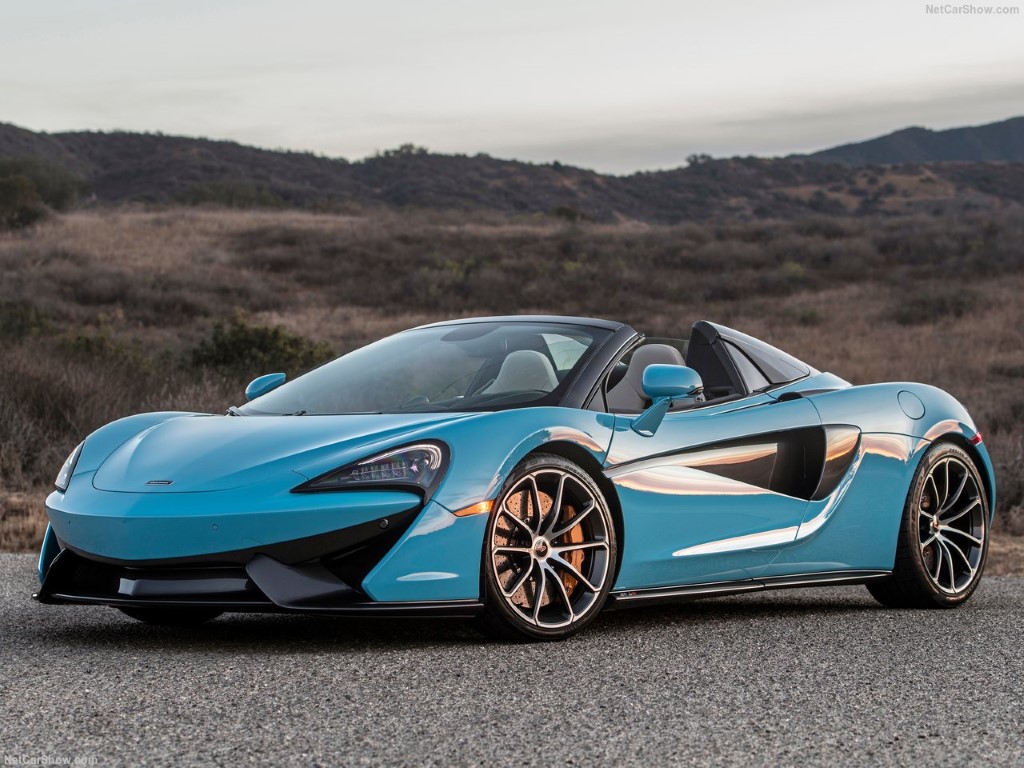
Launched in 2017, the 570S Spider challenged the convention that convertibles are structurally compromised and significantly heavier.
The Spider uses a two-piece retractable hardtop constructed from lightweight composite panels. The mechanism is capable of opening or closing in just 15 seconds and can be operated at speeds up to 40 km/h (25 mph).
The greatest engineering achievement of the Spider lies in the MonoCell II chassis. Due to its immense inherent rigidity, McLaren did not need to add heavy structural reinforcements to the chassis when the roof was removed. As a result, the weight increase compared to the Coupé was limited to a mere 46 kg, attributed exclusively to the roof mechanism and operating systems. This contrasts sharply with competitors that often gain over 100 kg in their convertible versions.
The performance of the Spider is virtually identical to that of the Coupé. The 0-100 km/h time remains at 3.2 seconds. The top speed with the roof closed is the same: 328 km/h (204 mph). With the roof open, the top speed is slightly reduced to 315 km/h (196 mph) due to aerodynamic drag.
McLaren implemented a continuous refinement strategy throughout the 570S lifecycle, introducing improvements and new packages with each Model Year.
The McLaren Special Operations (MSO) division played a crucial role in keeping the 570S relevant and desirable, offering levels of customization that allowed owners to create unique vehicles.
To guide customers through the complexity of specifications, McLaren launched five "Design Editions", curated by the brand's own designers to ensure aesthetic harmony.
Available for the Coupé and Spider, the "Track Pack" was designed for owners who frequented track days. The package focused exclusively on weight reduction and increased downforce.
The MSO X represents the pinnacle of exclusivity in the 570S line. Commissioned by the McLaren Newport Beach dealership, only 10 units were produced. These vehicles were designed to be "GT4 race cars for the road".
The 570S's credibility as a performance car is reinforced by its racing version, the 570S GT4. Competing globally, the GT4 shares the MonoCell II chassis and the twin-turbo V8 engine with the road car, proving the robustness of the original design.
Technical Differences: The GT4 utilizes a fixed rear wing mounted on tall pylons, an aggressive front splitter, and suspension with adjustable coilover dampers (abandoning the adaptive street system). The wheels are center-lock magnesium.
BoP Restrictions: Due to "Balance of Performance" rules, the GT4 frequently races with reduced power (about 100 hp less than the road car) and additional weight ballast, making it heavier than the road model, but capable of much faster lap times due to slick tires and advanced aerodynamics.
The "Sports Series" family was a resounding commercial success, with over 8,500 units sold globally by the end of 2020. The 570S (combining Coupé and Spider) represented the largest slice of that volume, with estimates indicating a production split close to 50/50 between the hardtop and convertible variants in markets where both were fully offered.
In Brazil, the 570S positioned itself as an ultra-exclusive object of desire.
For potential buyers in the secondary market, the reliability of the 570S is a crucial factor.
Overall Reliability: The engine and transmission are considered robust ("bulletproof") by supercar standards. However, minor issues are reported.
The McLaren 570S ended its production in 2021, leaving a legacy of transformation. It proved that a carbon fiber chassis could be produced at scale for an "accessible" segment, offering driving dynamics that many purists consider superior even to its bigger brother, the 720S, due to its more analog and exploitable nature at legal speeds.
The transition to the McLaren Artura, with its hybrid V6 engine, marks the end of the pure twin-turbo V8 era in the Sports Series. For collectors and enthusiasts, the 570S – especially in the Spider versions with the Track Pack or the rare MSO editions – remains a milestone of modern British engineering: light, fast, and incredibly driver-focused.