1st Generation
(2024-)
4.0 V8 Twin-turbo
750 cv
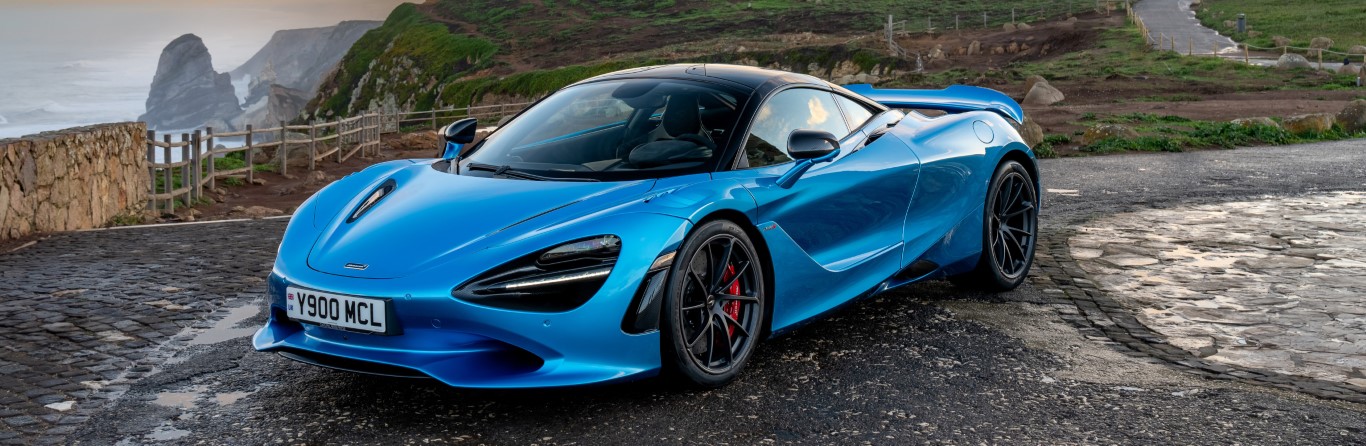
Refined perfection: the successor that took the best of the 720S and made it lighter, faster, and more visceral.
Select a generation to see available versions
(2024-)
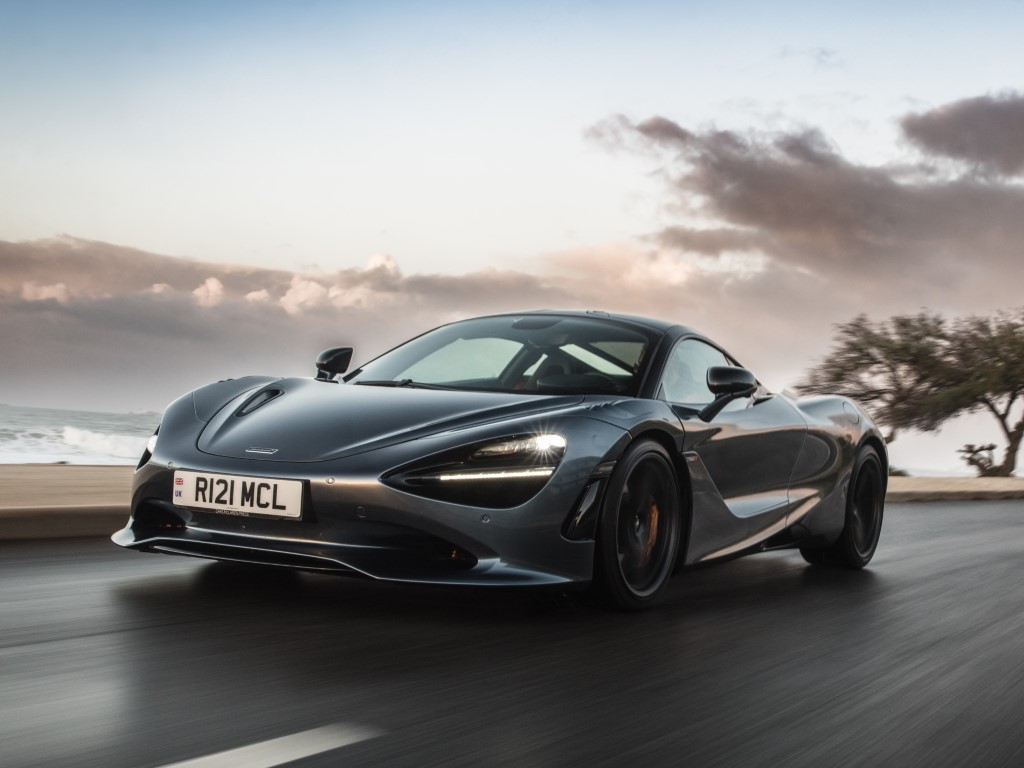
The launch of the McLaren 750S marks a crucial moment in the trajectory of McLaren Automotive. Positioned as the direct successor to the acclaimed 720S, the 750S does not seek to reinvent the wheel, but rather to perfect it to a level of obsessive precision. While the supercar market rapidly moves towards hybridization and total electrification, the 750S stands out as one of the last and purest exponents of internal combustion performance in the British brand's "Super Series" lineage.
Historically, McLaren divides its vehicles into categories: Sports Series (entry), Super Series (core performance), and Ultimate Series (hypercars). The 750S takes the throne of the Super Series, carrying the responsibility of surpassing a car that was already considered by many critics as the most complete in the world in its category. To achieve this, Woking's engineering adopted a philosophy of "marginal gains": there was not a single revolutionary change, but rather thousands of small improvements that, added together, transform the driving experience. About 30% of the 750S components are new or significantly altered compared to the 720S.
The heart of the 750S is a masterpiece of mechanical engineering: the 4.0-liter twin-turbo V8 engine, code M840T.
One of the most striking visual and auditory changes is the new central exhaust system, inspired by the P1. Made of stainless steel, it is 2.2 kg lighter and was tuned to emphasize the engine's even harmonic orders, creating a cleaner and higher-pitched sound.
The 7-speed sequential transmission (SSG) has a 15% shorter final drive ratio. This theoretically sacrifices top speed, but drastically improves acceleration in all gears and throttle response.
The backbone of the car is an extremely rigid carbon fiber "tub" (Monocage II on the Coupé and II-S on the Spider). Compared to the 720S, the 750S is 30 kg lighter, thanks to new carbon seats, "ultra-lightweight" forged wheels (saving 13.8 kg of unsprung mass), a lighter instrument panel, and thinner glass. The dry weight of the Coupé reaches an impressive 1,277 kg.
The 750S debuts the third generation of Proactive Chassis Control. The system eliminates physical anti-roll bars, using an interconnected hydraulic system. When the car corners, the system pressurizes the outside to hold the body flat; in a straight line, it "uncouples" the wheels to absorb bumps.
On the 750S, the front track geometry is 6 mm wider, the front springs are 3% softer (for better response) and the rears 4% stiffer.
In a market dominated by electric steering, McLaren retained hydraulic assistance. This preserves the "texture" and road feedback, allowing the driver to feel the limit of grip at their fingertips. The 750S steering rack has a faster ratio than the 720S.
The system uses carbon-ceramic discs (CCM-R) that undergo a months-long manufacturing process for greater thermal resistance, and monoblock calipers with integrated F1-inspired cooling. The 750S stops from 200 km/h to 0 in 113 meters.
The Spider version uses the Monocage II-S chassis, which is structurally as rigid as the coupe, dispensing with heavy reinforcements. The retractable hardtop (RHT) opens in 11 seconds at up to 50 km/h and is operated by silent electric motors. The Spider weighs only 49 kg more than the Coupé.
Form follows function: the "nose" is lower, the headlight air intakes ("eye sockets") are narrower, and the front splitter is longer. The new carbon fiber rear wing is 20% larger than the 720S's, acting as a downforce generator, DRS, and airbrake.
The 750S serves as a canvas for the McLaren Special Operations (MSO) division.
| Characteristic | Specification |
|---|---|
| Engine | M840T 4.0L V8 Twin-Turbo |
| Power | 750 PS (740 bhp / 552 kW) @ 7,500 rpm |
| Torque | 800 Nm (590 lb-ft) @ 5,500 rpm |
| Transmission | 7-Speed SSG (Dual-Clutch) |
| Drivetrain | Rear-Wheel Drive (RWD) |
| CO2 Emissions | 276 g/km (WLTP) |
| Metric | 750S Coupé | 750S Spider |
|---|---|---|
| Top Speed | 332 km/h | 332 km/h |
| 0-100 km/h | 2.8 s | 2.8 s |
| 0-200 km/h | 7.2 s | 7.3 s |
| 0-300 km/h | 19.8 s | N/A |
| 1/4 Mile (400m) | 10.1 s | 10.3 s |
| Braking 200-0 km/h | 113 m | 113 m |
| Measurement | 750S Coupé | 750S Spider |
|---|---|---|
| Dry Weight (Lightest) | 1,277 kg | 1,326 kg |
| DIN Weight (with fluids) | 1,389 kg | 1,438 kg |
| Fuel Tank | 72 Liters | 72 Liters |
| Trunk (Total) | 360 Liters (150+210) | 208 Liters (150+58) |
In Brazil, the 750S arrived with high demand. Estimated prices for the Coupé hover around R$ 4,000,000 to R$ 4,400,000, while the Spider easily breaks the R$ 5,000,000 barrier, depending on customization. Availability is extremely low, with long waiting lists.
The McLaren 750S is a triumph of focused engineering. By resisting the temptation to add weight and hybrid complexity, McLaren delivered the pinnacle of the modern V8 supercar. For the enthusiast, it symbolizes the end of an era of lightness and mechanical simplicity. The 750S is not just an evolution of the 720S; it is its final and definitive form.