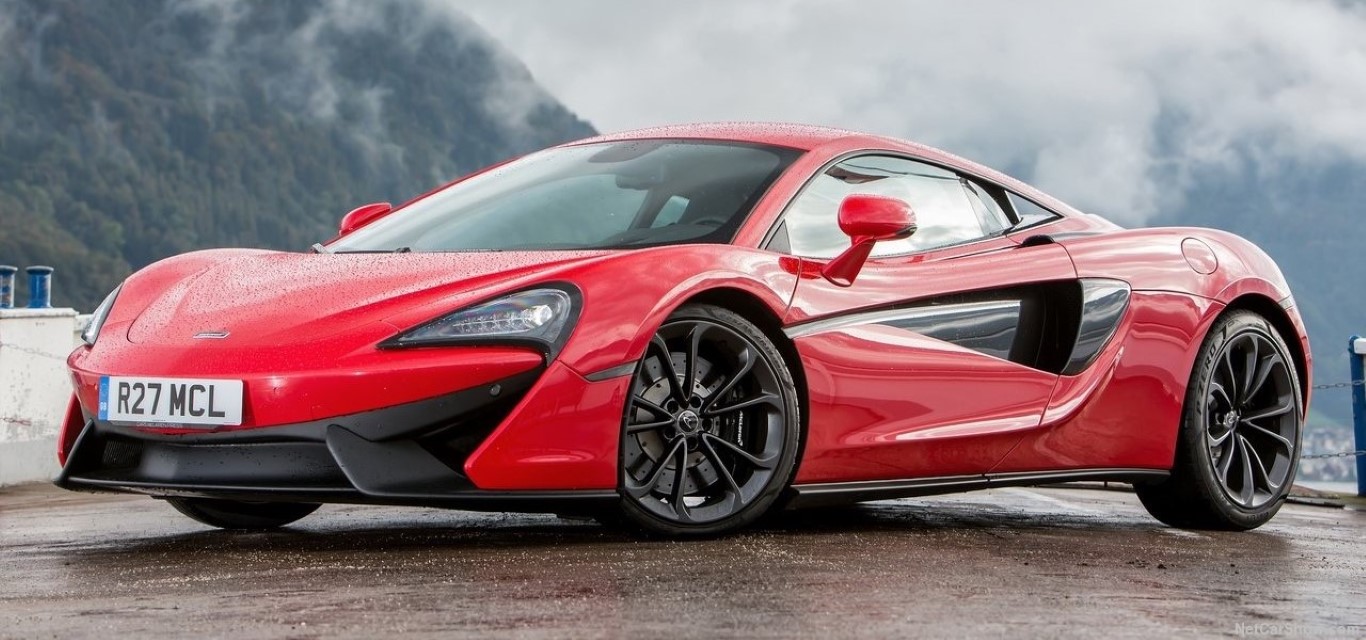
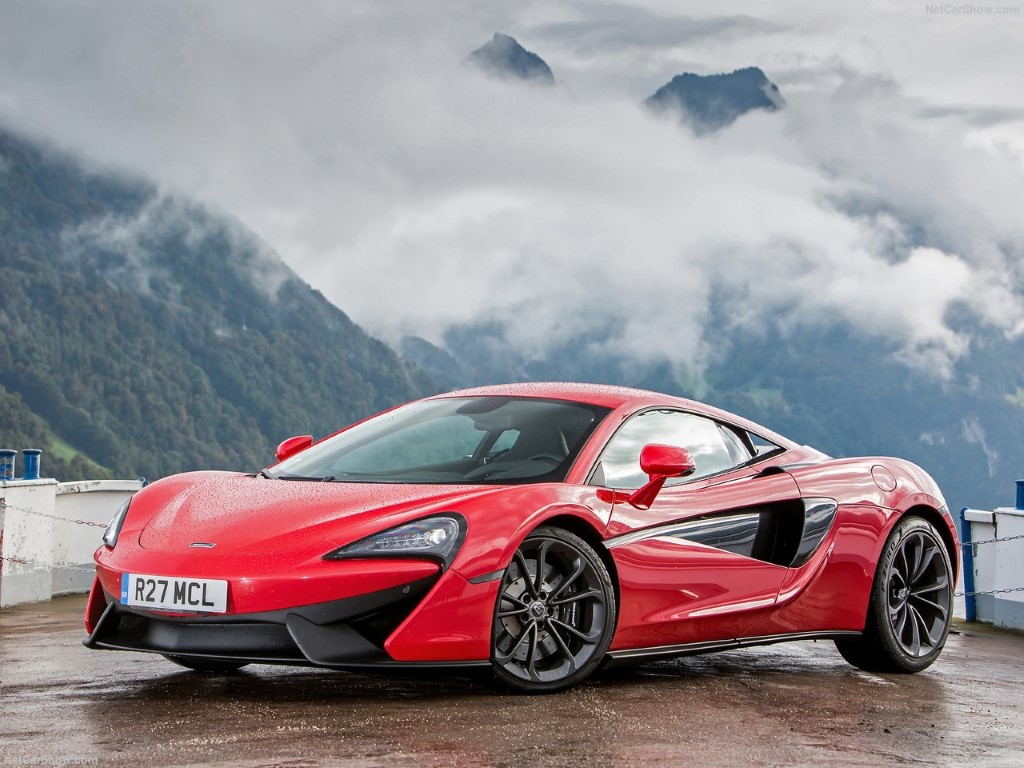
1st Generation
(2015 - 2019)
Technical specifications, versions, and history for the Mclaren 540C.
Select a generation to see available versions
(2015 - 2019)
Select a powertrain to view full technical specifications
The history of the high-performance automotive industry is punctuated by inflection points, where technologies previously restricted to the pinnacle of motorsport become accessible to a broader spectrum of enthusiasts. The McLaren 540C represents one of these crucial moments. Launched in 2015, it wasn't just another model in the Woking manufacturer's portfolio; it was the materialization of an aggressive corporate strategy aimed at tripling the company's production volume and challenging the hegemony established by brands like Porsche and Audi in the daily-drivable sports car segment.
To understand the genesis of the 540C, it is imperative to analyze the state of McLaren Automotive in the first half of the 2010s. After separating the road car operations from the Formula 1 team and launching the MP4-12C in 2011, the brand struggled to establish an identity beyond the "clinical precision tool" often cited by critics. With the subsequent launch of the 650S and the P1 hypercar, McLaren solidified its position at the top of the pyramid, in the so-called Super Series and Ultimate Series.
However, the long-term financial viability of an independent supercar manufacturer requires scale. The internal project, known by the codename "P13", was conceived to fill this vital gap. The goal was to create a product line — the Sports Series — that could offer the McLaren DNA (carbon fiber chassis, mid-engine, lightweight construction) at a price that directly competed with the Porsche 911 Turbo S and the Audi R8 V10, vehicles that historically dominated the "usable supercars" sector.
The 540C emerged as the anchor of this strategy. The "C" in its nomenclature stands for "Club", suggesting a focused, accessible entry point, yet intrinsically linked to the brand's racing heritage. Unlike its bigger brothers, the 540C didn't have the mission of breaking lap records at Nürburgring, but rather to offer a tactile and engaging driving experience on public roads, maintaining the technological exclusivity of carbon fiber in a segment dominated by aluminum and steel.
The decision to unveil the 540C at the Shanghai Motor Show in April 2015 was a calculated geopolitical chess move. At that time, China was emerging as the fastest-growing market for luxury goods, but imposed severe tax barriers based on engine displacement and the final price of the vehicle. The Sports Series, equipped with a 3.8-liter engine (escaping the punitive taxes for engines over 4.0 liters that affected competitors like Ferrari and Lamborghini) and positioned with a lower entry price, was custom-designed to capture the new class of Asian wealth.
While the 570S model targeted the traditional North American and European markets, the 540C had a more nuanced global mandate. McLaren made the strategic decision not to homologate the 540C for the United States market. The logic was to preserve brand value and profit margins in the world's largest supercar market, forcing American buyers to opt for the more expensive 570S. Thus, the 540C became a phenomenon focused on Europe, Asia, and selected emerging markets, such as Brazil and the Middle East.
This geographical exclusion created an interesting dynamic of rarity and value perception, which will be explored deeply in the subsequent sections of this report.
The McLaren 540C distinguishes itself from its direct competitors (Porsche 911 Turbo, Audi R8, Mercedes-AMG GT) through a fundamental engineering principle: the rejection of weight. While rivals relied on aluminum or mixed architectures, the 540C democratized the use of structural carbon fiber.
The structural heart of the 540C is the MonoCell II. It is a carbon fiber "tub" that weighs less than 80 kg, offering torsional rigidity that vastly surpasses any comparable metal structure. The importance of this technology cannot be understated; it allows the suspension to operate with millimeter precision, as there is no flex in the chassis to distort the geometry during high-load cornering.
The "II" designation refers to a critical evolution over the original MonoCell used in the 12C and 650S. McLaren recognized that for a Sports Series car to be considered a "daily driver", entry and exit ergonomics needed to be improved. In the original MonoCell, the door sill was wide and high, requiring an almost acrobatic maneuver to enter the vehicle. For the 540C and 570S, engineers redesigned the carbon weave to narrow and lower the sill at the front, drastically easing access to the cabin without compromising structural integrity in the event of a side impact.
This structure serves as a survival cell, to which front and rear aluminum subframes are bolted to support the engine and suspension. In the event of an accident, these aluminum structures are designed to absorb energy, protecting the integrity of the carbon cell and the occupants.
Under the rear decklid, in a mid-longitudinal position, resides the 3.8-liter (3,799 cm³) twin-turbo V8 engine, codenamed M838TE. The final letter "E" stands for "Evolution", indicating that although it shares the basic architecture with the 650S engine, approximately 30% of its components were redesigned specifically for the Sports Series.
This engine is a piece of competition engineering adapted for the road. It utilizes a dry sump, which allows the engine to be mounted very low in the chassis, reducing the center of gravity, and ensures constant lubrication even under extreme lateral G-forces that would leave a wet-sump engine starved of oil.
Power delivery in the 540C was calibrated to be more linear and accessible than in the Super Series models. Peak torque is available across a broad plateau from 3,500 to 6,500 rpm, which provides remarkable elasticity in urban driving, minimizing the need for constant gear changes. Despite being the entry-level model, the specific output of 140 hp per liter is an impressive figure by the standards of the time.
Power is sent exclusively to the rear wheels through a 7-speed dual-clutch transmission, dubbed SSG (Seamless Shift Gearbox), manufactured by the Italian partner Graziano.
The transmission control logic in the 540C was tuned for smoothness in "Normal" mode, eliminating the low-speed jerkiness that was common in early MP4-12C models. However, in "Sport" and "Track" modes, the transmission employs "Inertia Push" technology. This system harnesses the kinetic energy built up in the engine's flywheel during acceleration; at the moment of an upshift, instead of cutting torque, the transmission releases this kinetic energy as a torque impulse into the next gear, resulting in continuous, visceral acceleration with no interruption of power.
Unlike its competitors that use complex and heavy mechanical limited-slip differentials (LSD), the 540C utilizes an open differential. Traction control and torque vectoring are managed by the Brake Steer system. Derived from banned Formula 1 technology (used by McLaren in the 1997 MP4/12), this system applies imperceptible braking to the inner rear wheel during a corner. This reduces the tendency for understeer (the car pushing wide) and helps "point" the nose of the car into the corner, simulating the effect of a locking differential, but with a fraction of the weight and mechanical complexity.
The major technical distinction that separates the Sports Series (540C/570S) from the Super Series (650S/720S) lies in the suspension system. While the more expensive models use the interconnected hydraulic Proactive Chassis Control system (which dispenses with physical anti-roll bars), the 540C adopts a more conventional, yet highly refined, double wishbone setup with front and rear anti-roll bars.
The 540C is equipped with independent adaptive dampers. The calibration of these dampers is the primary dynamic differentiator compared to the 570S. McLaren engineers tuned the damping rates of the 540C to be significantly more compliant in compression and rebound at low speeds.
This engineering decision was directly aimed at daily usability. On imperfect pavements — common in markets like China, the UK, and Brazil — the 540C demonstrates shock absorption capabilities superior to many sports sedans, without losing body control at high speeds. The system offers three selectable modes via the Active Dynamics Panel on the center console:
In the mid-2010s, the automotive industry migrated en masse to electric power-assisted steering (EPAS) systems to reduce fuel consumption and enable autonomous driving aids. McLaren, however, stayed true to electro-hydraulic assistance in the 540C.
In this system, an electric motor drives a hydraulic pump, but the actual assistance to the steering rack is provided by hydraulic fluid. This preserves the natural, analog communication between the front tires and the driver's hands. The subtle vibrations that indicate a change in asphalt texture or the onset of grip loss are transmitted without the digital filtering inherent to pure electric systems. For purists, this is often cited as the highlight of the 540C's driving experience, surpassing rivals like the Audi R8 and Porsche 911 Turbo in terms of tactile feedback.
The 540C leaves the factory equipped with cast alloy wheels (not forged, like on the 570S) featuring an exclusive multi-spoke design. The dimensions are staggered: 19 inches on the front axle and 20 inches on the rear.
The tires are Pirelli P Zero, developed specifically for McLaren (marked with the "MC1" designation on the sidewall). Unlike the track-focused P Zero Corsa tires fitted to the 570S, the 540C's P Zeros have a compound and tread pattern optimized for wet weather performance, water drainage, and acoustic comfort, reinforcing the all-weather usability proposition.
In the braking department, the 540C presents another cost and usability differentiation: it uses ventilated cast iron/steel brake discs as standard, with 4-piston aluminum calipers. The 570S, by contrast, comes with carbon-ceramic discs as standard. While carbon brakes offer greater resistance to track fatigue (fading), the 540C's iron discs offer better feel and initial "bite" when cold — a desirable trait for urban traffic — in addition to having a drastically lower replacement cost, which is a positive point in the used market.
The design language of the 540C follows McLaren's "shrink-wrapped" philosophy, where the bodywork appears to be stretched tightly over the mechanical components to minimize visual bulk and aerodynamic drag. The design is functional, dictated by airflow.
Although it shares the majority of body panels (which are predominantly superformed aluminum, except for the composite bumpers and engine cover) with the 570S, there are functional visual differences that allow the model to be identified:
The most striking design feature of the Sports Series, present on the 540C, is the "Flying Buttresses" on the C-pillar. This design solution, where the rear pillar is separated from the rear glass, allows air to flow around the cabin and be directed over the engine decklid to increase downforce without adding a large fixed rear wing, maintaining a clean and elegant silhouette.
The interior of the 540C reflects its daily driver proposition. The cabin is designed to offer excellent forward visibility, a rarity in mid-engine supercars. The windshield is deep and the front wheel arches are prominent, allowing the driver to position the car with precision on the road.
The standard seats in the 540C are upholstered in high-quality leather, unlike the grip-and-lightness-focused Alcantara that is standard in the 570S and LT models. The seats offer extensive electric adjustment and heating (in many optional packages), prioritizing comfort on long journeys over extreme lateral support.
The center console is dominated by a 7-inch vertically oriented (portrait style) touchscreen, which controls the IRIS II infotainment system. This system bundles navigation, audio, climate control, and telephony.
It is necessary to address the technological limitations of the era. McLaren's IRIS system, especially in units produced between 2015 and 2017, was subject to criticism. The system was frequently described as slow to respond, with dated graphics compared to Audi's MMI systems (used in the R8) or Porsche's PCM.
Smartphone connectivity was also limited. Apple CarPlay and Android Auto were not natively available at launch, requiring later software updates or third-party interface modules for modern integration. The original satellite navigation system often failed to recalculate routes with the speed required in dense urban traffic. However, the optional 12-speaker Bowers & Wilkins audio system is widely praised for its clarity and power, being a "must-have" option for audiophiles in the used market.
For a mid-engine car, the 540C is surprisingly practical. The "frunk" (front trunk) offers 150 liters of capacity. While it doesn't sound like much, the deep, square shape is usable, capable of accommodating a standard carry-on suitcase and a backpack, or weekly groceries for a couple.
Furthermore, there is a storage space behind the front seats, accessible by reclining the backrests. This "parcel shelf" offers an additional 70 liters or so, ideal for coats, bags, or soft items, totaling a combined cargo capacity that exceeds that of many mid-engine rivals.
There is persistent confusion in the market regarding the 540C variants. It is crucial to clarify: The McLaren 540C was produced exclusively as a Coupé.
While the 570S received Spider (convertible) and GT (Grand Tourer with a rear glass hatch) variants, McLaren chose not to dilute the Spider lineup with a 540 variant. The commercial logic was clear: convertible buyers are generally less price-sensitive and seek lifestyle, so McLaren steered them toward the 570S Spider, guaranteeing higher profit margins. Any advertisement or mention of a "540C Spider" refers to a cataloging error or a misidentified 570S Spider.
The "Track Pack" was a popular option launched for the 570S, which included a rear spoiler raised by 12mm, a Dark Palladium roof, a Stealth sports exhaust, carbon fiber racing seats, and track telemetry, reducing the weight by 25 kg.
Officially, McLaren stated that the Track Pack was exclusive to the 570S. However, in the used market, one can find 540C models listed with a "Track Pack". This occurs because the MSO (McLaren Special Operations) personalization division allowed 540C clients to configure their cars with many of the package's individual components (such as the carbon seats and telemetry), effectively creating an unofficial "540C Track Pack". This demonstrates the flexibility of McLaren's production line, where the boundary between models could be blurred if the client had the budget for MSO.
The Brazilian market played a disproportionately important role for the 540C. Due to Brazil's import tax structure, which multiplies the cost of the vehicle, the price difference between the 540C and the 570S became astronomical in Reais, making the 540C a much more rational entry point to the brand.
McLaren produced the Sports Series line (540C, 570S/GT/Spider, 600LT, 620R) between 2015 and 2021, totaling just over 8,500 units combined. Although McLaren does not disclose the exact breakdown by model, analysts and chassis records suggest that the 540C is, ironically, rarer than the 570S.
Estimated production for the 540C hovers around 1,500 to 2,000 units globally. The rarity is mainly due to its absence in the US market and the tendency for upselling in European markets. The end of production occurred in late 2020, paving the way for the McLaren Artura, a hybrid V6 that replaced the entire Sports Series range.
Owning a McLaren 540C is an experience of contrasts: the sublime driving pleasure versus the reality of maintaining a hand-built British supercar. The ownership report reveals critical points that potential buyers and historians should note.
A well-documented aesthetic problem in the Sports Series is galvanic corrosion (bubbling in the paint). This occurs on the edges of the aluminum panels (doors, front and rear hoods). Although the bodywork is aluminum and the chassis is carbon, the chemical interaction between the aluminum and the fasteners or hinges, if not perfectly isolated during painting at the factory, can cause oxidation under the paint. McLaren frequently repairs this under warranty (10-year corrosion warranty), but it is a vital inspection point.
The M838TE engine is generally robust if maintained correctly. The recommended oil change interval is annual or every 10,000 miles (16,000 km), strictly using Mobil 1 New Life 0W-40.
Despite being the "cheapest" model, maintenance is at a McLaren level. Replacement parts are exclusive and expensive. However, the use of cast iron brakes on the 540C makes replacing discs and pads significantly cheaper (about 1/4 of the cost) than on models with carbon-ceramic brakes, making it a much more sensible option for intense track or road use.
The McLaren 540C ended its production in 2021, leaving a complex and fascinating legacy. Far from being just the "base version", it proved to be, in many respects, the most honest and road-focused car that McLaren has produced in its modern era.
By combining the Formula 1 carbon fiber chassis with compliant suspension and communicative hydraulic steering, the 540C offered a purity of driving that is often lost in the pursuit of lap times and astronomical horsepower numbers. It democratized exotic materials technology, forcing competitors like Audi and Lamborghini to raise the bar on their chassis in the following generation (as seen in the Huracán Tecnica and R8 RWD).
For the collector, the 540C represents the end of an era: the final entry step for a purely combustion-powered McLaren, before the inevitable electrification brought by the Artura. Its rarity, especially well-specified and maintained units, suggests a potential for future appreciation, not just as a financial asset, but as a historical milestone of British engineering focused on the pleasure of driving.
Images of the Mclaren 540C