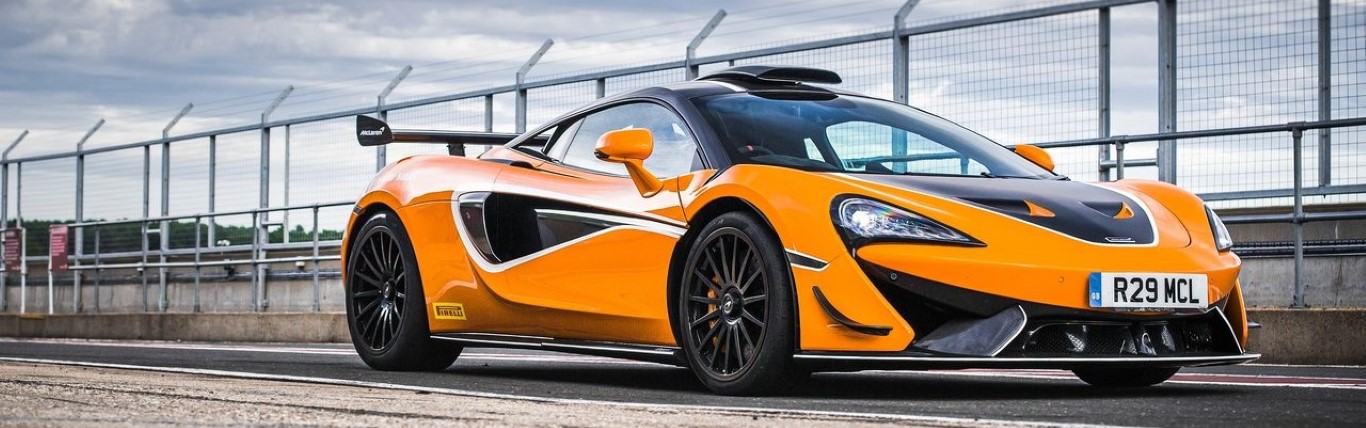
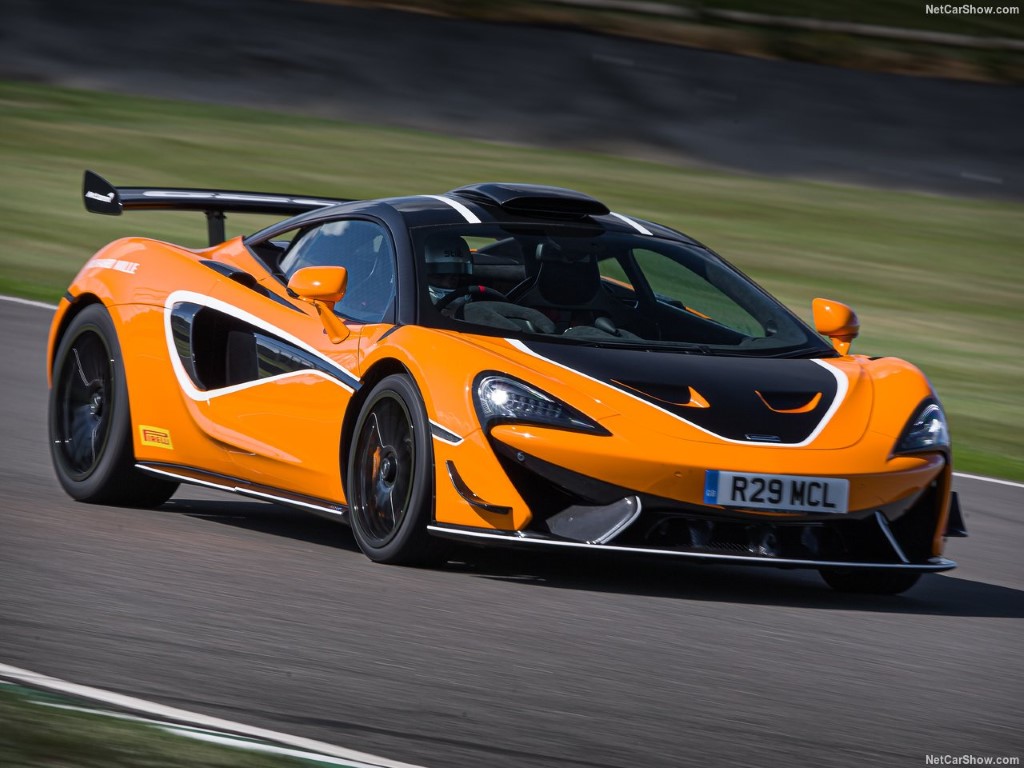
McLaren 620R

McLaren 620R

From the paddock to the pavement: the ultimate competition-spec machine with 620 hp and pure GT4 DNA for the street.

McLaren 620R Generations

Select a generation to see available versions

McLaren 620R G1

1st Generation

(2019-2020)

3.8 V8 Twin-turbo 620 cv

Technical Data and History: McLaren 620R

The Genesis of a Modern Homologation Special

The high-performance automotive industry frequently operates at the intersection of aspirational marketing and applied engineering. However, rarely does a vehicle transgress the theoretical barrier between a pure competition car and a road vehicle with the mechanical fidelity presented by the McLaren 620R. This report dissects the engineering, production history, and strategic positioning of this model, which serves as the final chapter of McLaren Automotive's acclaimed "Sports Series" lineage.

The fundamental premise of the 620R lies not merely in being a faster variant of the 570S model, but rather in an inversion of traditional development logic. While most track-focused supercars, such as the McLaren 600LT, are modified road vehicles designed to withstand the rigors of a circuit, the 620R is, in essence, the McLaren 570S GT4 race car subjected to a reverse engineering process to achieve legal status for public roads.1

The motivation for the development of this vehicle came directly from McLaren's customer base. The 570S GT4 solidified itself as the most successful GT race car ever built by the Woking manufacturer, accumulating championship victories on four continents since its debut in 2017.1 Owners and racing teams, familiar with the competition chassis dynamics, repeatedly questioned what the GT4 mechanical package could achieve if freed from the "Balance of Performance" (BoP) regulatory restrictions imposed by the FIA and other motorsport federations.1 The answer to this technical inquiry is the 620R: a vehicle that maintains the motorsport DNA but operates with the full power of its powertrain, without intake restrictors or artificial weight ballasts.

Powertrain Architecture and Calibration

The heart of the McLaren 620R is a direct evolution of the power unit used in the motorsport program, but with critical alterations that fundamentally change its power delivery curve.

The M838TE Engine: Freedom from GT4 Restrictions

The vehicle is propelled by the M838TE engine, a 3.8-liter V8 with twin turbochargers.3 Although this block is shared with the 570S GT4, its application in the 620R is drastically different. In GT4 competitions, power is frequently limited electronically and mechanically to ensure parity among different manufacturers, generally hovering in the range of 400 to 500 horsepower.

Freed from these bureaucratic constraints, McLaren's engineering team reconfigured the Engine Control Unit (ECU) and the turbocharger management to reach the hardware's peak efficiency. The result is a maximum power output of 620 PS (610 bhp or 611 hp) achieved at 7,500 rpm, accompanied by a torque of 620 Nm (457 lb-ft) available at 3,500 rpm.2 These figures make the 620R the most powerful model in the entire Sports Series lineage, surpassing the 600LT and the 570S.6

Transmission and "Inertia Push" Technology

Power transmission to the rear wheels is managed by a 7-speed SSG (Seamless Shift Gearbox).2 Unlike a conventional automatic transmission focused on comfort, this dual-clutch unit was calibrated to prioritize shift speed and mechanical integrity under high thermal load.

A crucial component of this transmission is the incorporation of McLaren's "Inertia Push" technology. Originally developed for high-performance projects, this technology harnesses the kinetic energy accumulated in the engine flywheel and the transmission's rotating components. During an upshift under full acceleration, the system converts this kinetic energy into a momentary torque pulse as the next gear is engaged.2 This eliminates the torque drop that normally occurs during power interruption, resulting in linear and continuous acceleration, a vital characteristic for maximizing speed on corner exits.

Furthermore, to enhance mechanical connection and chassis response, the 620R's powertrain utilizes engine and transmission mounts that are significantly stiffer than those on standard road models.2 This reduces powertrain inertia under high lateral and longitudinal loads, preventing the engine mass from "rocking" and disturbing the car's balance during rapid directional transitions. The side effect, intentional and accepted, is an increase in the transfer of noise, vibration, and harshness (NVH) into the cabin, reinforcing the sensory experience of a race car.2

Longitudinal Performance Data

The combination of high power, low weight, and optimized traction results in acceleration numbers that rival the brand's "Super Series" category (such as the 720S).

It is notable that the top speed of 322 km/h is lower than that of some other less powerful supercars. This is a direct consequence of the aggressive aerodynamic package, which prioritizes downforce over drag efficiency, a conscious trade-off made to prioritize circuit performance.12

Chassis Dynamics and Suspension: The Radical Divergence

It is in the suspension system that the 620R distances itself most radically from its road-going peers, such as the 600LT and the 570S. While the supercar industry has massively migrated towards electronic adaptive suspension systems (which alter damper fluid viscosity in milliseconds to suit the road), the 620R rejects this technology in favor of a purely motorsport-derived analog solution.

GT4 Manual Dampers

The 620R is equipped with two-way manually adjustable competition dampers (coilovers), exactly like those found on the 570S GT4.3 These components offer 32 clicks of individual adjustment for compression and rebound at each corner of the vehicle.2

The decision to use manual dampers has multiple engineering implications:

  • Weight Reduction: The elimination of electronic components, solenoids, and wiring associated with adaptive suspension results in weight savings of over 6 kg.2
  • Thermal Consistency: Passive competition dampers tend to offer more consistent performance under extreme thermal load cycles (such as in a 30-minute track session) compared to magnetorheological fluids or electronic valves that can suffer behavioral changes with heat.
  • Driver Engagement: Adjusting requires the owner to physically interact with the car's mechanics, allowing for fine tuning of the dynamic behavior (more oversteer or understeer) based on driver preference and the specific characteristics of each circuit.

Elastokinematics and Solid Mounts

Complementing the dampers, the suspension architecture utilizes lightweight aluminum control arms (wishbones) and aluminum uprights, along with stiffer anti-roll bars.2 Crucially, the 620R replaces many of the traditional rubber bushings with solid stainless steel top mounts.3

In a standard street car, rubber bushings allow a certain "compliance" or movement in suspension joints to absorb impacts and reduce noise. However, this compliance introduces imprecision: when the driver turns the steering wheel, the rubber compresses before the tire reacts. By using solid steel mounts, the 620R eliminates this latency. Steering response becomes immediate, and the suspension geometry remains precise even under the highest cornering loads, significantly improving tactile feedback and steering control.3

MonoCell II Structure and Weight Metrics

The structural foundation of the vehicle is the carbon fiber MonoCell II chassis, a single piece that provides the necessary torsional rigidity for the competition suspension to function correctly. The chassis's stiffness ensures there is no structural flex, allowing the dampers and tires to perform all the dynamic work.13

This focus on lightness, combined with the removal of comfort items and the extensive use of carbon fiber, results in impressive weight metrics:

  • Lightest Dry Weight: 1,282 kg.3
  • DIN Kerb Weight: 1,386 kg (including fluids and 90% fuel).14
Aerodynamics and Ground Interface

The 620R's aerodynamics are not stylistic; they are entirely functional and inherited directly from the wind tunnels and test tracks of the GT4.

The Adjustable Rear Wing

The most dominant visual element is the carbon fiber rear wing. This is the same piece used on the race car, raised by 32 cm to capture the "clean" (non-turbulent) airflow passing over the vehicle's cabin.2 To homologate this racing component for use on public roads, the only technical modification required was the incorporation of a third brake light into the wing structure, satisfying lighting regulations.1

The wing is adjustable in three angles of attack. When configured to the most aggressive angle (maximum incidence), it generates 185 kg of additional downforce at 250 km/h.2 This downforce is vital for stabilizing the rear axle in high-speed corners and heavy braking zones.

Front Aerodynamic Balance

To prevent excessive rear downforce from lifting the front of the car (which would cause understeer), the front end was deeply revised. The front bumper, the splitter, and the hood were redesigned.2 The hood features pronounced air vents that extract hot air from the radiator and direct it upward and outward, reducing pressure under the car and increasing downforce.

Additionally, the 620R incorporates carbon fiber "dive planes" on the front bumper. These components contribute up to 30 kg of downforce, as part of a total front aerodynamic package that generates 65 kg of vertical load.2 The resulting balance, or "center of pressure," is tuned to provide a neutral and predictable platform for the driver.

Tires: From Street to Slick

The 620R leaves the factory equipped with Pirelli P Zero Trofeo R tires, which are road-legal semi-slick compounds.2 The wheels are center-lock forged aluminum, 19 inches at the front and 20 inches at the rear, dispensing with conventional lug nuts in favor of a single large-diameter central nut, facilitating quick changes.7

A crucial technical detail is that the 620R was designed from the outset to accommodate full competition slick tires (track-only) without the need for mechanical adjustments to the suspension or bodywork to prevent rubbing. The optional slick tires, developed by Pirelli Motorsport specifically for this car, offer an 8% larger contact patch than the road tires, unlocking a level of lateral grip and braking unattainable by any street-legal tire.1

Braking System

The braking system utilizes McLaren's latest lightweight materials technology. Carbon Ceramic (CCM) discs of 390 mm at the front and 380 mm at the rear are bitten by forged aluminum calipers.3 To improve modulation and pedal feel — critical in racing situations where the driver must manage the wheel lock-up limit — the 620R uses a brake booster derived from the McLaren Senna hypercar.1

Production, Rarity, and the "R Pack"

The production history of the 620R is marked by planned exclusivity and accidental scarcity, creating a complex scenario for collectors and brand historians.

The Production Cut: From 350 to 225

Originally, McLaren announced a strictly limited production of 350 global units, with manufacturing starting in January 2020.16 Each vehicle was to bear a numbered dedication plaque identifying its sequence in production (e.g., "1 of 350").15

However, production was severely impacted by the COVID-19 pandemic, which disrupted global supply chains and forced the temporary closure of the Woking factory. As a consequence, 620R production was prematurely ended in December 2020, totaling only 225 complete units built.9

This cut of approximately 36% in the planned volume generated interesting anomalies in chassis numbering. There are confirmed reports of vehicles with plaques numbered near the end of the originally planned series (such as car number 349), despite only 225 cars physically existing.18 This suggests that McLaren maintained the original chassis number allocation for specific orders, even if intermediate slots were not filled, or that the numbering did not follow a perfect chronological build order. This "accidental" rarity elevated the model's collectibility status.

Market Strategy: North America vs. Rest of the World

The distribution and specification of the cars varied significantly by region.

  • North America (USA/Canada): Only 70 units were allocated to this market. Crucially, all North American cars came factory-equipped with an MSO (McLaren Special Operations) upgrade package that included the carbon fiber roof scoop, carbon roof rails, and the track telemetry system.6
  • Europe, Middle East, and Africa (EMEA): In these markets, McLaren introduced the "R Pack" as a post-launch option.10

The MSO "R Pack"

The "R Pack," offered for £25,000 in the UK, was a collection of enhancements developed by the brand's special operations division to intensify the sensory and visual experience.20 The package included:

  • Gloss Visual Carbon Fibre Roof Scoop: Inspired by the legendary McLaren F1 Longtail, this component is fully functional. It acts as an air intake system, feeding the engine while simultaneously amplifying the induction sound within the cabin for a more visceral auditory experience.20 It can also accommodate a camera for the telemetry system.
  • Titanium SuperSports Exhaust: A full titanium exhaust system with gloss Nano Black finishers. This system is up to 5 decibels louder than the standard sports exhaust options of the Sports Series, providing a sharper and more aggressive engine note.10
  • Front Fender Louvres: Made of carbon fiber, these louvres assist in extracting turbulent air from the front wheel arches.20
  • Carbon Fibre Interior Pack: Additional carbon fiber finishes in the cockpit.20

The existence of the R Pack creates a value hierarchy in the used market in Europe, where cars equipped with the package are considered "complete" and tend to command higher prices.

Design and Aesthetic Personalization

The 620R's aesthetics are dictated by function, but the personalization allowed by McLaren offered customers the chance to pay homage to the brand's history.

The standard colors were selected to mirror the liveries of the GT4 racing teams:

  • McLaren Orange with white stripes.17
  • Silica White with orange stripes.17
  • Onyx Black with orange stripes.17

Beyond these, MSO offered extensive personalization options, including off-palette colors (such as "Ceramic Grey" 23) and custom racing decals. The most exclusive option was the livery inspired by the McLaren Senna GTR, creating a direct visual link to the brand's track hypercar.17 There are also extremely rare references to a "Senna Sempre" livery, paying tribute to Ayrton Senna with colors inspired by the Brazilian flag and details from his helmet.25

The interior reflects the spartan nature of the project. Items such as floor mats, a glovebox, air conditioning, the IRIS navigation system, and the audio system were removed as standard to save weight. However, McLaren allowed customers to add the air conditioning and infotainment system back at no additional cost, recognizing that some journeys to the track could be unbearable without them.1 The seats are super-lightweight carbon fiber racing buckets with six-point harnesses installed from the factory.2

Comparative Analysis: Positioning in the Sports Series Lineup

To fully understand the 620R, it is necessary to situate it relative to its platform siblings. Common confusion lies in the comparison between the 600LT and the 620R.

Technical Characteristic McLaren 570S (Base) McLaren 600LT (Longtail) McLaren 620R (Homologation)
Engine Power 570 PS 600 PS 620 PS
Suspension Adaptive Electronic Adaptive Electronic (Stiff) Manual GT4 (Coilovers)
Engine Mounts Standard Stiff Stiffer / Motorsport
Aerodynamics Integrated / Clean Fixed Wing / Extended Splitter Adjustable GT4 Wing / Dive Planes
Standard Tires Pirelli P Zero Corsa Pirelli P Zero Trofeo R Pirelli P Zero Trofeo R (Opt. Slicks)
Exhaust Conventional Rear Exit Top-Exit Rear Exit (Optional Titanium)
Production Series (Thousands) Time-Limited (1 year) Number-Limited (225 units)
Philosophy Street Sports Car Track-Focused Road Car Street-Legal Race Car

The 600LT is a road car that was optimized for the track. It retains the convenience of adaptive suspension and features the unique "top-exit" exhaust, which saves weight and improves rear aerodynamics.26

The 620R, in contrast, is a race car minimally adapted for the road. The absence of electronic suspension and the use of solid chassis components result in a much harsher ride quality on public roads, but offer a purity of feedback that the 600LT, despite being brilliant, cannot fully match due to the electronic filters inherent in its road systems.26 The 620R does not have the top-exit exhaust of the 600LT, keeping the GT4's rear exit configuration to accommodate the massive rear wing.

Conclusion and Legacy

The McLaren 620R represents the end of a significant era for McLaren Automotive. As the final model produced under the "Sports Series" designation, it closes the chapter initiated in 2015 with the 570S, which was responsible for democratizing access to carbon fiber engineering and expanding the brand globally.7

The 620R's legacy lies in its authenticity. In a market saturated with "special editions" that are often limited to cosmetic changes and nominal power increases, the 620R stands out for offering genuine competition hardware. The decision to retain manual dampers, adjustable aerodynamics, and the option for slick tires demonstrates a commitment to pure performance over comfort or convenience.

With only 225 units in existence, the 620R has secured its place as one of the rarest and most focused modern McLarens. It serves as a physical tribute to the success of the 570S GT4 and stands as the ultimate expression of what the MonoCell II platform and twin-turbo V8 engine could achieve when freed from all restrictions. For the enthusiast who values mechanical connection and surgical precision above all else, the 620R is not just a car; it is a precision tool forged on the track and licensed for the road.

Technical data based on: • Official manufacturer catalogs • EPA / WLTP documentation when available • Official press releases

Editorial content produced by Gabriel Carvalho. | Última revisão: Dezembro/2025.