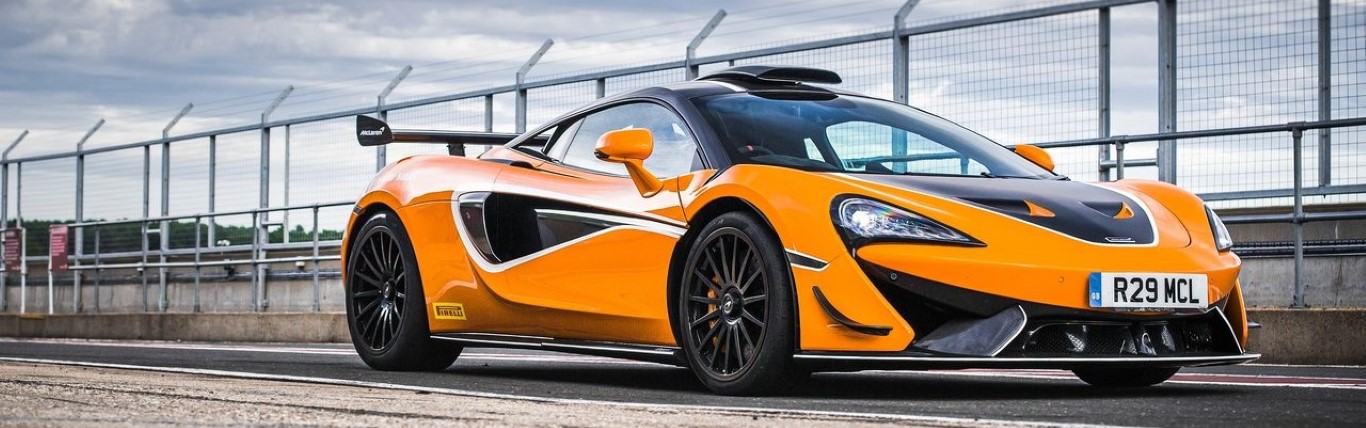
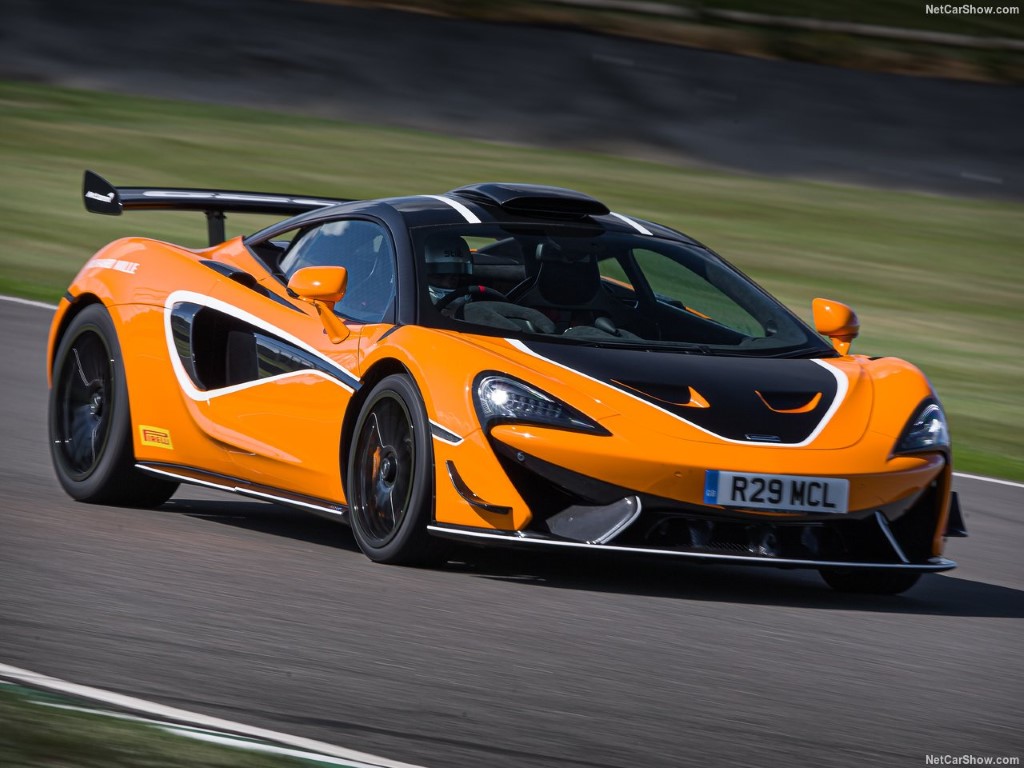
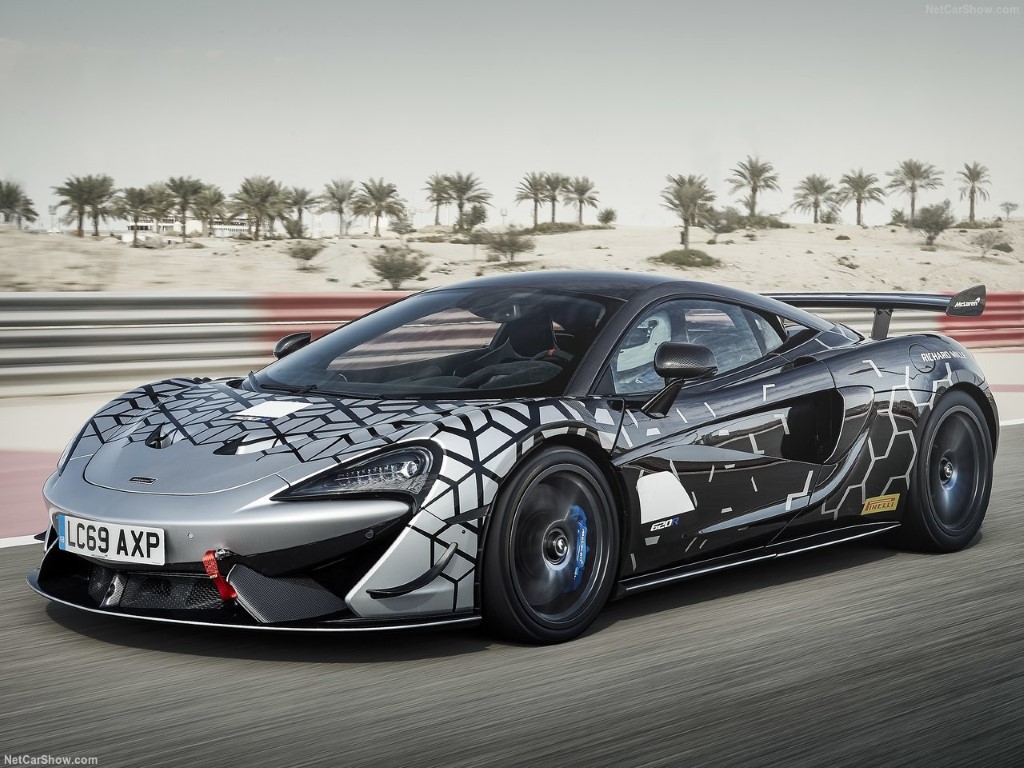
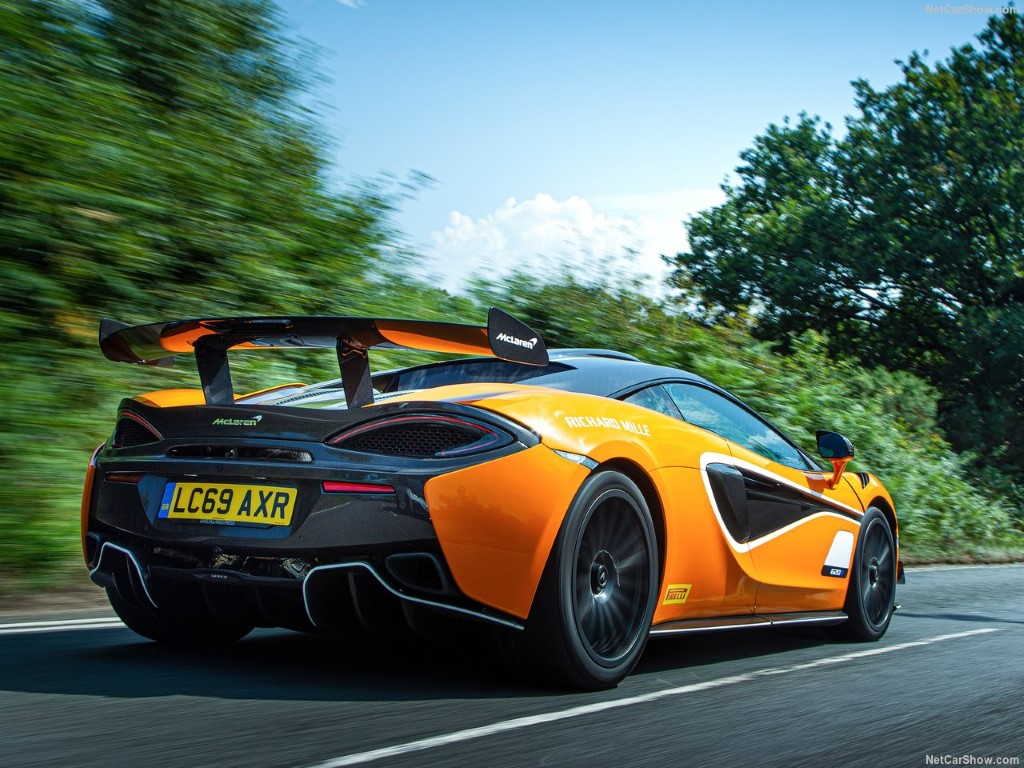
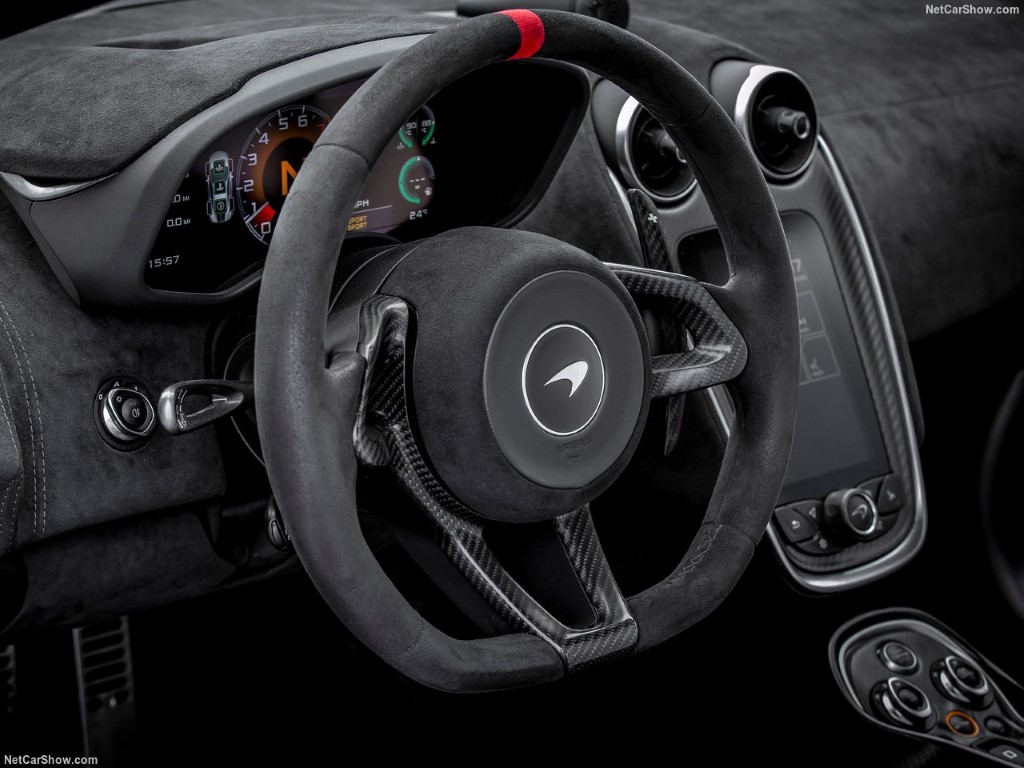
The heart of the McLaren 620R is a direct evolution of the power unit used in the motorsport program,
but with critical alterations that fundamentally change its power delivery curve.
The M838TE Engine: Freedom from GT4 Restrictions
The vehicle is propelled by the M838TE engine, a 3.8-liter V8 with twin turbochargers.3 Although this block
is shared with the 570S GT4, its application in the 620R is drastically different. In GT4 competitions,
power is frequently limited electronically and mechanically to ensure parity among different manufacturers,
generally hovering in the range of 400 to 500 horsepower.
Freed from these bureaucratic constraints, McLaren's engineering team reconfigured the Engine Control
Unit (ECU) and the turbocharger management to reach the hardware's peak efficiency. The result is a maximum
power output of 620 PS (610 bhp or 611 hp) achieved at 7,500 rpm, accompanied by a torque of 620 Nm (457
lb-ft) available at 3,500 rpm.2 These figures make the 620R the most powerful model in the entire Sports
Series lineage, surpassing the 600LT and the 570S.6
Transmission and "Inertia Push" Technology
Power transmission to the rear wheels is managed by a 7-speed SSG (Seamless Shift Gearbox).2 Unlike a
conventional automatic transmission focused on comfort, this dual-clutch unit was calibrated to prioritize
shift speed and mechanical integrity under high thermal load.
A crucial component of this transmission is the incorporation of McLaren's "Inertia Push" technology.
Originally developed for high-performance projects, this technology harnesses the kinetic energy accumulated
in the engine flywheel and the transmission's rotating components. During an upshift under full
acceleration, the system converts this kinetic energy into a momentary torque pulse as the next gear is
engaged.2 This eliminates the torque drop that normally occurs during power interruption, resulting in
linear and continuous acceleration, a vital characteristic for maximizing speed on corner exits.
Furthermore, to enhance mechanical connection and chassis response, the 620R's powertrain utilizes
engine and transmission mounts that are significantly stiffer than those on standard road models.2 This
reduces powertrain inertia under high lateral and longitudinal loads, preventing the engine mass from
"rocking" and disturbing the car's balance during rapid directional transitions. The side effect,
intentional and accepted, is an increase in the transfer of noise, vibration, and harshness (NVH) into the
cabin, reinforcing the sensory experience of a race car.2
Longitudinal Performance Data
The combination of high power, low weight, and optimized traction results in acceleration numbers
that rival the brand's "Super Series" category (such as the 720S).
It is notable that the top speed of 322 km/h is lower than that of some other less powerful supercars. This
is a direct consequence of the aggressive aerodynamic package, which prioritizes downforce over drag
efficiency, a conscious trade-off made to prioritize circuit performance.12