1st Generation
(2017-2023)
The paradigm shifter: an engineering masterpiece that fused revolutionary aerodynamics with hypercar power.
Select a generation to see available versions
(2017-2023)
Select a powertrain to view full technical specifications
The story of the McLaren 720S doesn't just begin with its launch in 2017, but rather with McLaren Automotive's critical need to establish itself as a mature road car manufacturer, capable of not only competing with, but overcoming the established Italian hegemony of Ferrari and Lamborghini. Following the launch of the MP4-12C in 2011 and its evolution into the 650S, the British brand, based in Woking, needed a product to define the second generation of its "Super Series" — the backbone of its product range.
The project, codenamed P14, was born under the ambitious "Track22" business plan, which foresaw a £1 billion investment in research and development to launch 15 new models or derivatives by 2022. The goal was not merely incremental; McLaren sought a quantum leap in performance that would make the 720S untouchable in direct comparisons for an entire life cycle. When the curtains fell at the 87th Geneva Motor Show in March 2017, the world didn't just see a successor to the 650S, but a vehicle that redefined the performance parameters for series-production supercars.
The premise was to create a car with an unprecedented breadth of capability: it needed to be refined enough for daily use, absorbing urban asphalt imperfections with the docility of an executive sedan, while simultaneously offering track performance capable of challenging dedicated hypercars. To achieve such a dichotomy, McLaren's engineering had to abandon traditional components and rethink aerodynamics, the carbon structure, and the electronic chassis management from scratch. The result was a vehicle that, according to official data, reached a top speed of 341 km/h and accelerated from 0 to 100 km/h in 2.9 seconds, numbers that put the competition on immediate high alert.
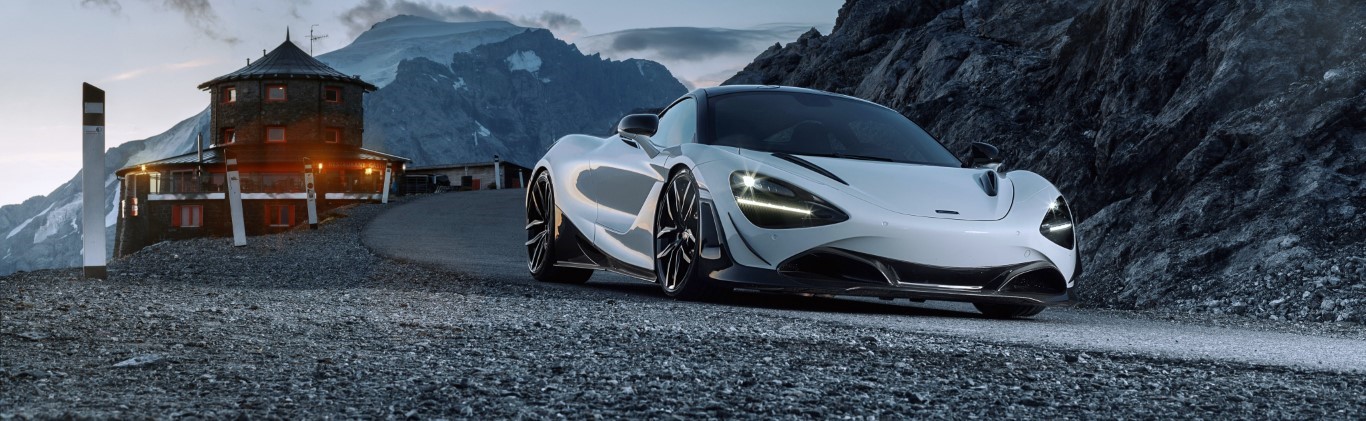
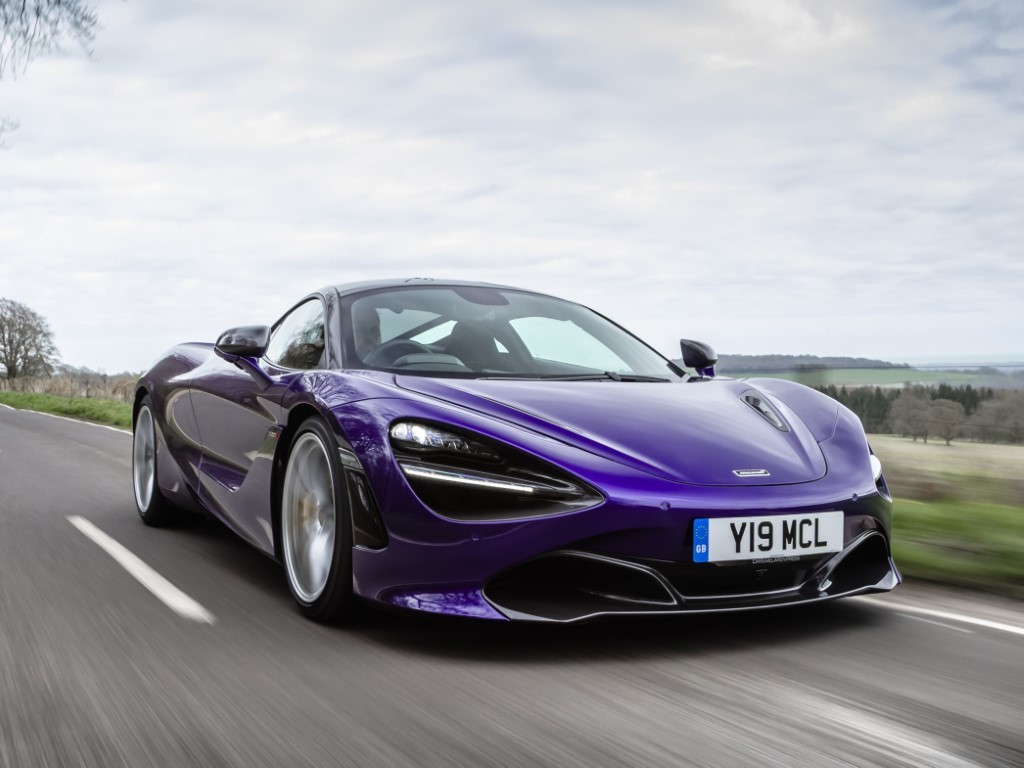
The design of the 720S, led by Rob Melville and Frank Stephenson, radically broke away from the visual language of previous models. The most polarizing feature at launch was the absence of conventional headlights. In their place, McLaren introduced what it called "eye sockets" — large dark cavities in the front fascia.
This decision was not aesthetic, but purely functional. Within these cavities reside not only the adaptive LED headlights, but also critical air ducts that channel airflow to the Low Temperature Radiators (LTRs). This solution allowed the front of the car to remain low and aggressive, improving driver visibility while resolving the thermal needs of a significantly more powerful engine.
Perhaps the most significant design innovation of the 720S is the absence of large side air intakes, which had been a visual signature of almost all mid-engine supercars since the 1980s. McLaren managed to eliminate these visible openings by creating "double-wall" or "double-skin" doors.
The fast, turbulent air exiting the front wheels and passing the A-pillar is captured by a hidden channel within the door structure itself. This channel accelerates the airflow and directs it straight to the High Temperature Radiators (HTRs) mounted ahead of the rear wheels. According to McLaren, this solution improved cooling efficiency by 15% compared to the 650S model, while simultaneously increasing the vehicle's overall downforce. The design is biomimetic, inspired by the hydrodynamic efficiency of the Great White Shark, resulting in an organic, fluid shape free of unnecessary appendages.
The rear of the vehicle is dominated by a full-width active wing, which operates in harmony with the rest of the bodywork. This wing doesn't just serve to generate aerodynamic pressure in high-speed corners. It has three main functions operated automatically by the vehicle's software:
McLaren is a pioneer in the use of carbon fiber, having introduced the material to Formula 1 in 1981 and to road cars with the F1 in 1993. The 720S debuted the Monocage II structure. Unlike the "MonoCell" structure of the previous generation (which was an open "tub" with aluminum structures for the roof), the Monocage II is a complete safety cell, integrating the roof and pillar structure into a single, extremely rigid and lightweight carbon fiber piece.
The structural rigidity of the Monocage II allowed McLaren engineers to reduce the width of the door sills and lower them, drastically easing entry and exit from the vehicle — a common criticism of earlier supercars. Furthermore, the material's strength allowed for extremely thin A, B, and C pillars. The C pillar, in particular, is glazed or translucent in certain configurations, providing over-the-shoulder rear visibility that is virtually nonexistent in competitors like the Lamborghini Huracán.
The dry weight of the 720S Coupé, in its lightest configuration, is just 1,283 kg, while the curb weight (DIN), with fluids and 90% fuel, is 1,419 kg. This lightness is fundamental to the car's performance, resulting in a power-to-weight ratio of 561 PS per tonne, a figure that surpasses most rivals of the time.
The heart of the 720S is the M840T engine. Although it shares the twin-turbo V8 lineage with the M838T engine used in the 650S and 570S, the M840T was significantly reworked, with 41% of its components being new.
The official factory figures are impressive on their own:
However, the automotive world quickly discovered that these numbers were conservative. Independent dynamometer (dyno) tests frequently showed the car producing nearly 700 horsepower at the wheels, which, factoring in drivetrain and differential losses, suggested the true engine power (at the crank) was closer to 750 to 780 horsepower. This practice of "under-promise and over-deliver" became a McLaren hallmark in this era, solidifying the 720S's reputation as a "hypercar killer."
Power is sent to the rear wheels via a 7-speed dual-clutch transmission (SSG - Seamless Shift Gearbox). The transmission software was recalibrated for even faster shifts in track mode, using the inertia of the rotating components to provide a torque "push" on upshifts, increasing the sensation of acceleration.
While most competitors use physical anti-roll bars (metal torsion bars) to control body roll in corners, McLaren utilizes an interconnected hydraulic system. In the 720S, this system evolved into the Proactive Chassis Control II (PCC II).
The PCC II hydraulically connects the dampers: when a left-side wheel is compressed in a corner, fluid is transferred to resist compression and keep the body flat. In a straight line, the system decouples this stiffness, allowing each wheel to absorb bumps independently.
The brain of the PCC II system is based on PhD research from the University of Cambridge. The system uses 12 additional sensors compared to the 650S, including an accelerometer in each wheel hub and pressure sensors in each damper. These sensors read the road surface and driver inputs (steering angle, throttle position) and adjust the damping valves in milliseconds. The result is a car that offers a "magic carpet" ride comfort in Comfort mode, but becomes surgically precise and rigid in Track mode.
To make 720 horsepower performance accessible and fun, McLaren introduced Variable Drift Control. This system allows the driver to adjust, via an on-screen graphic, the level of traction control intervention and the permitted slip angle. This democratized limit handling, allowing less experienced drivers to explore oversteer (tail stepping out) with an adjustable electronic safety net.
Historically, transforming a coupe supercar into a convertible (Spider) involved significant compromises: the car became heavier due to necessary structural reinforcements and the roof mechanism, and torsional rigidity decreased. With the 720S Spider, launched in December 2018, McLaren defied this convention.
Thanks to the inherent rigidity of the Monocage II carbon structure, no additional reinforcement structure was needed in the lower chassis. The only structural change was the adaptation of the upper rear section to accommodate the roof, resulting in the Monocage II-S structure.
The result was a weight increase of just 49 kg over the Coupé, totaling a dry weight of 1,332 kg. To put this in perspective, McLaren claims the 720S Spider is 88 kg lighter than its closest direct competitor (the Ferrari 488 Spider).
The roof system is a single-piece carbon fiber top operated electrically (abandoning the hydraulic system of previous models to save weight and gain speed).
A design innovation unique to the Spider is the glazed flying buttresses. Instead of solid panels that block rear diagonal vision (blind spots), McLaren used glass, drastically improving visibility and the feeling of space in the cabin. In addition, the carbon roof could be specified with an electrochromic glass panel, which switched between transparent and opaque at the touch of a button, allowing light into the cabin even with the roof closed.
The performance figures of the 720S became legendary.
On drag strips, the 720S cemented its reputation. While the factory claimed a quarter-mile (402 meters) time of 10.3 seconds, owners and specialized channels like DragTimes recorded bone-stock times in the 9.9-second range, and even 9.59 seconds in ideal grip and air density conditions.
These times placed the 720S, a "regular" series production car, in the same territory as much more expensive, limited-run hybrid hypercars like the Porsche 918 Spyder and LaFerrari in rolling acceleration races. This dominance forced the competition to respond: Ferrari, for example, had to equip the F8 Tributo (successor to the 488) with the 488 Pista's engine just to keep pace with the standard 720S.
McLaren kept the 720S life cycle vibrant through various special editions and focused packages, often developed by the MSO (McLaren Special Operations) division.
Right at the launch in Geneva, McLaren presented the "Velocity" theme to demonstrate MSO's capabilities.
Not an edition limited by number, but a focused specification for owners who frequent circuits.
An extremely restricted collection of just 15 units, marketed in Europe.
Launched to celebrate the 25th anniversary of the McLaren F1 GTR's victory at the 1995 24 Hours of Le Mans.
The FIA-homologated competition version for global GT3 championships. This car was the first GT developed internally by the McLaren Customer Racing division (previously, GT cars were developed in partnership with CRS GT). Due to Balance of Performance (BoP) rules, the GT3's engine is often restricted to around 500-550 horsepower to ensure parity with cars from other brands, despite having far superior aerodynamics and chassis compared to the road car.
Launched in 2021, the GT3X is McLaren's answer to the question: "What could the race car do without the restrictions of the rules?".
McLaren operates with much lower volumes than brands like Porsche or even Ferrari. The total capacity of the Woking factory for all models is around 4,000 to 5,000 cars per year.
The life cycle of the 720S coincided with periods of turbulence and success for the McLaren Group. The launch in 2017 helped drive record sales, with the company selling 3,286 cars in 2016 and growing in subsequent years.
However, the final years of production (2020-2022) were marked by the COVID-19 pandemic and the global semiconductor crisis. Financial reports from 2021 and 2022 indicate that, despite strong demand (full order books), production was limited by supply chain constraints, which affected the final delivery volume of the last units of the 720S and the 765LT.
Production of the McLaren 720S quietly ended in December 2022. The company confirmed that the model could no longer be ordered and that all capacity was being directed towards its successor, the McLaren 750S.
The model arrived in Brazil through the official importer Eurobike, consolidating the brand's presence in the national luxury market.
The 720S has maintained robust value retention in Brazil. As of 2025, used 2018 models are still advertised for values close to R$ 2.7 million (according to the FIPE table and market listings), indicating that depreciation was minimal in nominal terms, protected by exclusivity and the dollar/real exchange rate variation over the years.
The McLaren 720S was not just "another fast car." It was a technological milestone that forced the entire supercar industry to move. Its combination of a carbon fiber chassis, proactive hydraulic suspension, and functional aerodynamics created a product that offered GT-class comfort with hypercar performance.
| Feature | 720S Coupé | 720S Spider |
|---|---|---|
| Engine | 4.0L Twin-Turbo V8 (M840T) | 4.0L Twin-Turbo V8 (M840T) |
| Power | 720 PS (710 hp) | 720 PS (710 hp) |
| Torque | 770 Nm | 770 Nm |
| Dry Weight (Lightest) | 1,283 kg | 1,332 kg (+49kg) |
| 0-100 km/h | 2.9 s | 2.9 s |
| 0-200 km/h | 7.8 s | 7.9 s |
| Top Speed | 341 km/h | 341 km/h (325 km/h open) |
| Launch Price BR | ~R$ 2.9 Million ~R$ 3.45 Million |
The model was succeeded by the McLaren 750S in 2023, which is a direct evolution (30% new parts, 30 hp more, 30 kg less), proving that the engineering foundation established by the 720S in 2017 was so advanced that, even six years later, it only needed refinements to remain at the top of the class. For collectors and enthusiasts, the 720S remains one of the most complete and technically impressive supercars of the 21st century.
Images of the McLaren 720S