1st Generation
(2024-)
3.0 V6 Twin-turbo PHEV
700 cv
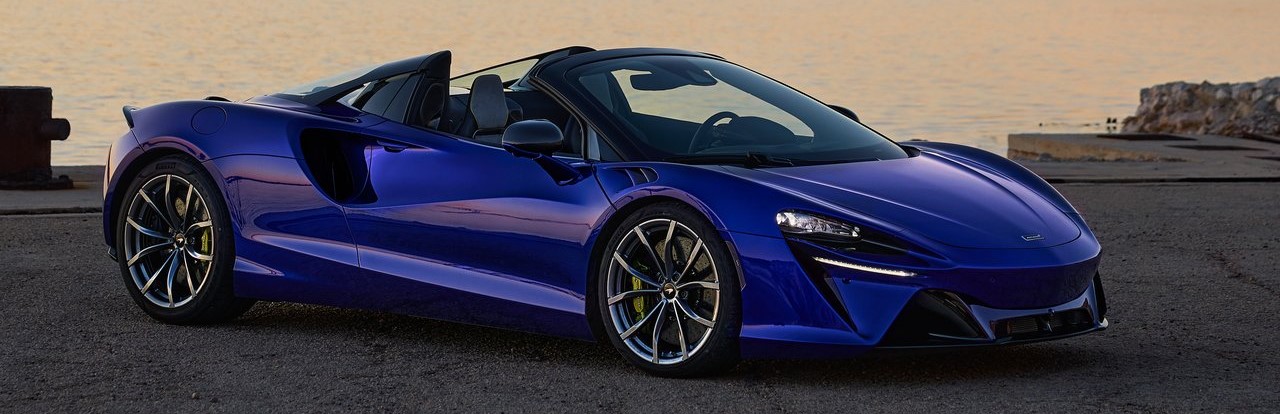
Electricity and wind: the 700 hp evolution of the hybrid system in a technologically absolute convertible.
Select a generation to see available versions
(2024-)
The McLaren Artura does not just represent the launch of a new model; it symbolizes a complete restructuring of the brand's product hierarchy and its engineering philosophy. Over the last decade, McLaren consolidated its reputation with the "Sports Series" line (including models like the 570S, 570GT, and 600LT), which used variations of the MonoCell chassis and the Ricardo twin-turbo V8 engine. However, global regulatory pressures on emissions and the need for technological innovation forced a paradigm shift.
The Artura was designed to replace the Sports Series line, but McLaren chose to reclassify it as the brand's first mass-produced "High-Performance Hybrid" (HPH) Supercar. Unlike the P1 and the Speedtail, which were limited-production hybrids with stratospheric costs (Ultimate series), the Artura democratizes hybrid technology within the brand's portfolio, serving as the entry point for McLaren's electrification.
Breaking with the tradition of alphanumeric nomenclatures based on horsepower (like 570S, 720S), the name "Artura" is a linguistic fusion of the words "Art" and "Future". This semantic choice signals an intention to balance the aesthetics of automotive design with the vanguard of technology. The announcement of the name in November 2020 marked the beginning of a campaign to reposition the brand not just as a manufacturer of race cars for the road, but as a luxury technology company.
The foundation of the Artura project required the development of entirely new components, rejecting the reuse of parts from previous generations to ensure that electrification did not compromise the brand's "DNA" of lightness.
The central innovation of the Artura is the McLaren Carbon Lightweight Architecture (MCLA). Unlike previous MonoCell structures, manufactured in Austria by partner Carbo Tech, the MCLA is the first chassis designed and manufactured in-house by McLaren at the new McLaren Composites Technology Centre (MCTC) in Sheffield, UK.
The biggest obstacle for hybrid supercars is the added weight of batteries and electric motors. The MCLA was conceived specifically to mitigate this problem.
Under the carbon and aluminum "skin," the Artura debuted an Ethernet-based electrical architecture, a radical shift from traditional CAN bus (Controller Area Network) systems.
The most controversial and technically complex decision in the development of the Artura was the replacement of the iconic twin-turbo V8 with an all-new hybrid V6.
The internal combustion engine, codenamed M630, is a bespoke (custom-made) piece of engineering, with 2,993 cc of displacement.
The most distinctive feature of this engine is the 120-degree angle between the cylinder banks.
For the electrical component, McLaren avoided the radial flux motors common in the automotive industry, opting for a more exotic technology: the axial flux motor.
The hybrid system is powered by a lithium-ion battery pack with a gross capacity of 7.4 kWh.
The dual-clutch transmission (SSG) was redesigned to integrate the electric motor and add an eighth gear for cruising efficiency.
The Absence of a Reverse Gear: In a lateral engineering move, the gearbox has no mechanical gears for reverse. Reversing the vehicle is accomplished exclusively by spinning the electric motor in the opposite direction. This saved weight and mechanical complexity, offsetting the additional weight of the eighth gear.
The Artura's design follows the "Function dictates Form" philosophy, with an approach described as "shrink-wrapped," where the bodywork tightly hugs the mechanical components.
Thermal management is critical due to the high temperatures generated by the engine's "Hot Vee" configuration.
The Artura's trajectory to market was tumultuous, marked by significant delays that impacted McLaren's financial health.
Originally planned for deliveries in late 2021, the Artura's commercial launch collided head-on with the global semiconductor (chip) shortage crisis. The car's advanced electronic architecture, dependent on multiple processors for the chassis, engine, and ADAS systems, made it particularly vulnerable.
Successive Delays: The launch was postponed first to June 2022, then to July, and in some markets, deliveries only gained real volume in 2023.
In addition to the lack of parts, the Artura faced product "maturity" issues. Michael Leiters, who took over as CEO of McLaren in 2022, made the drastic decision to halt deliveries to correct fundamental quality flaws.
One of the most critical incidents was a recall involving the high-pressure fuel pipe nuts. In about 164 initial units in the US, it was discovered that these nuts could come loose due to vibration or improper assembly, creating a real risk of fuel leakage and fire over the hot engine components. McLaren acted to replace the entire piping in the affected units.
McLaren responded to the initial problems with a comprehensive update to the lineup for the 2025 model year (MY2025), launched in conjunction with the convertible variant.
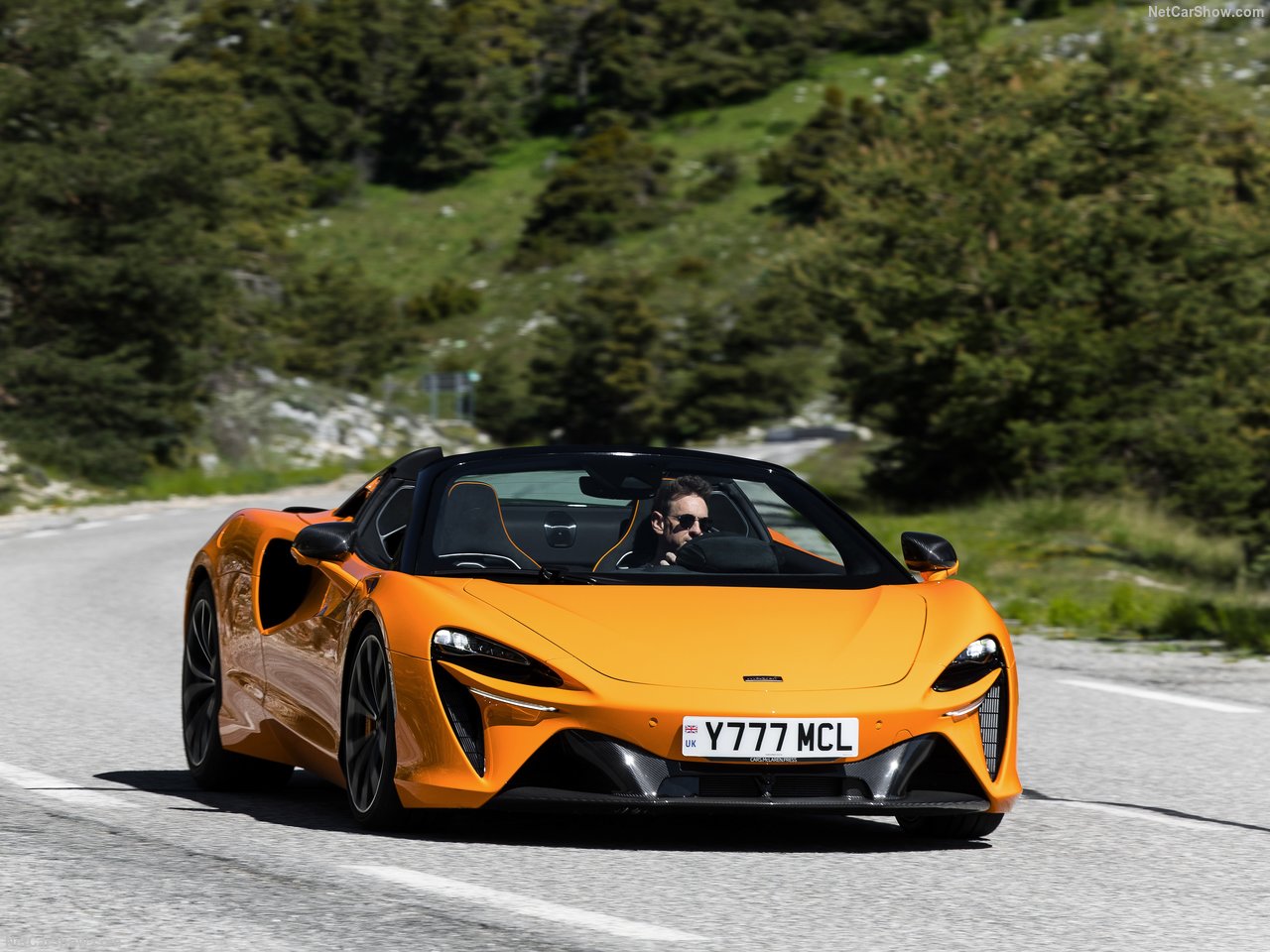
Launched in 2024 as a 2025 model, the Artura Spider brought the open-air experience to the MCLA platform without compromising structural rigidity.
The arrival of the Spider marked a technical update for the entire Artura family, focused on resolving dynamics criticisms and increasing competitiveness.
In an unprecedented CRM (Customer Relationship Management) strategy for the brand, McLaren offered the 20 PS power upgrade free of charge to all existing owners of 2023 and 2024 Artura models. The upgrade is performed via software at dealerships, ensuring that early adopters were not penalized by the rapid product evolution.
The table below summarizes the critical technical differences between the launch model and the 2025 update.
| Technical Specification | Artura Coupe (2023-2024) | Artura Spider / Coupe (2025+) |
|---|---|---|
| Combustion Engine (ICE) | 3.0L Twin-Turbo V6 (M630) | Updated 3.0L Twin-Turbo V6 (M630) |
| ICE Power | 585 PS (577 hp) | 605 PS (597 hp) |
| Electric Motor Power | 95 PS (94 hp) | 95 PS (94 hp) |
| Total Combined Power | 680 PS (671 hp) | 700 PS (690 hp) |
| Combined Torque | 720 Nm | 720 Nm (Optimized curve) |
| Transmission | 8-Speed SSG | 8-Speed SSG (+25% faster shifts) |
| 0-100 km/h | 3.0 seconds | 3.0 seconds |
| 0-200 km/h | 8.3 seconds | 8.4 seconds (Spider) |
| 0-300 km/h | ~21.5 seconds | 21.6 seconds (Spider) |
| Maximum Speed | 330 km/h (Limited) | 330 km/h (Limited) |
| EV Range (WLTP) | 30 km | 33 km |
| Dry Weight (Minimum) | 1,395 kg | 1,457 kg (Spider) |
| Estimated Price (Brazil) | R$ 2,400,000 (Pre-owned) | R$ 2,900,000 - R$ 3,200,000 (New) |
Analysis of McLaren Holdings Limited's financial reports reveals the direct impact of the Artura on the company's business.
Production numbers reflect the difficult transition from the old line to the new.
The Artura's delays cost dearly. In 2023, the company recorded impairment charges (loss of asset value) of £375 million, reflecting the costs of prolonged development and cash flow delays. However, the recovery in 2024 showed an 80% revenue increase (to £617.6 million) and a significant improvement in EBITDA, driven by the richer sales mix with the introduction of the Artura Spider and the 750S.
Brazil represents an ultra-luxury niche market for McLaren, officially operated by McLaren São Paulo (Eurobike Group).
The introduction of the Artura in Brazil followed exchange rate volatility and pent-up demand for novelties in the segment.
In the Brazilian market, the Artura competes directly with the Ferrari 296 GTB/GTS.
A central concern for enthusiasts was the sound of the V6 engine. McLaren worked extensively on the exhaust system to ensure the harmonic frequencies were pleasing. Critics note that the sound is higher-pitched and more "technical" than the thunderous V8, but engaging at high revs (8,500 rpm limit). The Artura Spider, with its independent retractable rear window, allows the driver to hear the engine more clearly even with the roof closed.
Unlike most competitors who have migrated to electric power steering (EPAS), McLaren retained electro-hydraulic assistance in the Artura. This technical choice preserves the texture and detailed road feedback that reaches the driver's hands, a characteristic universally praised as superior in terms of tactile engagement.
The Artura is the first model to deeply integrate Pirelli's Cyber Tyre technology. Sensors inside each tire (P-Zero, P-Zero Corsa, or P-Zero Winter) transmit real-time temperature and pressure data to the stability control system.
Practical Application: If the tires are cold, the system limits power and adjusts the ABS to prevent locking. Once they reach the ideal temperature, the system unleashes maximum performance, all without driver intervention.
The McLaren Artura represents a triumph of persistence over adversity. What started as a project plagued by global supply crises and technological growing pains evolved to become a mature and highly competitive product. The introduction of the Spider variant and the 2025 updates corrected the initial flaws, solidifying the MCLA platform as a robust foundation for the brand's future.
For the automotive market, the Artura proves that the transition to electrification in the supercar segment does not require sacrificing lightness or driving emotion. With sales surging in 2024 and positive critical reception for the new versions, the Artura has fulfilled its mission of leading McLaren into the modern era, setting a new standard for performance and efficiency that will define the competition in the coming years.