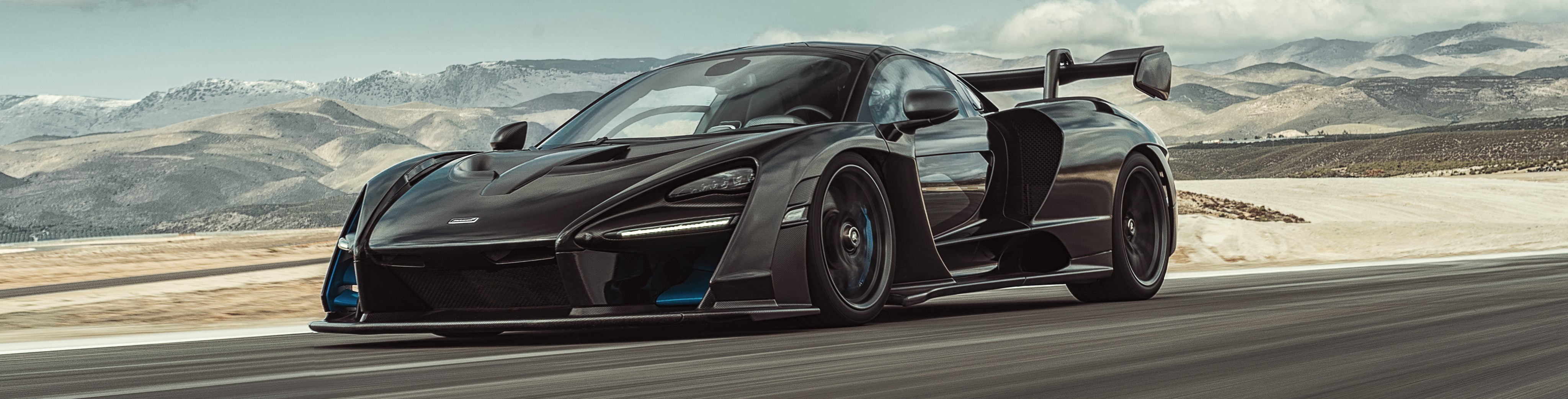
1st Generation
(2019-2022)
Technical specifications, versions, and history for the Mclaren Senna.
Select a generation to see available versions
(2019-2022)
In the universe of elite automotive engineering, the launch of a new model from McLaren's "Ultimate Series" is always a seismic event. However, when the Woking manufacturer announced that the successor to the legendary McLaren P1 would bear the name of Ayrton Senna, the stakes transcended mere mechanical performance. The project, designated internally by the code P15, carried with it not only the expectation of overcoming physical limits, but also the responsibility of honoring the most revered driver in Formula 1 history. This report dissects, with technical and contextual exhaustiveness, the trajectory of the McLaren Senna, from its philosophical conception to its rarest variants, exploring how British engineering attempted to capture the indomitable spirit of the Brazilian three-time champion.
The McLaren Senna was not conceived to be a comfortable "Grand Tourer" or a sculpture of classic beauty. Its mission was singular and relentless: to be the fastest road-legal track car McLaren has ever built. To achieve this goal, engineers adopted a "form follows function" approach taken to its ultimate consequences, resulting in a machine that prioritizes lap times and sensory feedback above any other metric. The partnership with the Ayrton Senna Institute and the Senna family ensured that the vehicle was not just a branding exercise, but an extension of Ayrton's legacy, directing resources to educational causes and keeping alive the flame of technical perfection that he so tirelessly pursued.
Throughout this document, we will analyze the technical anatomy of the base model, the ferocity of the GTR track version, and the esotericism of limited editions like the LM, the Can-Am, and the GTR LM collection. We will investigate how McLaren manipulated airflow, carbon fiber, and thermodynamics to create a vehicle that, according to specialized critics, seems to operate on a different physical plane than other road cars.
To understand the car, it is imperative to understand the relationship that gave rise to it. Ayrton Senna drove for McLaren between 1988 and 1993, a period that defined the modern era of Formula 1. Together, they won three Formula 1 World Drivers' Championships and four Constructors' Championships. More than trophies, Senna brought to Woking a culture of absolute demand. Historical accounts indicate that he drove with almost computational precision, but with intense human passion, providing engineers with feedback of unmatched quality.
When McLaren Automotive decided to create the "Senna" model, the goal was to replicate this telepathic connection between man and machine. Unlike the McLaren P1, which used a complex hybrid system to maximize power and efficiency, the P15 (Senna) project returned to the purity of internal combustion and extreme lightness. The decision to abandon the weight of hybrid batteries was crucial: it allowed the focus to turn entirely to active aerodynamics and mass reduction, creating a vehicle that responds to the driver's inputs with the immediacy of a racing kart.
The collaboration was not limited to the use of the name. The McLaren Senna serves as a vector for social sustainability through the Ayrton Senna Institute. A portion of the profits from the sale of each unit is destined for the IAS's educational programs, which have already impacted millions of students in Brazil. The Institute, recognized by UNESCO and the OECD, saw the car as an opportunity to perpetuate the positive cycle initiated by Ayrton, uniting technological excellence with social transformation. This philanthropic dimension adds a layer of purpose to the vehicle that is rarely seen in the hypercar industry.
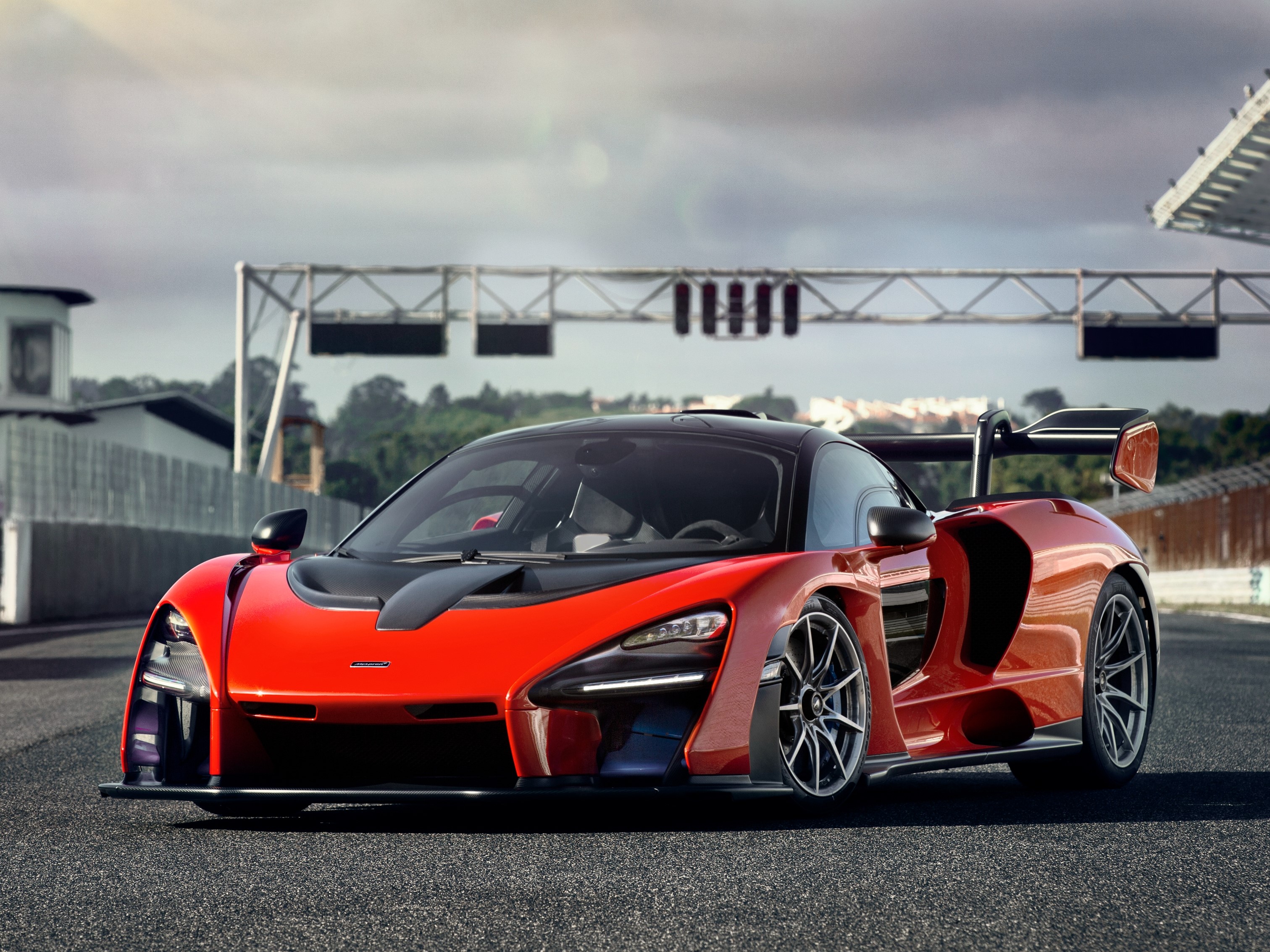
The road-legal model of the McLaren Senna, officially launched at the 2018 Geneva Motor Show, is a compendium of engineering solutions aimed at a single end: downforce and mechanical grip.
At the heart of the Senna resides the Monocage III, a carbon fiber monocoque chassis that represents the evolution of the structure used in the 720S. This carbon "cage" is incredibly rigid, offering the necessary protection for occupants while serving as a firm anchor point for the suspension and engine. Torsional rigidity is fundamental: without a rigid chassis, the suspension cannot work precisely, as the chassis would act as an undamped "spring".
McLaren pursued weight reduction with fanaticism. The dry weight of the car, in its lightest configuration (Lightest Dry Weight), is only 1,198 kg. The DIN Kerb Weight, which includes fluids and 90% fuel, is 1,309 kg. To put this in perspective, the Senna is the lightest road car manufactured by the brand since the iconic McLaren F1 of the 1990s.
Every body panel is made of carbon fiber. The interior is stripped down: there are no carpets, acoustic insulation is minimal, and the seats are thin carbon shells with strategic padding. The mechanism of the dihedral doors (which open upwards and forwards) was designed to take a portion of the roof with them, facilitating the entry of drivers wearing helmets, a clear indication of the car's natural habitat.
The Senna's powerplant is a radical evolution of the brand's twin-turbo V8. Designated as the M840TR, this 4.0-liter (3,994 cc) engine features motorsport-derived technologies, such as dry sump lubrication and electrically actuated "Twin-Scroll" turbochargers to minimize response delay (turbo lag).
| Parameter | Specification | Engineering Context |
|---|---|---|
| Maximum Power | 800 PS (789 bhp) | Achieved at high RPMs, prioritizing linear delivery. |
| Maximum Torque | 800 Nm (590 lb-ft) | Available over a wide band (plateau), ensuring explosive corner exits. |
| Power-to-Weight Ratio | 668 PS/tonne | An astonishing figure that surpasses most GT3 race cars. |
| 0-100 km/h | 2.8 seconds | Limited only by the traction of the rear tires. |
| 0-200 km/h | 6.8 seconds | Where aerodynamics begin to fight against drag, but power prevails. |
| Maximum Speed | 335 km/h (208 mph) | The focus is downforce, not pure top speed (which would be higher with less drag). |
Air intake is handled through a roof-mounted "snorkel", a tribute to F1 cars and the original McLaren F1. This air intake not only feeds the engine with high-pressure fresh air but also creates an immersive acoustic experience in the cabin, where induction noise blends with the sound of the Inconel and titanium exhaust.
The most visual and controversial aspect of the Senna is its aerodynamics. The car generates 800 kg of downforce at 250 km/h. To achieve such a figure in a road car, McLaren utilized active aerodynamic elements at the front and rear that work in harmony, controlled by a central computer.
Rear Wing: The gigantic carbon fiber rear wing is suspended by "swan neck" pylons, which ensure that the airflow on the underside of the wing (where low pressure is generated) remains clean and laminar. The wing is hydraulically active and constantly adjusts its angle. It acts as an airbrake during hard deceleration and features a DRS (Drag Reduction System) function to reduce drag on straights.
Front Aero Blades: Hidden in the front air intakes, active blades adjust the aerodynamic balance to ensure the front of the car does not lift or dive excessively, maintaining precise steering regardless of speed.
This system allows the Senna to maintain a constant aerodynamic balance. In many cars, increasing speed alters the center of pressure, making the steering light or unstable. In the Senna, the car is predictably "sucked" to the ground, allowing high-speed corners that defy logic.
The RaceActive Chassis Control II (RCC II) suspension is an interconnected hydraulic system that dispenses with mechanical anti-roll bars. The system controls roll (lateral inclination) and pitch (front/rear dive) through hydraulic pressure. In "Race" mode, the suspension drastically lowers the car, stiffening the damping to handle the massive aerodynamic loads. If the suspension were soft, the 800 kg of downforce would push the car to the end of the shock absorbers' travel, causing the chassis to hit the ground.
The brakes utilize next-generation carbon-ceramic discs (CCM-R). The manufacturing process for each disc takes months, resulting in a density and thermal capacity far superior to conventional carbon-ceramic discs. The system allows the Senna to brake from 200 km/h to 0 in just 100 meters, and from 100 km/h to 0 in an incredible 29.5 meters. The pedal feel is described as hard and short, similar to a race car, requiring physical strength from the driver to modulate braking.
If the road-legal McLaren Senna lives on the edge of legality, the Senna GTR crosses that line without looking back. Launched as a concept in 2018 and entering production in 2019, the GTR is the track-exclusive version, free from the constraints of road regulations or official racing series (such as GT3), allowing McLaren to explore the platform's maximum potential.
The transition to the GTR involved profound changes. Without the need to comply with pedestrian protection laws or noise emissions, the design was radicalized.
The interior of the GTR is purely functional. The traditional steering wheel was replaced by a GT3-style racing yoke, grouping all essential controls within thumb's reach. The instrument panel was simplified to display only vital telemetry, temperature, and lap time data. Driver aid systems, such as rear collision radar and pit-to-car radio communication, were integrated for use in track days and private competitions. Despite the track focus, air conditioning was kept as standard — a vital necessity in a closed carbon fiber cockpit subjected to the heat of the engine and transmission.
Production was strictly limited to 75 units, all sold quickly after the announcement, with an estimated price around £1.1 million (plus taxes). The exclusivity of the GTR guaranteed its position as an instant collector's item, with many owners keeping their cars in private facilities or participating in McLaren's exclusive driving programs.
The McLaren Special Operations (MSO) division utilized the Senna platform to create even more exclusive series, often at the request of VIP clients or influential dealerships. These variants represent the pinnacle of personalization and rarity.
The Senna LM is one of the most mysterious variants. It is essentially a Senna GTR disguised for road use. Produced in an extremely limited run (sources indicate between 20 and 35 units globally, with 5 specifically destined for the North American market), the LM combines the GTR's 825 PS engine with the bodywork of the road model, albeit with significant modifications.
Visually, the LM distinguishes itself by its "McLaren Orange" paint (in homage to the brand's historic cars), retro-style OZ Racing wheels (similar to those on the F1 LM), gold exhaust tips (four tips instead of the usual three or two), and the removal of the glass panels in the doors in favor of painted carbon fiber panels. The interior features titanium nitride pedals and gold details. The model gained unwanted public notoriety when former F1 driver Adrian Sutil crashed his example (one of the few LMs) in Monaco, revealing the existence of the car to many who were unaware of this special series.
Limited to just 3 units worldwide, the Senna Can-Am is a tribute to McLaren's roots in the Can-Am (Canadian-American Challenge Cup) series, where Bruce McLaren and Denny Hulme dominated in the late 1960s.
Based on the GTR chassis but homologated for the street (similar to the LM concept), the Can-Am features the 825 PS engine. Its differences are purely aesthetic and nostalgic: the orange paint with racing numbers on the doors, Bruce McLaren's signature on the rear fenders, and interior details that reference the McLaren M8B, the car that won every race of the 1969 Can-Am season. With an estimated price of 1.5 million dollars, these three units were sold quietly to top-tier collectors before any official announcement.
The acronym "XP" stands for "Experimental Prototype". Normally, a manufacturer's development prototypes are destroyed, archived, or kept in museums after the project's completion. In the case of the Senna, McLaren Beverly Hills saw a unique opportunity: it commissioned MSO to rebuild and personalize three of these surviving prototypes, transforming them into new and ultra-exclusive road cars, each with a historical theme linked to Ayrton Senna.
The known XP models are:
These cars maintain the 800 PS mechanical specification of the road model, but their value lies in the physical history of the chassis (having been a test car) and the exclusivity of the artistic configuration.
In 2020, to celebrate the 25th anniversary of McLaren's victory at the 1995 24 Hours of Le Mans, MSO launched the Senna GTR LM collection. This is undoubtedly the most complex and detailed series of all. Only 5 units were produced, each replicating the livery of one of the five McLaren F1 GTRs that finished that historic race.
Unlike any other Senna, the GTR LMs feature an even more powerful engine, calibrated to 845 PS (833 hp) and a rev limit raised to 9,000 rpm, giving them an even wilder character.
Below, we detail each of the five cars, their historical inspiration, and the details that make their execution unique. MSO required special legal permissions from companies like Gulf, Harrods, and Elf to recreate the original logos.
| GTR LM Model (Chassis) | Honored Car (1995) | Result in 1995 | Livery Details and History |
|---|---|---|---|
| 825/1 "The Ueno Clinic" | F1 GTR #59 | 1st Place (Winner) | Charcoal grey paint ("Ueno Grey"). Homage to the Kokusai Kaihatsu Racing car, driven by JJ Lehto, Yannick Dalmas, and Masanori Sekiya. It was McLaren's first victory at Le Mans on its debut. |
| 825/6 "The Harrods" | F1 GTR #51 | 3rd Place | Solar yellow with a green central stripe ("Heritage Green"). Replica of the car sponsored by the famous Harrods store, driven by Andy Wallace, Derek Bell, and Justin Bell. |
| 825/2 "The Gulf" | F1 GTR #24 | 4th Place | The classic light blue and orange of Gulf Oil. Homage to the car driven by Mark Blundell, Ray Bellm, and the Brazilian Maurizio Sandro Sala. The OZ wheels are bright orange. |
| 825/7 "The Jacadi / Elf" | F1 GTR #50 | 5th Place | Royal blue ("Le Mans Blue") with Elf logos. Bears the French flag and pays homage to the privateer Giroix Racing Team. |
| 825/5 "The Cesar Art Car" | F1 GTR #42 | 13th Place | The most complex paint job, replicating the artwork of artist César Baldaccini on the original Société BBA car. Involved thousands of hours of airbrushing to recreate the abstract patterns. |
Although it does not bear the "Senna" name, the McLaren Sabre is an integral part of this technical story. Developed exclusively for the United States market, the Sabre uses the Senna's platform and engine as a base, but with entirely new bodywork and distinct aerodynamics.
Produced in only 15 units, the Sabre focuses more on top speed than absolute downforce. Its M840TR engine is calibrated to 835 PS (824 hp) and 800 Nm of torque, making it the most powerful non-hybrid V8 engine ever produced by McLaren. Its maximum speed is 351 km/h (218 mph), surpassing the Senna's 335 km/h, which makes it the fastest two-seater McLaren in history (since the F1 and Speedtail have three seats).
The Sabre's design is less fragmented than the Senna's, with lines inspired by Le Mans Prototypes (LMP), including a dorsal "fin" that connects the roof to the rear wing for directional stability at high speed. Being an exclusive model for the USA, the Sabre was able to incorporate design elements that would not be homologated in Europe or Asia, allowing unique creative freedom for MSO.
To consolidate the vast range of versions and numbers, we present the definitive table of production and specifications for the Senna lineage.
| Model | Global Production | Year(s) | Power (PS) | Dry Weight (kg) | Usage Status | Main Characteristic |
|---|---|---|---|---|---|---|
| McLaren Senna | 500 | 2018-2019 | 800 | 1,198 | Street | The original. Total focus on downforce. |
| Senna GTR | 75 | 2019-2020 | 825 | 1,188 | Track | "Unleashed" version with slicks and 1000kg of downforce. |
| Senna LM | ~20-35* | 2020 | 825 | N/A | Street | GTR engine in a street body. Retro wheels. |
| Senna Can-Am | 3 | 2020 | 825 | N/A | Street | Canadian historical homage. Papaya orange. |
| Senna GTR LM | 5 | 2020 | 845 | 1,188 | Track | The crown jewel. Le Mans '95 tribute. Stronger engine. |
| Senna XP | ~4** | 2019 | 800 | 1,198 | Street | Rebuilt prototypes. F1 themed. |
| McLaren Sabre | 15 | 2020-2021 | 835 | N/A | Street (USA) | Exclusive body. Focus on V-Max (Maximum Speed). |
*The exact production of the LM varies among sources, with the consensus being ~20 global units plus 5 for the USA, totaling around 25-35 chassis.
**Number referring to the special XP models publicly known (Monaco, Gods, Home Victory, El Triunfo).
The McLaren Senna closes a chapter in McLaren Automotive's history and opens another. It proved that there is a robust market for vehicles that sacrifice conventional comfort and aesthetics in the name of pure performance. Market reception was overwhelming: all versions, from the 500 base units to the 3 Can-Ams, sold out instantly, often before even being revealed to the public, demonstrating the unshakeable strength of the Senna brand and the confidence of collectors in Woking's engineering.
More than acceleration or downforce figures, the McLaren Senna achieved its philosophical goal: to create a visceral connection between the driver and the road. In an automotive world increasingly filtered by electronic assists and acoustic isolation, the Senna chose the opposite path, vibrating, roaring, and demanding total attention from whoever is behind the wheel.
The engineering developed for this car — especially the active aerodynamics and CCM-R brake technology — flowed into subsequent models, such as the 765LT and the new McLaren W1. However, the Senna remains unique as the ultimate tribute. It is not just a fast car; it is the materialization in carbon fiber of the phrase uttered by Ayrton: "I have no idols. I admire work, dedication, and competence." The McLaren Senna is, above all, a monument to technical competence pushed to the extreme.