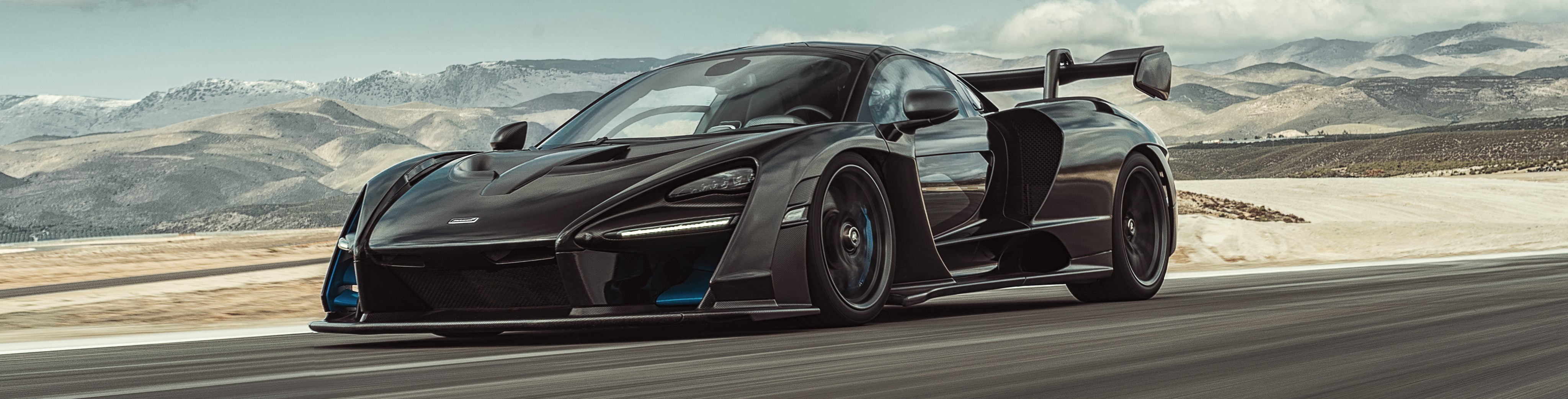
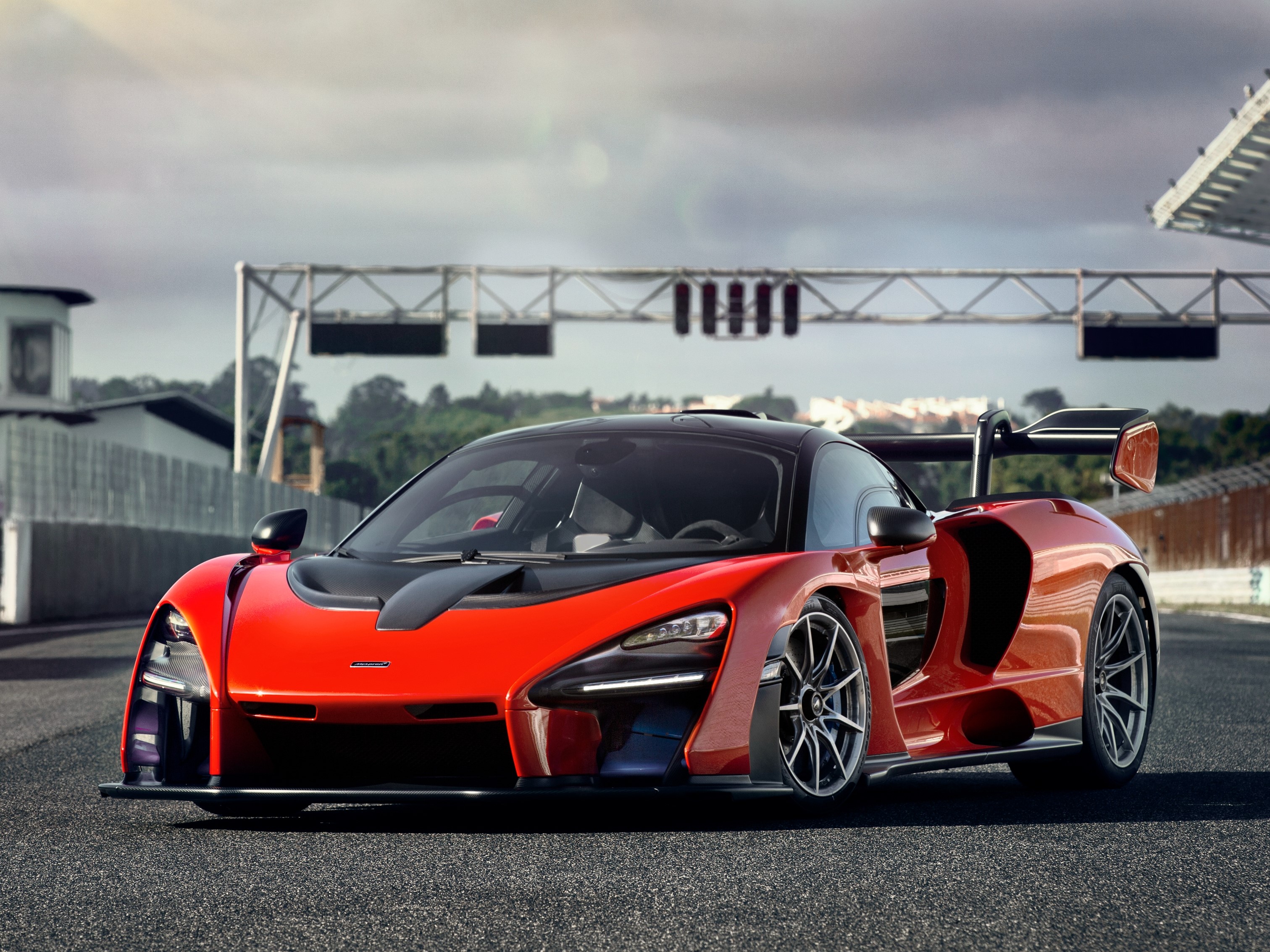
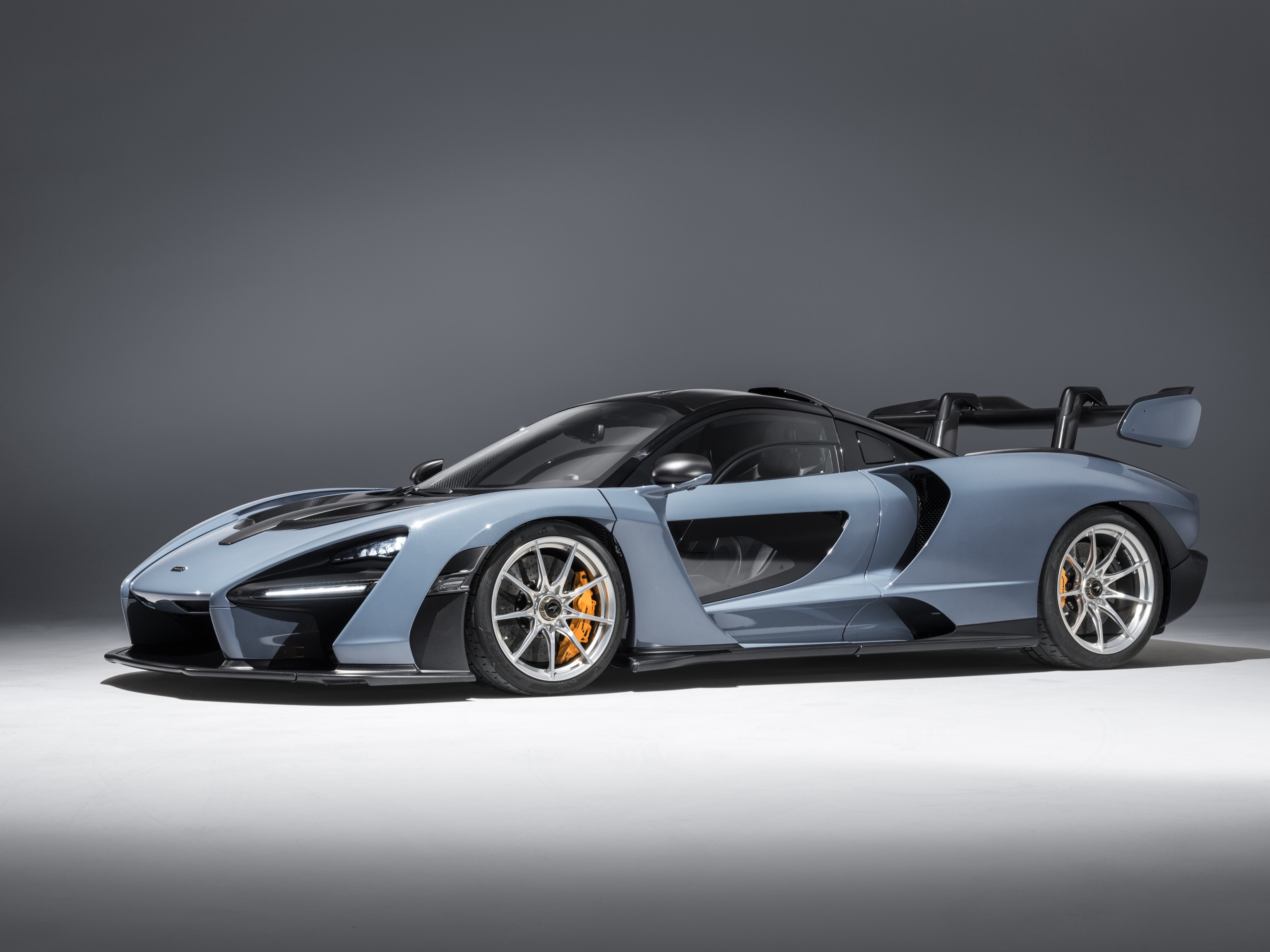
The road-legal model of the McLaren Senna, officially launched at the 2018 Geneva Motor Show, is a
compendium of engineering solutions aimed at a single end: downforce and mechanical grip.
The Structure: Monocage III and the Obsession with Lightness
At the heart of the Senna resides the Monocage III, a carbon fiber monocoque chassis that represents
the evolution of the structure used in the 720S. This carbon "cage" is incredibly rigid, offering the
necessary protection for occupants while serving as a firm anchor point for the suspension and engine.
Torsional rigidity is fundamental: without a rigid chassis, the suspension cannot work precisely, as the
chassis would act as an undamped "spring".
McLaren pursued weight reduction with fanaticism. The dry weight of the car, in its lightest
configuration (Lightest Dry Weight), is only 1,198 kg. The DIN Kerb Weight, which includes fluids and 90%
fuel, is 1,309 kg. To put this in perspective, the Senna is the lightest road car manufactured by the brand
since the iconic McLaren F1 of the 1990s.
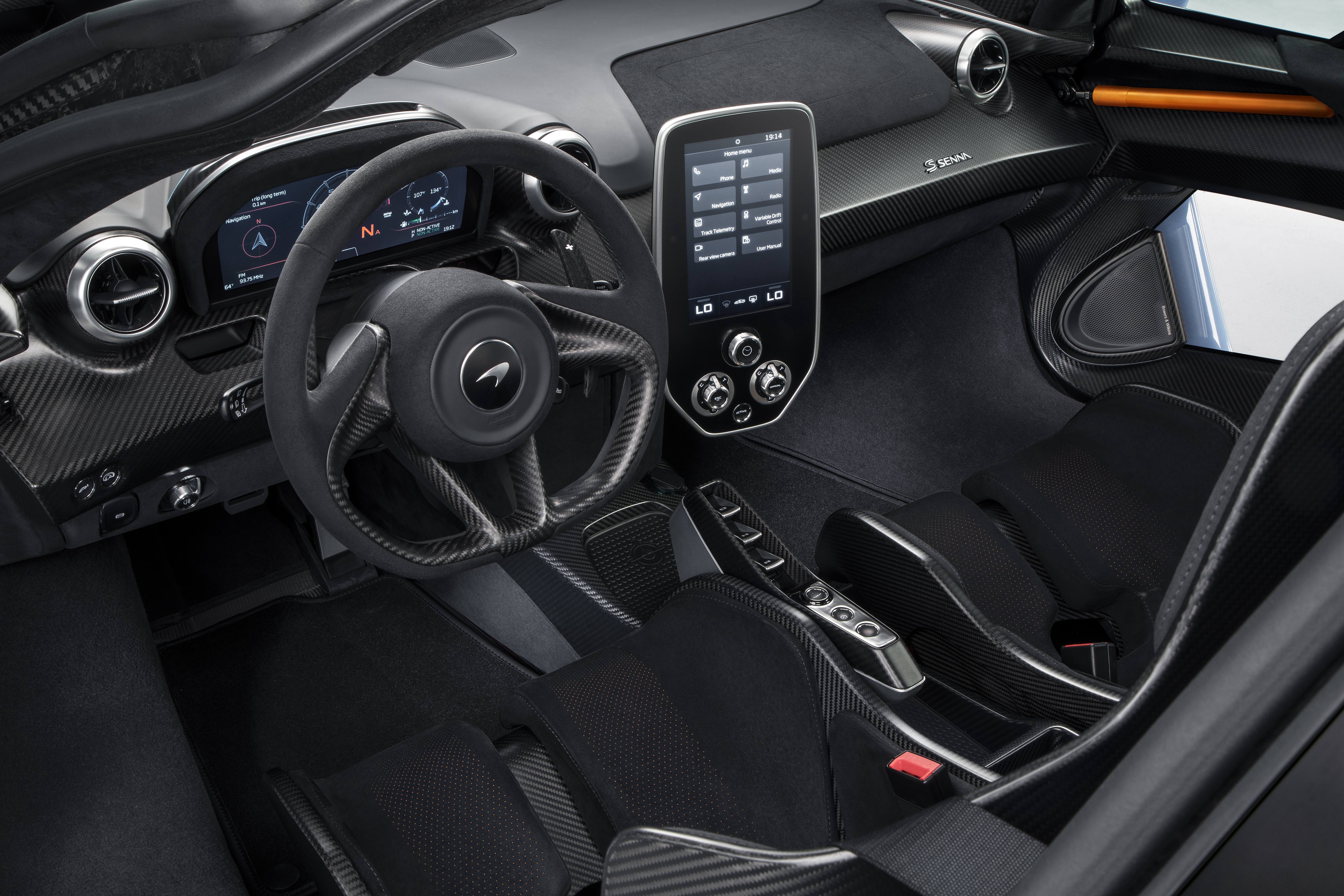
Every body panel is made of carbon fiber. The interior is stripped down: there are no carpets,
acoustic insulation is minimal, and the seats are thin carbon shells with strategic padding. The mechanism
of the dihedral doors (which open upwards and forwards) was designed to take a portion of the roof with
them, facilitating the entry of drivers wearing helmets, a clear indication of the car's natural habitat.
The Mechanical Heart: M840TR Engine
The Senna's powerplant is a radical evolution of the brand's twin-turbo V8. Designated as the M840TR,
this 4.0-liter (3,994 cc) engine features motorsport-derived technologies, such as dry sump lubrication and
electrically actuated "Twin-Scroll" turbochargers to minimize response delay (turbo lag).
M840TR Engine Performance Data:
| Parameter |
Specification |
Engineering Context |
| Maximum Power |
800 PS (789 bhp) |
Achieved at high RPMs, prioritizing linear delivery. |
| Maximum Torque |
800 Nm (590 lb-ft) |
Available over a wide band (plateau), ensuring explosive corner
exits. |
| Power-to-Weight Ratio |
668 PS/tonne |
An astonishing figure that surpasses most GT3 race cars.
|
| 0-100 km/h |
2.8 seconds |
Limited only by the traction of the rear tires. |
| 0-200 km/h |
6.8 seconds |
Where aerodynamics begin to fight against drag, but power prevails.
|
| Maximum Speed |
335 km/h (208 mph) |
The focus is downforce, not pure top speed (which would be higher
with less drag). |
Air intake is handled through a roof-mounted "snorkel", a tribute to F1 cars and the original McLaren F1.
This air intake not only feeds the engine with high-pressure fresh air but also creates an immersive
acoustic experience in the cabin, where induction noise blends with the sound of the Inconel and titanium
exhaust.
Active Aerodynamics: The Art of Manipulating Air
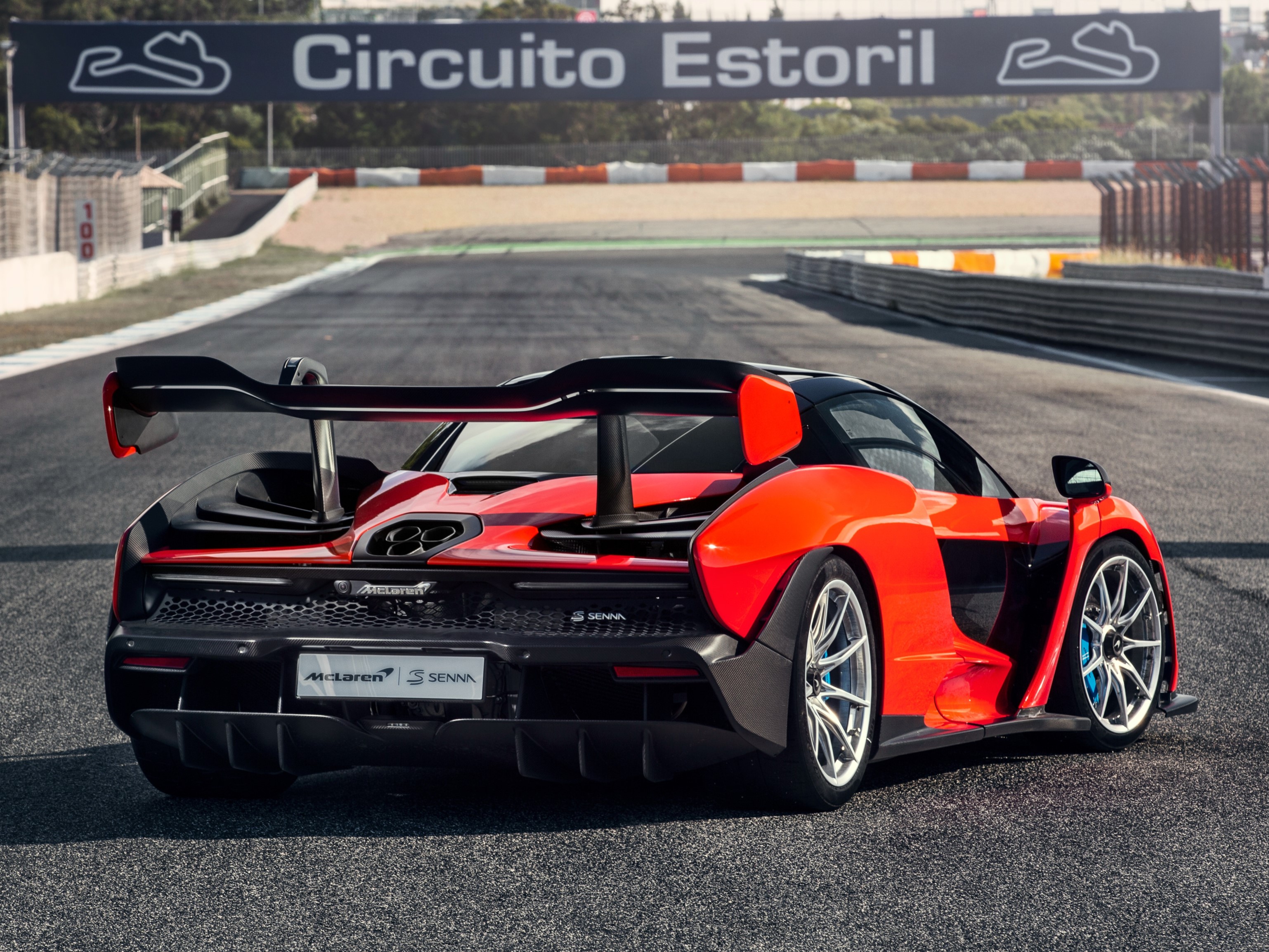
The most visual and controversial aspect of the Senna is its aerodynamics. The car generates 800 kg
of downforce at 250 km/h. To achieve such a figure in a road car, McLaren utilized active aerodynamic
elements at the front and rear that work in harmony, controlled by a central computer.
Rear Wing: The gigantic carbon fiber rear wing is suspended by "swan neck" pylons,
which ensure that the airflow on the underside of the wing (where low pressure is generated) remains clean
and laminar. The wing is hydraulically active and constantly adjusts its angle. It acts as an airbrake
during hard deceleration and features a DRS (Drag Reduction System) function to reduce drag on straights.
Front Aero Blades: Hidden in the front air intakes, active blades adjust the
aerodynamic balance to ensure the front of the car does not lift or dive excessively, maintaining precise
steering regardless of speed.
This system allows the Senna to maintain a constant aerodynamic balance. In many cars, increasing
speed alters the center of pressure, making the steering light or unstable. In the Senna, the car is
predictably "sucked" to the ground, allowing high-speed corners that defy logic.
Chassis Dynamics: RCC II Suspension and CCM-R Brakes
The RaceActive Chassis Control II (RCC II) suspension is an interconnected hydraulic system that
dispenses with mechanical anti-roll bars. The system controls roll (lateral inclination) and pitch
(front/rear dive) through hydraulic pressure. In "Race" mode, the suspension drastically lowers the car,
stiffening the damping to handle the massive aerodynamic loads. If the suspension were soft, the 800 kg of
downforce would push the car to the end of the shock absorbers' travel, causing the chassis to hit the
ground.
The brakes utilize next-generation carbon-ceramic discs (CCM-R). The manufacturing process for each
disc takes months, resulting in a density and thermal capacity far superior to conventional carbon-ceramic
discs. The system allows the Senna to brake from 200 km/h to 0 in just 100 meters, and from 100 km/h to 0 in
an incredible 29.5 meters. The pedal feel is described as hard and short, similar to a race car, requiring
physical strength from the driver to modulate braking.