
Introduction and Historical Context
The Genesis of the First "Super Tourer"
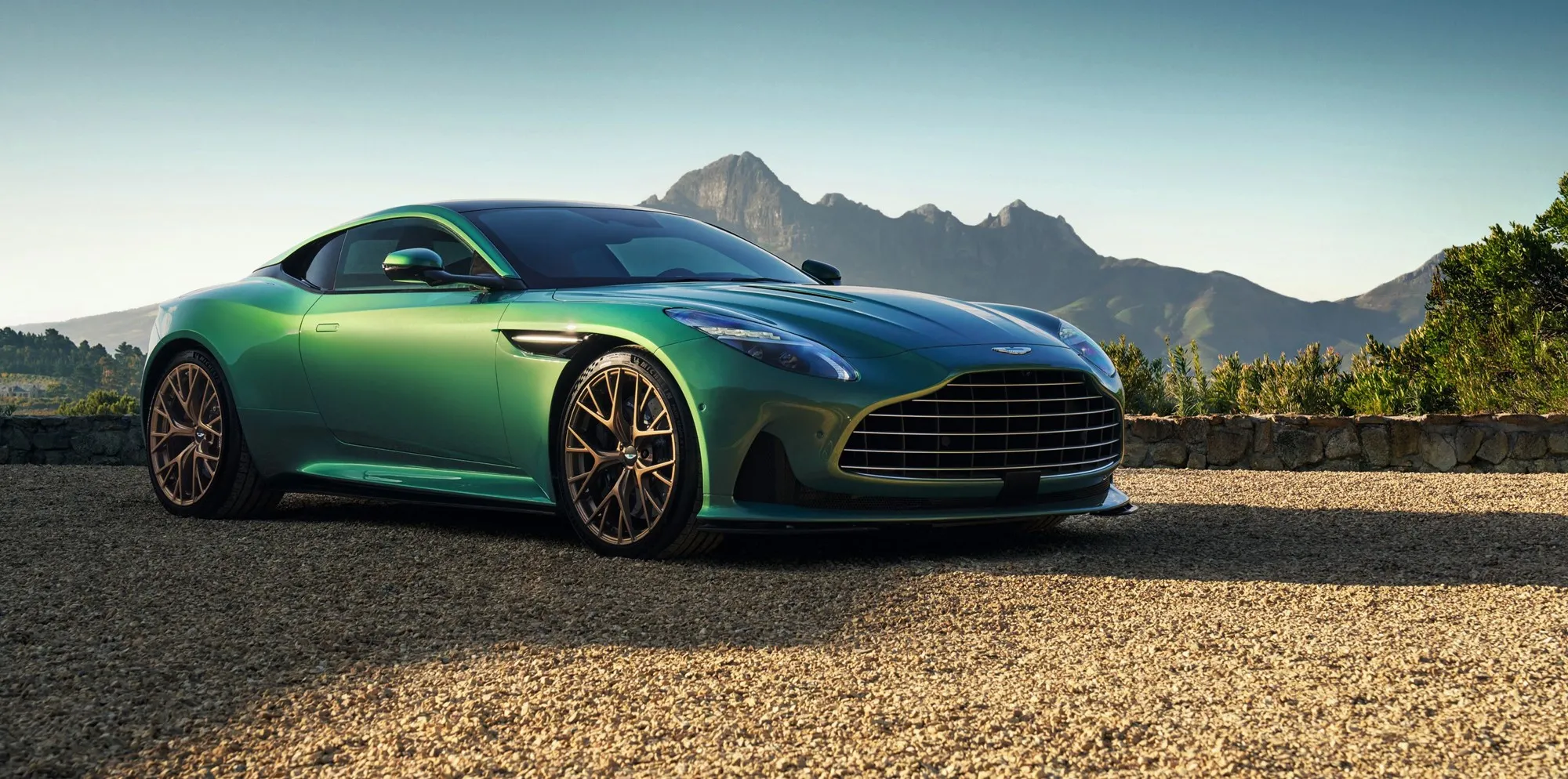
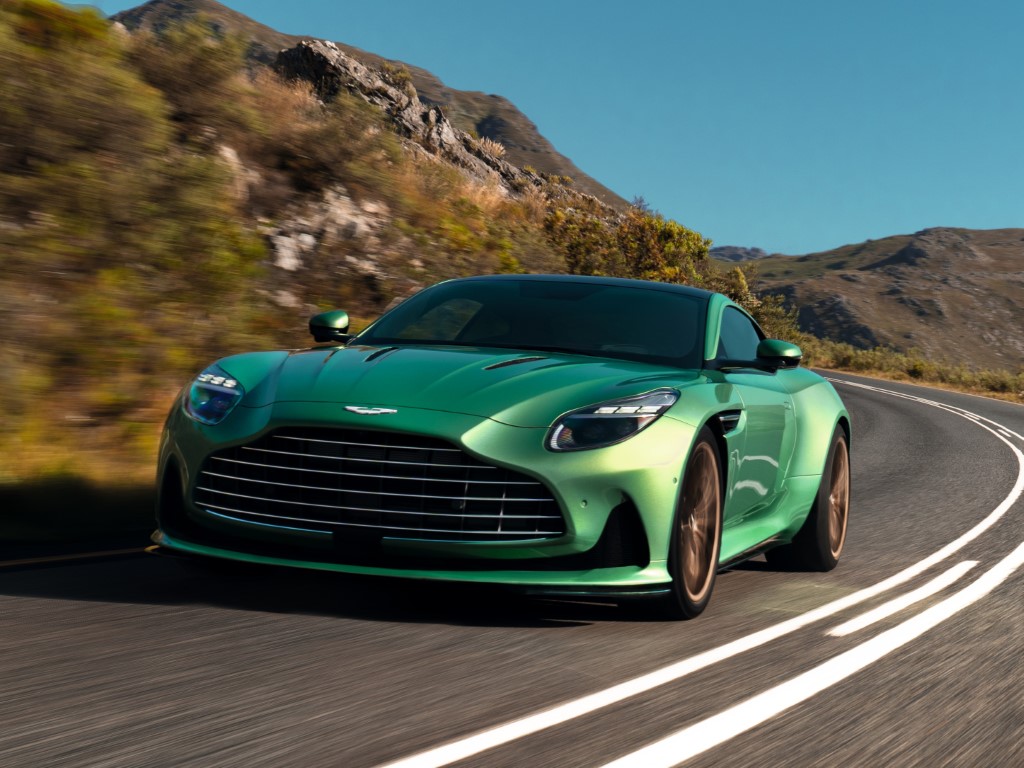
The ultra-luxury automotive industry witnessed a decisive strategic move in May 2023, when Aston Martin, celebrating its 110th anniversary, revealed the DB12. This vehicle was not merely designed to replace the DB11, but to redefine the categorization of high-performance vehicles. Aston Martin's leadership, under the executive direction of Lawrence Stroll, rejected the traditional term "Grand Tourer" (GT), arguing that it was no longer sufficient to describe the breadth of dynamic capabilities of the new car. Thus, the designation "Super Tourer" was born, a marketing term backed by substantial engineering, intended to position the DB12 in a niche above conventional GTs and below track-focused supercars.
The launch of the DB12 marked the beginning of a new era for the British manufacturer, being the first model to bear the redesigned Aston Martin "wings" logo and the first to integrate an entirely new, in-house developed infotainment architecture.
The Succession of the DB Lineage
The "DB" lineage (initials for David Brown) is the backbone of Aston Martin's history. The DB11, launched in 2016, was a commercial success, but as the years passed, it began to suffer criticism regarding its cabin technology and driving dynamics. The DB12 was conceived to aggressively correct these shortcomings. Aston Martin stated that the DB12 is 80% new compared to the DB11, a statistic that underlines the depth of the re-engineering undertaken, transcending a simple visual "facelift".
The "Super Tourer" Philosophy
The "Super Tourer" concept is based on the fusion of two antagonistic worlds: the transcontinental comfort of a GT and the surgical precision of a sports car. The goal was to create a vehicle that could cross Europe in absolute silence and, upon reaching the Alps, attack the corners with the ferocity of a Vantage.
Engineering and Technical Specifications
The Heart: Revised Twin-Turbo V8 Engine
One of the most controversial and technically significant decisions was the elimination of the V12 engine option for the standard DB line. The DB12 was launched exclusively with a 4.0-liter twin-turbo V8 engine. This engine, code M177, stems from the technical partnership with Mercedes-AMG, but Aston Martin emphasizes that it was extensively re-engineered in Gaydon to possess a distinct British character.
- Higher Capacity Turbochargers: The turbine diameter was increased to allow for greater air flow.
- Modified Cam Profiles: Valve timing was altered to optimize torque delivery.
- Optimized Compression Ratios: Adjustments to the combustion chamber to extract more energy.
- Thermal Management: The cooling system was redesigned, with frontal openings increased by 56% to ensure optimal temperature.
| Parameter | Technical Specification |
|---|---|
| Configuration | 4.0-Liter Twin-Turbo V8 (Quad Cam) |
| Maximum Power | 680 PS (671 bhp / 500 kW) at 6,000 rpm |
| Maximum Torque | 800 Nm (590 lb-ft) between 2,750 and 6,000 rpm |
| 0-100 km/h Acceleration | 3.6 seconds (Coupe) |
| Top Speed | 325 km/h (202 mph) |
| Comparison with DB11 V8 | 34% increase in power |
The mated transmission is an 8-speed ZF automatic gearbox (8HP75), rear-mounted in a transaxle arrangement, contributing to a weight distribution of 48% (front) and 52% (rear). The final drive ratio was shortened (3.083:1) for more vigorous acceleration.
Chassis Dynamics and Intelligent Suspension
The bonded extruded aluminum structure received reinforcements, increasing torsional rigidity by 7% compared to the DB11. The major innovation was the introduction of Bilstein DTX intelligent adaptive dampers, offering a 500% greater bandwidth of operation.
Electronic Rear Differential (E-Diff): For the first time in the DB lineage, a proactive E-Diff was implemented. Linked to the stability control, it can go from open to 100% locked in milliseconds for precise torque vectoring.
Tires and Wheels
In partnership with Michelin, Pilot Sport 5S tires ('AML' code) were developed, which incorporate polyurethane foam inserts to reduce cabin rolling noise by up to 20%.
Exterior and Interior Design
Exterior Aesthetics and Aerodynamics
The exterior design evolved to reflect the increased power. The front track was widened by 6 mm and the rear by 22 mm. The front grille grew substantially to feed the new radiators.
The DB12 retains the Aeroblade system, which uses air intakes in the C-pillar to create downforce without the need for a large rear wing. A deployable spoiler is present for additional stability at high speeds.
The Interior and the New HMI
Historically the "Achilles' heel", the DB12's interior broke from reliance on older systems, introducing the first infotainment system developed entirely in-house by Aston Martin.
- Interface: 10.25-inch touchscreen (1970x720 pixels).
- Connectivity: Standard wireless Apple CarPlay and Android Auto, with support for OTA updates.
- Hybrid Ergonomics: Tactile physical buttons were retained for critical driving functions (suspension, exhaust, temperature), reflecting a "driver-focused" philosophy.
- Bowers & Wilkins Audio: Optional system with 15 speakers and 1,170 Watts.
Variants and Evolution (2023–2026)
Aston Martin DB12 Coupe (May 2023)
The fundamental model. Weighing approx. 1,685 kg (dry), it offers the purest experience of structural rigidity and sets the metric for the Super Tourer category.
Aston Martin DB12 Volante (August 2023)
The convertible version, presented at Monterey Car Week.
- Roof Mechanism: 8-layer "K-fold" roof. Opens in 14s and closes in 16s, at speeds up to 50 km/h.
- Reinforcements: The structure received reinforcements at the rear suspension mounts, resulting in a weight increase of 110-140 kg.
- Performance: Minimal penalty. 0-100 km/h in 3.7s (only 0.1s slower than the Coupe).
Limited Edition: DB12 Goldfinger (2024)
Celebrating 60 years of the partnership with James Bond. Limited to 60 units. Silver Birch paint, exclusive wheels, and 18k gold-plated details in the interior.
Aston Martin DB12 S (2026 Model)
Announced in October 2025, it represents the pinnacle of V8 performance.
- Increased Power: 700 PS (690 bhp).
- Track Data: 0-100 km/h in 3.4 seconds.
- Hardware: Standard Carbon Ceramic Brakes (CCB) and recalibrated transmission.
Production, Challenges, and Market
The 2023-2024 Bottleneck
Production faced significant obstacles. Software issues in the new infotainment system prevented the delivery of finished cars, reducing delivery forecasts. In 2024, supply chain disasters (floods and fires at suppliers) forced further reductions in production targets.
"Value over Volume" Strategy
Under Lawrence Stroll, the strategy shifted to limiting supply and increasing profit margins. The DB12 raised the brand's Average Selling Price (ASP) by 7%, reaching £192,000 in 2025.
Reliability and Owner Experience
Initial problems included check engine lights coming on due to software errors and limp modes triggered by erroneous readings. A critical recall in September 2024 affected oil cooler hoses at risk of cracking.
Brazilian Market
The DB12 arrived in Brazil with ultra-premium positioning.
- 2024 (Pre-owned): R$ 3,000,000 – R$ 3,400,000
- 2025 (Brand New): R$ 3,185,000 – R$ 3,700,000
- 2026 (Estimated DB12 S): R$ 3,800,000+
Comparison: DB12 vs. DB11
| Feature | Aston Martin DB11 (V8) | Aston Martin DB12 | Verdict |
|---|---|---|---|
| Engine | 4.0L V8 (510 PS) | 4.0L V8 (680 PS) | Massive jump in power (+34%). |
| 0-100 km/h | 4.0 seconds | 3.6 seconds | Significantly faster. |
| Suspension | Adaptive Dampers (Gen 1) | Intelligent Bilstein DTX | Greater breadth between comfort and sport. |
| Interior | Mercedes Comand (Older) | Aston Martin In-House | Total modernization. |
| Rigidity | Standard of the time | +7% stiffer | Better body control. |
While the DB11 was a classic Grand Tourer, the DB12 transformed into a machine capable of tackling winding roads with genuine competence. The loss of the V12 is lamented by traditionalists, but the efficiency and power of the new V8 objectively surpass the old V12.
Conclusion
The Aston Martin DB12 is a manifesto of survival and ambition. It proved that Aston Martin can produce modern technology in-house and compete with the best. Despite initial challenges, it fulfilled the promise of being the first "Super Tourer," ensuring the brand's relevance for the next decade.