1st Generation
(2010 - 2013)
5.9 V12
477 cv
Technical specifications, versions, and history for the Aston Martin Rapide.
Select a generation to see available versions
(2010 - 2013)
(2014 - 2020)
Select a powertrain to view full technical specifications
The history of the luxury automobile in the 21st century is marked by the diversification of segments, where brands traditionally focused on two-seater sports cars began to explore new territories to ensure financial sustainability. Within this scenario, the Aston Martin Rapide emerges not just as a product, but as a statement of identity and aesthetic resistance. Launched as Aston Martin's first mass-produced four-door automobile, the Rapide carried the weight of reviving a historical lineage, succeeding the low-volume attempts of the Lagonda Rapide in the 1960s and the futuristic Aston Martin Lagonda sedan of the 1970s and 1980s.
Unlike its German rivals, which frequently sacrificed elegance in favor of rear habitability, Aston Martin, under the direction of Dr. Ulrich Bez, opted for a distinct path. The goal was not to create a traditional executive sedan, but rather to extend the experience of a sports coupe to four occupants. The result was a vehicle that defied conventional categories, frequently described as a "four-door coupe" long before the term became a marketing cliché in the automotive industry.
This report exhaustively examines the life cycle of the Rapide, from Marek Reichman's initial sketches in 2005 to the cancellation of the electric Rapide E project in 2020. We will analyze the engineering nuances of the VH platform, the complex logistical decisions that moved production from Austria to the United Kingdom, the crucial mechanical evolutions introduced in the Rapide S model, and the high-performance variants that marked the end of its production.
The development of the Rapide began in the summer of 2005, a period of rebirth for Aston Martin under the umbrella of the Ford Group and the Premier Automotive Group. The brand had already established a new design language with the DB9 and the V8 Vantage, based on the innovative VH (Vertical Horizontal) architecture. This platform used extruded and bonded aluminum, a technique derived from the aerospace industry, which allowed for exceptional torsional rigidity with low weight, as well as a modular flexibility that would be crucial for the Rapide.
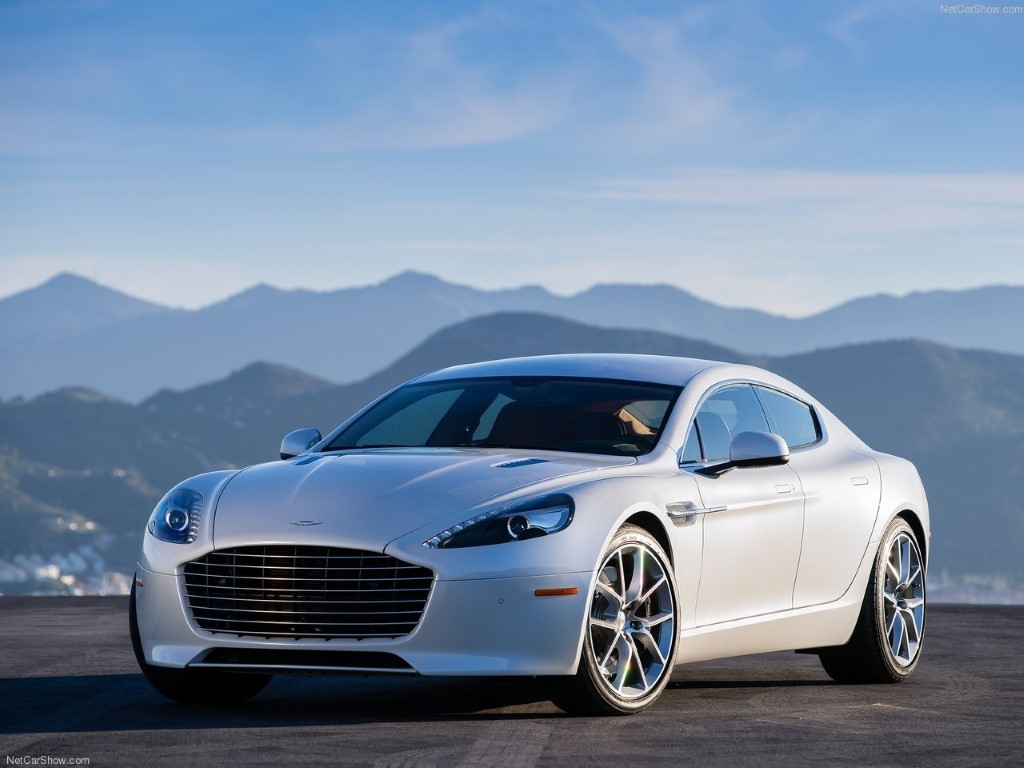
The challenge imposed on the new Director of Design, Marek Reichman, was to create a four-door car that maintained the brand's characteristic golden proportions. Reichman created the initial sketches and basic design in a remarkably short period of seven weeks. The solution found was to lengthen the DB9's platform by approximately 30 centimeters, creating enough wheelbase to accommodate two rear doors without breaking the vehicle's fluid silhouette. The visual concept avoided the rear "box" typical of sedans, maintaining a descending roofline that flowed smoothly to the trunk lid, configuring a disguised hatchback style.
The world got its first glimpse of the project on January 9, 2006, at the North American International Auto Show in Detroit. The Rapide Concept presented was functional and aesthetically very close to what would become the production car. It featured exotic details that, although modified for the final version, demonstrated the brand's ambition, such as a transparent polycarbonate roof that could become opaque at the touch of a button and carbon-ceramic brakes, a technology that Aston Martin would only introduce in series on the DBS model months later.
The reception was enthusiastic. The specialized press praised Aston Martin's courage in prioritizing beauty over absolute practicality, contrasting sharply with the Porsche Panamera, which would be launched shortly after with a controversial design focused on interior space. The Rapide was positioned as the "most elegant four-door sports car in the world," a description that would guide all of its subsequent development.
With the approval for mass production, Aston Martin faced a logistical problem: its main factory in Gaydon, Warwickshire, was operating near maximum capacity with the DB9, DBS, and V8 Vantage lines. To make the Rapide viable without compromising the production of existing models, the company made the unprecedented decision to manufacture the vehicle outside the United Kingdom.
In 2008, after a six-month feasibility study, Aston Martin formed a partnership with Magna Steyr, a renowned contract manufacturer based in Graz, Austria. A dedicated facility, dubbed the Aston Martin Rapide Plant (AMRP), was established within the Magna complex. The initial goal was ambitious: to produce around 2,000 units per year, leveraging Magna's expertise in assembling low-volume luxury vehicles.
The final production version debuted at the Frankfurt Motor Show in 2009, with the first units rolling off the Austrian assembly line in May 2010. However, the economic timing was unfavorable. The world was still recovering from the 2008 global financial crisis, which significantly shrank the ultra-luxury sedan market. Actual demand fell below the optimistic projections of 2,000 cars annually, creating idle capacity in the Austrian factory that would become a point of financial tension for the project.
The first-generation Rapide hit the market equipped with Aston Martin's venerable naturally aspirated 6.0-liter (5,935 cc) V12 engine. This powerplant, mounted in a front-mid position (behind the front axle), produced 477 horsepower (470 bhp) and 600 Nm of torque. Power was sent to the rear wheels via a carbon fiber driveshaft housed in a lightweight alloy torque tube, connecting to a rear-mounted (transaxle) six-speed "Touchtronic II" (ZF 6HP26) automatic gearbox.
This mechanical configuration resulted in a near-perfect weight distribution of 49% in the front and 51% in the rear, something rare for a four-door car. The dynamic behavior was widely praised for being indistinguishable from the DB9, with precise steering and exemplary body control, although the power was considered merely adequate for the extra weight of 1,950 kg compared to the turbocharged rivals emerging on the market.
| Parameter | Specification |
|---|---|
| Engine | Naturally Aspirated 6.0L V12 |
| Power | 477 hp (470 bhp) @ 6,000 rpm |
| Torque | 600 Nm (443 lb-ft) @ 5,000 rpm |
| Transmission | 6-speed Automatic (ZF Touchtronic II) |
| 0-100 km/h | 5.2 seconds |
| Max. Speed | 296 km/h (184 mph) |
| Weight | ~1,950 kg |
The interior of the Rapide was conceived under the philosophy of "honesty of materials." Where you saw wood, it was real wood; where you saw metal, it was solid alloy; and high-quality leather covered almost all surfaces, requiring about ten full hides per vehicle. The layout was strictly for four people, with a high center console running the entire length of the cabin, creating an individual "cockpit" environment for each passenger.
One of the most distinctive and functional features of the model were the "Swan Doors". The four doors opened not only outward but also slightly upward, at a 12-degree angle. This engineering solution had a dual purpose: aesthetically, it evoked the wings of a swan, adding visual drama; practically, it allowed the doors to avoid scraping on high curbs, given the extremely low profile of the chassis, and facilitated access to the cabin in tight spaces, compensating for the low roofline.
During this initial period, Aston Martin launched a variant focused on supreme comfort, dubbed the Rapide Luxe. Produced in extremely limited numbers (only 84 identified units), this version came equipped as standard with almost all available options. Differentiators included a rear-seat entertainment system with screens integrated into the headrests, ventilated and heated seats in all four positions, exclusive 20-inch wheels with a polished finish, and a set of custom leather luggage, designed to fit perfectly into the 317-liter trunk (expandable to 886 liters with the seats folded down).
In 2011, market reality forced an adjustment. Sales did not reach the volume necessary to sustain the dedicated operation in Austria. Production was temporarily reduced, and in mid-2012, Aston Martin announced the end of production at Magna Steyr. The manufacturing of the Rapide was transferred to Gaydon in the second half of 2012. This move was made possible thanks to improvements in the efficiency of the British assembly line and was supported by a British government regional growth fund.
The return to the UK allowed Aston Martin to reclaim the "Handmade in England" seal for its entire range and adjust production in real-time according to fluctuating demand, eliminating the fixed costs of outsourcing. It is estimated that Magna Steyr produced the vast majority of first-generation Rapides, totaling around 2,872 units (including the first units assembled in Gaydon after the transition) before the introduction of the updated model.
Aston Martin's response to criticisms about power and the need for a technological update came in January 2013 with the launch of the Rapide S. More than a simple facelift, the "S" model represented a deep re-engineering beneath the car's skin.
The heart of the update was the introduction of the "AM11" specification V12 engine. This engine incorporated technology derived from the Vanquish, including dual variable valve timing and CNC machined combustion chambers. Power jumped significantly to 558 horsepower (550 bhp), a 17% increase over the original model. Torque also rose to 620 Nm. Beyond the gain in strength, engineers managed to position the engine 19 millimeters lower in the chassis, reducing the center of gravity and improving steering response.
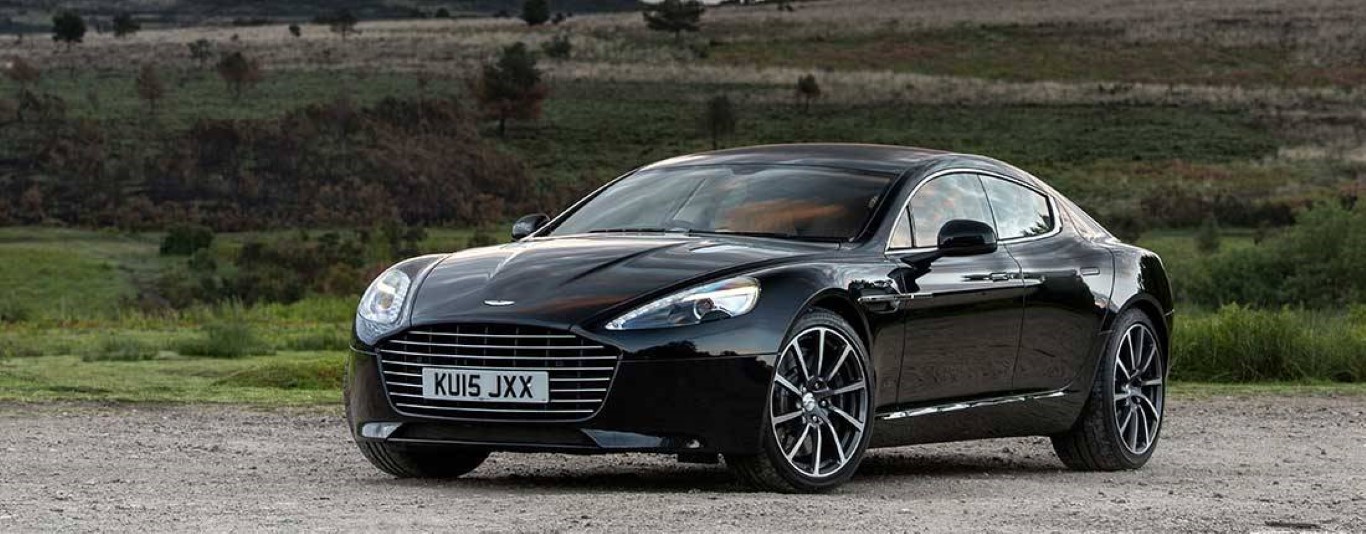
Externally, the Rapide S was immediately distinguishable by its massive new front grille. The old two-piece grille gave way to a single piece of aluminum, the largest ever installed on an Aston Martin up to that point. This change was not just aesthetic; it was necessary to comply with new European pedestrian protection regulations (the grille was designed to deform in a controlled manner upon impact) and to supply the greater cooling needs of the more powerful engine. The rear received a more pronounced spoiler on the trunk lid to reduce aerodynamic lift at high speeds.
Although the 2013 launch was significant, the most transformative change in the life of the Rapide S occurred in the 2015 model (announced in August 2014). Aston Martin replaced the aging 6-speed transmission with the modern ZF 8HP (Touchtronic III) 8-speed automatic gearbox.
This new transmission, developed in technical partnership with ZF, radically altered the character of the car. Gear changes now occurred in just 130 milliseconds in sport modes. Coupled with a new Bosch engine management system, power was slightly adjusted to 560 horsepower (552 bhp) and torque to 630 Nm. The impact on performance was drastic: the 0 to 100 km/h acceleration time dropped from 4.9 seconds (in the 2013 Rapide S) to 4.2 seconds (in the 2015 model), putting the Rapide S back into direct competition with contemporary super sports sedans. Fuel efficiency also improved by about 11%, making the car more usable on long trips.
A historical weak point of Aston Martin's VH-era models was the onboard technology, often derived from older Volvo systems (a legacy of the Ford era). During the life of the Rapide S, the brand made continuous efforts to mitigate this through updates to the AMi (Aston Martin Infotainment) system.
As the life cycle of the VH platform neared its end, Aston Martin decided to give the Rapide a worthy farewell through its performance sub-brand, AMR (Aston Martin Racing). Launched in a production version in 2018, the Rapide AMR is widely considered the definitive and most collectible version of the model.
Production of the Rapide AMR was limited to a strict 210 global units, ensuring its rarity. The model inherited the naturally aspirated V12 engine in its most aggressive configuration, derived from the Vantage GT12, equipped with larger intake manifolds and racing calibration. Power was raised to 603 horsepower (595 bhp / 600 PS) in the UK and European markets, while climate and emissions restrictions limited power to 588 horsepower (580 bhp) in other global markets. Torque remained at a robust 630 Nm. The resulting performance was impressive: 0 to 100 km/h in 4.4 seconds and a top speed of 330 km/h (205 mph), making it one of the fastest sedans in the world at the time.
To handle the performance increase, the Rapide AMR received extensive chassis modifications:
The interior reflected the sporty nature, with an entirely carbon fiber center console, Alcantara seats, and details in Lime Green, the signature color of Aston Martin's racing team.
The Rapide E was conceived to be the pioneer of electrification at Aston Martin, serving as a technological bridge to the brand's future. The project went through several phases, initially in partnership with the Chinese company LeEco, and later, after financial problems with the partner, with Williams Advanced Engineering.
The Rapide E promised to be an electric "super sedan." Aston Martin replaced the V12, the transmission, and the fuel tank with a 65 kWh battery and two electric motors mounted on the rear axle, encased in Kevlar and carbon fiber. This 800-volt configuration aimed to allow ultra-fast charging and consistent, repeatable performance, something that many electric vehicles of the time could not offer.
Despite having been revealed in near-final form and having 155 units planned for production, the project was abruptly canceled in January 2020. Aston Martin, facing financial difficulties and focusing all its resources on the critical launch of the DBX SUV, decided to transform the Rapide E into a purely internal research project. No units were delivered to end customers, making the Rapide E a technological "ghost" in the brand's history.
A special mention must be made of the Bertone Jet 2+2 (2013), a Shooting Brake (sports wagon) version of the Rapide created by the legendary Italian design house Bertone. Commissioned by a British collector, the car was the last vehicle manufactured by Bertone before its bankruptcy. The design extended the roofline, significantly improving headroom in the rear seats and the versatility of the trunk, transforming the Rapide into a supreme shooting brake. Only one unit was produced, although there were initial plans for a small run of ten cars that never materialized.
The Aston Martin Rapide ended its production in 2020 as one of the rarest models in its segment. While competitors like the Porsche Panamera sold tens of thousands of units annually, the Rapide remained an exclusive niche product.
| Model Version | Period | Manufacturing Location | Estimated Units |
|---|---|---|---|
| Rapide (Original) | 2010 – 2012 | Graz, Austria (Magna Steyr) | ~2,400 |
| Rapide (Transition) | 2012 – 2013 | Gaydon, UK | ~470 |
| Rapide S | 2013 – 2018 | Gaydon, UK | ~3,000 |
| Rapide AMR | 2018 – 2020 | Gaydon, UK | Max. 210 |
| Rapide E | 2019 | Gaydon, UK | 0 (Prototypes) |
| Bertone Jet 2+2 | 2013 | Italy (Bertone) | 1 |
| Global Total | 2010 – 2020 | ~6,000 units |
The Aston Martin Rapide did not leave a direct successor in the form of a sedan. The luxury market migrated massively to SUVs, and the Aston Martin DBX took on the role of the brand's family vehicle. However, the Rapide's legacy remains intact as a triumph of design over convention.
It proved that it was possible to create a four-door car with the soul and aesthetics of a pure Grand Tourer. The versions equipped with the 8-speed transmission (post-2015) represent the sweet spot of mechanical maturity, while the rare Rapide AMR is already beginning to be recognized as a high-value future classic. The Rapide will be remembered as one of the most beautiful and audacious chapters in Aston Martin's modern history, a car that refused to be just executive transport, insisting on being, above all else, an Aston Martin.
Images of the Aston Martin Rapide