1st Generation
(2025-)
Technical specifications, versions, and history for the Aston Martin Valhalla.
Select a generation to see available versions
(2025-)
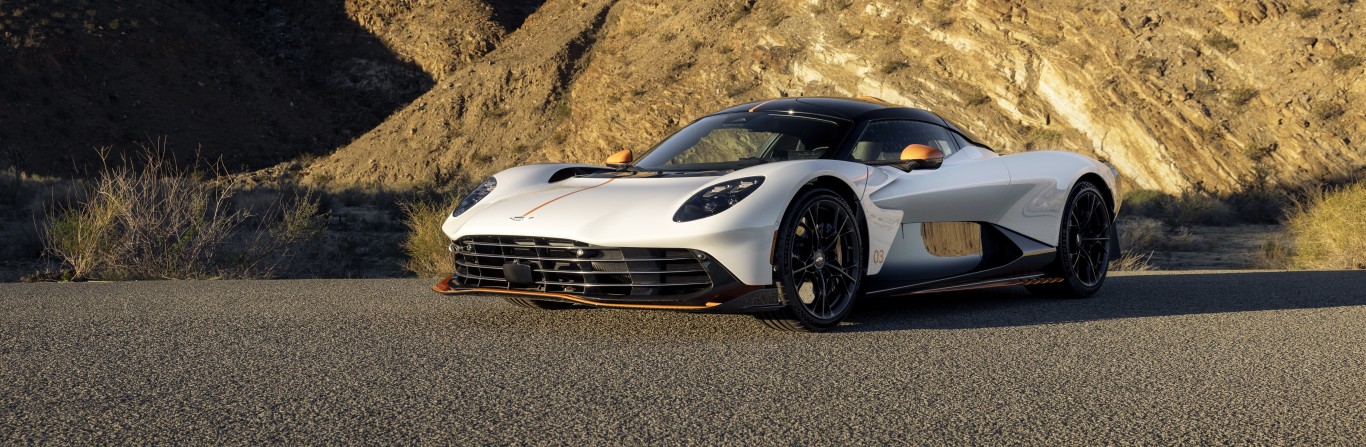
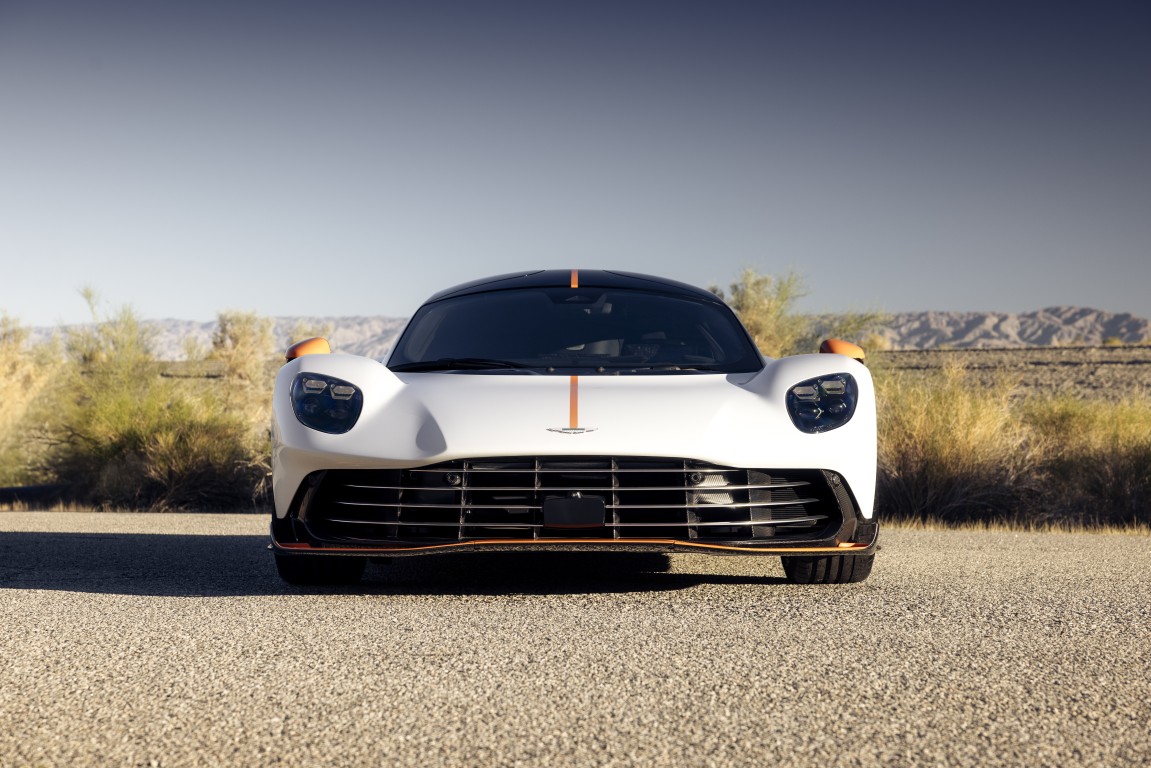
The Aston Martin Valhalla represents a historic turning point in the British automaker's supercar portfolio. Designed to occupy the space just below the extreme Valkyrie hypercar, the Valhalla was conceived with the mission of applying Formula 1 technologies into a road-legal automobile, combining track performance with superior daily usability. Throughout its development cycle, the model underwent profound mechanical, aesthetic, and conceptual transformations, evolving from a V6-engined prototype into a high-performance plug-in hybrid (PHEV) supercar equipped with a flat-plane crankshaft V8 engine.
The history of the Valhalla officially began at the 2019 Geneva Motor Show, when the brand presented the prototype known by the codename AM-RB 003. The nomenclature alluded to the technical partnership between Aston Martin and Red Bull Advanced Technologies, featuring the direct involvement of Formula 1 designer Adrian Newey. Maintaining the brand's tradition of naming its high-performance vehicles starting with the letter "V", such as the Vantage, the Vanquish, and the Valkyrie, the official name Valhalla was finalized in mid-2019, referencing the hall of heroes in Norse mythology.
The model gained worldwide projection even before reaching the assembly lines when it was cast in the James Bond film, No Time to Die (2021). Due to successive delays in the theatrical release and reformulations in the actual vehicle project, the version displayed on screen corresponds to the initial 2019 concept, while the final production model followed a significantly distinct technical path.
Marketed in a single production generation, the Valhalla went through three milestone phases during its engineering process, which radically altered its propulsion system and visual language.
The first phase consisted of the presentation of the AM-RB 003 concept in 2019. The initial proposal foresaw an in-house designed 3.0-liter twin-turbo V6 engine by Aston Martin (code TM01), combined with a hybrid system using a Rimac battery. The concept brought innovations such as the Castrol Nexcel rapid oil change system — capable of performing the replacement in 90 seconds through a sealed cartridge — and a rear wing featuring NASA-approved FlexFoil aerodynamic technology. At that moment, manufacturing volume was planned for only 500 units with a price set at around 1 million dollars each.
The second phase occurred in 2021, under the management of executive Tobias Moers. Facing budget constraints and the high cost of finalizing the in-house V6 engine development, Aston Martin canceled the internal engine and decided to adopt the twin-turbo V8 engine from Mercedes-AMG. The bodywork was completely redesigned to accommodate the new powertrain and meet global homologation standards, which included installing a traditional front grille, conventional rearview mirrors, and new air intakes. With the reformulation, production volume was expanded to 999 units and the price revised to the 800,000 dollar range.
The third phase marked the final homologation between 2023 and 2026, with track-adjusted prototypes fine-tuned by the Aston Martin Performance Technologies division and the brand's Formula 1 team. The electrical system was enhanced to integrate three electric motors, while the active aerodynamics and chassis received final ride dynamics adjustments, culminating in the first customer deliveries at the end of 2025.
The mechanical heart of the Valhalla underwent a complete transformation between the conceptual phase and the final assembly line specification, resulting in a significant gain in power and torque.
| Specification / Parameter | AM-RB 003 Concept (2019) | Pre-Series Re-engineering (2021) | Final Production Specification (2025-2026) |
|---|---|---|---|
| Internal Combustion Engine (ICE) | 3.0L V6 Twin-Turbo (Aston Martin TM01) | 4.0L V8 Twin-Turbo (Mercedes-AMG M178) | 4.0L V8 Twin-Turbo Flat-Plane Crankshaft (M178 LS2) |
| Electric Motors | KERS System (Rimac Battery) | 2 electric motors (1 front, 1 rear) | 3 electric motors (2 front, 1 rear) |
| Combined Output | ~1,000 PS (~986 hp) | 950 PS (937 hp / 699 kW) | 1,079 PS (1,064 bhp / 793 kW) |
| Internal Combustion Power | Not individually specified | 750 PS (552 kW) | 828 PS (816 hp) |
| Total Electric Power | Not individually specified | 204 PS (150 kW) | 251 PS (248 hp) |
| Combined Torque | ~1,349 Nm (estimated) | 1,000 Nm | 1,100 Nm |
| Transmission | 8-speed automatic | 8-speed Dual Clutch (Graziano) | 8-speed Dual Clutch (Graziano e-LSD) |
| Drivetrain | All-Wheel Drive (AWD) | All-Wheel Drive without mechanical connection between axles | All-Wheel Drive (AWD) with Front Torque Vectoring |
| Acceleration (0–100 km/h) | 2.5 seconds | 2.5 seconds | 2.5 seconds |
| Top Speed | 354 km/h (estimated) | 350 km/h | 350 km/h |
| Weight (Dry / Curb Weight) | ~1,405 kg (estimated dry) | 1,550 kg (dry) | 1,550 kg (dry) / 1,655 kg (curb) |
The definitive propulsion package is composed of the 4.0-liter twin-turbo V8 engine equipped with a flat-plane crankshaft, capable of reaching 7,200 rpm and sending 828 PS exclusively to the rear axle. This engine operates in tandem with three electric motors that add an extra 251 PS. Two of these motors are installed on the front axle, controlling each wheel independently to offer precise torque vectoring. The third electric motor is integrated into the rear 8-speed dual-clutch transmission, providing instantaneous torque and assisting in starting the thermal engine.
A notable technical solution in the transmission developed by Graziano is the complete elimination of a physical reverse gear. Reverse maneuvers are carried out exclusively by the two front electric motors, which reduces the overall weight of the gearbox. The 6.1 kWh, 400V lithium-ion battery allows the vehicle to travel about 15 km in fully electric mode at speeds up to 130 km/h, a configuration in which drive is 100% concentrated on the front wheels.
The Valhalla's central structure is formed by a rigid and lightweight monocoque molded in carbon fiber, developed in partnership with Aston Martin Performance Technologies. Attached to it are aluminum subframes at the front and rear, responsible for supporting the suspension systems and the powertrain assembly. The front suspension uses a push-rod system derived directly from Formula 1, with internally mounted springs and dampers. At the rear, the vehicle adopts a multilink configuration combined with Bilstein DTX adaptive dampers. Braking is delivered by carbon-ceramic discs with electronic brake-by-wire control and a regenerative energy recovery system.
Active aerodynamics play a fundamental role in the Valhalla's stability, generating over 600 kg of downforce at 240 km/h when the Race driving mode is activated. The front features an active wing hidden behind the main grille, while the rear boasts a hydraulic wing capable of rising up to 255 mm. Both wings react in less than 0.5 seconds to optimize aerodynamic balance, act as a DRS system for drag reduction on straights, or function as an airbrake during hard braking. Underbody airflow is managed by extensive Venturi tunnels and a sculpted rear diffuser.
The production model's exhaust system adopts an exclusive quad-pipe arrangement. Two main exhaust tips are located on top of the rear deck, just ahead of the active wing, to maximize the sonic resonance of the V8 engine and optimize gas flow. Two other tips are installed at the bottom, alongside the license plate, containing active valves that control noise volume according to the selected driving mode.
The Valhalla's interior prioritizes ergonomics without compromising racing DNA. The carbon fiber bucket seats are mounted directly to the monocoque, while the pedal box and steering column can be adjusted longitudinally. This arrangement positions the driver's heels at an elevated level, replicating the driving posture of a Formula 1 single-seater.
The minimalist dashboard features a structural carbon bar underneath which air vents and two high-definition floating screens face the driver. The infotainment system offers native integration with Apple CarPlay and Android Auto, operated via intuitive controls on the raised center console or the flat-bottomed multifunctional steering wheel. Unlike hypercars focused solely on circuits, the Valhalla comes factory-equipped with dual-zone climate control, matrix LED headlight assemblies, adaptive cruise control, autonomous emergency braking, blind-spot monitoring, and a parking assistant with surround-view cameras. Access to the cabin occurs via dihedral doors that pivot upward and forward.
The commercial strategy for the Valhalla reflects the model's transformation from a niche hypercar into a limited-production supercar. Initially slated for a build run of just 500 units, the total manufacturing volume was set at 999 numbered units worldwide. With a base price established in the 800,000-dollar range (around £580,000), the model positions Aston Martin in the ultra-high-performance hybrid supercar segment, competing with vehicles like the Ferrari SF90 Stradale. First customer deliveries occurred in December 2025 in the United Kingdom, marking the start of global distribution.
Alongside the road-going model, the automaker initiated development on an even more extreme track-focused variant named the Valhalla AMR. Spotted in intensive testing at the Nürburgring Nordschleife circuit, the AMR version eliminates comfort concessions in favor of weight reduction, incorporating sliding acrylic side windows, a prominent front splitter, a massive fixed rear wing, and the return of the Castrol Nexcel oil change system aimed at competition use. The emergence of the AMR version reaffirms the Valhalla's role as a lasting technological platform for the future of Aston Martin.