To understand the essence of the 5 Series Gran Turismo, it is fundamental to analyze its technical
and conceptual foundations, which reveal an identity much more complex than its name suggests.
The Genesis of the Project: "Progressive Activity Sedan" (PAS)
The origin of the F07 dates back to the "BMW Concept 5 Series Gran Turismo" prototype, revealed with great
prominence at the Geneva Motor Show in 2009. The vision behind the project, internally called "Progressive
Activity Sedan" (PAS), was to create a vehicle for a customer who sought more space, luxury, and versatility
than a traditional sedan could offer, but who did not identify with the rugged image of an SUV. The focus
was on creating an automobile that stood out for its supreme comfort on long journeys, functionality in
daily use, and a level of finish and sophistication comparable to BMW's top models.
The 7 Series (F01) Base: The Key Decision
Despite being named and marketed as part of the 5 Series family, the Gran Turismo was, in its essence, built
on the platform of its larger sibling, the BMW 7 Series (F01). This engineering decision is the most crucial
point to understand the character of the F07.
The car shares with the standard-wheelbase 7 Series the same wheelbase of 3,070 mm, as well as the width of
1,901 mm and track widths. This base resulted in rear-seat legroom identical to that of the 7 Series and
headroom comparable to that of the X5 SUV, fulfilling the promise of a vast and airy interior.
This choice, however, generated a fundamental paradox. The name "5 Series" evokes the image of an executive
sedan focused on dynamics and agility. However, the engineering of the F07, inherited from the 7 Series,
prioritized comfort, isolation, and ride smoothness, resulting in a vehicle significantly heavier and less
agile than the 5 Series sedan (F10). This discrepancy between the car's name and soul created an identity
crisis that confused the market. Consumers expecting the sportiness of a 5 Series found the weight and
comfort of a 7 Series, packaged in a hatchback body. This confusion about the vehicle's purpose was one of
the greatest challenges to its acceptance.
Exterior Design: The Controversial Silhouette
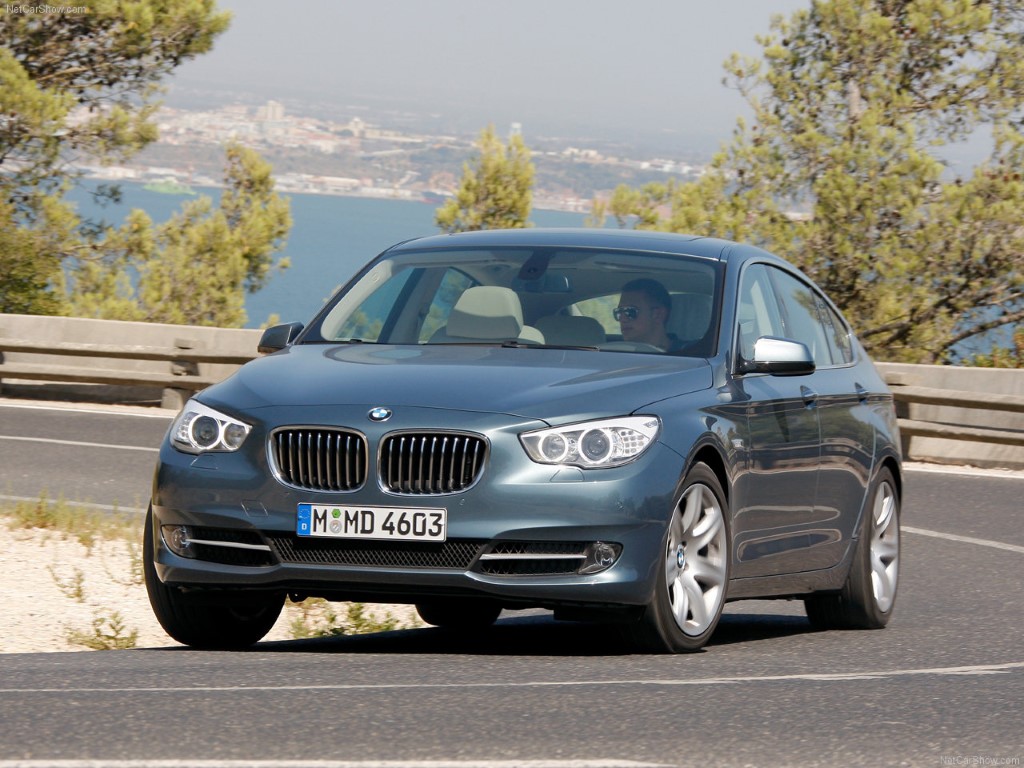
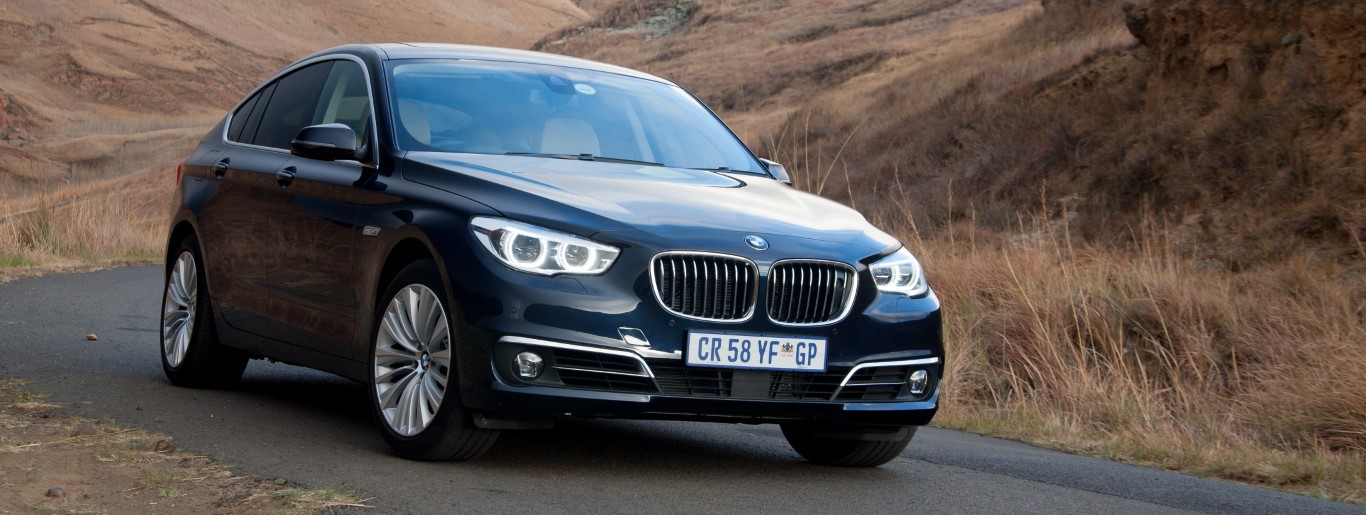
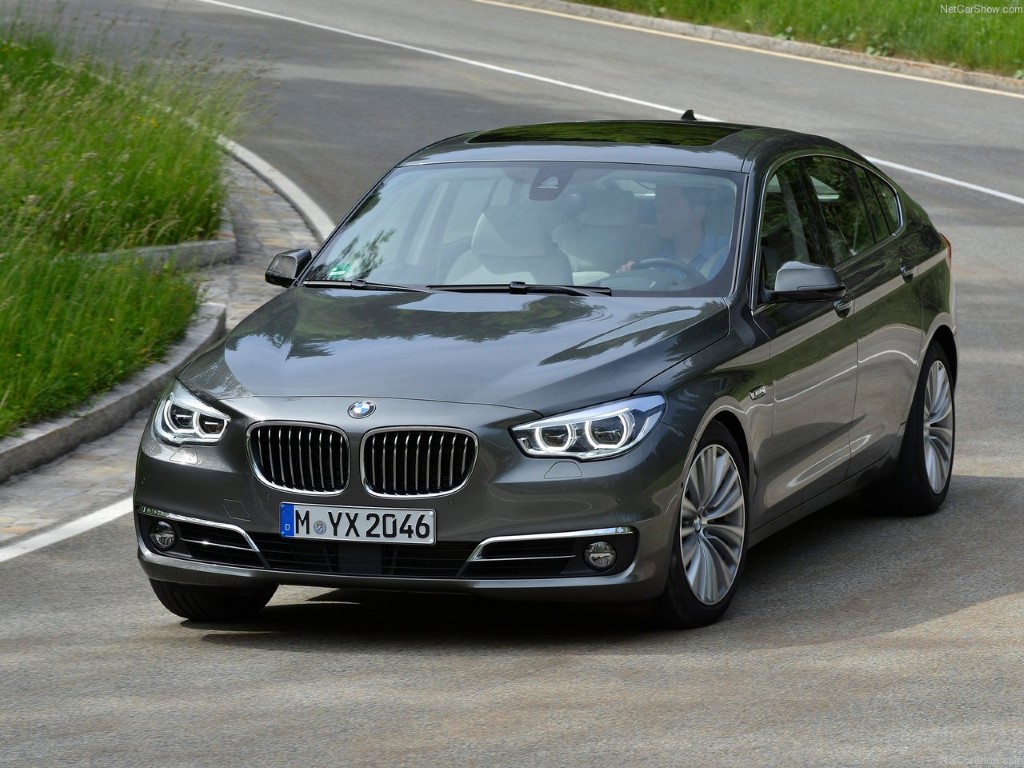
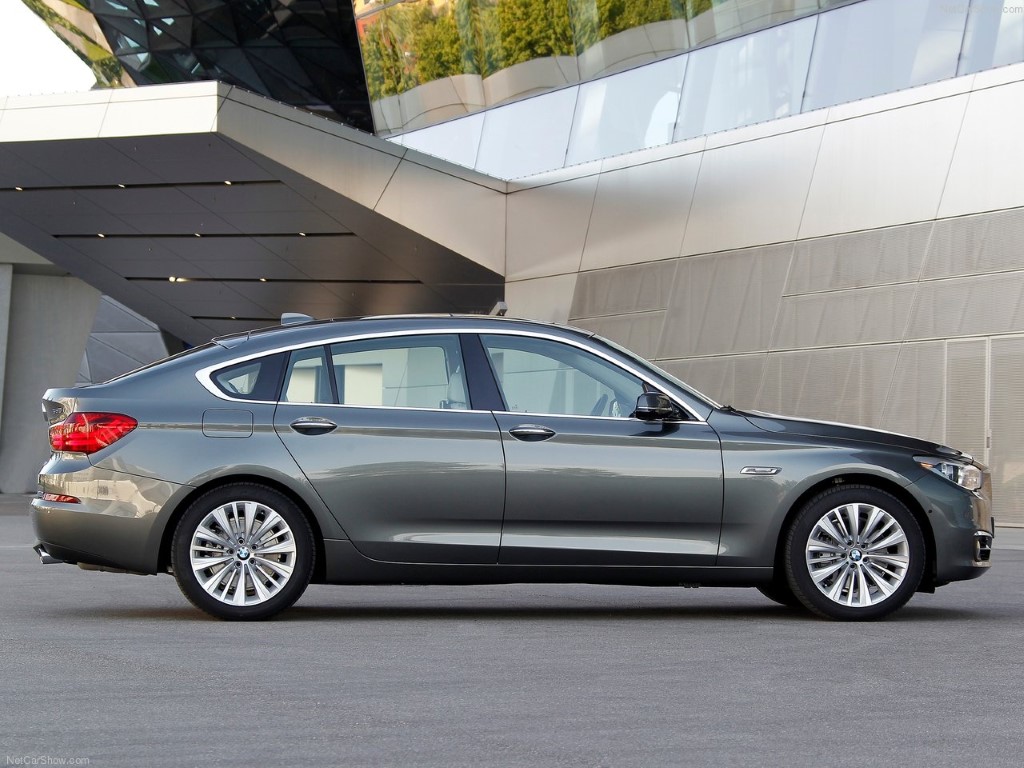
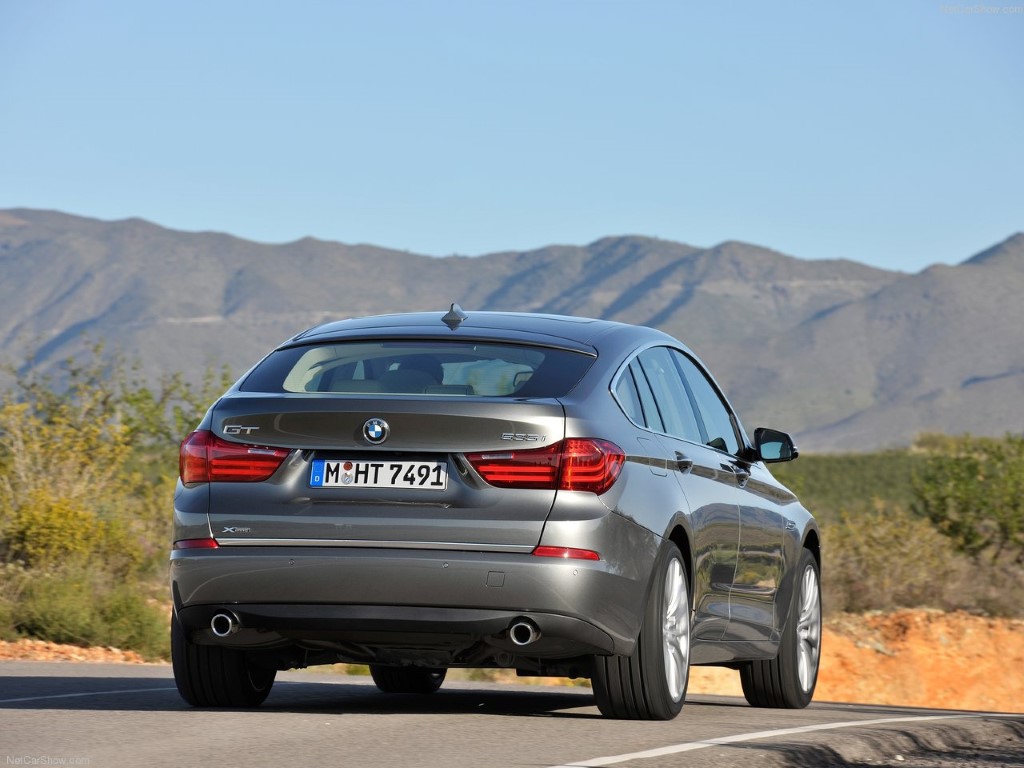
The design of the F07, penned by Christopher Weil, was an attempt to harmonize elements from different
vehicle typologies. The body combined an elongated silhouette with a descending, coupe-style roofline, and
four frameless doors — a novelty for a four-door BMW model at the time. The front was imposing, with a
prominent and verticalized "double kidney" grille, and it was the brand's first model to use LED rings
("corona rings") as daytime running lights.
The rear, however, was the most controversial point. With tall proportions and considerable volume, it was
frequently described by critics as awkward and visually heavy. This shape, however, was not an isolated
aesthetic mistake, but a direct consequence of its ambitious functional proposal. To achieve the promised
interior space and accommodate the complex trunk mechanism, the rear needed to have that volume. BMW, in
this case, prioritized function over conventional form, resulting in a design that, although polarizing, was
dictated by engineering.
Functional Innovation: The Dual-Opening Trunk Lid
One of the most ingenious and distinctive features of the F07 was its trunk lid, which had a two-way opening
mechanism, a complex and highly functional engineering solution.
- Sedan Mode: It was possible to open only a lower section of the lid, like
in a traditional sedan. This function was ideal for quickly placing smaller objects, without exposing
the entire interior of the car to noise, wind, or temperature changes, maintaining the thermal and
acoustic insulation of the cabin.
- Hatchback Mode: For large and bulky objects, the entire lid, including the
rear window, could be opened, revealing a wide cargo opening typical of a hatchback. The operation could
be fully electric, controlled by buttons on the key, inside the vehicle, or on the lid itself.
Interior: First-Class Space and Luxury
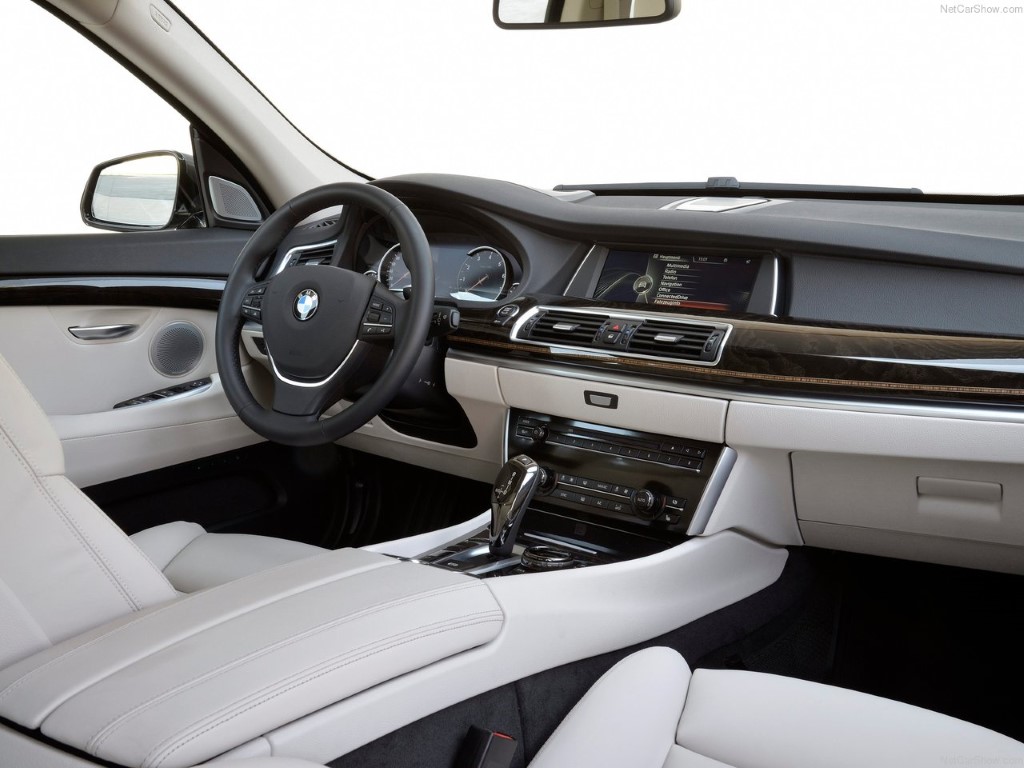
If the exterior was controversial, the interior was universally acclaimed. The cabin of the F07 was its
greatest asset, offering a level of space, luxury, and comfort that far exceeded the traditional 5 Series
and directly rivaled the 7 Series. The dashboard, largely inherited from the 7 Series, and the quality of
the materials conveyed a sense of belonging to a higher segment.
The seating position was slightly elevated ("semi-command"), providing superior visibility compared to a
sedan without the full height of an SUV. The true highlight, however, was in the rear seat. The seats could
slide longitudinally by up to 100 mm and had reclining backrests, allowing passengers to adjust legroom or
prioritize luggage capacity. As an option, it was possible to configure the rear seat with two individual
luxury seats ("executive class seating"), separated by a center console, transforming the F07 into a true
limousine.
Cargo capacity was equally impressive: the trunk offered 440 liters in the standard configuration, which
could be expanded to 590 liters with the rear seats moved forward, and reached a maximum of 1,700 liters
with the seats folded down — a volume greater than that of many station wagons.
Key Technical Specifications of the BMW F07 Gran Turismo
| Feature |
Measurement / Value |
| Length |
4,998 mm (LCI: 5,004 mm) |
|
| Width |
1,901 mm |
| Height |
1,559 mm |
| Wheelbase |
3,070 mm |
| Front Track |
1,611 mm |
| Rear Track |
1,654 mm |
| Curb Weight |
1,940 kg - 2,215 kg |
| Trunk Capacity |
440 L (LCI: 500 L) |
| Maximum Trunk Capacity |
1,700 L |