
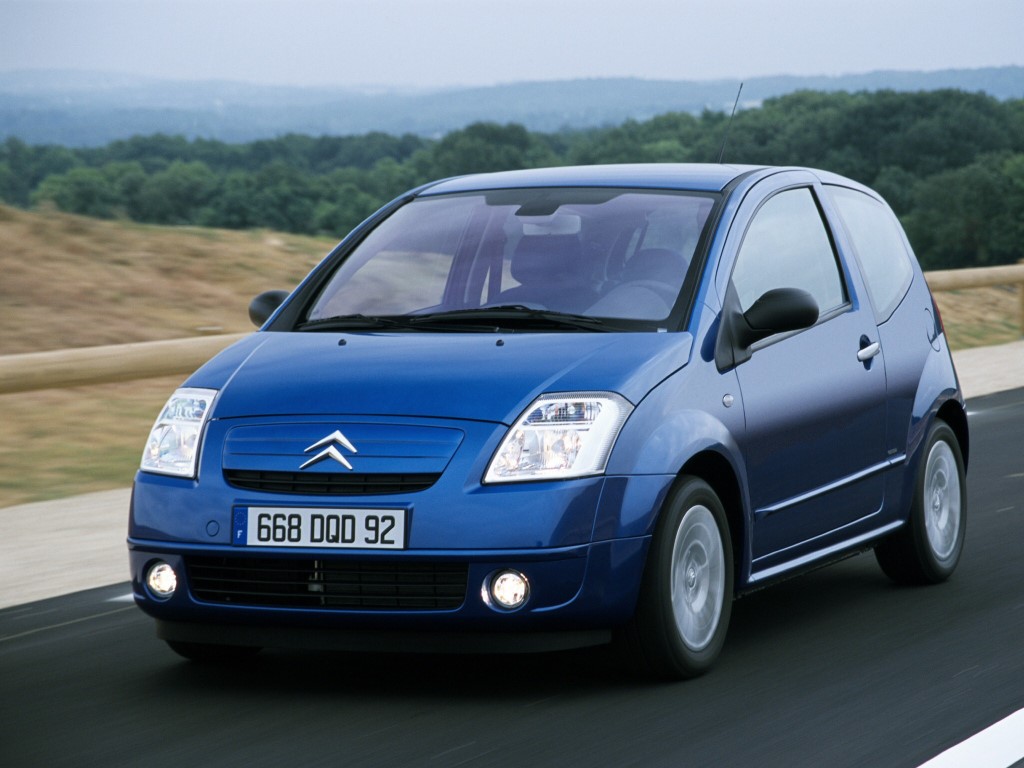
JM
(2004 - 2008)
1.6 L4 16V VTS
125 cv
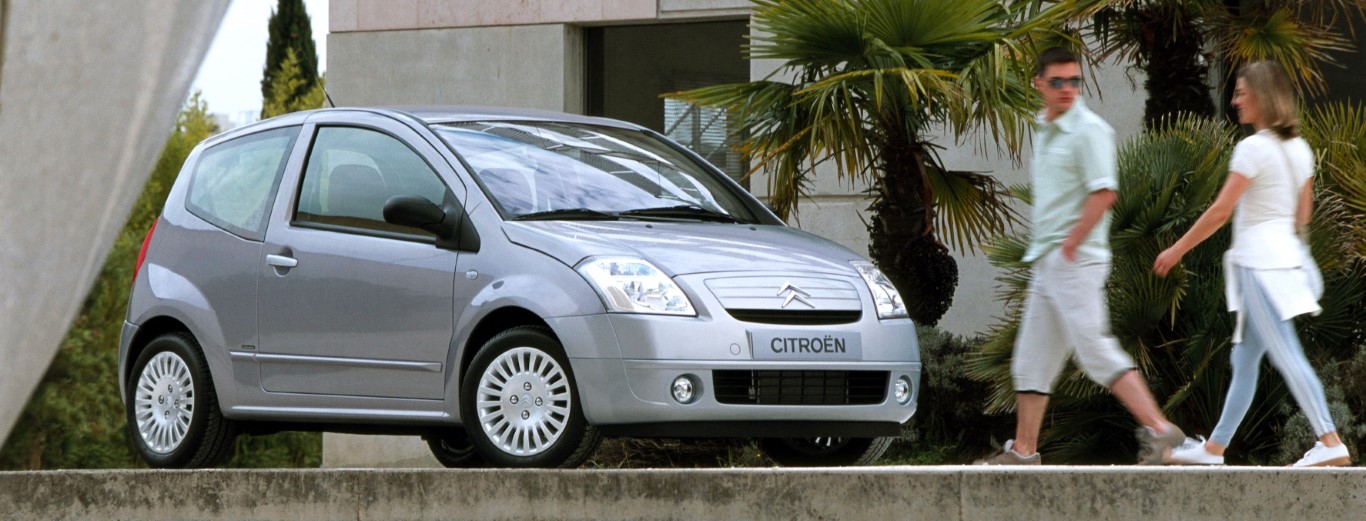
Technical specifications, versions, and history for the Citroen C2.
Select a generation to see available versions
(2004 - 2008)
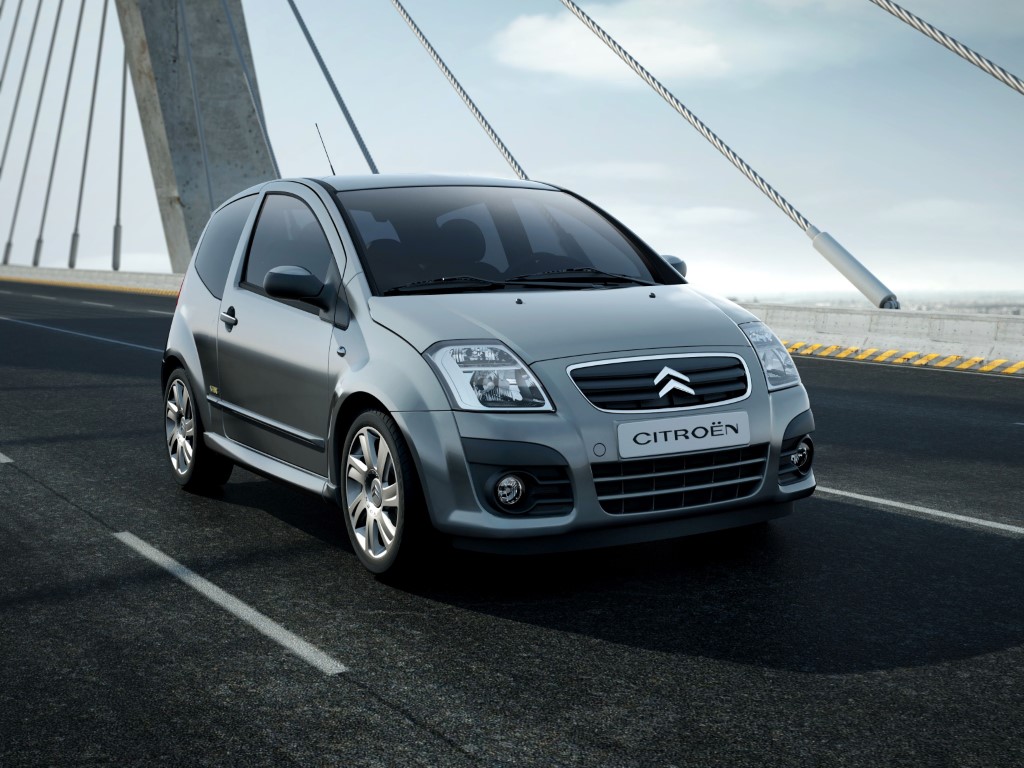
(2008 - 2010)
The European automotive market at the beginning of the 21st century required rapid adaptations from automakers, especially in the compact car segment (B-Segment). The Citroën C2 was the direct response from the French automaker Citroën, part of the PSA Group (Peugeot Société Anonyme), to replace the popular, but aging, Citroën Saxo. Produced between August 2003 and October 2009 at the Aulnay-sous-Bois plant, on the outskirts of Paris, the C2 marked a radical shift in the brand's strategy.
Historically, Citroën covered the compact market with a single model available in three- and five-door versions, as was the case with the Saxo. However, for the new generation, the company split its offering. The Citroën C3 was launched as a five-door vehicle focused on comfort, space, and a family audience. In parallel, the Citroën C2 was designed exclusively as a three-door hatchback, intended to project a younger, more agile, and sporty image. The design of the C2 was led by Donato Coco, who gave the car a flatter and more aggressive style compared to the rounded lines of the C3. Despite the extreme external differences, both cars shared the same front-wheel-drive platform (FF layout) and much of the internal architecture, including the dashboard, allowing Citroën to reduce development costs while targeting distinct market niches.
One of the crucial factors for the discontinuation of the Saxo and the creation of the C2 was safety. The Saxo had an old structural design that achieved only 2 out of 5 stars in the Euro NCAP crash tests. The C2, with a reinforced structure and programmed crumple zones, achieved a respectable 4 out of 5 stars, putting Citroën back in a competitive position in European safety ratings.
The exterior design of the Citroën C2 was widely praised for its originality, breaking with the common conservatism in urban cars. The most striking feature of the model was the side window line. The rear windows did not follow the alignment of the front door windows; they started at a noticeably lower level, creating an irregular or "stepped" waistline. This aesthetic choice, in addition to creating a unique visual identity, increased visibility for rear-seat passengers.
Another highlight in the design was the sharply bulging wheel arches (fenders). These flared fenders conveyed the impression that the car was wider and planted on the ground, suggesting sportiness even in versions with less powerful engines. The headlights had a square and extended shape, flowing towards an extremely short hood, while the A-pillars had an aggressive inclination of almost 45 degrees.
The most practical innovation of the C2's bodywork was, without a doubt, the trunk opening system. Instead of a traditional one-piece tailgate, the C2 used a rear door split into two halves.
The upper half, consisting mainly of the rear window, opened upwards, allowing the user to quickly place small objects in the trunk, which was extremely useful in tight parking spaces in European cities, where there would be no room to open a large tailgate. The lower half opened downwards, forming a small platform. Citroën's engineering designed this lower tailgate to withstand a static weight of up to 100 kg. This feature transformed the trunk lid into a practical seat, ideal for putting on shoes after outdoor activities or for supporting heavy loads before sliding them into the luggage compartment.
The C2 was designed to be strictly urban, reflected in its compact dimensions. The standard European civilian model had the following standard measurements:
The vehicle's aerodynamic drag coefficient (Cd) was 0.31, an excellent value for such a short hatchback, which helped to reduce fuel consumption and wind noise at highway speeds.
The interior of the Citroën C2 was designed to be youthful and highly functional. The dashboard deviated from the conventional analog standard. Instead of physical pointers for speed, the C2 adopted a large central LCD (Liquid Crystal Display) that displayed the speed digitally, flanked by an arc-shaped tachometer and light bars on the sides for fuel and temperature gauges.
To add a tone of originality, Citroën used translucent materials in various parts of the cabin. The inner door handles and the gear lever (on some versions) were made of transparent colored plastic, matching the vibrant color options for the upholstery, which created a modern and relaxed atmosphere.
Modularity was one of the C2's biggest selling points. Instead of a one-piece rear bench that would limit cargo options, higher-end versions (like the SX and above) came equipped with two completely individual rear seats.
These seats were mounted on sliding rails, allowing them to be moved forward and backward effortlessly. This allowed the owner to choose between giving more legroom to rear passengers or increasing trunk volume. Additionally, each seat could be folded down or folded completely against the back of the front seats, creating an almost flat load floor. The only drawback of this system was that, when folding the rear seats completely, the front seats had to be pushed slightly forward, which could reduce comfort for taller drivers on long trips.
The dynamic behavior of the C2 focused on agility. Using the PSA Group's PF1 platform, the car employed a classic and efficient suspension setup. At the front, it used independent MacPherson strut suspension with lower arms and a stabilizer bar. At the rear, the adoption of a torsion-beam axle saved space, keeping the trunk at a low level and reducing maintenance costs.
The braking system varied according to engine power. Entry-level models (1.1L and 1.4L) used ventilated discs at the front and drum brakes at the rear. The sporty VTR and VTS models, which had to handle speeds over 190 km/h, were equipped with ventilated discs at the front and solid discs at the rear, ensuring greater resistance to overheating (fading). The Anti-lock Braking System (ABS) with Electronic Brakeforce Distribution (EBD) and Emergency Brake Assist became standard on most versions.
The steering had electric assistance with weight variation according to speed, offering 3.2 turns lock-to-lock on normal models and a more direct response (2.6 turns) on sports models like the VTS and the Code edition. Tire options ranged from narrow 175/65 R14 mounted on steel wheels for economy, to wide low-profile 195/45 R16 tires mounted on alloy wheels for sports models, ensuring strong lateral grip.
The Citroën C2 featured a variety of gasoline engines from PSA's TU family, all with multipoint injection and front-wheel drive (FWD). The data below shows the detailed specifications of each option:
The HDi family diesel engines (developed in partnership with Ford) were acclaimed for their durability and incredible thermal efficiency.
Citroën was a pioneer in implementing micro-hybridization technology in the B segment. Using a system developed by Valeo (which united the alternator and the starter motor into a single belt-driven piece), the C2 equipped with "Stop & Start" technology automatically shut off the engine when the car stopped in traffic (e.g., at traffic lights) and restarted it instantly and smoothly as soon as the driver released the brake pedal. This technology, similar to the concept seen in the VW Polo "Formel E" of the 1980s, but much more refined, helped to significantly reduce urban consumption and emissions. The system became more accessible from the 2008 facelift onwards, being included in mid-range versions such as the Rhythm in the UK.
To keep the car competitive against modern rivals, Citroën applied strategic updates throughout its six years of production.
The original launch version. It was characterized by taillights with opaque red plastics and a first-generation instrument panel. It established the base sales of the model and its iconic VTR and VTS versions.
The first "facelift". Citroën focused on trim details and electrics. Externally, the most obvious change was the adoption of taillights with clear lenses ("Lexus" or "Altezza" style), a huge design trend in the mid-2000s. Internally, the C2 gained a redesigned dashboard with better quality materials to address criticisms about hard plastics. The electrical architecture was updated to the multiplexed CAN bus system, improving electronic reliability and allowing for new optional equipment.
The final and most extensive update, often called the 2008 model or 2008-2010 model. Focused on aligning the car with Citroën's new corporate visual identity. The front bumper was redesigned, becoming a single, larger, and more sculpted piece, giving it a much more robust stance. The lower air intake was widened, and the radiator grille now housed a much wider and more prominent Citroën "chevron" logo, aligning the C2 with the C4 and C5 of the time. The headlights maintained their compact shape, but the overall look of the front became more aggressive.
Technically, this phase marked the introduction of cleaner turbodiesel engines with a particulate filter (to meet the impending Euro 5 standards) and the spread of the Stop & Start system. In the UK, the trim lineup was simplified to make purchasing easier, boiling down to Vibe, Rhythm, VTR, and VTS. Equipment such as an MP3-compatible radio and side airbags became standard on many of these versions.
The trim structure of the Citroën C2 was vast, designed to capture different socioeconomic profiles.
To maintain interest in the model, Citroën launched special editions that are now collector's items.
Citroën also explored the light commercial vehicle (LCV) market, crucial in Europe, creating the Citroën C2 Enterprise.
This model was a direct conversion from the hatchback to a micro-van. The rear seats were removed at the factory, and a flat load floor was installed. Equipped with the indestructible and economical 70 hp (68 HP) 1.4 HDi diesel engine, the Enterprise was the ideal choice for urban postal delivery fleets, technical service providers, and security companies.
The cargo compartment specifications were formidable for the car's size:
Being a work vehicle, it used 14-inch steel wheels with Michelin Energy 175/65 R14 tires and recalibrated suspension to handle the extra weight in the rear. In the UK and France, this model guaranteed tax exemptions for businesses.
A fascinating and often confusing chapter in the history of the C2 occurred in China, under the Dongfeng Peugeot-Citroën Automobile (DPCA) joint venture. If a consumer looked for the "Citroën C2" in China in late 2006, they would not find the small three-door hatch designed by Donato Coco.
The Chinese Citroën C2 (internal code T21) was actually a rebadged and restyled five-door Peugeot 206.
The logic behind this corporate maneuver was based on brand perception. The original Peugeot 206, produced locally in Wuhan, was not reaching expected sales targets. The Citroën brand, however, possessed immense prestige and a long history in China, built on the absolute success of older models like the Fukang. To capitalize on this prestige and expand the lineup (which already included the C-Triomphe, Elysée, and Xsara Picasso), Dongfeng-PSA applied a new front and rear to the Peugeot 206, inserting tapered headlights and a pronounced grille to resemble other Citroëns, and named it the C2.
Mechanically, the Chinese C2 used engines adapted to local fuel and climate: a 75 hp 1.4i (120 Nm) and a 106 hp 1.6i 16v (142 Nm), available with a 5-speed manual or 4-speed sequential automatic gearbox. The suspension was independent MacPherson at the front and a torsion bar with trailing arms at the rear.
The range was divided into the SX (basic, but with AC, power steering, front electric windows, ABS, and EBD) and EX (luxury, adding a sunroof, leather, rear electric windows, and aluminum accents) versions. The Chinese market also received peculiar versions based on this model, such as the adventurous "Cross" version, and locally developed "VTS" aerodynamic packages (including darkened headlights, larger spoilers, and DS-style alloy wheels), in addition to extravagant local tuning adaptations with "lambo doors" (scissor style).
The success of this strategy was substantial, with forecasts of 40,000 units per year and a total production that almost reached 80,000 units manufactured in China before the model was replaced.
Citroën's tradition in rallying demanded a replacement for the victorious Saxo S1600, which had revealed Sébastien Loeb to the world in 2001. In 2003, at the Geneva Motor Show, the Citroën Sport division presented the C2 competition concept car, which would soon evolve into the Citroën C2 S1600, making its official debut on the asphalt of the Rally Catalunya in 2004.
The C2 S1600 was a track monster. Built under the strict Super 1600 regulations, the car was widened to the extreme: the width went from the civilian 1,664 mm to an astonishing 1,795 mm, allowing for wide tracks and massive slick tires. The exact length of the rally car was 3,660 mm, with a wheelbase of 2,326 mm. The weight was restricted to the legal minimum of the category at 1,000 kg (2,204 lbs). The engine was a naturally aspirated 1.6 with guillotine intake and a free-flowing exhaust, easily exceeding 220 horsepower, driving the front wheels through a sequential gearbox.
Citroën's bet was rewarded with absolute dominance in the Junior World Rally Championship (JWRC). Already in 2005, Spanish driver Dani Sordo won the JWRC championship driving the C2 S1600. The car was so balanced that it remained competitive for years, beating newer machines from Suzuki, Fiat, and Renault. In 2008, future legend Sébastien Ogier secured the second world title for the C2 S1600, followed by another championship victory by Czech driver Martin Prokop in 2009.
The PSA Group's commercial strategy in South America, and particularly in Brazil, always diverged from Europe. In Brazil, the focus on premium compact cars fell heavily on the five-door Citroën C3 and the Peugeot 206. Small, high-cost three-door hatchbacks were seen as commercially unviable due to the Latin American consumer's preference for versatility and rear space for families.
As a result, Citroën never officially marketed or manufactured the C2 in Brazil. However, the dynamic reputation of the sporty versions of the C2 led Brazilian enthusiasts with high purchasing power to make independent imports. The C2 VTS became a true "white fly" (an expression for something extremely rare) in Brazil. Automotive records and specialized media indicate the existence of, at most, two units of the Citroën C2 VTS on Brazilian soil, primarily used by collectors and in track events (Track Days), as demonstrated in reviews by renowned drivers like Rubens Barrichello at the Velo Città circuit.
Today, Citroën's strategy in Brazil is entirely focused on the C-Cubed project, focusing on affordable SUVs and crossovers like the C3 Aircross and the Basalt, definitively burying any possibility of a pure three-door hot hatch returning to the country.
Despite some criticism about the lack of advertising compared to the C1 and C3, the C2 was a solid commercial success, reaching impressive targets for a three-door vehicle. The PSA group factories (especially Aulnay in France) maintained a fast pace until the 2008 facelift, at which time the vehicle had already sold over 480,000 units in Europe.
The total global production numbers were tabulated and show the natural decline of the life cycle, but with an impressive total volume. The year 2009 marked the end of mass production in Paris, but inventories and the continuous production of the Asian model lengthened the statistics.
| Year | Annual Global Production | Global Sales | Notes / Accumulated Milestone |
|---|---|---|---|
| Until 2008 | - | > 480,000 | Pre-final facelift consolidation |
| 2009 | 49,100 units | 52,400 units | End of production in Europe (October) |
| 2010 | 8,200 units | 9,300 units | Inventory clearance period |
| 2011 | 10,403 units | 10,468 units | Total production reaches 676,004 units |
| 2012 | 14,800 units | 14,600 units | Total production reaches 690,800 units |
| 2013 | 9,800 units | 10,000 units | Total production reaches 700,600 units |
Important: The amount frequently cited by the press of 622,173 units refers to pure European production and Western exports. However, the final audits indicating the mark of 700,600 global units also include the quota of almost 80,000 units of the C2 manufactured by Dongfeng in China (the T21 model based on the Peugeot 206). The car was replaced in the premium compact market in 2010 by the luxurious Citroën DS3.
The trajectory of the Citroën C2 highlights the transition of automotive engineering at the turn of the millennium, replacing the fragile simplicity of cars like the Saxo with safe structures (4 Euro NCAP stars), technological innovations (Stop & Start), and cabin modularity that proved cramped cars can be highly practical. Its victories in the JWRC and the cult status of the VTS model, combined with its intriguing double life in Asia, guarantee the C2 a place of undeniable importance in the modern history of the PSA Group.