1st Generation
(2010 - 2014)
1.6 L4 16V THP Racing
207 cv
Technical specifications, versions, and history for the Citroen DS3.
Select a generation to see available versions
(2010 - 2014)
(2014 - 2016)
The launch of the Citroën DS3 in 2010 marked not only the introduction of a new vehicle in the premium compact segment, but the beginning of a profound strategic maneuver within the PSA Group (now Stellantis). This model was the precursor to the DS line — an acronym that harkens back to the legendary 1955 Citroën DS "Déesse" — designed to offer products with radical choices in style, architecture, and sensations.
Over nearly two decades of history, the DS3 evolved from a three-door hatchback focused on driving pleasure to a technological and electrified crossover, serving as the cornerstone for the emancipation of DS Automobiles as an independent manufacturer. This report details the model's trajectory, its exhaustive technical specifications, market variations, and the industrial impact of its production.
The history of the DS3 began to be sketched out in 2007, under the internal concept of creating a three-door variant for the second generation of the Citroën C3 that could compete with icons like the Mini Cooper and the Audi A1. Citroën sought to distance itself from the image of a manufacturer focused solely on functionality and cost-benefit, rescuing its DNA of innovation and French luxury. The term "DS", reinterpreted as "Different Spirit", symbolized a break with the automotive conservatism of the time.
The public's first contact with this new philosophy occurred in February 2009, with the revelation of the Citroën DS Inside concept at the Geneva Motor Show. This prototype, designed by Frédéric Soubirou (exterior) and Christophe Cayrol (interior), already featured the definitive lines of the DS3, including the iconic "shark fin" B-pillar and the floating roof, which allowed for unprecedented chromatic customization in the segment. The design was projected to convey a sense of fluidity, as if the car were sculpted from a single block of noble material.
The production Citroën DS3 was officially launched in January 2010, utilizing the PSA PF1 platform. Unlike the C3, on which it was mechanically based, the DS3 received a much firmer suspension tuning, more communicative electro-hydraulic steering, and a lowered driving position, aiming to attract an enthusiast audience for vehicle dynamics. Success was immediate: by 2013, the DS3 already held a 40% market share in its category in Europe, being the best-selling premium compact car on the continent.
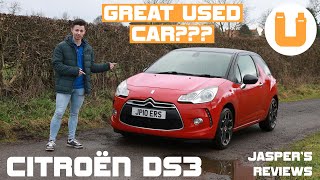
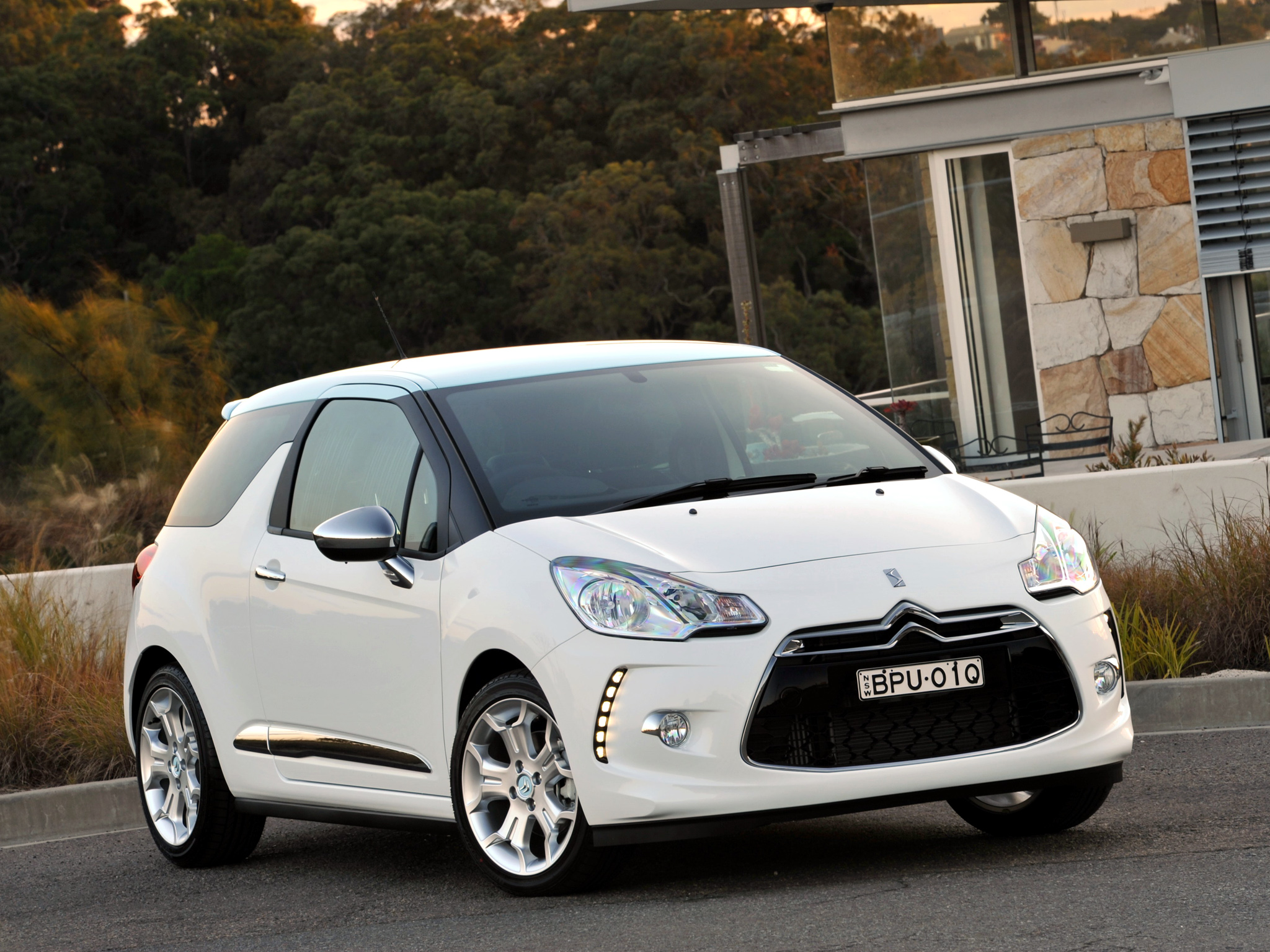
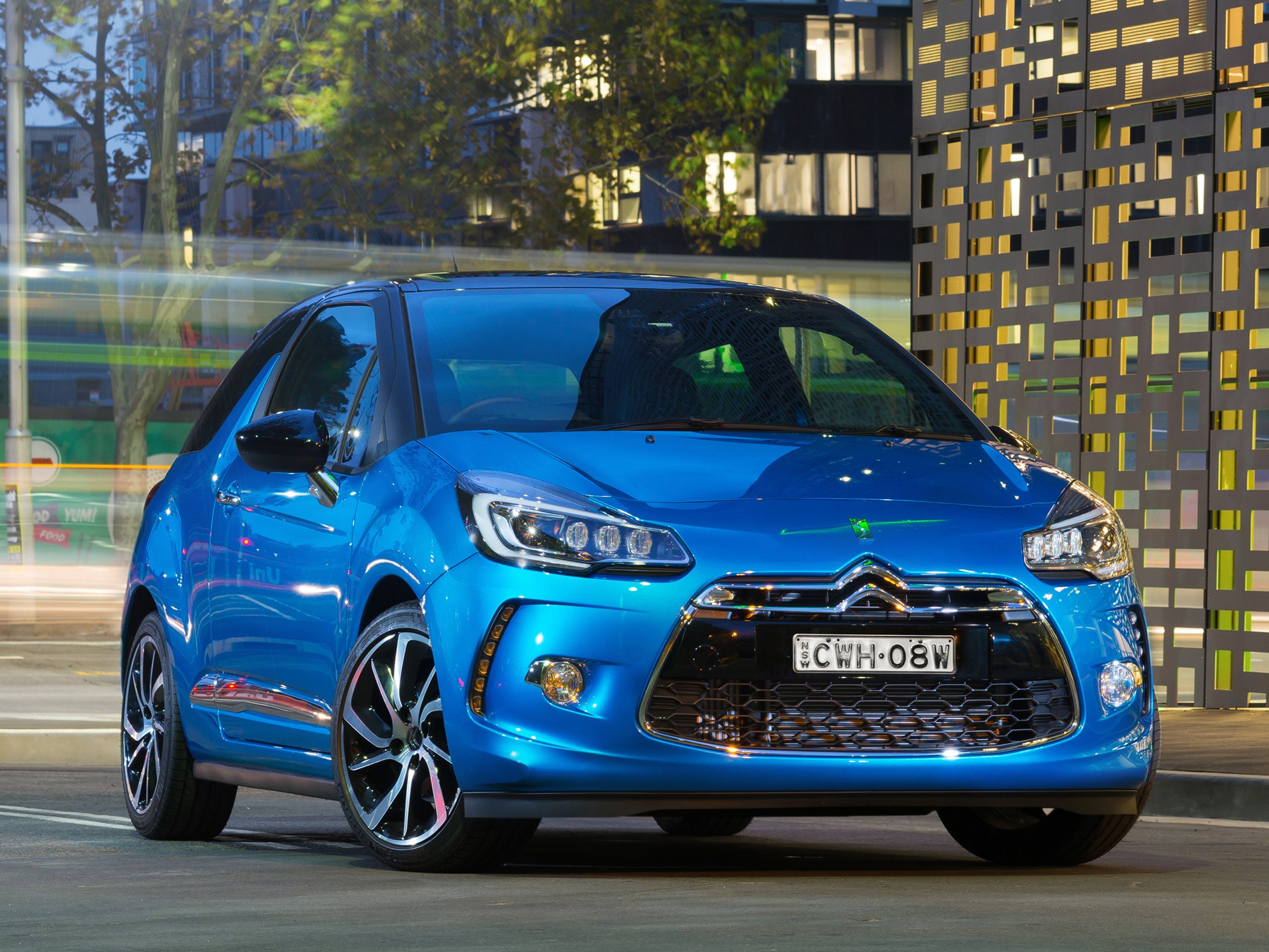
The DS3's design was one of its biggest selling points. The three-door silhouette, with rear windows integrated into the C-pillar and the visible absence of window frames, created the visual effect of a roof that "floated" over the bodywork. The front displayed LED daytime running lights arranged vertically in the bumpers, a light signature that would become standard in the industry years later.
Internally, the finish used high-quality materials, with a rubberized upper dashboard and customization options that included various colors for the central dashboard appliqué and the gear shift knob. The instrument panel consisted of three conical indicators with analog dials, uniting the classic with the sporty.
Table 1: Technical Dimensions - DS3 First Generation (Hatchback)
| Attribute | Specification |
|---|---|
| Length | 3,948 mm |
| Width | 1,715 mm |
| Height | 1,458 mm |
| Wheelbase | 2,464 mm |
| Front Track | 1,468 mm |
| Rear Track | 1,471 mm |
| Curb weight | 974 kg to 1,175 kg |
| Trunk Volume | 285 liters |
| Tank Capacity | 50 liters |
Source:
The first generation's engine range was vast, covering everything from units focused on economy to high-performance powertrains developed in partnership with the BMW Group. The 1.6 Turbo High Pressure (THP) engine became the model's benchmark, offering maximum torque at low revs and a linear acceleration curve.
The entry-level options featured the three-cylinder 1.2 PureTech engines, which replaced the old 1.4 VTi. In Europe, the HDi and e-HDi diesel variants were extremely popular due to their efficiency, with the 1.6 e-HDi 115 Airdream model achieving average consumption figures exceeding 22 km/l on highway trips.
Table 2: Performance Specifications - Main Engines (1st Generation)
| Engine | Power | Torque | 0-100 km/h | Top Speed |
|---|---|---|---|---|
| 1.2 PureTech 82 (I3) | 82 hp | 118 Nm | 14.2 s | 174 km/h |
| 1.6 VTi 120 (I4) | 120 hp | 160 Nm | 8.9 s | 190 km/h |
| 1.6 THP 155 (Turbo) | 156 hp | 240 Nm | 7.3 s | 214 km/h |
| 1.6 THP 165 (Turbo) | 165 hp | 245 Nm | 7.3 s | 218 km/h |
| 1.6 e-HDi 90 (Diesel) | 92 hp | 230 Nm | 11.3 s | 180 km/h |
| 1.6 BlueHDi 120 (Diesel) | 120 hp | 285 Nm | 9.3 s | 190 km/h |
Source:
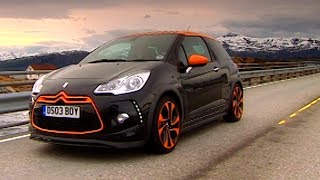
To celebrate the success in the WRC (World Rally Championship), Citroën Racing developed the DS3 Racing in 2010. This limited version was initially planned for only 1,000 units, but global demand forced an expansion to about 2,400 vehicles. The Racing featured the 1.6 THP engine recalibrated to 202 hp and a 15 mm lower chassis, with tracks widened by 30 mm to optimize control in tight corners.
The use of real carbon fiber on the rear diffuser, side skirts, and fender flares was not just aesthetic, but aided in aerodynamics and weight reduction. The braking system was upgraded with four-piston calipers at the front and drilled discs at the rear. In 2016, with the separation of the brands, the model was renamed to DS 3 Performance, receiving the 208 hp engine and, crucially, a Torsen limited-slip differential, making it one of the best front-wheel-drive "hot hatches" of its era.
Launched in 2012 at the Paris Motor Show, the DS3 Cabrio adopted a retractable canvas roof solution that preserved the car's side pillars. This engineering choice allowed the chassis's torsional rigidity to remain almost identical to that of the hatchback, weighing only 25 kg more. The roof could be operated electrically at speeds up to 120 km/h, a convenience superior to most traditional convertibles.
Brazil received the Citroën DS3 in May 2012 as a niche model, imported directly from France. The configuration chosen for the national market was the most purist: an exclusively gasoline 165 hp 1.6 THP engine and a six-speed manual transmission. The model quickly earned the nickname "pocket rocket" among Brazilian enthusiasts due to its agility and ease of mechanical tuning.
The launch price of R$ 79,900 was competitive for the time, positioning it between the Fiat 500 Abarth and the Audi A1. In Brazil, the DS3 came standard with six airbags, electronic stability program (ESP), dual-zone digital air conditioning, and LED daytime running lights. The lack of an automatic transmission option was initially seen as a negative point for mass sales, but it consolidated the car as a collector's item for drivers who valued mechanical interaction.
The limited editions strategy was vital to maintaining the product's freshness over the years. Some of the most notable versions include:
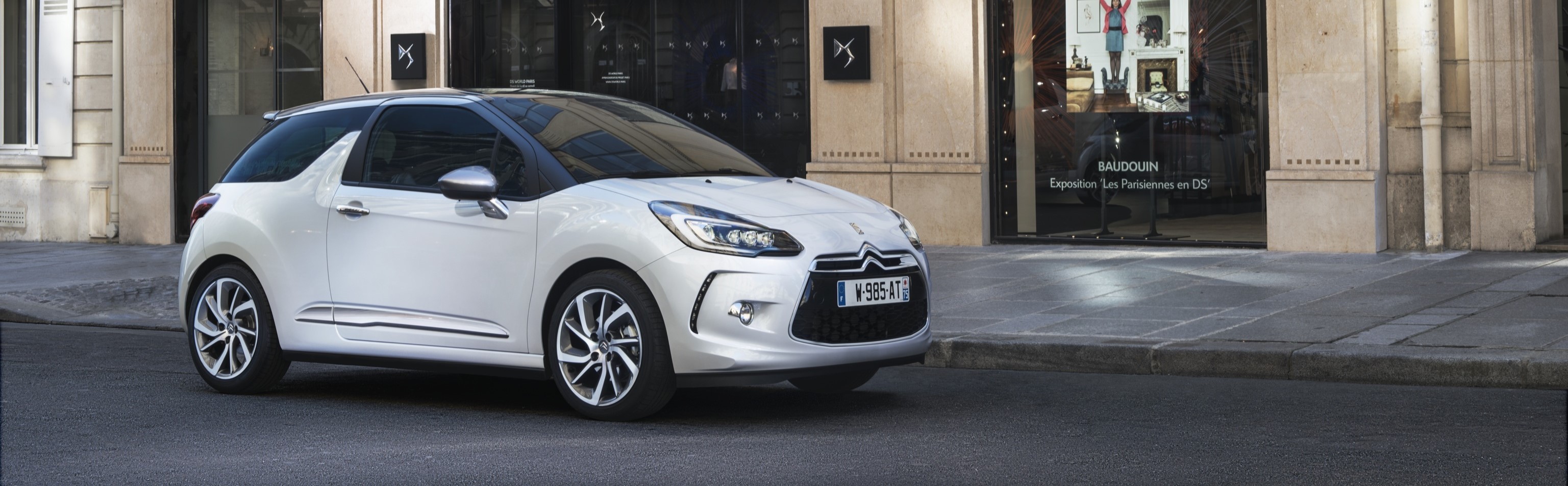
In 2016, PSA made the strategic decision to emancipate DS as an independent prestige brand. With this, the model underwent a profound facelift that removed the Citroën logos. The new "DS Wings" grille featured the prominent DS emblem, accompanied by new DS LED Vision headlights that combined Xenon and LED with sequential turn indicators.
In this phase, the version nomenclatures were changed to Chic, Elegance, and Prestige, aligning with the manufacturer's new luxury standards. The 130 hp 1.2 PureTech turbo engine became the balanced option, offering a torque of 230 Nm that gave the compact surprising agility for a low-displacement engine.
Meeting the global demand for SUVs, the second generation of the DS 3 abandoned the hatchback format to become a five-door crossover, named DS 3 Crossback. Built on the CMP (Common Modular Platform) platform, the Crossback brought technologies from higher segments, such as flush door handles that automatically emerge and a fully digital dashboard.
The DS 3 Crossback marked the brand's entry into full electrification with the E-Tense version. Equipped with a 136 hp (100 kW) electric motor and a 50 kWh battery, the model offered a range of about 320 km (WLTP). Fast charging allowed recovering 80% of the battery in just 30 minutes at 100 kW stations.
Table 3: Dimensions Comparison - Hatch (1st Generation) vs Crossback (2nd Generation)
| Measurement | DS 3 Hatch (2010) | DS 3 Crossback (2018) |
|---|---|---|
| Length | 3,948 mm | 4,118 mm |
| Width | 1,715 mm | 1,791 mm |
| Height | 1,458 mm | 1,534 mm |
| Wheelbase | 2,464 mm | 2,558 mm |
| Trunk Volume | 285 l | 350 l |
| Wheels (Standard) | 16" / 17" | 17" / 18" |
Source:
In late 2022, DS Automobiles carried out a mid-life update on the Crossback, simplifying the name back to just DS 3. The biggest technical news was the introduction of the Hybrid 136 powertrain, a 48V system that allows driving in electric mode in urban traffic jams and reduces fuel consumption by up to 15%. The interior was updated with the DS IRIS system, offering a user interface similar to smartphones and advanced connectivity.
The DS3's success can be measured by its longevity and sales volume, especially considering it competed in a high-value niche market. Total production of the first generation exceeded 400,000 units, with the majority manufactured at the Poissy plant in France.
Table 4: World Sales History (Units per Year)
| Year | World Sales (Hatch/Cabrio) | Market Context |
|---|---|---|
| 2009 | 500 | Pre-launch units |
| 2010 | 64,500 | Immediate success in Europe |
| 2011 | 78,375 | Sales peak in the model's history |
| 2012 | 68,248 | Launch in Brazil and Argentina |
| 2013 | 69,014 | Debut of the Cabrio model |
| 2014 | 57,042 | First Facelift (LED Vision) |
| 2015 | 48,698 | Transition to independent brand |
| 2016 | 40,653 | Official launch of the DS brand |
| 2017 | 28,971 | End of the first generation's cycle |
| 2018 | 16,187 | Start of the transition to the Crossback |
| 2019 | 5,049 | End of hatch production |
Source:
The British market was one of the strongest for the model, where the DS3 consistently outperformed the sales volume of Citroën's C1 and C3 models in certain periods. In France, the model even figured among the ten best-selling cars in the country in October 2010, a rare feat for a vehicle positioned as premium.
As part of the model's history, it is necessary to mention the massive recall that affected units produced between 2009 and 2019. Due to a flaw in the airbag inflators supplied by the Takata company, Stellantis issued a "stop driving" warning to hundreds of thousands of owners in Europe and other regions, including Brazil. It is estimated that 690,000 vehicles, between Citroën C3 and DS 3, were recalled for urgent component replacement to avoid the risk of projecting metal fragments in the event of a collision. This event marked the end of the first generation's trajectory with an unprecedented logistical challenge for the brand.
The Citroën DS3 (and later the DS 3) managed to fulfill its original mission of redefining French luxury in the contemporary automotive sector. It proved that emotional design and extreme personalization could sustain a premium brand in a market dominated by traditional manufacturers. From a World Rally Championship-winning car to a refined electric crossover, the DS3 served as the PSA Group's technological laboratory for innovations in suspension, turbo powertrains, and energy efficiency.
Today, first-generation units, especially those equipped with a manual transmission and a THP engine, are considered modern classics, maintaining a stable resale value due to their unique combination of style and performance. The evolution to the SUV format and full electrification in the second generation reflects the DS brand's adaptability to new environmental and consumer demands, ensuring that the "DS 3" name continues to be synonymous with distinction and vanguard in the global automotive industry.