
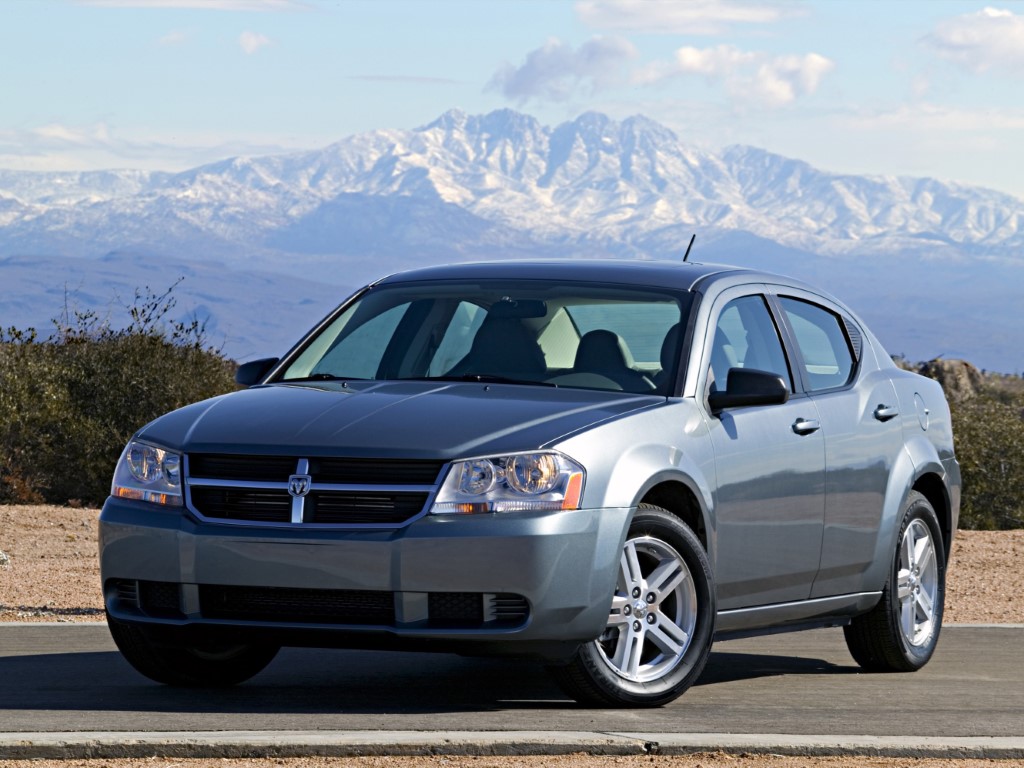
1st Generation
(2008 - 2010)
3.5 V6 24V
238 cv
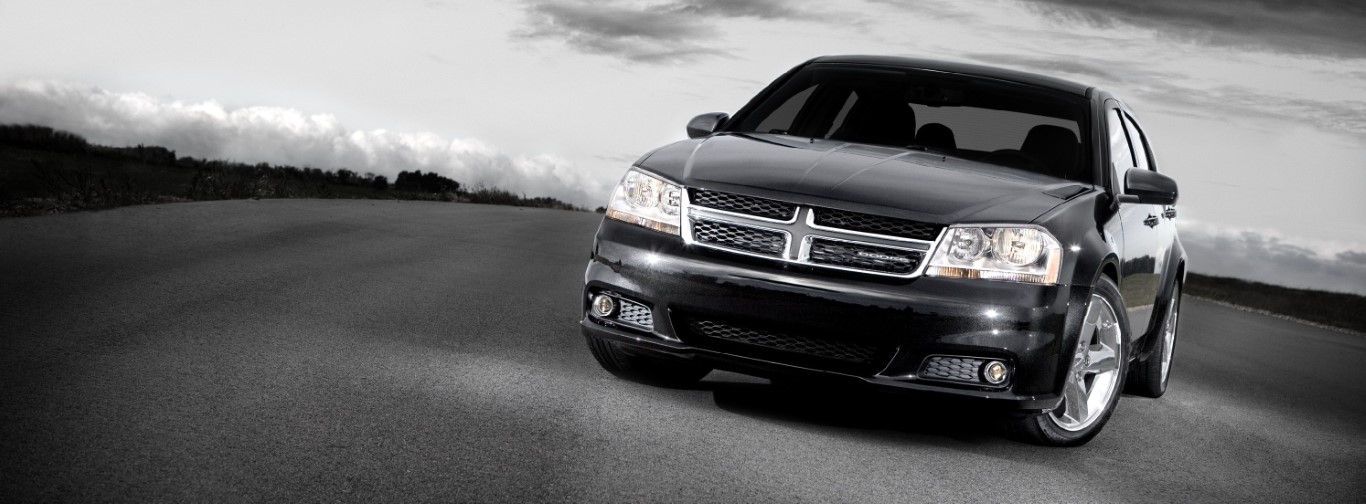
Technical specifications, versions, and history for the Dodge Avenger.
Select a generation to see available versions
(2008 - 2010)
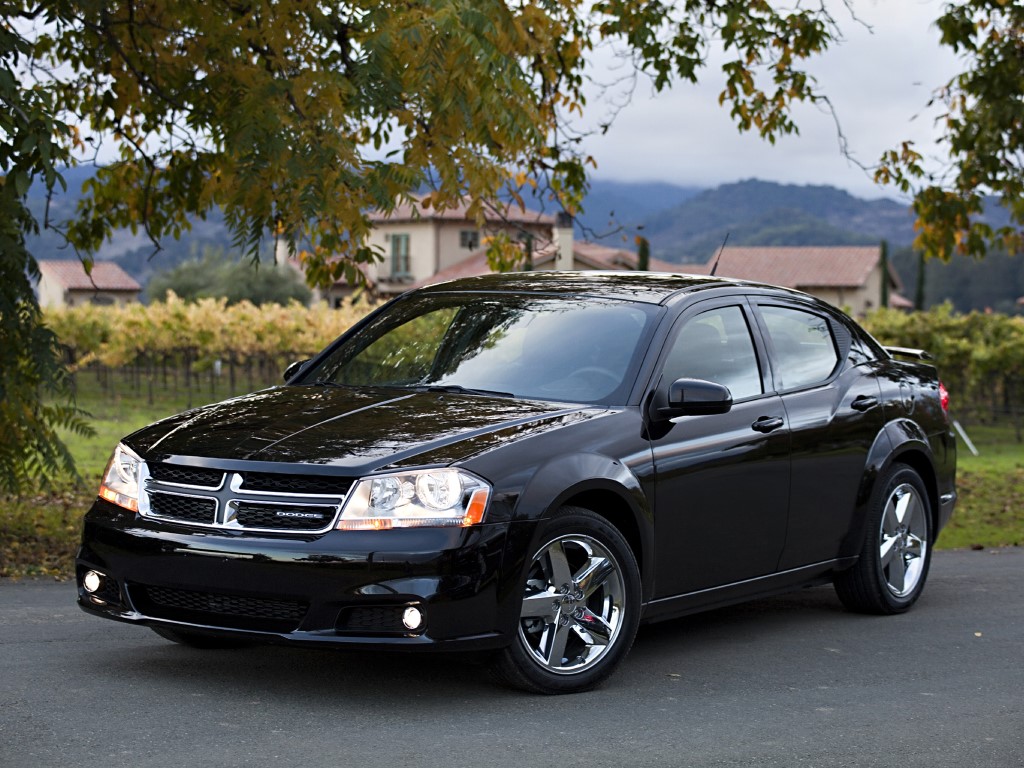
(2011 - 2014)
Select a powertrain to view full technical specifications
The trajectory of the Dodge Avenger in the global automotive scene is a fascinating example of how a brand can adapt a name to different purposes, platforms, and market demands over decades. The Avenger was not just born as a mid-size sedan in the 2000s; its lineage traces back to complex international collaborations, going through a sports coupe phase in the 90s until reaching its final form as a four-door sedan with a visual inspired by high-performance models. This analysis details each stage of this evolution, exploring the engineering decisions, design changes, and commercial performance of one of Dodge's most recognizable models.
Before becoming the sedan that cruised North American and European roads in the 21st century, the Avenger name had origins deeply linked to the British industry and emerging markets like Brazil and South Africa. The first use of the Dodge Avenger badge occurred in South Africa, between 1975 and 1976. It was a renamed version of the Hillman Avenger, an original project of the Rootes Group in the United Kingdom, which had been absorbed by Chrysler.
In the South African context, to comply with local content laws, the vehicle used a 1.6-liter Peugeot engine instead of the original British units. This connection with the Peugeot brand occurred because the engines were the same ones installed in the locally assembled Peugeot 404 at the time. This initial model did not share any mechanical basis with the Avengers that would later be developed in the United States, but it established the name as a practical and accessible mobility option within the Chrysler portfolio.
In the Brazilian market, the influence of this project was felt in an even more nostalgic way. The Dodge 1800, later renamed Dodge Polara and affectionately nicknamed "Dodginho", was essentially the British Hillman Avenger adapted for Brazil. Launched in 1973, the Polara represented Chrysler's attempt to offer a smaller and more economical car than the imposing Dodge Dart V8. With a four-cylinder engine and rear-wheel drive, the Polara lived until 1981, leaving a legacy of fondness among Brazilian enthusiasts, despite being technically very different from the front-wheel-drive sedan launched decades later.
The Avenger name returned to the North American market in 1994, as a 1995 model, but in a completely different format: a two-door coupe. This vehicle was the product of a strategic partnership between Chrysler and Mitsubishi, built on the FJ platform, which was a derivation of the base used in the Mitsubishi Galant and the Mitsubishi Eclipse of that generation.
The Dodge Avenger coupe was designed to replace the Dodge Daytona and offer a more refined and spacious alternative than the Dodge Stealth. At 4.83 meters long, the coupe was surprisingly large for its category, approaching the dimensions of contemporary mid-size sedans, but maintaining the two-door silhouette. The design followed Chrysler's "cab-forward" trend in the 90s, with rounded lines and a front grille positioned at the bottom of the bumper, inspired by the look of the Dodge Viper of the time.
Mechanically, the coupe offered two main engine options that reflected its Japanese-American hybrid nature. The entry-level engine was the 2.0-liter four-cylinder (Chrysler 420A), which produced 140 horsepower and 130 lb-ft of torque. This engine could be mated to a five-speed manual transmission or a four-speed automatic.
For those seeking more performance, there was the 2.5-liter V6 engine designed by Mitsubishi. Initially delivering 155 horsepower, this engine had its power increased to 163 horsepower in 1996. Interestingly, the V6 engine was only available with the four-speed Ultradrive A604 automatic transmission. The coupe featured a fully independent double wishbone suspension, which gave it superior handling for the category.
| Characteristic | Detail (Coupe 1995-2000) |
|---|---|
| Platform | Chrysler FJ (Mitsubishi Base) |
| Base Engine | 2.0L I4 DOHC (140 hp) |
| Optional Engine | 2.5L V6 SOHC (155-163 hp) |
| Wheelbase | 2,634 mm |
| Transmissions | 5-speed Manual / 4-speed Automatic |
The coupe went through several annual updates until its discontinuation in 2000. In 1997, for example, 16-inch wheels became standard and the bumpers were redesigned. In its final year, the four-cylinder engine was dropped, making the V6 and automatic transmission standard items on all units produced. Despite the sporty look, sales were modest, leading Dodge to replace the model with the Stratus Coupe in 2001.
After a seven-year hiatus, Dodge decided to revive the Avenger name in 2007 for the 2008 model year. This time, the mission was to replace the Dodge Stratus sedan and offer a robust competitor in the mid-size sedan segment (D-segment). The prelude to this launch occurred at the Paris Motor Show in September 2006, where Dodge presented the "Avenger Concept".
The concept, painted in Inferno Red, was a declaration of stylistic intentions. It broke with the idea that a functional mid-size sedan had to be visually boring. The design, penned by Ryan Nagode for the exterior, featured a muscular stance with high rear shoulders, a signature crosshair grille, and 19-inch wheels that filled the wheel arches well. The concept already suggested the inclusion of a 2.0-liter turbo diesel engine for markets outside North America, signaling the brand's global ambitions.
Experts at the time noted that the production Avenger would be virtually identical to the concept, sharing the platform and powertrains with the recently launched Chrysler Sebring. Dodge's strategy was to offer a "mini-Charger," attracting customers who admired the look of the brand's large sedan but needed a more affordable and efficient vehicle.
The 2008 Dodge Avenger sedan arrived at dealerships in February 2007, built on the Chrysler JS platform, an architecture developed jointly with Mitsubishi. This new Avenger was positioned as a sportier and more aggressive alternative compared to traditional sedans like the Chevrolet Malibu and the Ford Fusion.
The external look was its biggest asset. The influence of the Dodge Charger was evident in the curvature of the rear doors and the roofline, which gave the car an appearance of always being ready to sprint. The front was dominated by modern halogen headlights and the crosshair grille, while the rear sported wide taillights and, in some versions, a sporty spoiler.
Inside, designed by Ben S. Chang, the Avenger sought to offer features that made sense for the lifestyle of modern families. One of the highlights was the "Chill Zone" compartment, a refrigerated space above the glove box that used the vehicle's air conditioning system to keep up to four 12-oz (350 ml) cans cold.
Another innovation was the heated and cooled front cupholder, capable of keeping hot drinks up to 140 °F (60 °C) or cooling cold drinks down to 35 °F (1.6 °C). The "YES Essentials" seat fabric was another practical feature, being stain-resistant, odor-resistant, and anti-static, ideal for those transporting children. The instrument panel featured white electroluminescent lighting, providing clear reading and a sophisticated look at night.
Physical Specifications Table (2008 Sedan)
| Item | Dimension / Capacity |
|---|---|
| Total Length | 4,849 mm (190.9 inches) |
| Width (without mirrors) | 1,824 mm (71.8 inches) |
| Height | 1,496 mm (58.9 inches) |
| Wheelbase | 2,766 mm (108.9 inches) |
| Trunk Volume | 380 liters (13.4 cubic feet) |
| Curb Weight | Approx. 1,521 kg (3,355 lbs - SE I4) |
Data source:
During the first three years of production, the Avenger sedan offered a range of three engines in the United States, each catering to a different cost and performance profile.
The entry-level option, present in the SE and SXT versions, was the 2.4-liter four-cylinder engine from the GEMA (Global Engine Manufacturing Alliance) family. This engine, the result of cooperation between Chrysler, Mitsubishi, and Hyundai, used dual variable valve timing (VVT) to balance power and economy. Producing 173 horsepower and 166 lb-ft of torque, it allowed the Avenger to achieve up to 30 miles per gallon (mpg) on the highway, a competitive mark for the time. However, this engine was frequently criticized for being noisy and harsh under heavy acceleration, especially when mated to the four-speed automatic transmission that was standard on these versions.
The intermediate option for the SXT version was Chrysler's 2.7-liter V6 engine. With 189 horsepower, this powertrain offered a more linear and smoother power delivery than the four-cylinder. One of its great advantages was the Flex-Fuel technology, allowing the use of gasoline or E85 ethanol. Despite the extra refinement, its consumption was higher, and it was also limited by the four-speed automatic transmission.
The top-of-the-line R/T version received the 3.5-liter V6 engine, which delivered 235 horsepower and 232 lb-ft of torque. This engine was significantly more powerful and transformed the Avenger into a truly fast sedan, capable of making overtakes with ease. The technical differential of this version, besides the engine, was the six-speed automatic transmission with AutoStick function, which allowed manual shifts and offered closer gear ratios for more agile acceleration.
In 2008, the Avenger R/T could also be equipped with an on-demand all-wheel-drive (AWD) system, something rare in the affordable mid-size sedan segment. This system sent torque to the rear wheels only when necessary, such as during hard acceleration or on slippery surfaces, improving stability and traction. However, due to the additional weight and the impact on fuel consumption, the AWD version was discontinued after the 2008 model year.
The years 2009 and 2010 were years of adjustments for the Avenger, reflecting both customer feedback and Chrysler's turbulent financial situation prior to Fiat's intervention.
In 2009, Dodge simplified the model lineup, eliminating the base SE version and keeping only the SXT and R/T configurations. There was a greater focus on improving the cabin's acoustic comfort with the addition of new insulating materials. The SXT version now featured ABS brakes and fog lights as standard items, while the R/T received 18-inch chrome-clad wheels. Another aesthetic curiosity was the change in the position of the "AVENGER" badge on the trunk lid, which moved from the left side to the right side to accommodate the name "DODGE" on the left, standardizing the brand's visual identity.
In 2010, improvements focused on active and passive safety. The ABS braking system became standard on all models, as well as active head restraints for the driver and front passenger, designed to reduce injuries in rear-end collisions. On the mechanical front, the 2.7-liter V6 engine was dropped from the catalog, leaving the Avenger with only the 2.4-liter four-cylinder for the SXT model and the 3.5-liter for the R/T.
The year 2011 marked the most important moment in the life of the Dodge Avenger sedan. Under Fiat's new management, Chrysler made a massive investment to revitalize the model, correcting the main criticisms regarding the quality of the interior finish and mechanical refinement.
The exterior received modifications that, although not changing the sheet metal, gave the car a much more modern feel. The front grille was redesigned with the new Dodge logo (two slanted stripes) replacing the traditional ram's head, and the front bumper gained a more aggressive lower air intake with a honeycomb texture. At the rear, the introduction of LED taillights with a "Ring of Fire" design created an unmistakable visual signature at night.
The highlight of the 2011 facelift was the interior. The old instrument panel, dominated by hard plastics, was replaced by a completely new unit, made with soft-touch materials and premium trim details. The new seats gained denser foams and better upholstery, significantly increasing comfort on long trips.
To make the cabin one of the quietest in the segment, engineers applied 45 new treatments for noise, vibration, and harshness (NVH) reduction. This included the installation of an acoustic windshield, laminated side glass, and new engine mounts to isolate vibrations from the four-cylinder powertrain.
Dodge's engineering wasn't limited to aesthetics. Virtually all suspension components were revised. Of the vehicle's 30 suspension bushings, 26 were redesigned or recalibrated to offer a more precise steering response and reduce body roll in corners. The vehicle's track was widened by one inch, and the width of the standard tires increased from 215 mm to 225 mm, providing greater grip. Furthermore, the ride height was lowered by 12 mm at the front and 6 mm at the rear, giving the Avenger a more planted and sporty stance.
The biggest mechanical innovation of the facelift was the introduction of the 3.6-liter Pentastar V6 engine, which replaced the old 2.7 and 3.5-liter engines. This engine was an engineering marvel for its time, featuring an aluminum block, dual variable valve timing, and a much lighter and more efficient construction.
With 283 horsepower and 260 lb-ft of torque, the Avenger equipped with the Pentastar engine became the most powerful mid-size sedan in its category. Mated exclusively to the 62TE six-speed automatic transmission, the Avenger could now accelerate from 0 to 100 km/h in considerably less time, maintaining a commendable fuel economy of up to 29 mpg on highways.
Many automotive critics noted that the Pentastar engine finally gave the Avenger the performance that its aggressive looks had always promised. However, with so much power to the front wheels, the car could exhibit the phenomenon of "torque steer", where the steering tends to pull to one side under maximum acceleration.
Engine Comparison Table (Post-2011)
| Engine | Power | Torque | Transmission |
|---|---|---|---|
| 2.4L I4 World Gas | 173 hp | 166 lb-ft | 4 or 6-speed Automatic |
| 3.6L V6 Pentastar | 283 hp | 260 lb-ft | 6-speed Automatic |
Note: The 4-speed transmission remained restricted to fleet versions or base SE models in some markets.
Between 2012 and 2014, Dodge focused on appearance packages to keep the model attractive while the development of its successor (Dodge Dart) and consolidation with the Chrysler 200 took place. The version nomenclatures temporarily changed in 2011 to names like Express, Mainstreet, Lux, and Heat, but soon returned to the traditional SE, SXT, and R/T.
In 2012, the R/T version returned with a total focus on performance. Engineers increased roll stiffness by 18% and spring rates by 17% in the front and 12% in the rear. The shock absorbers were also stiffened to provide a "spirited sports sedan" experience. Aesthetically, the R/T stood out with a body-color grille, "war paint" decals on the fenders, and exclusive 18-inch wheels with a darkened finish. The interior featured leather and fabric seats with red stitching and a center-mounted tachometer to reinforce its sporty vocation.
The "Blacktop Edition", launched in 2013, was a response to the trend of factory visual customization. Based on the SXT version, it added 18-inch wheels painted in Gloss Black, a black front grille, darkened headlight bezels, and a body-color rear spoiler. For a low additional cost, it offered a customized look that was very popular among younger buyers.
The "Rallye Appearance Group" package was similar, available for the SE and SXT versions, and included 18-inch aluminum wheels, a body-color grille, and darkened headlights, but without the total focus on the black finish of the Blacktop.
The Dodge Avenger was a global product, sold in several European markets and in Australia. For these markets, Dodge had to adapt the engine lineup to meet local preferences for fuel economy and displacement-based taxes.
In Europe, the Avenger was offered with a 2.0-liter turbo diesel (CRD) engine supplied by Volkswagen. This engine was of the "Pumpe-Düse" (Unit Injector) type and produced 140 horsepower and 310 Nm of torque. This setup was particularly attractive to fleets and long-distance drivers due to its low consumption, being able to achieve averages of up to 16 km/l in the combined cycle.
This engine could be mated to a six-speed manual transmission from Aisin or an advanced six-speed dual-clutch transmission supplied by Getrag, offering quick and efficient shifts.
In some countries, there was also a 2.0-liter gasoline version of the World Engine. With 156 horsepower, it served as the entry-level option outside North America, almost always accompanied by a five-speed manual transmission. This configuration was focused purely on cost and urban efficiency, losing the vigorous performance of the American models but maintaining the brand's distinctive look.
| Specification (2.0 CRD Diesel) | Detail |
|---|---|
| Maximum Power | 140 PS (138 hp) @ 4000 rpm |
| Maximum Torque | 310 Nm @ 1750 rpm |
| Top Speed | 200 km/h |
| 0-100 km/h Acceleration | 10.5 to 11.8 seconds |
| Average Consumption | 6.2 liters / 100 km |
Diesel data source:
Safety was an area where the Dodge Avenger demonstrated constant evolution. The vehicle's structure was designed with a high-strength safety cage, complemented by front and rear crumple zones.
Since its launch in 2008, the Avenger had been equipped as standard with multi-stage front airbags, curtain-type side airbags for both rows, and side airbags mounted in the front seats. Features like the "Enhanced Accident Response System" (EARS) were standard, making the job of rescue teams easier by automatically turning on interior lights and unlocking the doors after airbag deployment.
The Avenger achieved impressive results in the IIHS (Insurance Institute for Highway Safety) tests. It was rated "Good" in moderate overlap front impact, side impact, and roof strength tests. In fact, its roof structure was capable of supporting 4.43 times the vehicle's own weight, a mark much higher than required by law.
In 2013, the model received the prestigious "Top Safety Pick+" award from the IIHS. In the US government's (NHTSA) tests, the 2014 Avenger maintained an overall four-star rating, with good performance in frontal and side impacts. A notable point was its performance in the rigorous "small overlap front" test, where it scored an "Acceptable" rating, which was considered positive for a platform design that predated the creation of this specific test.
Although the Avenger faced criticism from the specialized media for its initial refinement, the consumer market responded positively to its style and value. Production was concentrated at the Sterling Heights Assembly Plant in Michigan, United States.
Sales data reveal that the Avenger had a resilient performance, with a surprising peak in sales in 2012, five years after its initial launch, which is unusual in the automotive industry and attests to the success of the improvements made in 2011.
Annual Sales by Region (Consolidated Data)
| Year | US Sales | Canada Sales | Mexico Sales | Total (North America) |
|---|---|---|---|---|
| 2007 | 84,404 | 7,067 | 8,091 | 99,562 |
| 2008 | 61,963 | 7,873 | 8,525 | 78,361 |
| 2009 | 38,922 | 5,533 | 3,592 | 48,047 |
| 2010 | 50,989 | 3,495 | 3,690 | 58,174 |
| 2011 | 64,023 | 4,680 | 4,147 | 72,850 |
| 2012 | 96,890 | 4,858 | 3,748 | 105,496 |
| 2013 | 93,242 | 7,631 | 3,119 | 103,992 |
| 2014 | 51,705 | 488 | 631 | 52,824 |
| 2015+ | 1,314 | 8 | 35 | 1,357 |
| TOTAL | 543,452 | 41,633 | 35,578 | 620,663 |
Note: Sales after 2014 refer to inventory units sold as the previous model year.
The Avenger's success in the United States was driven by its price competitiveness, frequently being the most powerful mid-size sedan for the lowest cost. In addition to direct consumer sales, the model was a popular choice for rental fleets and government agencies, especially in Mexico, where it was commonly used as a police cruiser due to its robustness and ease of maintenance.
Production of the Dodge Avenger came to an end at the close of the 2014 model year. This decision was part of a larger strategy by Fiat Chrysler Automobiles (FCA) to avoid model overlap. The group decided to focus the mid-size sedan segment on the new generation of the Chrysler 200 (launched in 2015), which used a much more modern and technological platform.
For the Dodge brand, the Avenger's departure meant a shift in focus. The brand received the Dodge Dart, a more technological and efficient, albeit smaller, compact-midsize sedan. Those seeking the experience of a larger, muscular Dodge sedan were directed to the Dodge Charger, which continued in production as the brand's flagship.
The Dodge Avenger sedan will be remembered as a car of extremes. It started as a bold attempt to bring "muscle car" design to the masses in 2008, but suffered from the lack of interior refinement typical of Chrysler's pre-crisis era. However, its 2011 transformation is one of the most notable success stories in the industry, where a well-executed facelift and the introduction of a world-class engine (the Pentastar V6) extended the car's life and made it a legitimate competitor until its very last day.
Mechanically, the Avenger proved to be a reliable vehicle if properly maintained. The 2.4-liter World Engine, although noisy, is known for its simplicity and durability. The 3.6-liter Pentastar V6, on the other hand, became a legend within the Chrysler group, powering everything from Jeeps to minivans for over a decade due to its excellent power-to-efficiency ratio.
Culturally, the Avenger fulfilled its role of offering "pizzazz" (style and excitement) to a segment that often prioritizes only the rational. Whether through its curious innovations like the "Chill Zone," its aggressive Charger-inspired looks, or its Blacktop special editions, the Avenger left its mark as a sedan that wasn't afraid to look mean, even when its primary function was taking the kids to school or serving as a reliable companion on the daily commute to work.
At the end of its journey, with over 600,000 units sold in North America alone, the Avenger was not just a "Stratus successor"; it was the vehicle that helped Dodge maintain its brand identity focused on performance and attitude during one of the most challenging periods in the history of the American automotive industry.
Images of the Dodge Avenger