
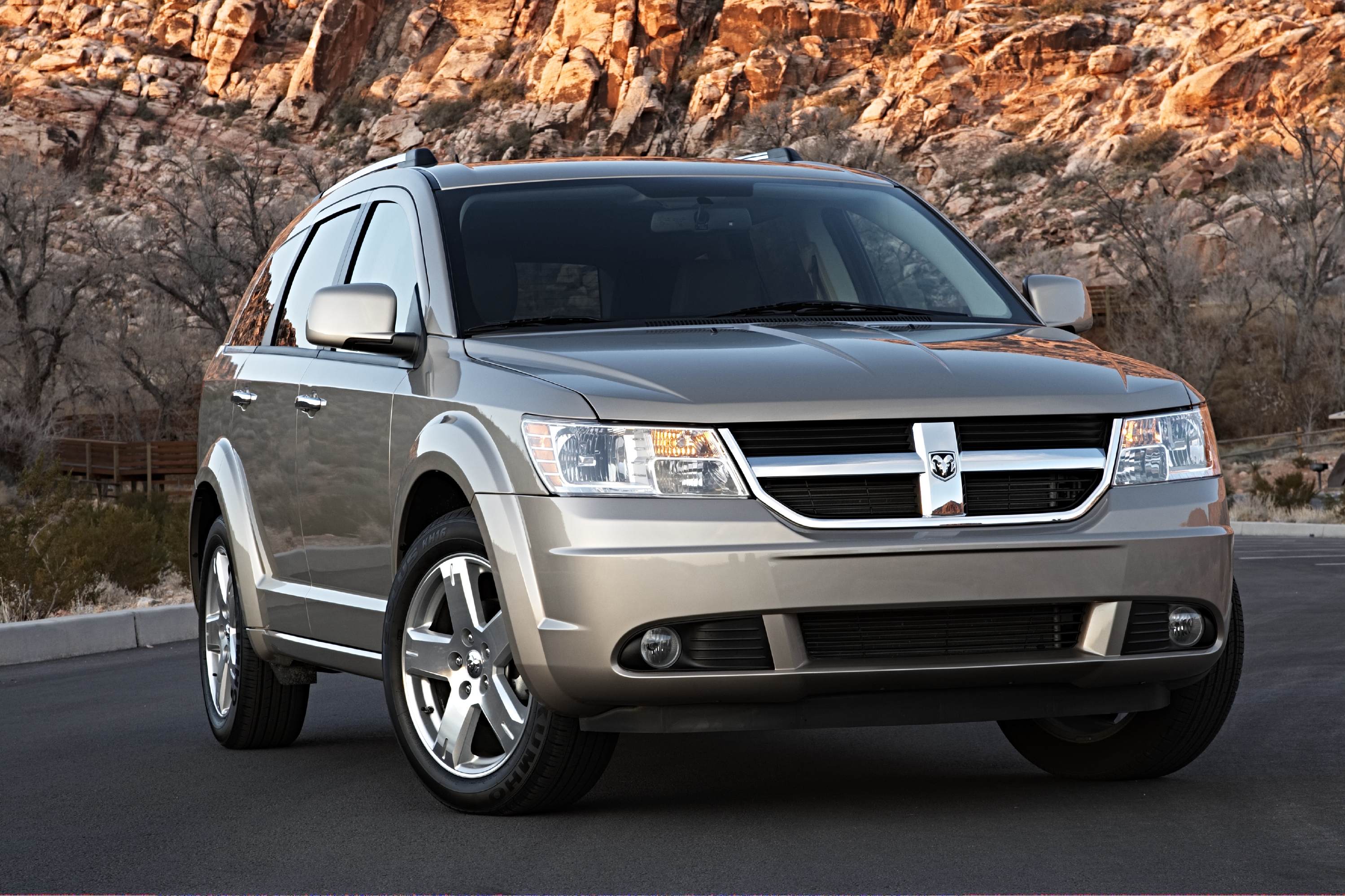
1st Generation
(2009 - 2010)
3.5 V6 24V
235 cv
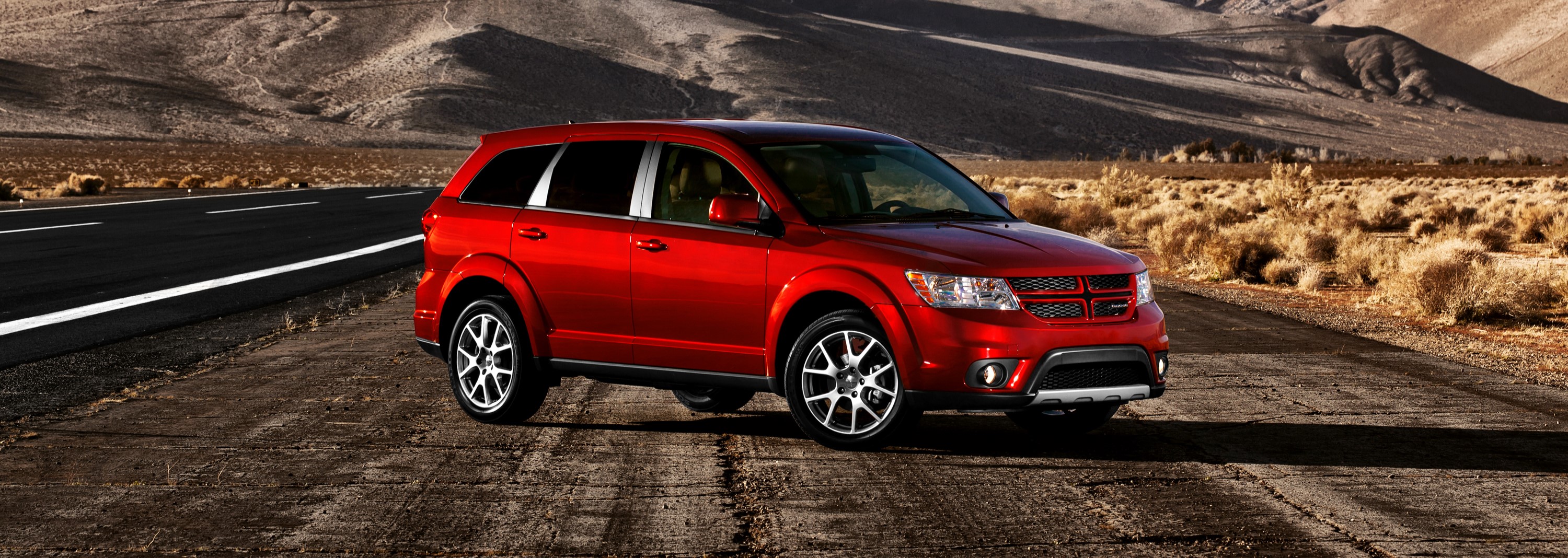
Technical specifications, versions, and history for the Dodge Journey.
Select a generation to see available versions
(2009 - 2010)
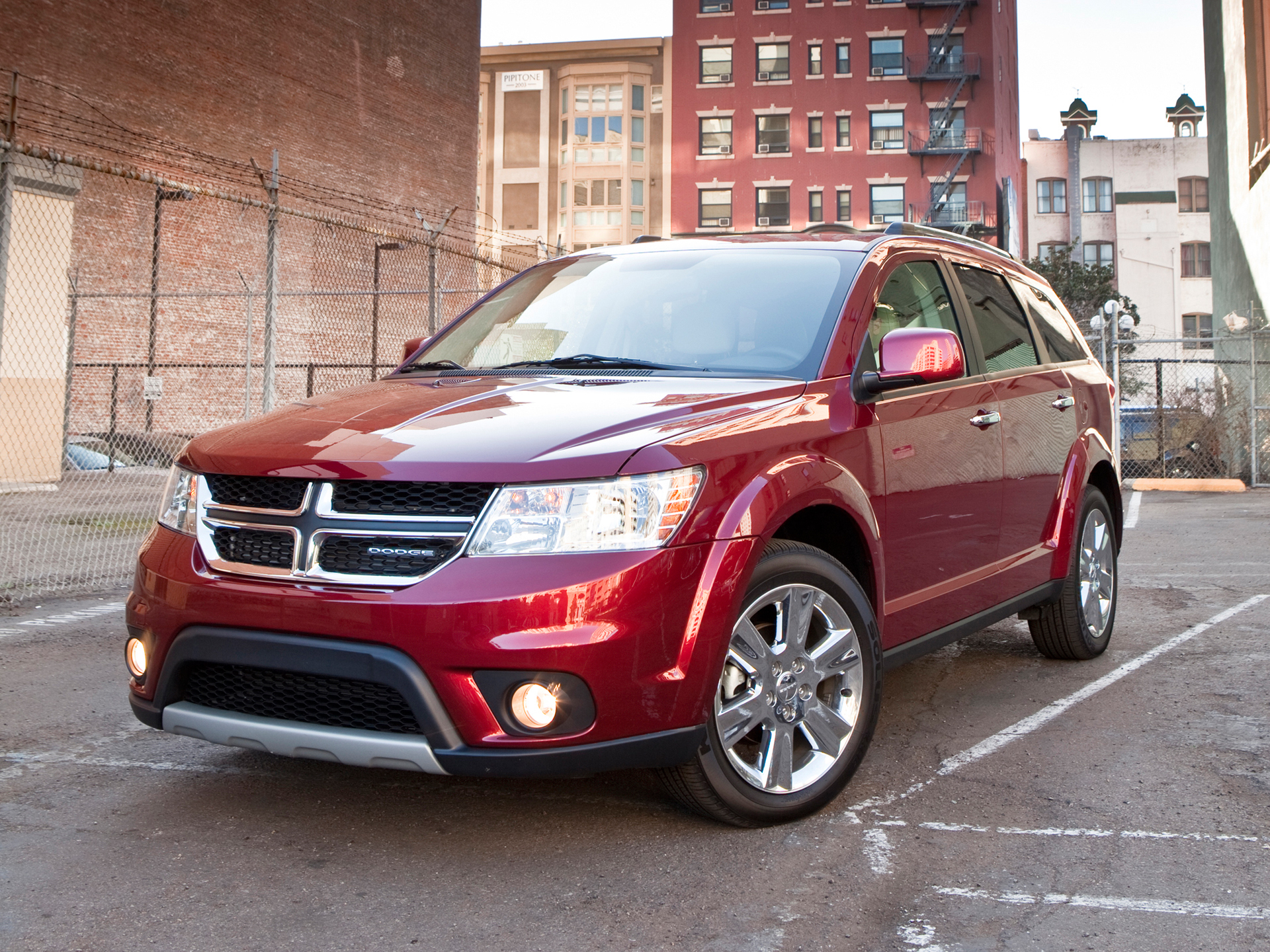
(2011 - 2020)
Select a powertrain to view full technical specifications
The trajectory of the Dodge Journey in the global automotive market is a remarkable example of how a well-conceived project can maintain its relevance over more than a decade, even while facing drastic changes in the structure of its manufacturing company. Originally launched in late 2007 as a 2009 model, the Journey was Chrysler's answer to the growing demand for vehicles that could offer the utility of a minivan with the aesthetics and size of a sport utility vehicle (SUV). Identified internally by the code JC49, the model used Chrysler's global D-segment platform, an architecture that also served as the basis for sedans like the Dodge Avenger and the Chrysler 200, which gave it a more refined dynamic behavior than SUVs based on truck chassis. Throughout its production, which extended until 2020 in its first generation, the Journey reached the mark of over 1.1 million units manufactured, consolidating itself as one of the sales pillars of the Dodge brand and a fundamental piece in the integration between the American group and the Italian Fiat.
The development of the Dodge Journey occurred during a transitional period for Chrysler, which was looking to replace models like the short-wheelbase Caravan minivan and the Pacifica crossover with something more modern and efficient. The design was penned by Ryan Nagode, who sought to create a vehicle with the "right proportions" for urban family use, but with a robust visual presence. The JC platform was an evolution of the GS platform, developed in partnership with Mitsubishi, which allowed the use of four-wheel independent suspension, an important differential for ride comfort compared to competitors that still used solid rear axles.
Dodge's strategy with the Journey was clear: offer the maximum number of seats for the lowest possible price. It quickly became the most affordable seven-seater vehicle in the North American market, a position it defended for almost its entire life cycle. To achieve this goal, engineering focused on internal modularity, creating storage solutions that would become iconic, such as the in-floor storage bins in the second row, which could be used to store items or even ice and drinks, thanks to the removable and washable liners.
The Journey was designed to be large enough to accommodate seven adults, but compact enough to fit in standard residential garages. Its architecture prioritized the wheelbase to maximize legroom across all three rows of seats.
| Structural Characteristic | Measurement in Millimeters | Measurement in Inches |
|---|---|---|
| Wheelbase | 2,890 mm | 113.8 in |
| Overall length | 4,887 mm | 192.4 in |
| Overall width (without mirrors) | 1,834 mm | 72.2 in |
| Overall height (standard version) | 1,692 mm | 66.6 in |
| Overall height (R/T version) | 1,765 mm | 69.5 in |
| Ground clearance | 183 mm | 7.2 in |
| Front track | 1,571 mm | 61.8 in |
| Rear track | 1,582 mm | 62.3 in |
The first generation of the Journey arrived at dealerships with a variety of engines that reflected the diversity of markets where it would be sold. In North America, the model debuted with the 2.4-liter four-cylinder "World Engine" as the entry-level option and V6 engines for the higher trims. The exterior design was well-received, featuring Dodge's characteristic "crosshair" front grille, but the interior was the target of severe criticism from the specialized press and consumers due to the extensive use of hard plastics and a design considered rectangular and unsophisticated.
Mechanically, the early Journey offered front-wheel drive (FWD) as standard and all-wheel drive (AWD) as an option on versions equipped with V6 engines. The four-speed automatic transmission that accompanied the 2.4 engine was considered obsolete even for its time, while the V6 versions used a more modern six-speed gearbox.
During the first two years, the Journey had a range of engines that varied drastically by region, including diesel options for the European and Asian markets.
| Engine | Displacement | Power | Torque | Main Markets |
|---|---|---|---|---|
| 2.4L World I4 | 2,360 cc | 173 hp | 225 Nm | Global |
| 2.7L LH V6 | 2,736 cc | 185 hp | 256 Nm | International |
| 3.5L EGF V6 | 3,518 cc | 235 hp | 315 Nm | North America |
| 2.0L VW TDI | 1,968 cc | 140 hp | 310 Nm | Europe / Asia |
The 2.7-liter V6 engine was a unit inherited from the DaimlerChrysler era, known for being smooth but less powerful than the 3.5-liter, which was the brand's workhorse in the United States. The 2.0-liter diesel engine was supplied by Volkswagen and used the unit injector (Pumpe-Düse) system, being replaced later by more modern units from Fiat.
The year 2011 was the most important point in the Dodge Journey's chronology. Following the acquisition of Chrysler by the Fiat Group, the new CEO Sergio Marchionne ordered a complete renewal of almost all products in the lineup. The Journey received what the industry calls a "major overhaul". The most drastic change occurred in the interior: the rectangular and simplistic dashboard was replaced by a sculpted single piece, with soft-touch materials and a vastly superior finish.
In addition to the new internal look, Dodge introduced the 3.6-liter Pentastar V6 engine, which replaced both the old 2.7 and the 3.5. This new engine delivered 283 horsepower, a 20% increase in power, transforming the Journey into one of the most powerful crossovers in its category. The suspension was entirely recalibrated, with changes to the geometry and shock absorbers to reduce body roll in corners and improve comfort on uneven roads.
As a result of the merger between the companies, Fiat needed a seven-seater SUV to replace the Ulysse minivan and the Croma sedan in Europe. The solution was to "rebadge" the Dodge Journey as the Fiat Freemont. The Freemont was launched in 2011 with specific modifications for the European market, including an even firmer suspension to handle the region's winding roads and MultiJet II diesel engines developed by Fiat.
In Brazil, the Fiat Freemont arrived in 2011 equipped with the 2.4-liter four-cylinder engine. Interestingly, Fiat sold the Freemont in its dealerships, while the Dodge Journey continued to be sold in Chrysler/Dodge stores, but equipped exclusively with the 3.6 V6 Pentastar engine and all-wheel drive (AWD) in the R/T version. This strategy allowed the two brands to compete in different price ranges with the same vehicle: the Freemont focused on cost-benefit and the Journey on performance and luxury.
Although they were visually identical except for the grilles and logos, the Freemont and the Journey had distinct personalities due to mechanical adjustments and engines.
| Specification | Fiat Freemont (Brazil) | Dodge Journey (Brazil) |
|---|---|---|
| Main Engine | 2.4L 16V I4 | 3.6L V6 Pentastar |
| Power | 172 hp | 280-283 hp |
| Torque | 22.4 kgfm | 34.9 kgfm |
| Transmission | 6-speed Auto (after 2013) | 6-speed Auto |
| Acceleration (0-100 km/h) | 12.4 seconds | 8.9 seconds |
| Top Speed | 190 km/h | 208 km/h |
| Suspension Tuning | Soft / Comfort | Firm / Sporty |
From 2012 onwards, Dodge focused on simplifying the Journey lineup while introducing styling packages to maintain public interest. The model became a resilient sales success, despite its aging platform.
What kept the Dodge Journey selling well for 12 years was its incredible internal flexibility. It was designed from the inside out, prioritizing the needs of a family with children. The "Stadium" seating system ensured that rear passengers had a clear view of the road, while the rear doors that opened 90 degrees made getting in and out, as well as installing child seats, enormously easier.
Among the most praised features were the integrated child booster seats, options that could be pulled up directly from the base of the second-row seat, eliminating the need to carry separate child seats. In addition, the "Flip-N-Stow" system allowed the front passenger seat to be folded completely forward to carry long objects, also revealing a hidden storage bin under the seat cushion.
| Seating Configuration | Cargo Volume (Liters) | Cargo Volume (Cubic Feet) |
|---|---|---|
| With all 3 rows in use | 303 L | 10.7 cu ft |
| With the 3rd row folded | 1,047 L | 37.0 cu ft |
| With 2nd and 3rd rows folded | 1,914 L | 67.6 cu ft |
The vehicle featured over 40 available safety and convenience features, including a rechargeable flashlight built into the trunk in some model years, and USB ports and 115V outlets to charge electronic devices during trips.
The safety of the Dodge Journey is a subject of intense debate. When it was launched, it featured advanced technologies for the time, such as side curtain airbags covering all three rows, front seat side airbags, and active head restraints. It received four stars in NHTSA frontal crash tests and five stars in side impact tests.
However, as safety standards evolved, the Journey began to show the age of its design. In tests by the IIHS (Insurance Institute for Highway Safety), it received the maximum "Good" rating in almost all traditional categories, but failed the small overlap frontal test, receiving a "Poor" rating. This was because the original structure had not been designed to deflect energy from collisions that strike only the edge of the vehicle.
| IIHS Rating (2009-2020) | Result |
|---|---|
| Moderate Overlap Front | Good |
| Side Impact | Good |
| Roof Strength | Good |
| Head Restraints & Seats | Good |
| Small Overlap Front (Driver) | Poor |
| LATCH (Child Seat) Ease of Use | Marginal |
The Dodge Journey was produced exclusively at the Toluca plant in Mexico. This location was strategic for Chrysler and later for FCA, as it allowed exporting the vehicle to the United States, Canada, Latin America, and Europe by taking advantage of various free trade agreements. By the end of its production in 2020, over 1.1 million Journey units had rolled off that assembly line.
Sales figures in the United States show that the Journey peaked in popularity between 2015 and 2016, proving that the 2011 facelift and the aggressive pricing strategy were extremely effective in keeping the model competitive against newer rivals like the Toyota Highlander and Honda Pilot.
| Year | US Sales | Canada Sales | Mexico Sales |
|---|---|---|---|
| 2008 | 47,097 | 11,817 | 12,831 |
| 2010 | 48,577 | 23,785 | 13,063 |
| 2012 | 79,563 | 28,888 | 13,034 |
| 2014 | 93,572 | 24,715 | 11,688 |
| 2016 | 106,759 | 16,883 | 7,698 |
| 2018 | 94,096 | 5,777 | 2,828 |
| 2020 | 40,341 | 420 | 615 |
Success in Mexico was particularly strong, where the Journey became Dodge's best-selling model for many years, which justifies the brand's decision to keep the name alive in that market with a totally different new generation.
Although the original Journey was discontinued in the North American market (US and Canada) after 2020, the name did not die. In 2022, Dodge launched the second generation of the Journey in Mexico, but this one is based on an entirely new vehicle, the result of a partnership with the Chinese manufacturer GAC Motor. This new model is a "rebadged" version of the Chinese GAC Trumpchi GS5 SUV.
Unlike the original, the new Journey is a five-seater SUV with two rows of seats. It focuses on a much more aerodynamic and sporty design, with state-of-the-art technology and smaller, more efficient turbocharged engines. Dodge integrated its own visual elements, such as the black front grille and the rear LED light bar, to align the Chinese look with the brand's American identity.
The Pentastar V6 engine gave way to a 1.5 Turbo unit, reflecting the global trend of downsizing to improve fuel economy without losing performance.
| Component | Technical Detail |
|---|---|
| Engine | 1.5L Turbo 4-cylinder GDI |
| Power | 169 hp (or 156 hp in some versions) |
| Torque | 264 Nm (195 lb-ft) |
| Transmission | 6-speed Automatic (Aisin) |
| Front Suspension | Independent McPherson |
| Rear Suspension | Independent Multi-link |
| Wheels | 18 or 19-inch aluminum |
This new generation is sold in Mexico in the SXT, Sport, and GT Plus versions, bringing items like a 12.3-inch digital dashboard, panoramic sunroof, 360-degree cameras, and driver assistance systems that the old model never had. Production of this new Journey takes place in China, but it was designed to be Dodge's primary SUV in several Latin American markets, including Chile, Colombia, and Peru.
In Brazil, the Journey's history is inseparable from that of the Fiat Freemont. Fiat dominated sales with the 2.4 version, reaching its peak in 2014 with about 2,970 registered units. However, with the economic downturn and the arrival of new competitors, sales began to fall from 2015 onwards, leading to the discontinuation of the Freemont in the country in 2016.
The Dodge Journey, on the other hand, remained a niche item for those who insisted on the V6 engine. It was highly appreciated for its characteristic roar and acceleration capability, reaching 100 km/h in less than 8 seconds, an impressive performance for a vehicle weighing nearly two tons. The AWD (all-wheel drive) version sold in Brazil provided superior stability on rainy days, correcting one of the weak points of the front-wheel-drive versions, which used to spin the wheels under hard acceleration due to the high torque of the V6 engine.
Over the years, the 2.4 engine used in the Freemont and the entry-level Journey underwent improvements. Initially mated to a four-speed gearbox, it received a six-speed transmission in 2013, which significantly improved fuel economy and reduced noise at highway speeds. The 3.6-liter Pentastar V6 engine, introduced in the Journey in 2011, was considered one of the best engines of its time, winning several international awards for its efficiency and smooth operation.
The Dodge Journey ended its first phase as one of the longest-lived vehicles in Chrysler's recent history. It survived three different owners of the company (Daimler, Cerberus, and Fiat) and proved to be an extremely resilient design. Its legacy is that of a car that did not try to be overly luxurious or innovative, but delivered exactly what families needed: space, practicality, and a fair price.
Although the first generation was discontinued due to the aging of its platform and Dodge's new performance priorities, the Journey paved the way for Stellantis to explore global partnerships, such as the one that resulted in the new generation produced by GAC. For owners, it remains a popular choice in the used market, valued for its unbeatable interior space and mechanical robustness, especially in versions equipped with the Pentastar V6 engine.
The Journey's trajectory demonstrates that, in the automotive world, functionality often outweighs technological novelty. With simple storage solutions and smart seating configuration, it became the home of millions of family trips around the world, leaving its mark as the crossover that democratized seven seats for the global middle class.
Images of the Dodge Journey