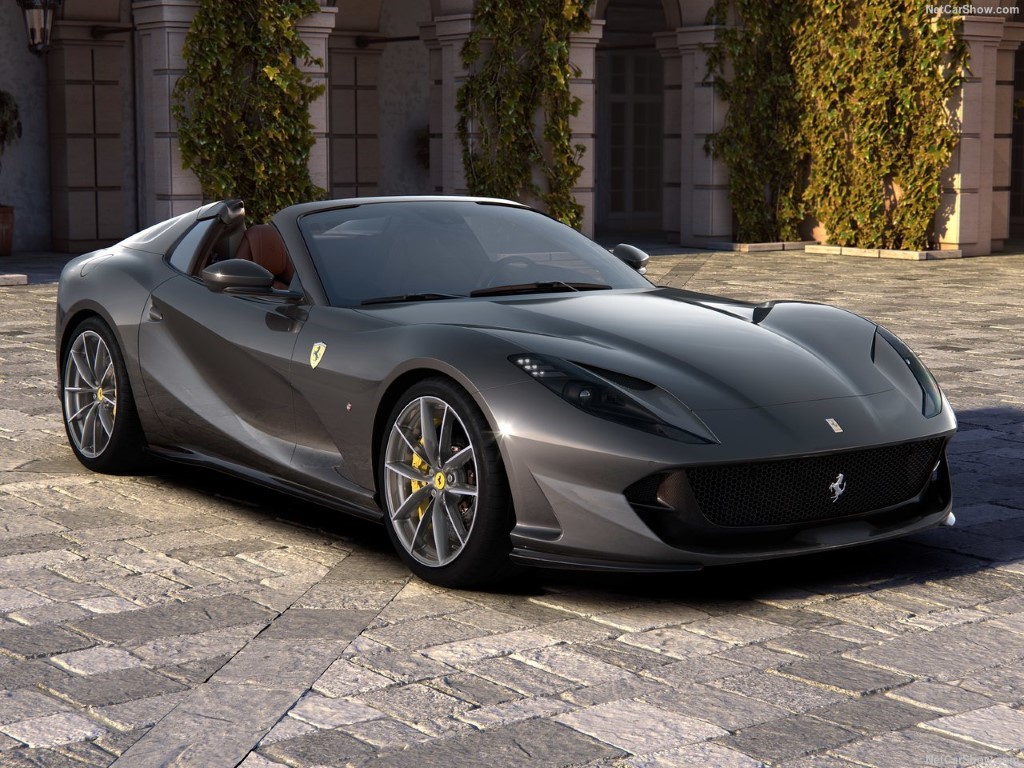
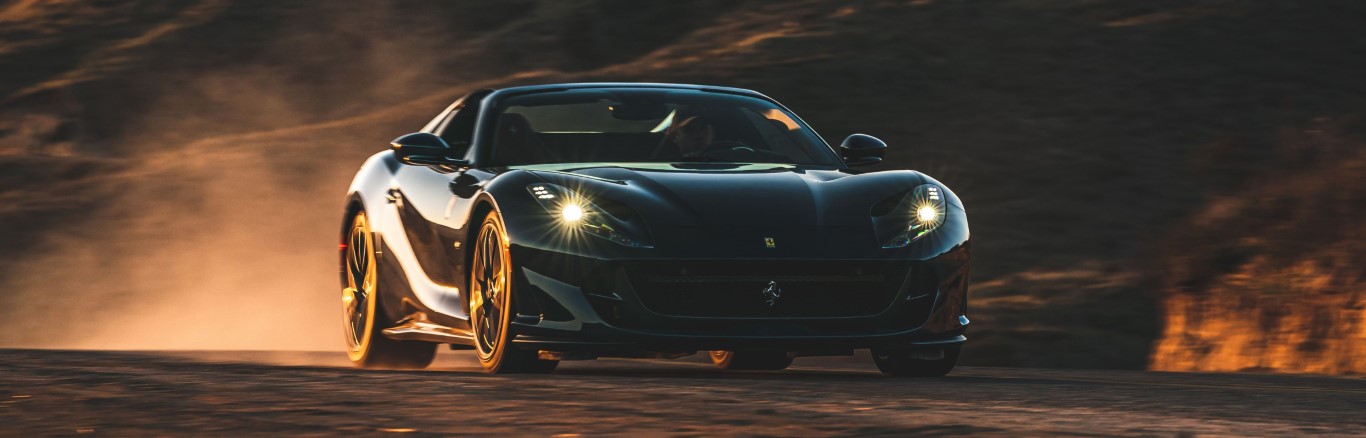
The 812 Superfast was designed with a clear goal: to set a new standard for
front-engine sports cars, combining overwhelming performance with the ability to
be a
comfortable car for long journeys.
The Heart of the Beast: The F140 GA Engine
At the center of the 812 Superfast is an engineering masterpiece: the 65-degree V12 engine,
code
F140 GA. It is a direct evolution of the F12berlinetta's engine, with its displacement
increased from
6.3 to 6.5 liters (specifically 6496 cc). The result is a maximum output of 800
hp (588
kW) delivered at 8,500 rpm and a torque of 718 Nm at 7,000 rpm. At the time of its
launch, this
was the most powerful naturally aspirated engine ever installed in a series-production car, a
remarkable feat
that dispensed with the use of turbo or hybrid technology.
The specific output of 123 hp per liter was an unprecedented figure for a
front engine
in a production car. However, Ferrari did not focus solely on peak numbers. To
ensure
that the car was usable on a daily basis, engineers made sure that 80% of the maximum
torque
was available at just 3,500 rpm, providing vigorous acceleration and
flexibility
at lower revs. The engine's ability to rev up to a maximum limit of 8,900
rpm, with
a power curve that rises constantly, offers the driver a feeling of
limitless acceleration.
Performance and Vehicle Dynamics: Technology in the Service of Speed
The performance figures of the 812 Superfast are impressive: 0 to 100 km/h acceleration
in 2.9
seconds, 0 to 200 km/h in 7.9 seconds, and a claimed top speed of 340 km/h.
To
manage this power and ensure perfect weight distribution (47% at the front and
53% at the
rear), the car uses a transaxle architecture, with the engine in the front and the
transmission
mounted at the rear.
The 812 Superfast introduced two crucial technologies that represented a turning
point for
Ferrari. The first was the adoption of Electric Power Steering (EPS), a
premiere for the
brand. Although purists traditionally prefer hydraulic steering, Ferrari
integrated the EPS
into all of the vehicle's dynamic control systems to fully exploit the car's
performance
potential.
The second innovation was the Virtual Short Wheelbase 2.0 (PCV) system. Inherited from the experience
with the F12tdf, this system combines front
steering assistance
with rear-wheel steering. At low speeds, the
rear wheels
turn in the opposite direction of the front ones, making the car more agile, as if it
had a
shorter wheelbase. At high speeds, they turn in the same direction,
increasing
stability. The introduction of these technologies was not just to make the car
easier to
drive, but it was framed as a tool to enhance performance, allowing a
driver to explore the limits of an 800 hp car with more confidence. This solidified
a new
philosophy for the brand's V12s, where maximum performance is achieved through a
complex symbiosis
between mechanics and software.
To complete the dynamic package, the 812 Superfast was equipped with Brembo Extreme Design
carbon-ceramic brakes, the same ones used on the LaFerrari, which improved
braking
performance from 100 to 0 km/h by 5.8% compared to the F12berlinetta.
Aerodynamics Sculpted by the Wind
The design of the 812 Superfast, conceived by the Ferrari Styling Centre, is a fusion of beauty and
function.
The aerodynamic goal was to increase downforce — the force that presses the car against
the ground,
improving stability — without increasing aerodynamic drag, which would hinder
top speed
and fuel consumption.
To achieve this, a combination of active and passive solutions was used. The front of the car
was
designed to channel the air and increase downforce, with ducts for cooling the
brakes and
to increase airflow under the car. The underbody features three pairs of curved dams
that
act as vortex generators, responsible for 30% of the downforce increase compared to
the
F12berlinetta. At the rear, the diffuser has active flaps that can open at high
speeds to reduce drag.
Design and Interior
Visually, the 812 Superfast redefines the language of Ferrari's front-mounted V12s. Its
fastback
silhouette, with a high and short rear, is a direct homage to the iconic 1969 365 GTB/4
"Daytona".
Details like the full-LED headlights and the four circular taillights
modernized the
look, while maintaining the brand's identity.
The interior draws inspiration from both the F12berlinetta and the LaFerrari, with an
instrument panel
focused on the driver and elements that seem to "float", creating a sporty and
sophisticated atmosphere.