
1st Generation
(2020-)
4.0 V8 Twin-turbo
635 cv
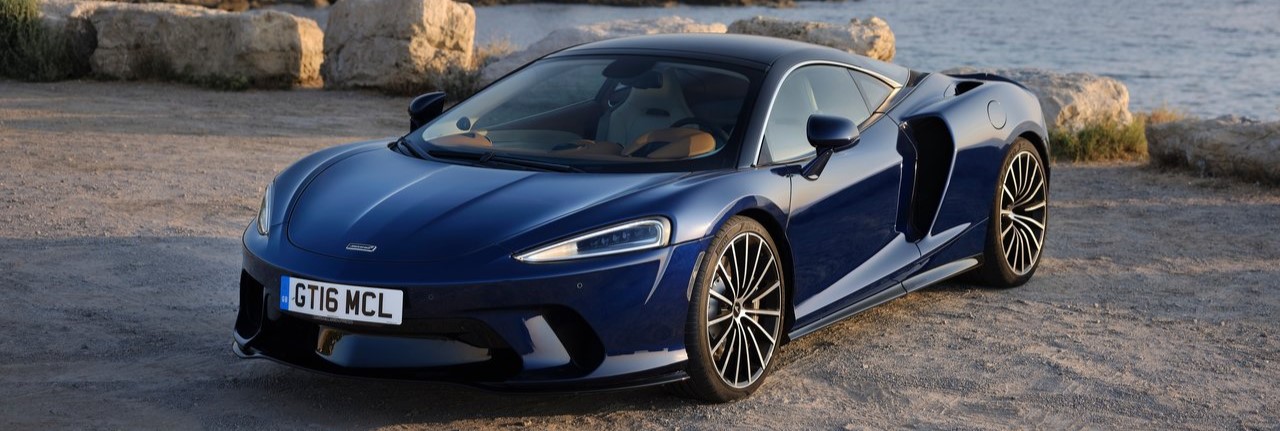
Technical specifications, versions, and history for the Mclaren GT.
Select a generation to see available versions
(2020-)
In the vast and complex universe of high-performance automotive engineering, few categories are as loaded with tradition and expectations as the Grand Tourer (GT). Historically, a GT is defined not just by cold acceleration numbers or top speed, but by a philosophy of use: the ability to cross continents at high speed, offering sumptuous comfort for two occupants and their luggage, isolating them from the imperfections of the outside world while maintaining a sovereign power reserve. For decades, the formula for achieving this goal was almost dogmatic: a large displacement engine (usually V12 or V8) mounted at the front, rear-wheel drive, a luxurious cabin lined in leather and wood, and a substantial weight that conferred stability on highways but penalized agility in tight corners. Brands like Bentley, Aston Martin, and Ferrari (with their front-engined models) built empires on these pillars.
McLaren Automotive, based in Woking, England, entered this scene with a disruptive proposal. Known for its obsession with lightness, aerodynamics, and pure driving dynamics derived from Formula 1, McLaren had never produced a car that explicitly prioritized comfort over absolute performance. The introduction of the McLaren GT in 2019 was not just the launch of a new model; it was a technical challenge to the sector's orthodoxy. The central question McLaren sought to answer was: is it possible to create a true Grand Tourer while maintaining the mid-rear engine architecture, an ultra-light carbon fiber chassis, and the incisive dynamics of a supercar?
This report is dedicated to documenting, exhaustively and in detail, the trajectory of the McLaren GT. We will analyze everything from the brand's first experiments with daily usability in the 570GT model, through the innovative engineering of the MonoCell II-T chassis, to the recent evolution to the McLaren GTS model in 2024. We will investigate production numbers, the nuances of each version, maintenance challenges, and the impact of this vehicle on the global and Brazilian markets. The following narrative seeks to demystify the complex technology behind the car, making it accessible, while maintaining the technical rigor required for a complete understanding of the vehicle.
To understand the McLaren GT, it is first necessary to understand the culture of the company that created it. Since its rebirth as a road car manufacturer in 2010 (with the MP4-12C), McLaren focused obsessively on beating Ferrari and Porsche at their own performance games. Their cars were faster, braked better, and cornered faster. However, feedback from customers and specialized critics frequently pointed to a gap: usability. While a Porsche 911 Turbo could be used to go to the supermarket or travel hundreds of miles without fatigue, early McLarens, although civilized by supercar standards, were still too focused on the visceral driving experience.
McLaren's product structure was rigidly divided into three pillars, known as "Series":
The concept of a "Grand Tourer" did not fit perfectly into any of these boxes. A GT needed to be more refined than the Sports Series, but less aggressive than the Super Series.
McLaren's first concrete attempt to soften its formula occurred in 2016 with the launch of the 570GT. Based on the 570S from the Sports Series, this car was a fundamental laboratory for the development of the future dedicated model.
The 570GT brought important modifications that signaled the brand's intentions:
Despite being well-received, the 570GT revealed the limitations of adapting an existing platform. Access to the rear trunk was difficult (only from the curbside in left-hand drive countries, although McLaren later offered the option to choose the opening side), engine heat invaded the luggage compartment, and the suspension, although softer, still lacked the sophistication needed to compete with the "magic carpet" ride of a Bentley Continental GT. It became clear to the engineers in Woking: to make a true GT, they would need a dedicated car, not an adaptation.
The McLaren GT was announced at the 2019 Geneva Motor Show and officially revealed in May of that year. Its arrival marked a strategic shift: it did not belong to any of the existing series (Sports, Super, or Ultimate). It inaugurated its own category within the brand, simply called "GT". The goal was to attract a new type of customer, one who might never have considered a McLaren before due to the perception of it being a track-focused brand.
Visually, the GT broke with the angular aggressiveness of the 720S and the 570S. Under the direction of Rob Melville, the design adopted more fluid and elegant lines, inspired by natural aerodynamic shapes. The car is longer than its siblings at the time, measuring 4.68 meters, which gives it a more imposing road presence and helps with directional stability.
A crucial design detail was airflow management. In mid-engined supercars, large side air intakes are necessary to feed the radiators. On the GT, these intakes were subtly sculpted into the sides and the door "blades", hiding their aggressive function to maintain the elegance of the silhouette. The front was designed with a higher approach angle (10 degrees, or 13 degrees with the lift system activated), allowing the car to tackle speed bumps and garage ramps with the same ease as a mid-size sedan like a Mercedes C-Class, solving one of the biggest headaches for supercar owners.
The McLaren GT is a triumph of packaging engineering and materials. Unlike its competitors that use aluminum or steel structures, the GT maintained the brand's fidelity to carbon fiber, but with significant modifications.
The foundation of the GT is the carbon fiber monocoque chassis called MonoCell II-T (the "T" stands for Touring).
Although the GT shares the basic engine architecture with the 720S (the M840T block), the changes were so extensive that the engine received a new designation: M840TE.
Detailed Specifications:
Technical Differentiation: The main difference in the "E" (Evolution/Enhanced) engine lies in the turbochargers. They are smaller, low-inertia units than those used in the 720S. The goal was not to seek maximum power at high revs, but rather to reduce "turbo lag" (the delay in turbine response) and increase throttle response at low and medium revs. McLaren claims that over 95% of the torque is available from 3,000 rpm, which is crucial for a GT, allowing for effortless overtaking without the need to downshift multiple gears.
Transmission: The gearbox is a 7-speed SSG (Seamless Shift Gearbox) dual-clutch unit. In "Comfort" mode, the control software smooths out shifts to make them imperceptible, mimicking the fluidity of a traditional automatic torque converter used in limousines. However, in "Sport" and "Track" modes, it regains the brand's characteristic aggressiveness, with ignition cuts that produce exhaust pops during shifts.
To solve the comfort versus performance dilemma, McLaren applied an adapted version of its proactive suspension.
The interior experience of the McLaren GT is where it differs most from its siblings focused on the track.
The universal metric for Grand Tourers is the ability to carry a set of golf clubs. The McLaren GT not only passes this test, it exceeds it.
Placing luggage on top of a twin-turbo V8 engine that operates at extremely high temperatures presents an obvious thermal challenge. To prevent golf clubs from melting or clothes from arriving hot at their destination, McLaren used advanced materials.
The floor of the rear luggage compartment is lined with SuperFabric. This material, which incorporates tiny armor plates into a flexible fabric, is resistant to cuts, stains, and, crucially, to heat. Below it, there is an airflow management system that channels cool outside air around the engine compartment and expels the hot air out the rear, creating a thermal air cushion that insulates the luggage.
The GT was the first production car in the world to offer Cashmere (cashmere wool) as an interior upholstery option. Traditionally used in haute couture clothing, the material was treated to meet rigorous automotive standards for durability and abrasion resistance. It can be applied to the seat centers, door panels, and the dashboard, offering a level of tactile comfort and coziness that traditional leather cannot replicate.
The infotainment system, often a weak point in low-volume supercars, was upgraded to the MIS II system.
In late 2023, McLaren announced the replacement of the GT with the new McLaren GTS, with deliveries starting in 2024. The GTS is not a completely new generation, but rather a heavy "facelift" (mid-life update) that refined the original concept.
| Characteristic | McLaren GT (2019-2023) | McLaren GTS (2024-Present) | Details of the Change |
|---|---|---|---|
| Power | 620 PS (612 hp) | 635 PS (626 hp) | Increase of 15 PS (14 hp) via ECU recalibration. |
| Weight (DIN) | 1,530 kg | 1,520 kg | Reduction of 10 kg through component optimization. |
| 0-200 km/h | 9.0 seconds | 8.9 seconds | Improvement in high-speed acceleration. |
| Suspension | Proactive Damping | Dual Valve Dampers | New dual valve technology allows independent control of compression and rebound. |
| Front Lift | ~4 seconds | < 4 seconds | The nose lift system is now twice as fast. |
| Visuals | Subtle air intakes | "Hammer" air intakes | More aggressive front bumper and larger rear air intakes for cooling. |
The most significant change in the GTS, besides the power increase, is in the suspension. The introduction of dual-valve dampers (continuously variable) allows for a greater separation between driving modes. In "Comfort" mode, the car can be even softer and more compliant than the original GT, while in "Track" mode, the suspension can become stiffer, better controlling the vehicle's mass under heavy braking and cornering. This broadens the car's dynamic "bandwidth", making it better at both ends of the usage spectrum.
Visually, the GTS adopts a more assertive stance. The air intakes on the rear "shoulders" are taller and more pronounced, capturing more airflow to feed the engine which now generates more heat due to the extra power. Gloss Black details replace many of the satin or chrome finishes of the previous model, aligning with modern "stealth" design trends.
The brand's customization division, McLaren Special Operations (MSO), played a vital role in maintaining interest in the GT model throughout its lifespan, creating versions that push the car's aesthetic limits.
This special edition is a showcase of artisanal painting. The bodywork features a complex gradient finish that blends three shades of satin green: Horsell Green, Arbor, and Steppe Green. The transition between colors is done manually and the painting process takes over 430 hours to complete.
Inside, the Verdant theme combines Laurel green leather with charcoal gray Cashmere, evoking the natural landscapes of forests and fields that a Grand Tourer would cross on a trip through Europe.
Launched in 2023, this was an ultra-limited series of only 8 cars, exclusive to the UK market.
McLaren is notoriously secretive about exact production numbers for individual models. However, by analyzing the company's annual financial reports, we can draw a clear picture.
Based on these data, it is estimated that total production of the McLaren GT (2019-2023 generation) is in the range of 2,000 to 3,000 global units. This makes it a considerably rare car. For comparison, Porsche produces tens of thousands of 911s annually.
In Brazil, the McLaren GT occupies an exclusive niche. It arrived with a starting price around R$ 2.4 million in 2019/2020. Due to exchange rate variations and taxes, the price of the new GTS model (2025 model) is already referenced in the Fipe Table at around R$ 2,800,000, and can exceed R$ 3,200,000 with options and MSO customization.
The car found a loyal audience among buyers who want a usable supercar in Brazilian driving conditions (thanks to the efficient lift system) without giving up the status of an F1 brand.
The GT competes in a "shark ocean" of luxury:
Owning a McLaren GT requires awareness of the machine's complexity. Although it is more robust than the brand's older models, it is still a low-production supercar.
Safety and quality are closely monitored, resulting in recall campaigns that the buyer should verify have been completed:
Maintenance should be done annually or every 10,000 miles (approx. 16,000 km). The cost of maintenance is high, comparable to Ferrari and higher than Porsche. In Brazil, the service network is concentrated in São Paulo, which requires enclosed truck transport logistics for owners from other states. The McLaren extended warranty is highly recommended to mitigate the risks of expensive mechanical failures outside the original warranty period.
The McLaren GT and its successor, the GTS, represent a fascinating chapter in the brand's history. They challenged the notion that a mid-engined car must be uncomfortable and proved that carbon fiber can be used to create not just race cars, but also refined continental cruisers.
While it may not have the luxurious "heft" of a Bentley or the front-engine tradition of a Ferrari Roma, the McLaren GT offers something unique: the surgical precision of a supercar packaged in a body that embraces the daily routine. For the enthusiast who values technology, materials engineering, and pure driving over traditional status, the McLaren GT remains a singular and bold choice in the automotive world. Its rarity, guaranteed by limited production numbers, ensures that it will be a future classic, remembered as the moment McLaren decided to rewrite the rules of the Grand Touring game.
| Specification | McLaren GT (2019-2023) | McLaren GTS (2024-Present) | Ferrari Roma (Comparative) |
|---|---|---|---|
| Engine | 4.0L V8 Twin-Turbo (M840TE) | 4.0L V8 Twin-Turbo (M840TE) | 3.9L V8 Twin-Turbo |
| Engine Position | Mid-Rear | Mid-Rear | Front-Mid |
| Power | 620 PS (612 hp) | 635 PS (626 hp) | 620 PS (612 hp) |
| Torque | 630 Nm | 630 Nm | 760 Nm |
| Weight (DIN) | 1,530 kg | 1,520 kg | 1,570 kg |
| 0-100 km/h | 3.2 s | 3.2 s | 3.4 s |
| 0-200 km/h | 9.0 s | 8.9 s | 9.3 s |
| Top Speed | 326 km/h | 326 km/h | > 320 km/h |
| Trunk | 570 L (Total) | 570 L (Total) | 272 L |
| Seats | 2 | 2 | 2+2 (Symbolic) |
| Price (Fipe 2025) | ~R$ 2.4 mi (Used) ~R$ 2.8 mi (New) | ~R$ 3.4 mi |
Note on sources: This report was compiled based on official data from McLaren Automotive, investor financial reports (2021-2024), NHTSA safety bulletins, and analyses from the global and Brazilian specialized automotive press.