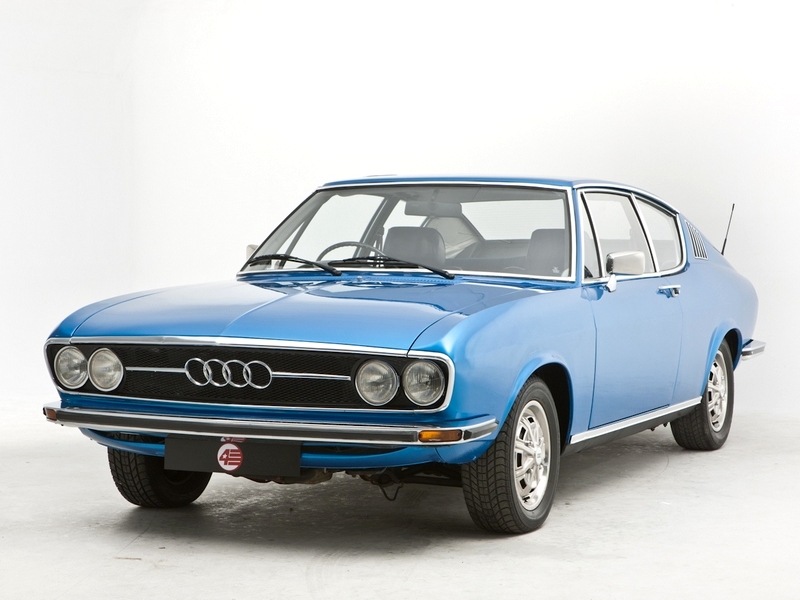
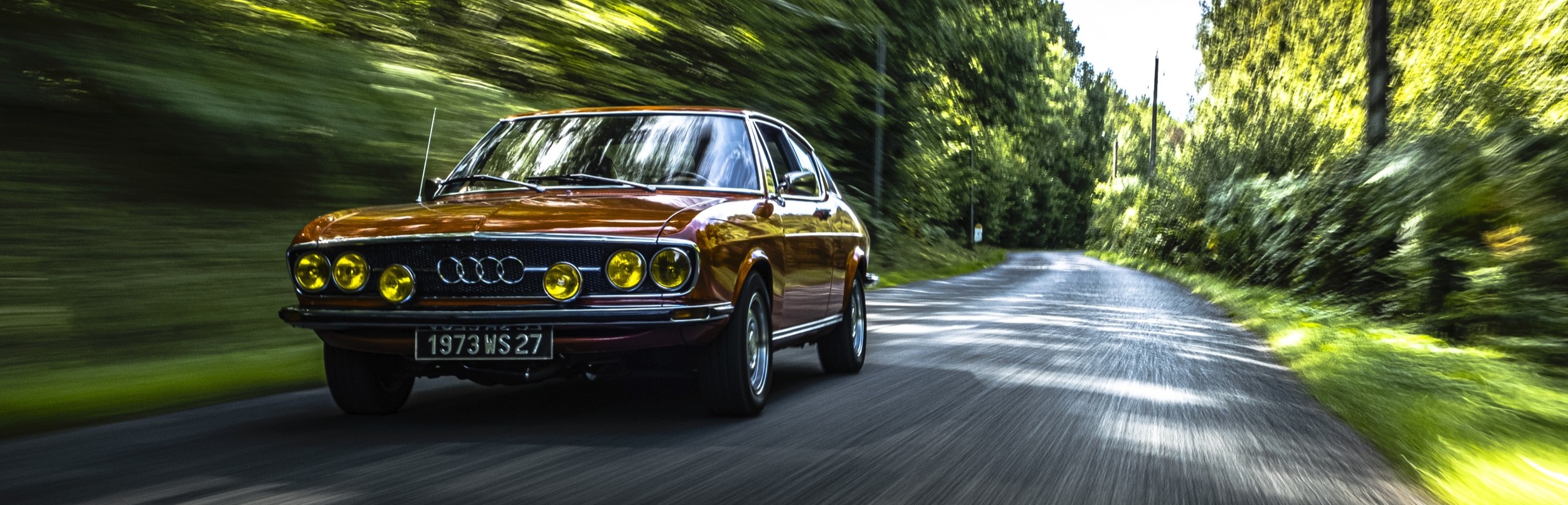
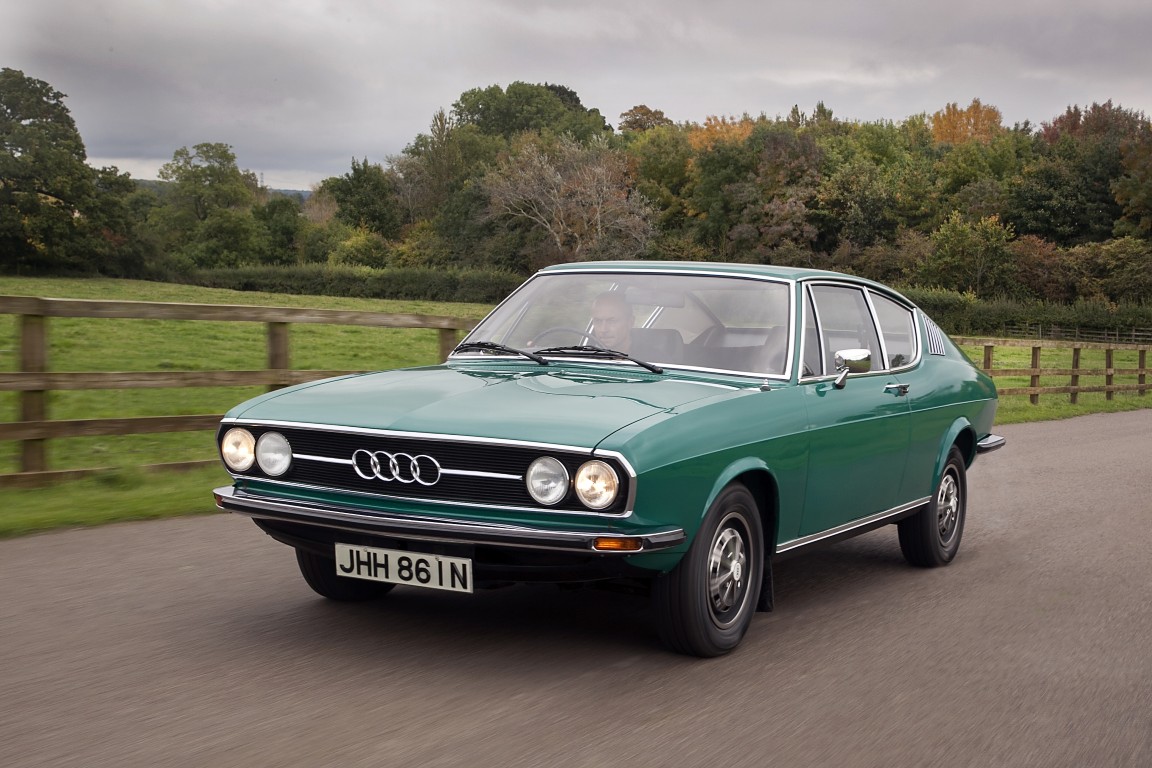
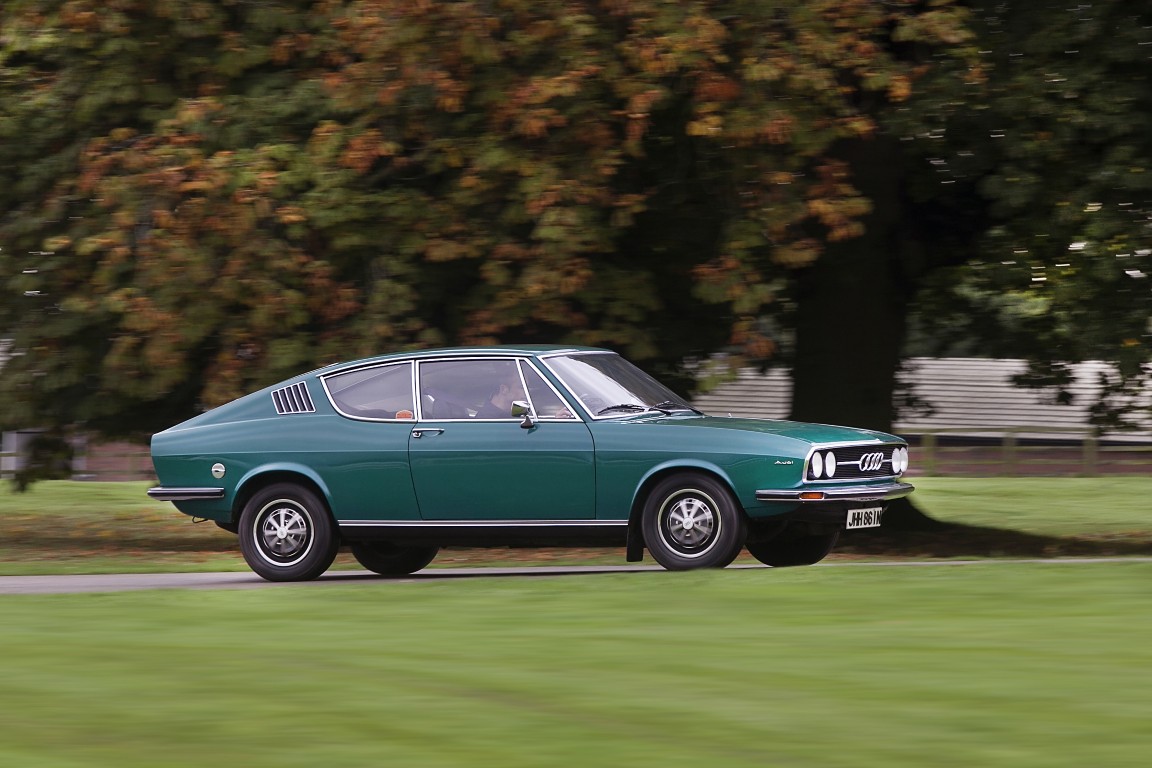
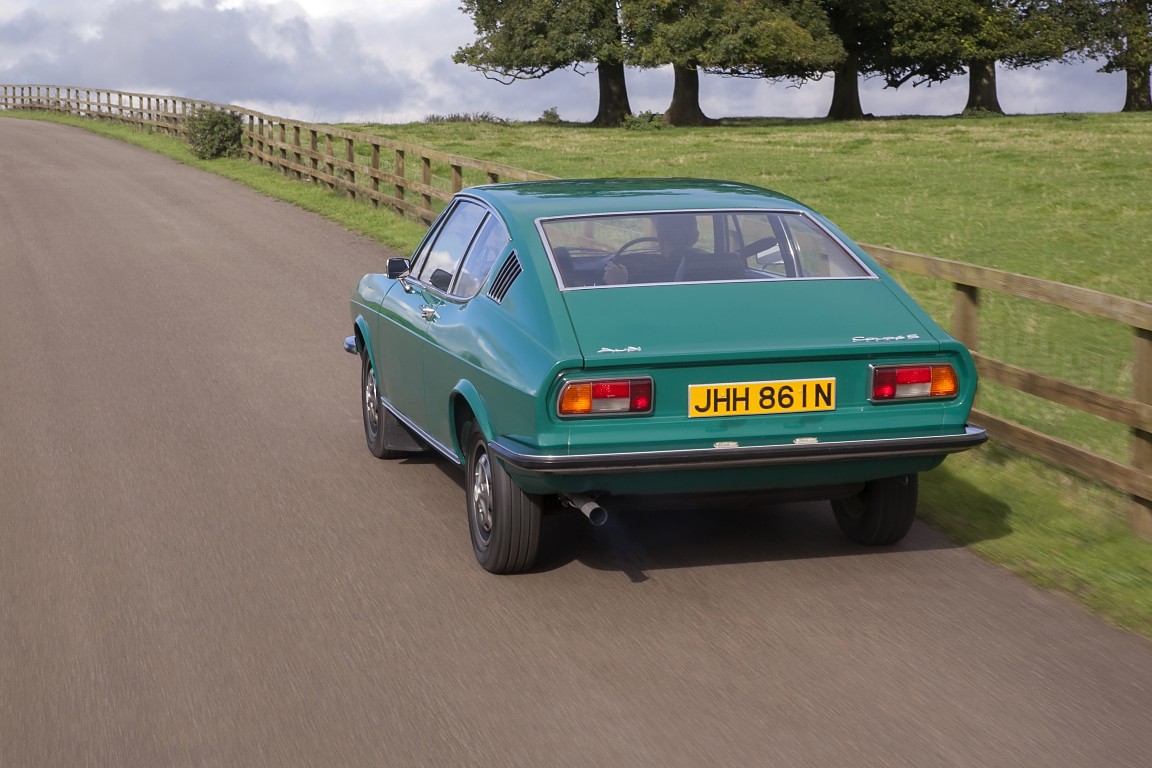
The Audi 100 Coupé was produced exclusively within the C1 platform lifecycle (factory code F105) between 1970
and 1976. Unlike the 100 sedan family, which continued evolving across the C2, C3, and C4 generations, the
Coupé S did not receive a direct second generation under the same nameplate; in subsequent decades, the
brand's
sporting focus shifted toward the Audi Coupé/Audi Quattro lineage, built on the smaller Audi 80 platform.
Over its six-year production run, the Coupé S went through three distinct technical and styling stages.
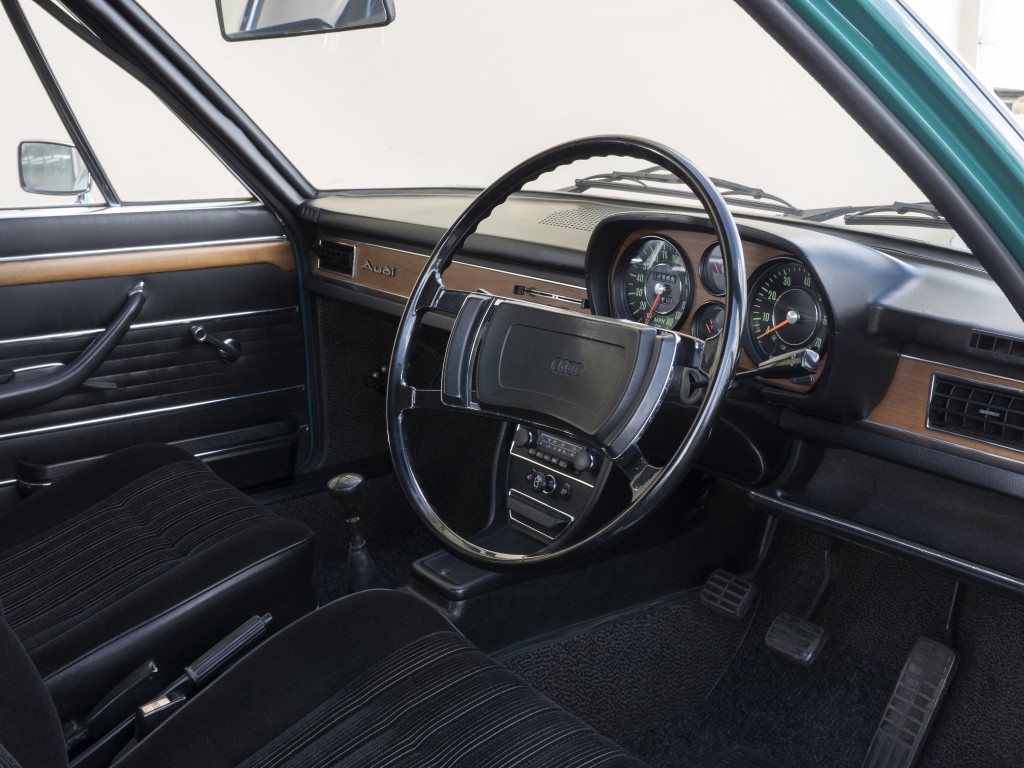
The first phase covered model years 1970 to mid-1972. During this period, the car utilized the highest-output
specification of its engine, fed by dual carburetors, while featuring an upscale interior appointed with
faux
wood dashboard trim, center-console auxiliary gauges, a tilt-adjustable sports steering wheel, and
individual
bucket seats with integrated head restraints.
The second phase took place between late 1972 and mid-1973, consisting of a strictly mechanical update.
Pressured by tightening vehicle emissions standards and seeking to eliminate the recurring synchronization
issues of dual carburetors, engineering standardized the powertrain with a single progressive twin-choke
carburetor. This resulted in a slight reduction in rated power output while maintaining a stable torque
delivery across the low and mid-rev ranges.
The third phase corresponded to the mid-cycle facelift (often identified by technical preservationists as the
C1.5 generation), implemented in September 1973 for the 1974 model year and maintained until production
ended
in 1976. Visually, the metallic front grille was replaced by an anti-glare black plastic unit with revised
horizontal slats. At the rear, the angled vertical taillights were superseded by larger, rectangular light
clusters. The cabin received an integrated instrument panel, a redesigned ventilation system, refreshed
upholstery materials, and upgraded seat belts. Mechanically, the primary update occurred between 1974 and
1975, when the manufacturer eliminated the problematic inboard front brakes, relocating the discs to
conventional outboard positions at the wheel hubs to resolve excessive engine-bay heat retention.